




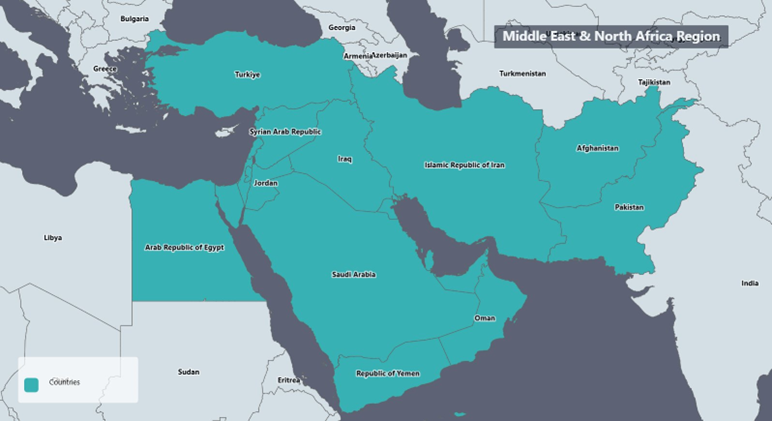
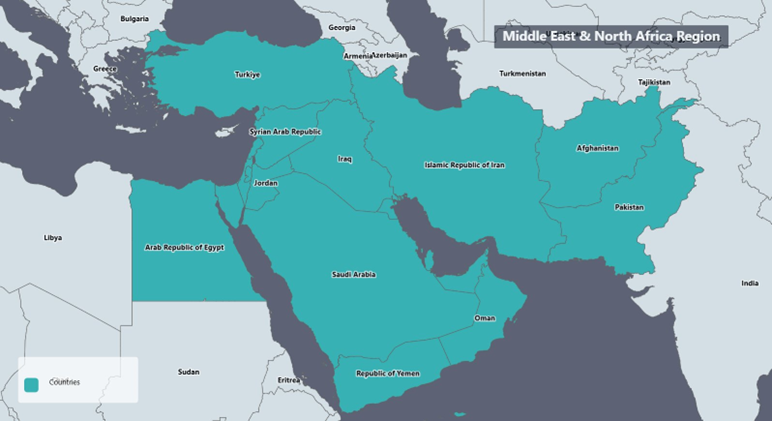
In a significant yet relatively low-profile development, the World Bank has reclassified Pakistan from the South Asia region to the Middle East and North Africa (MENA) grouping. This change, which comes into effect from the fiscal year 2026, reflects evolving analytical and operational priorities within the institution.
World Bank Reclassifies Pakistan from South Asia to MENA Region
What Has Changed?
Traditionally, Pakistan was considered part of the South Asia region alongside countries like India, Bangladesh, and Sri Lanka. However, under the updated classification, Pakistan has been shifted to a broader regional framework often referred to as MENAAP (Middle East, North Africa, Afghanistan, and Pakistan).
This move also aligns Pakistan with economies such as Saudi Arabia, the United Arab Emirates, and Egypt, instead of its previous South Asian counterparts.
Why Did the World Bank Make This Move?
The World Bank’s regional classifications are not strictly geographical—they are based on economic structures, development challenges, and policy priorities.
Several factors may have contributed to this shift:
- Economic Linkages: Pakistan has strong financial and labor ties with Middle Eastern countries, particularly through remittances and trade.
- Policy Alignment: Grouping countries with similar economic conditions allows for more targeted development strategies.
- Analytical Consistency: Reclassification helps the World Bank present more coherent regional data and comparisons.
Implications of the Reclassification
Although the change may appear administrative, it carries several important implications:
1. Impact on Regional Statistics
When a country moves regions, it alters economic indicators such as GDP growth, poverty rates, and population averages for both the old and new regions.
2. Development Programs
Pakistan may now be included in MENA-focused development initiatives, potentially influencing funding priorities and project designs.
3. South Asia’s Economic Profile
With Pakistan no longer included, South Asia’s economic outlook will be increasingly shaped by countries like India, which remains the dominant growth driver in the region.
4. Strategic Positioning
The move symbolically places Pakistan closer to the Middle East in global economic narratives, which could affect diplomatic and economic perceptions.
Broader Context
The World Bank periodically revises its regional groupings to better reflect global economic realities. Similar changes have occurred in the past, including the inclusion of Afghanistan alongside Pakistan in the MENAAP framework.
Such reclassifications are important because they shape how international organizations analyze development trends, allocate resources, and design policy interventions.
Conclusion
The World Bank’s decision to move Pakistan from South Asia to the MENA region marks a noteworthy shift in global economic categorization. While largely technical, the change has meaningful implications for regional analysis, development policy, and Pakistan’s international positioning. As global economic dynamics continue to evolve, such reclassifications highlight the fluid nature of regional boundaries in international institutions.


