




In Defence Current Affairs for 21 April 2026, we will see the latest national and international current affairs news. These important current affairs will be beneficial for your upcoming NDA, CDS, CDS OTA, AFCAT, TA, Agniveer Army, Agniveer Navy, Agniveer Air Force, Women Military Police, INET, MNS, ACC exams, SCO, PCSL, CAPF, and SSB interviews, and direct entries for Army, Navy, and Air Force like SSC Tech, TGC, JAG, NCC, TES, 10+2 Cadet. Download a PDF file about current events at the end of this article. Let us now see the Current Affairs.
Defence Current Affairs 21 April 2026
Launch of DSC A 23
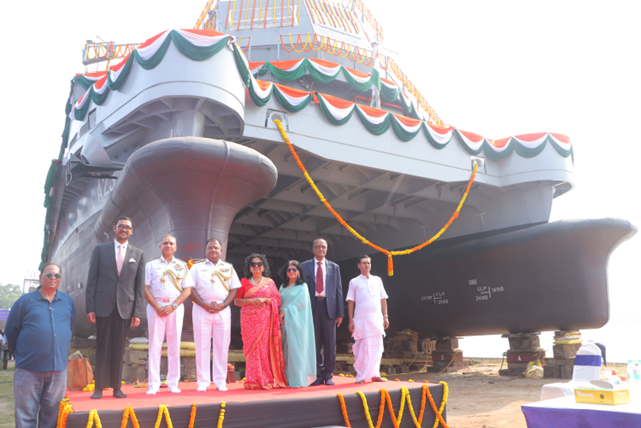
- DSC A 23, the fourth ship of five Diving Support Craft (DSC) project was launched on 19 Apr 2026 at Titagarh, Kolkata (WB) by Mrs Deepa Sivakumar, in the presence of Vice Admiral B Sivakumar, Chief of Materiel.
- The event was conducted with full naval traditions and ceremonial splendour, in presence of senior officials from Indian Navy and M/s Titagarh Rail Systems Limited (TRSL).
- The construction of Diving Support Craft is being undertaken by M/s TRSL, Kolkata. Featuring a 30 m long catamaran-hull form and an approximate displacement of 380 tons, these ships offer superior stability, enhanced deck area and improved sea-keeping characteristics.
- With 70% of main and auxiliary equipment sourced from indigenous manufacturers, Diving Support Craft are proud flag bearers of Aatmanirbhar Bharat and Make in India initiatives of Government of India (GoI) and Ministry of Defence (MoD).
IGoM Reviews West Asia Situation
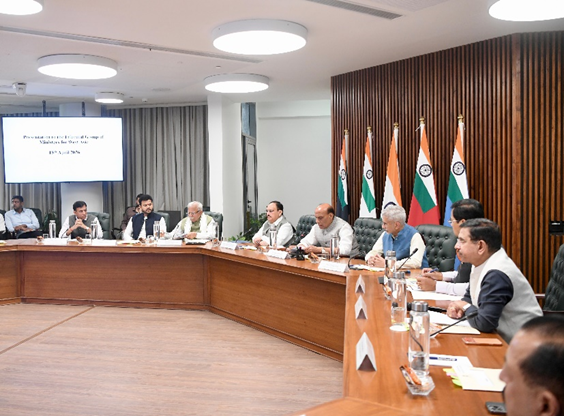
An Informal Group of Ministers (IGoM), led by Defence Minister Rajnath Singh, convened its fourth meeting on April 18, 2026, in New Delhi to assess the ongoing situation in West Asia. The group reviewed regional developments and evaluated India’s preparedness for various contingencies.
The Defence Minister described the situation as unpredictable and sensitive, stressing that India must remain ready for both de-escalation and potential escalation. The discussions focused on ensuring continuity in trade, energy security, and overall national preparedness.
A key highlight was the approval of the Bharat Maritime Insurance Pool, backed by a sovereign guarantee of ₹12,980 crore. This initiative aims to ensure uninterrupted and affordable insurance coverage for Indian vessels, even while navigating high-risk maritime zones.
Despite global uncertainties, officials confirmed that domestic economic indicators, including wholesale and retail food prices, remain stable. Additionally, recommendations have been made to export surplus wheat, indicating resilience in India’s food security framework.
Meanwhile, tensions in the Strait of Hormuz have impacted shipping routes. While some Indian vessels faced disruptions due to regional hostilities, others successfully navigated the passage, reflecting the challenges posed by geopolitical conflicts.
India’s Maritime Strategy and ‘Varuna Shakti’
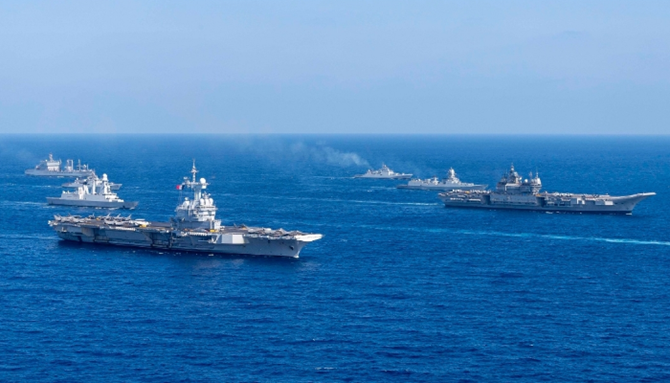
India’s maritime strength is deeply rooted in history, tracing back to Chhatrapati Shivaji Maharaj, who recognized the importance of naval power in protecting coastal regions. Today, this vision continues to shape India’s modern naval strategy.
A critical area of focus is the Strait of Malacca, one of the busiest and most strategically significant sea routes in the world. It serves as a vital link between the Indian and Pacific Oceans and supports a large share of global trade, including energy supplies.
Given the risks associated with such chokepoints, including piracy and geopolitical tensions, India has strengthened its presence through the Andaman and Nicobar Command (ANC). Established in 2001, this tri-service command enables India to monitor and secure vital sea lanes.
Key naval and air installations such as INS Baaz, INS Utkrosh, and INS Kohassa play a crucial role in surveillance and reconnaissance operations. These bases enhance India’s capability to respond swiftly to emerging threats and maintain maritime stability.
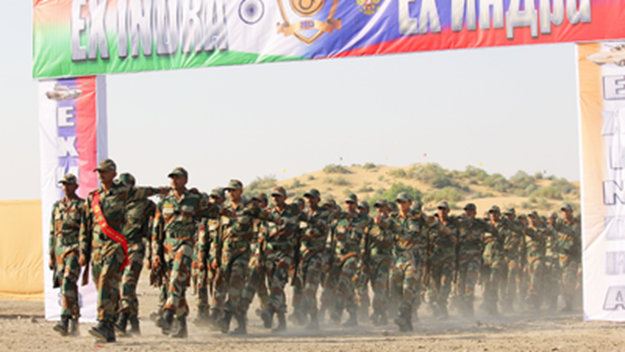
India–Russia Defence Logistics Pact
India and Russia have further strengthened their defence ties by formalising a logistics agreement that allows the deployment of up to 3,000 military personnel in each other’s territories. This arrangement reflects deepening trust and strategic alignment between the two nations.
The pact, part of the Reciprocal Exchange of Logistics Agreement (RELOS), also facilitates the stationing of military assets such as ships and aircraft. It is designed to enhance operational efficiency, logistical support, and coordination during joint exercises, humanitarian missions, and other collaborative operations.
Rajnath Singh’s Visit to Germany
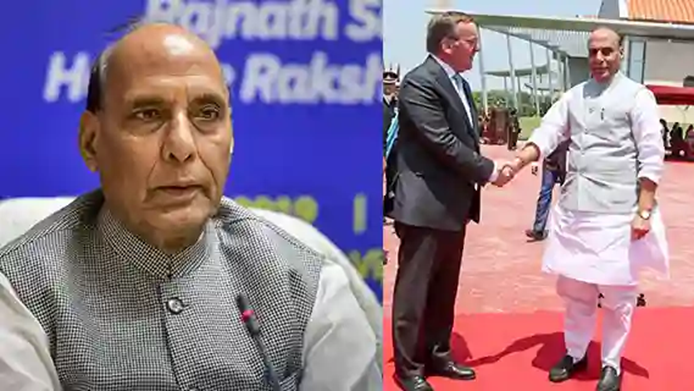
Defence Minister Rajnath Singh is scheduled to visit Germany from April 21 to 23, 2026, to further strengthen bilateral defence cooperation.
During the visit, he will hold discussions with his German counterpart Boris Pistorius and other senior officials. The talks are expected to focus on expanding defence industrial collaboration, boosting military engagement, and exploring cooperation in emerging domains such as cybersecurity, artificial intelligence, and drone technologies.
The visit is also likely to result in the signing of key agreements, including a Defence Industrial Cooperation Roadmap and arrangements related to UN peacekeeping training. It will provide an opportunity to deepen partnerships and promote joint development under India’s “Make in India” initiative.
Modernisation of IAF’s Garud Special Forces
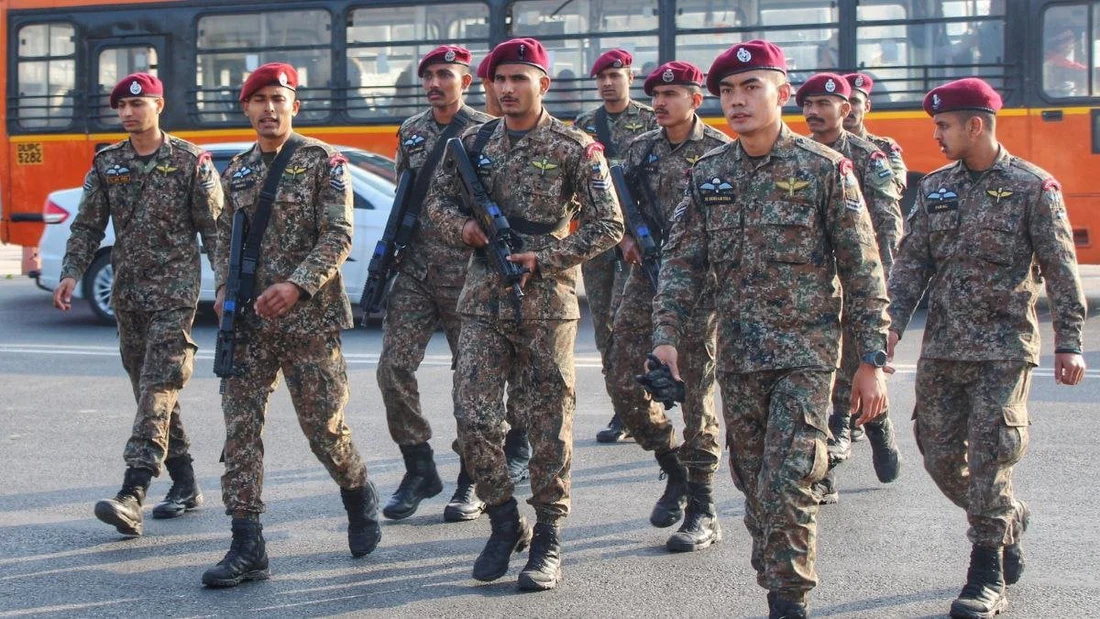
The Indian Air Force is set to upgrade the capabilities of its elite Garud Special Forces with the induction of advanced compact Unmanned Aerial Vehicle (UAV) systems. This initiative reflects India’s focus on enhancing surveillance and reconnaissance capabilities through modern technology.
The proposed UAV system will be lightweight, portable, and designed for operations in extreme conditions, including high-altitude regions. With features such as extended operational range, endurance, and real-time intelligence gathering, the system will significantly improve mission effectiveness.
Additional capabilities include day-and-night surveillance, secure communication, autonomous flight modes, and the ability to operate in GPS-denied environments. The procurement is expected to be carried out under the “Buy Indian” category, reinforcing the push for indigenous defence production.
Review Questions
1. Who headed the Informal Group of Ministers (IGoM) reviewing the West Asia situation?
A. Narendra Modi
B. Amit Shah
C. Rajnath Singh
D. S. Jaishankar
Answer: C. Rajnath Singh
Explanation: The IGoM was chaired by Rajnath Singh.
2. The IGoM meeting on West Asia was held on which date?
A. April 15, 2026
B. April 18, 2026
C. April 20, 2026
D. April 10, 2026
Answer: B. April 18, 2026
Explanation: The fourth meeting was conducted on April 18, 2026.
3. The Bharat Maritime Insurance Pool has a sovereign guarantee of:
A. ₹10,000 crore
B. ₹12,980 crore
C. ₹15,000 crore
D. ₹9,500 crore
Answer: B. ₹12,980 crore
Explanation: It was approved to ensure maritime insurance coverage during crises.
4. The Bharat Maritime Insurance Pool primarily ensures:
A. Agricultural insurance
B. Health insurance
C. Maritime trade insurance
D. Life insurance
Answer: C. Maritime trade insurance
Explanation: It ensures affordable insurance for shipping and trade routes.
5. Which strategic waterway was affected by tensions involving Indian vessels?
A. Strait of Malacca
B. Panama Canal
C. Strait of Hormuz
D. Suez Canal
Answer: C. Strait of Hormuz
Explanation: Tensions in the Strait of Hormuz impacted Indian tankers.
6. Who is known as the “Father of the Indian Navy”?
A. Raja Raja Chola
B. Chhatrapati Shivaji Maharaj
C. Tipu Sultan
D. Bajirao I
Answer: B. Chhatrapati Shivaji Maharaj
Explanation: Chhatrapati Shivaji Maharaj laid the foundation of naval strength.
7. The Strait of Malacca connects which two oceans?
A. Atlantic & Pacific
B. Arctic & Indian
C. Indian & Pacific
D. Atlantic & Indian
Answer: C. Indian & Pacific
Explanation: Strait of Malacca links these two oceans.
8. Approximately what percentage of global commerce passes through the Strait of Malacca?
A. 10%
B. 25%
C. 40%
D. 60%
Answer: B. 25%
Explanation: It is a major global trade route.
9. The Andaman and Nicobar Command (ANC) was established in:
A. 1995
B. 2001
C. 2005
D. 2010
Answer: B. 2001
Explanation: ANC is India’s only tri-service command.
10. Which country is part of the defence logistics pact with India?
A. USA
B. France
C. Russia
D. Japan
Answer: C. Russia
Explanation: Russia signed the RELOS agreement with India.
11. The India–Russia agreement allows deployment of up to how many troops?
A. 1,000
B. 2,000
C. 3,000
D. 5,000
Answer: C. 3,000
Explanation: Each country can station up to 3,000 personnel.
12. RELOS stands for:
A. Regional Logistics System
B. Reciprocal Exchange of Logistics Agreement
C. Resource Exchange Logistics System
D. Regional Engagement Logistics Operation
Answer: B. Reciprocal Exchange of Logistics Agreement
Explanation: It facilitates logistics cooperation.
13. Rajnath Singh’s visit from April 21–23, 2026 is to:
A. France
B. Germany
C. UK
D. USA
Answer: B. Germany
Explanation: Germany is the destination.
14. Who is the Defence Minister of Germany?
A. Olaf Scholz
B. Boris Pistorius
C. Frank-Walter Steinmeier
D. Angela Merkel
Answer: B. Boris Pistorius
Explanation: Boris Pistorius is Germany’s Defence Minister.
15. The discussions during the Germany visit include cooperation in:
A. Agriculture
B. Tourism
C. AI and Cybersecurity
D. Education
Answer: C. AI and Cybersecurity
Explanation: Emerging technologies are key focus areas.
16. The Garud Special Forces belong to which force?
A. Indian Army
B. Indian Navy
C. Indian Air Force
D. CRPF
Answer: C. Indian Air Force
Explanation: Garud is the special force of the IAF.
17. The UAV system being procured is categorized under:
A. Buy Global
B. Buy and Make
C. Buy Indian
D. Lease
Answer: C. Buy Indian
Explanation: Promotes indigenous defence manufacturing.
18. The UAV system will be operable by:
A. One person
B. Two-person team
C. Five-person team
D. Ten-person team
Answer: B. Two-person team
Explanation: It is designed for compact deployment.
19. The operational range of the UAV is at least:
A. 5 km
B. 10 km
C. 15 km
D. 20 km
Answer: C. 15 km
Explanation: It ensures extended surveillance capability.
20. The UAV system will provide:
A. Only daytime surveillance
B. Only communication
C. Day and night surveillance
D. Only mapping
Answer: C. Day and night surveillance
Explanation: It includes advanced ISR capabilities.
ALSO READ:
- Latest Daily Current Affairs and Defence Updates
- Latest Daily Current Affairs March 2026[DOWNLOAD PDF]
- Latest Daily Current Affairs February 2026[DOWNLOAD PDF]
- Latest Daily Current Affairs January 2026[DOWNLOAD PDF]
- Latest Daily Current Affairs November 2025[DOWNLOAD PDF]
- Latest Daily Current Affairs October 2025[DOWNLOAD PDF]
- Latest Daily Current Affairs August 2025[DOWNLOAD PDF]
- Latest Daily Current Affairs July 2025[DOWNLOAD PDF]
- Monthly Defence Current Affairs June 2025 [DOWNLOAD PDF]
- Monthly Defence Current Affairs May 2025 [DOWNLOAD PDF]
- Monthly Defence Current Affairs April 2025 [DOWNLOAD PDF]
- Monthly Defence Current Affairs March 2025 [DOWNLOAD PDF]
- Monthly Defence Current Affairs February 2025 [DOWNLOAD PDF]
- Monthly Defence Current Affairs January 2025 [DOWNLOAD PDF]
- Defence Current Affairs Year End Review 2024
- Monthly Defence Current Affairs November 2024 [DOWNLOAD PDF]
- Monthly Defence Current Affairs October 2024 [DOWNLOAD PDF]
- Monthly Defence Current Affairs September 2024 [DOWNLOAD PDF]
- Monthly Defence Current Affairs August 2024 [DOWNLOAD PDF]
- Monthly Defence Current Affairs July 2024 [DOWNLOAD PDF]


