




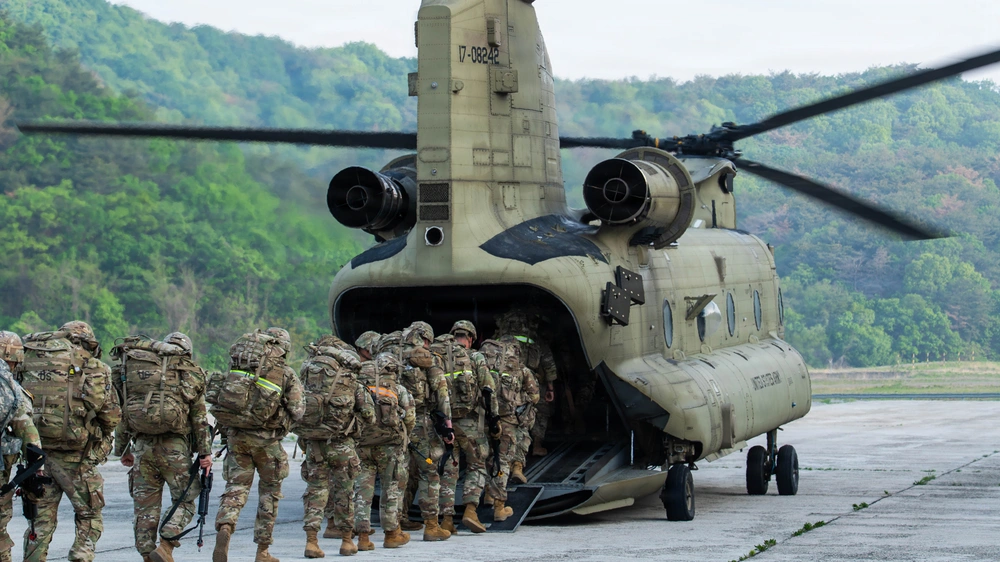
The recent decision by the United States to reduce its military presence in Germany has far-reaching implications that extend beyond European borders, resonating particularly with allies in Asia, including South Korea. This move is emblematic of a shifting landscape in which the US military posture abroad is increasingly fluid, politically contested, and tied to reciprocal expectations from Washington.
The planned withdrawal of approximately 5,000 troops from Germany has intensified existing tensions between Washington and Berlin. Concerns over defense spending, burden-sharing, and policy alignment have come to the forefront, exacerbated by the geopolitical nuances following the conflict in Iran. As NATO allies seek clarity on the implications of this move, German officials emphasize that it underscores the necessity for Europe to enhance its own security responsibilities.
In the broader context, this troop reduction has raised questions about the future of US missile deployments in Germany. Although German authorities have asserted that no final decisions have been made, the uncertainty is palpable. In South Korea, however, the takeaway from Germany’s troop drawdown is not an immediate threat of a similar reduction. Rather, the strategic context regarding North Korea’s nuclear capabilities creates a stark contrast with the situation in Europe.
Currently, about 28,500 US troops are stationed in South Korea to deter North Korean threats and provide extended nuclear assurances. This presence is rooted in a fundamentally different strategic environment, where the military focuses on immediate deterrence against a concentrated threat. Despite this, the developments in Germany serve as a critical reminder that US military commitments are increasingly subject to political negotiations and realignment based on conditions in allied nations.
This evolving landscape raises pivotal questions for South Korea, particularly regarding the role of US Forces Korea. Traditionally viewed as a deterrent against North Korean aggression, Washington is increasingly considering the integration of its military strategy in broader regional contexts, particularly in the Indo-Pacific. The notion of “strategic flexibility” has emerged, suggesting that US resources stationed in South Korea could potentially be diverted for contingencies in other regions. This scenario poses a dilemma for Seoul: balancing the imperative of deterring North Korea while considering the possibility of allied support in different global theaters.
Seoul cannot simply reject this concept of strategic flexibility; doing so would be both unrealistic and politically unwise. However, accepting it must also come with precautions to avoid a decrease in deterrence value on the peninsula. If US assets were reassigned during crises elsewhere, it could be interpreted by Pyongyang as a vulnerability, potentially leading to dangerous miscalculations.
To address these complexities, clearer agreements are necessary between Seoul and Washington about operational protocols, conditions under which US assets could be redeployed, and firm measures to ensure ongoing deterrence during such transitions.
The decision to reduce troops in Germany also highlights a wider shift in how Washington approaches the concept of burden-sharing. This is no longer confined to financial contributions from host nations; it now encompasses military capabilities, political alignment, and overall contributions to regional stability. For South Korea, this presents both pressures and opportunities. The country boasts a robust military and a thriving defense industry, increasingly vital to the sustainability and operational readiness of US forces.
As discussions around wartime operational control (OPCON) transition in South Korea evolve, they must be understood within a framework that reflects the growing volatility of global security dynamics. The transfer of command should not be perceived as a sign of US disengagement, but rather as an indication that the alliance can adapt to increasingly complex challenges.
While the reduction of US troops in Germany does not forecast similar actions in South Korea, it carries important implications. It serves as a reminder that US military deployments are influenced by political negotiations and strategic reprioritization, particularly when there are perceived gaps in allied contributions. European nations are already responding with greater urgency towards self-reliance and a willingness to assume roles historically filled by the US.
For South Korea, the response should be neither alarmist nor complacent. The focus ought to shift from mere troop numbers to a more comprehensive understanding of mission design and capability-building within the alliance. This includes establishing clearer frameworks for consultation that protect deterrent capabilities while allowing strategic flexibility.
Ultimately, the strength and credibility of the US-South Korea alliance will be gauged not by rhetoric, but by its adaptability to a world where military presence is increasingly subjected to negotiation.


