




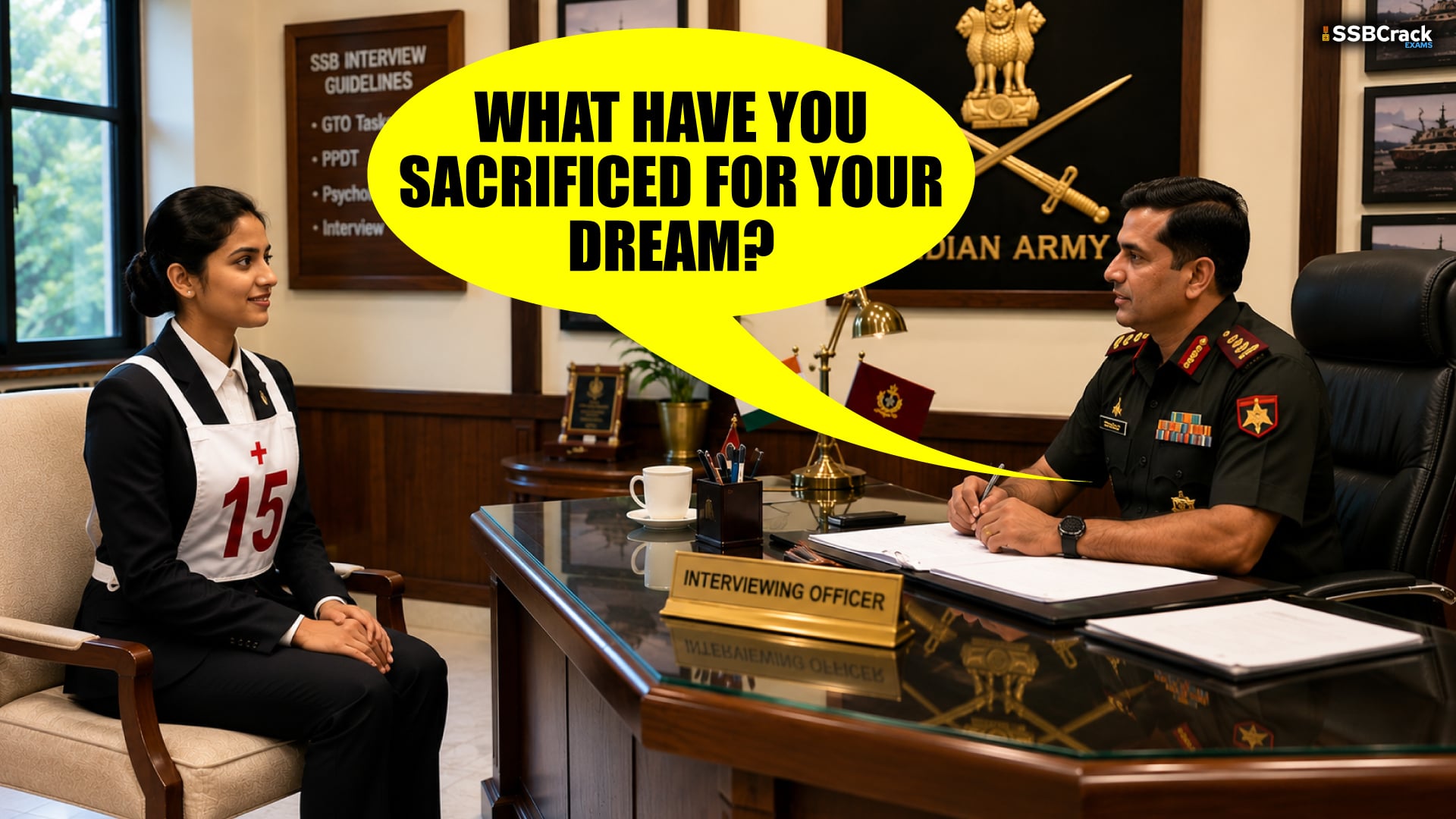
Many women decide to pursue a career in the Armed Forces after completing graduation, post-graduation, professional courses, or even after gaining work experience. Such candidates bring maturity, life experiences, and a broader understanding of responsibilities to the SSB Interview.
The Interviewing Officer understands that adult candidates have faced different challenges compared to teenage aspirants. Therefore, the questions often focus on decision-making, career choices, leadership experiences, social awareness, responsibility, and emotional maturity.
In this video, we will discuss 20 important SSB Interview questions specifically for adult female defence aspirants. We will understand why these questions are asked, how to answer them effectively, and examine sample responses that reflect Officer Like Qualities.
1. Why did you decide to join the Armed Forces after completing your graduation?
Why it is asked
To assess the clarity and seriousness of your career choice.
How to answer
Explain the thought process behind your decision and connect it with your aspirations.
Sample Answer
“During my graduation, I realized that I wanted a career that offered purpose, responsibility, and opportunities for leadership. The Armed Forces provide a platform where I can serve the nation while continuously challenging and developing myself.”
2. What have you learned from living away from home?
Why it is asked
To assess independence and adaptability.
How to answer
Highlight responsibility, self-management, and problem-solving.
Sample Answer
“Living away from home taught me time management, financial responsibility, decision-making, and the ability to adapt to different environments and people.”
3. What is the most important decision you have made in your life so far?
Why it is asked
To evaluate judgment and maturity.
How to answer
Choose a genuine decision and explain its impact.
Sample Answer
“Choosing my graduation subject despite differing opinions was an important decision. It taught me to take responsibility for my choices and work hard to achieve my goals.”
4. How do you handle disagreements in a team?
Why it is asked
To assess teamwork and social adaptability.
How to answer
Focus on communication and finding solutions.
Sample Answer
“I listen to all viewpoints, identify common objectives, and encourage discussion. My focus remains on solving the problem rather than proving someone wrong.”
5. What responsibilities do you currently handle?
Why it is asked
To assess responsibility and maturity.
How to answer
Mention genuine responsibilities from personal, academic, or professional life.
Sample Answer
“I manage my studies, household responsibilities, and financial planning for my expenses. These responsibilities have improved my organizational and decision-making skills.”
6. What is one failure that changed you positively?
Why it is asked
To assess resilience and learning ability.
How to answer
Focus on lessons learned.
Sample Answer
“Not qualifying for a competitive examination on my first attempt taught me patience, self-discipline, and the importance of consistent effort.”
7. What do you think is your biggest contribution to your family?
Why it is asked
To assess responsibility and family values.
How to answer
Discuss practical support or emotional contribution.
Sample Answer
“I support my family by helping with important decisions, sharing responsibilities, and being dependable whenever they need assistance.”
8. How do you react when someone questions your capability?
Why it is asked
To assess confidence and emotional stability.
How to answer
Show maturity and confidence.
Sample Answer
“I prefer to demonstrate my capability through actions and performance rather than arguments. Constructive criticism motivates me to improve further.”
9. Have you ever taken initiative without being asked?
Why it is asked
To assess initiative.
How to answer
Provide a real example.
Sample Answer
“During a college event, I noticed coordination issues and volunteered to organize communication among teams, which helped improve efficiency.”
10. How would you describe your leadership style?
Why it is asked
To assess leadership understanding.
How to answer
Use examples rather than labels.
Sample Answer
“I prefer leading by example. I encourage participation, delegate responsibilities appropriately, and ensure that team members feel valued.”
11. What role do women play in modern defence forces?
Why it is asked
To assess awareness and perspective.
How to answer
Focus on capability and professionalism.
Sample Answer
“Women contribute across operational, technical, administrative, and leadership roles. Their effectiveness depends on competence, commitment, and training rather than gender.”
12. Tell me about a time when you had to work under pressure.
Why it is asked
To assess stress management.
How to answer
Describe the situation, action, and outcome.
Sample Answer
“During examinations and project submissions occurring simultaneously, I prioritized tasks, created a schedule, and completed all commitments successfully.”
13. What would you do if you were given responsibility for an unfamiliar task?
Why it is asked
To assess learning ability and confidence.
How to answer
Show initiative and resourcefulness.
Sample Answer
“I would gather information, seek guidance if required, create a plan, and work systematically to accomplish the task.”
14. What does courage mean to you?
Why it is asked
To assess values and understanding of leadership.
How to answer
Include both physical and moral courage.
Sample Answer
“Courage means doing what is right despite fear, uncertainty, or opposition. It includes both physical bravery and moral integrity.”
15. How do you maintain a balance between personal and professional responsibilities?
Why it is asked
To assess organizational ability.
How to answer
Discuss prioritization and planning.
Sample Answer
“I maintain balance through planning, prioritization, and effective time management while ensuring that important responsibilities are not neglected.”
16. What quality would your colleagues or classmates appreciate most about you?
Why it is asked
To assess interpersonal effectiveness.
How to answer
Choose a realistic quality.
Sample Answer
“They would probably appreciate my reliability because I complete assigned responsibilities and support team members whenever needed.”
17. If selected as an officer, what kind of leader would you like to become?
Why it is asked
To assess aspirations and leadership philosophy.
How to answer
Focus on service-oriented leadership.
Sample Answer
“I would like to become a leader who earns respect through competence, fairness, and concern for the welfare and development of subordinates.”
18. What social issue concerns you the most and why?
Why it is asked
To assess awareness and analytical thinking.
How to answer
Present balanced views.
Sample Answer
“I am concerned about unequal access to quality education because education significantly influences opportunities and social progress.”
19. What is one misconception people have about you?
Why it is asked
To assess self-awareness.
How to answer
Choose something genuine and explain it.
Sample Answer
“People sometimes assume that I am reserved when they first meet me, but once I become comfortable, I actively engage and communicate with others.”
20. What would you do if you were not selected this time?
Why it is asked
To assess resilience and determination.
How to answer
Demonstrate optimism and perseverance.
Sample Answer
“I would evaluate my performance, identify areas for improvement, continue pursuing my professional and personal goals, and prepare again with greater determination.”
Common Traits Seen in Recommended Adult Female Candidates
They possess maturity and self-awareness.
They take responsibility for their actions.
They demonstrate confidence without arrogance.
They show initiative in daily life.
They remain calm under pressure.
They have balanced views on social and national issues.
They possess good communication and interpersonal skills.
They demonstrate resilience after setbacks.
Common Mistakes to Avoid
Giving rehearsed answers.
Trying to project a perfect personality.
Blaming circumstances or other people.
Providing theoretical answers without personal examples.
Showing uncertainty about joining the Armed Forces.
Overemphasizing privileges rather than responsibilities.
Being defensive when discussing failures.
Closing Lines
The SSB Interview is not about testing whether you have lived a perfect life. It is about understanding how your experiences have shaped your personality, decision-making ability, leadership potential, and sense of responsibility.
As an adult female defence aspirant, your life experiences, education, professional exposure, and personal responsibilities can become your greatest strengths if presented honestly and confidently.
Focus on authenticity rather than perfection. Reflect on your experiences, learn from your challenges, and demonstrate the qualities of a future military leader.
Keep striving, keep leading, and keep moving forward toward your dream of serving the nation in uniform.
Jai Hind!


