





In Defence Current Affairs for 16 July 2026, we will see the latest national and international current affairs news. These important current affairs will be beneficial for your upcoming NDA, CDS, CDS OTA, AFCAT, TA, Agniveer Army, Agniveer Navy, Agniveer Air Force, Women Military Police, INET, MNS, ACC exams, SCO, PCSL, CAPF, and SSB interviews, and direct entries for Army, Navy, and Air Force like SSC Tech, TGC, JAG, NCC, TES, 10+2 Cadet. Download a PDF file about current events at the end of this article. Let us now see the Current Affairs.
Defence Current Affairs 16 July 2026
Russia Offers India AL-51F1 Engine Expertise for AMCA Program
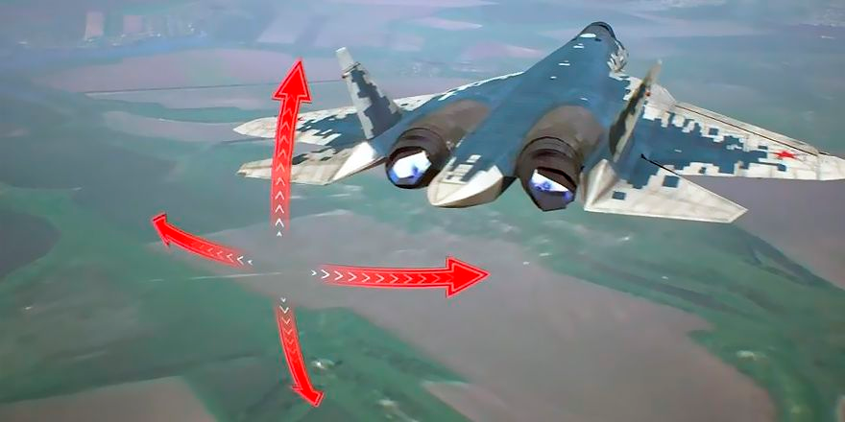
India’s ambitious Advanced Medium Combat Aircraft (AMCA) programme has received a significant boost as Russia has offered to share its advanced AL-51F1 aircraft engine technology. Instead of supplying a ready-made engine, Russia has proposed transferring valuable engineering expertise and design knowledge gained during the development of the AL-51F1 (Product 30) engine used in the Su-57 fifth-generation stealth fighter aircraft. This collaboration could help India overcome one of the most challenging aspects of developing an indigenous fifth-generation fighter aircraft—a powerful and reliable jet engine.
The AL-51F1 engine represents Russia’s latest generation of fighter aircraft propulsion systems. It features advanced technologies such as a digital engine control system and a plasma ignition system, which improve engine reliability, fuel efficiency, and overall operational performance. These innovations make it significantly more advanced than previous Russian fighter engines.
The engine is capable of producing approximately 11,000 kilogram-force (kgf) of thrust without afterburner and up to 18,000 kgf when the afterburner is engaged. Such high thrust enables the Su-57 to achieve superior speed, agility, and manoeuvrability during air combat missions. Access to this technological expertise could significantly strengthen India’s capability to develop a world-class indigenous fighter engine for the AMCA programme.
About AMCA
The Advanced Medium Combat Aircraft (AMCA) is India’s indigenous fifth-generation stealth multirole fighter aircraft being developed by the Aeronautical Development Agency (ADA) in collaboration with Hindustan Aeronautics Limited (HAL). The aircraft is expected to feature stealth technology, supercruise capability, advanced avionics, sensor fusion, and internal weapon bays, making it one of India’s most advanced defence projects.
Importance
- Strengthens India’s indigenous aerospace capabilities.
- Supports the Atmanirbhar Bharat initiative in defence manufacturing.
- Reduces long-term dependence on imported fighter aircraft engines.
- Enhances India’s future air combat capability with a fifth-generation stealth fighter.
Acceptance Tests of Indigenous MJP Waterjet Propulsion Strengthen India’s Maritime Self-Reliance
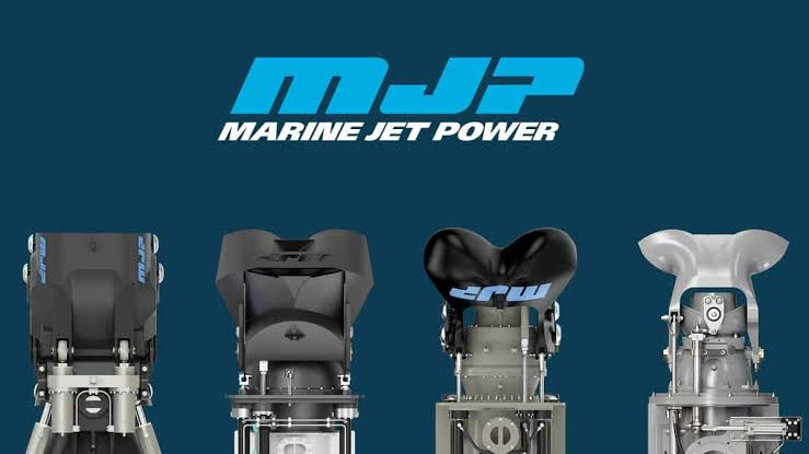
India has achieved another milestone in its journey towards defence self-reliance with the successful Factory Acceptance Tests (FAT) of the indigenously developed Marine Jet Power (MJP) Waterjet Propulsion System. The achievement marks a significant advancement in India’s shipbuilding capabilities and supports the government’s vision of Atmanirbhar Bharat in the defence sector.
The indigenous waterjet propulsion systems will be installed in 14 Fast Patrol Vessels (FPVs) currently under construction at Mazagon Dock Shipbuilders Limited (MDL). These high-speed vessels are being developed to strengthen India’s coastal surveillance, maritime security, and law enforcement capabilities.
The waterjets have been developed under a Transfer of Technology (ToT) framework, allowing India to acquire critical manufacturing expertise and reduce dependence on imported propulsion systems. This technology transfer is expected to boost domestic manufacturing and create long-term indigenous capability in marine propulsion.
A key contributor to this achievement is the newly established Waterjet Production and Testing Facility in Goa, inaugurated by the Director General of the Indian Coast Guard. This state-of-the-art facility enables India to manufacture and test advanced waterjet propulsion systems domestically. With this facility, India has become only the third country in the world, after the United States and South Korea, to possess such comprehensive indigenous testing and manufacturing capabilities.
Key Highlights
- Indigenous Marine Jet Power (MJP) Waterjet successfully completed Factory Acceptance Tests.
- Propulsion systems will equip 14 Fast Patrol Vessels being built at Mazagon Dock Shipbuilders Limited.
- Developed through Transfer of Technology (ToT).
- Goa facility makes India the third nation with indigenous waterjet manufacturing and testing capability.
- Strengthens India’s maritime security and defence manufacturing ecosystem.
Importance
- Promotes Atmanirbhar Bharat in naval defence.
- Reduces dependence on foreign propulsion technology.
- Enhances operational capability of the Indian Coast Guard.
- Strengthens indigenous shipbuilding and defence exports.
DRDO Successfully Validates Indigenous Quantum Key Distribution (QKD) System in Military Field Trials
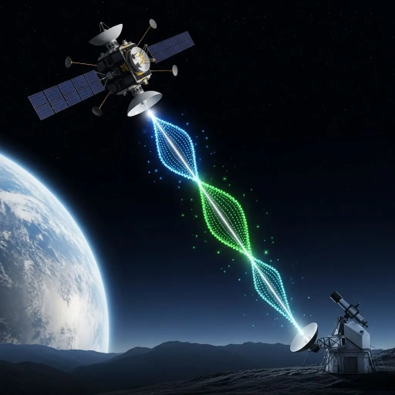
India has taken a major step towards secure military communications after the Defence Research and Development Organisation (DRDO) successfully completed military field trials of an indigenous Quantum Key Distribution (QKD) system. Developed in collaboration with Bengaluru-based Taqbit Labs, the technology is designed to provide highly secure communication for defence and strategic infrastructure.
Unlike conventional encryption methods that rely on mathematical algorithms, Quantum Key Distribution uses the principles of quantum mechanics to generate and distribute encryption keys. One of its most important features is the No-Cloning Theorem, which states that an unknown quantum state cannot be copied without altering it. As a result, any attempt to intercept the communication is immediately detected, making QKD one of the most secure communication technologies available.
The successful field trials demonstrate that the system is no longer confined to laboratory research but is capable of operating in real military environments. This achievement places India among a select group of countries developing quantum-secure communication networks for national security.
Beyond defence applications, Quantum Key Distribution has significant civilian uses. Financial institutions, power grids, telecommunications networks, and other critical infrastructure can adopt quantum-safe communication systems to protect sensitive data from future cyber threats. The technology is particularly important in addressing the growing concern of the “Harvest Now, Decrypt Later” strategy, where cyber attackers collect encrypted information today with the intention of decrypting it using future quantum computers.
Key Highlights
- DRDO and Taqbit Labs successfully conducted military field trials of indigenous QKD.
- Provides quantum-secure communication for defence networks.
- Uses No-Cloning Theorem for unbreakable encryption.
- Protects against future quantum computing cyber threats.
- Applications extend to banking, telecommunications, energy, and critical infrastructure.
Importance
- Strengthens India’s cyber security capabilities.
- Enhances secure military communications.
- Supports future quantum communication networks.
- Positions India among global leaders in quantum technologies.
India–UK Comprehensive Economic and Trade Agreement (CETA) Comes into Force
The India–United Kingdom Comprehensive Economic and Trade Agreement (CETA) officially came into effect on 15 July 2026, marking a major milestone in bilateral economic relations. The agreement aims to deepen trade, investment, and strategic cooperation between the two countries while creating new business opportunities and employment.
India and the United Kingdom have set an ambitious target of increasing bilateral trade to USD 100 billion by 2030, compared to the present trade volume of around USD 55–60 billion. The agreement provides zero-duty access for several categories of Indian exports, making Indian products more competitive in the UK market.
According to the Ministry of Commerce, the agreement is expected to promote investment, improve market access for businesses, strengthen global supply chains, and create employment opportunities in both countries.
Current bilateral trade already reflects strong economic ties. During FY 2025–26, trade in goods reached USD 25.12 billion, while trade in services stood at approximately USD 35.44 billion in 2024.
An important component of the agreement is the India–UK Double Contribution Convention (DCC). Under this arrangement, Indian professionals temporarily working in the UK will not be required to contribute to the UK’s social security system for up to five years, provided they continue contributing to India’s system.
The DCC is expected to save Indian companies over USD 600 million annually and benefit more than 75,000 Indian professionals along with 900 Indian employers operating in the UK.
Key Highlights
- CETA came into force on 15 July 2026.
- Target of USD 100 billion bilateral trade by 2030.
- Zero-duty access for several Indian exports.
- Double Contribution Convention prevents double social security payments.
- Expected annual savings of over USD 600 million.
Importance
- Boosts bilateral trade and investment.
- Improves ease of doing business.
- Benefits Indian professionals and companies.
- Strengthens India–UK strategic partnership.

India to Host the 5th BIMSTEC National Security Advisers’ Meeting
India will host the 5th BIMSTEC National Security Advisers’ Meeting in New Delhi on 16 July 2026, reaffirming its commitment to strengthening regional security cooperation among Bay of Bengal countries.
BIMSTEC (Bay of Bengal Initiative for Multi-Sectoral Technical and Economic Cooperation) is a regional organisation established in 1997. It comprises Bangladesh, Bhutan, India, Myanmar, Nepal, Sri Lanka, and Thailand, connecting South Asia and Southeast Asia through cooperation in trade, connectivity, security, energy, and technology.
The National Security Advisers’ Meeting serves as an important platform for member countries to discuss regional security challenges such as terrorism, cyber security, human trafficking, transnational crime, and satellite cooperation.
As the current BIMSTEC Chair, Bangladesh has confirmed its participation in the meeting. The Bangladeshi delegation will be led by Prime Minister’s Defence Adviser Brigadier General (Retd.) Dr. A.K.M. Shamsul Islam.
India has consistently played a leading role in strengthening BIMSTEC’s cyber security framework. It hosted the First BIMSTEC Expert Group Meeting on Cyber Security in 2022 and the Second Expert Group Meeting on Cyber Security Cooperation on 21 January 2025, both in New Delhi. These initiatives focus on information sharing, capacity building, and protecting critical digital infrastructure among member states.
Key Highlights
- India hosts 5th BIMSTEC National Security Advisers’ Meeting on 16 July 2026.
- BIMSTEC consists of 7 member countries.
- Established in 1997.
- Focus areas include cyber security, terrorism, trafficking, and regional cooperation.
- Bangladesh is the current Chair of BIMSTEC.
Importance
- Strengthens regional security cooperation.
- Enhances cyber security collaboration.
- Promotes peace, stability, and economic integration in the Bay of Bengal region.
- Reinforces India’s leadership in regional diplomacy.
Review Questions
- Russia has offered India expertise related to which aircraft engine for the AMCA
programme?
A. AL-31FP
B. AL-41F1
C. AL-51F1 (Product 30)
D. RD-33MK
Answer: C - The AL-51F1 engine is primarily developed for which fifth-generation fighter
aircraft?
A. MiG-35
B. Su-30SM
C. Su-35
D. Su-57
Answer: D - The indigenously developed Marine Jet Power (MJP) waterjet propulsion system
will be installed in how many Fast Patrol Vessels (FPVs)?
A. 10
B. 12
C. 14
D. 18
Answer: C - With the establishment of the Waterjet Production and Testing Facility in Goa,
India became the __ country to possess indigenous testing and manufacturing
capability of this scale.
A. First
B. Second
C. Third
D. Fourth
Answer: C - DRDO successfully conducted military field trials of which indigenous secure
communication technology?
A. Quantum Radar
B. Quantum Sensor
C. Quantum Computer
D. Quantum Key Distribution (QKD)
Answer: D - The indigenous Quantum Key Distribution (QKD) system was developed by DRDO
in collaboration with which company?
A. Tata Advanced Systems
B. Bharat Electronics Limited
C. Taqbit Labs
D. Infosys
Answer: C - Which principle of quantum mechanics ensures that quantum states cannot be
copied without detection?
A. Pauli Exclusion Principle
B. Heisenberg Uncertainty Principle
C. Wave-Particle Duality
D. No-Cloning Theorem
Answer: D - The India–UK Comprehensive Economic and Trade Agreement (CETA) came into
force on:
A. 26 January 2026
B. 1 April 2026
C. 15 July 2026
D. 15 August 2026
Answer: C - India and the United Kingdom have set a target to increase bilateral trade to
approximately __ by 2030.
A. USD 75 Billion
B. USD 85 Billion
C. USD 90 Billion
D. USD 100 Billion
Answer: D - Under the India–UK Double Contribution Convention (DCC), Indian professionals
working temporarily in the UK are exempted from paying UK social security
contributions for up to:
A. 2 Years
B. 3 Years
C. 4 Years
D. 5 Years
Answer: D - India hosted the 5th BIMSTEC National Security Advisers’ Meeting in which city?
A. Mumbai
B. Kolkata
C. Chennai
D. New Delhi
Answer: D - Which of the following countries is NOT a member of BIMSTEC?
A. Bhutan
B. Nepal
C. Thailand
D. Pakistan
Answer: D - What is the primary principle on which Quantum Key Distribution (QKD) is
based?
A. Artificial Intelligence
B. Classical Mechanics
C. Quantum Mechanics
D. Cloud Computing
Answer: C. Quantum Mechanics - Which theorem ensures that a quantum state cannot be copied without
detection?
A. Pauli Exclusion Principle
B. Schrödinger Equation
C. Heisenberg Uncertainty Principle
D. No-Cloning Theorem
Answer: D. No-Cloning Theorem - Quantum Key Distribution (QKD) is mainly used for:
A. Power generation
B. Weather forecasting
C. Secure communication and encryption
D. Manufacturing semiconductors
Answer: C. Secure communication and encryption - In quantum computing, the basic unit of information is known as:
A. Bit
B. Byte
C. Nibble
D. Qubit
Answer: D. Qubit - Which quantum property allows a qubit to exist in multiple states
simultaneously?
A. Diffraction
B. Reflection
C. Superposition
D. Refraction
Answer: C. Superposition - Quantum entanglement refers to:
A. The transfer of electricity between atoms
B. The interaction of sound waves
C. A phenomenon where two particles remain interconnected even when separated
by large distances
D. The splitting of atoms during nuclear fission
Answer: C. A phenomenon where two particles remain interconnected even when
separated by large distances - Which of the following sectors is expected to benefit from Quantum Key
Distribution (QKD) besides defence?
A. Agriculture only
B. Tourism only
C. Entertainment only
D. Banking, Telecommunications, and Energy
Answer: D. Banking, Telecommunications, and Energy - Which Indian organization successfully conducted military field trials of an
indigenous Quantum Key Distribution (QKD) system in collaboration with Taqbit
Labs?
A. ISRO
B. BARC
C. HAL
D. DRDO
Answer: D. DRDO
ALSO READ:
- Latest Daily Current Affairs and Defence Updates
- Latest Daily Current Affairs June 2026[DOWNLOAD PDF]
- Latest Daily Current Affairs May 2026[DOWNLOAD PDF]
- Latest Daily Current Affairs April 2026[DOWNLOAD PDF]
- Latest Daily Current Affairs March 2026[DOWNLOAD PDF]
- Latest Daily Current Affairs February 2026[DOWNLOAD PDF]
- Latest Daily Current Affairs January 2026[DOWNLOAD PDF]
- Latest Daily Current Affairs November 2025[DOWNLOAD PDF]
- Latest Daily Current Affairs October 2025[DOWNLOAD PDF]
- Latest Daily Current Affairs August 2025[DOWNLOAD PDF]
- Latest Daily Current Affairs July 2025[DOWNLOAD PDF]
- Monthly Defence Current Affairs June 2025 [DOWNLOAD PDF]
- Monthly Defence Current Affairs May 2025 [DOWNLOAD PDF]


