




In Defence Current Affairs for 21 July 2026, we will see the latest national and international current affairs news. These important current affairs will be beneficial for your upcoming NDA, CDS, CDS OTA, AFCAT, TA, Agniveer Army, Agniveer Navy, Agniveer Air Force, Women Military Police, INET, MNS, ACC exams, SCO, PCSL, CAPF, and SSB interviews, and direct entries for Army, Navy, and Air Force like SSC Tech, TGC, JAG, NCC, TES, 10+2 Cadet. Download a PDF file about current events at the end of this article. Let us now see the Current Affairs.
Defence Current Affairs 21 July 2026
SCO Member States Exchange Border Security Assessments to Strengthen Regional Cooperation
- In a significant step towards enhancing regional security cooperation, officials from the Shanghai Cooperation Organisation (SCO) member states, including India, participated in the 12th Meeting of the Heads of Border Services of the Competent Authorities held in Islamabad, Pakistan, on 18 July 2026. The meeting focused on exchanging assessments of the security situation along international borders, reviewing ongoing border cooperation mechanisms, and approving future joint operations to address emerging security challenges. The discussions highlighted the growing importance of multilateral coordination in maintaining peace, preventing cross-border threats, and strengthening mutual trust among SCO member countries.
- Background
- The Shanghai Cooperation Organisation (SCO) is a major Eurasian political, economic, and security grouping established in 2001. It was founded by China, Russia, Kazakhstan, Kyrgyzstan, Tajikistan, and Uzbekistan. Over the years, the organisation has expanded significantly with the inclusion of India and Pakistan in 2017, followed by Iran and Belarus as full members.
- One of the primary objectives of the SCO is to promote regional peace, combat terrorism, separatism, extremism, drug trafficking, and transnational organised crime. Border security cooperation has therefore become one of the organisation’s most important areas of engagement.
- Highlights of the Meeting
- The meeting brought together senior representatives of the border security agencies from Belarus, China, India, Iran, Kazakhstan, Kyrgyz Republic, Pakistan, Russia, Tajikistan, and Uzbekistan, along with officials from the SCO Regional Anti-Terrorist Structure (RATS).
- During the discussions, member countries exchanged information regarding the prevailing security conditions along their international borders. They also shared assessments of emerging trends, future challenges, and possible threats affecting border management across the SCO region.
- The participating countries reaffirmed that regular dialogue and timely information sharing are essential for improving border management and responding effectively to evolving security situations.
- Approval of Joint Border Operations
- A major outcome of the meeting was the approval of the results of Joint Border Operation “Solidarity-2025.” The operation involved coordinated activities among the border services of SCO member states to improve surveillance, information exchange, and operational coordination against common security threats.
- Building upon its success, the participants also approved the plan for conducting Joint Border Operation “Solidarity-2026.” This initiative aims to further strengthen cooperation among member states in tackling illegal cross-border activities and enhancing regional stability.
- Future Cooperation Roadmap
- The meeting adopted the Work Plan of the Group of Experts of the Border Services for 2027, providing a structured framework for continued cooperation in border management.
- In another important decision, member states supported Tajikistan’s proposal to host Joint Border Operation “Solidarity-2027.” The participants also discussed the venue and schedule for the next meeting of the Heads of Border Services, ensuring continuity in institutional cooperation.
- Importance for India
- India’s participation demonstrates its commitment to engaging in multilateral platforms for addressing regional security issues. Despite bilateral differences with some neighbouring countries, India continues to participate in SCO mechanisms that focus on practical cooperation against common security threats.
- For India, effective border management is crucial because of its extensive land borders with several countries and the challenges posed by terrorism, infiltration, smuggling, illegal migration, narcotics trafficking, and other transnational crimes. Participation in SCO border dialogues provides an opportunity to exchange best practices, improve coordination, and enhance confidence-building measures with regional partners.
- Role of the SCO Regional Anti-Terrorist Structure (RATS)
- The Regional Anti-Terrorist Structure (RATS) serves as the principal security mechanism of the SCO. Headquartered in Tashkent, Uzbekistan, it facilitates intelligence sharing, counter-terrorism cooperation, joint exercises, and coordination against terrorism, separatism, and extremism among member states.
- Its participation in the border services meeting underlines the close relationship between border security and counter-terrorism efforts across the SCO region.
- Why Border Cooperation Matters
- Modern border security extends beyond preventing illegal crossings. It also involves addressing challenges such as:
- Cross-border terrorism
- Arms and narcotics trafficking
- Human trafficking
- Illegal migration
- Cyber-enabled organised crime
- Smuggling networks
- Emerging transnational security threats
- Regular exchanges of information enable countries to anticipate risks, improve surveillance systems, and develop coordinated responses before threats escalate.
- Significance of the Meeting
- The Islamabad meeting reinforced the SCO’s role as an important platform for regional security cooperation. By approving future joint operations and strengthening institutional mechanisms, member states demonstrated their willingness to address common security concerns through dialogue and cooperation.
- Although political differences continue to exist among some members, particularly between India and Pakistan, the meeting reflected the practical importance of maintaining communication on issues directly related to regional peace and border stability. Strengthening mutual trust and operational coordination contributes to a more secure environment across the SCO region.
Yantur: India’s First Private Indigenous Fighter Jet Engine Programme
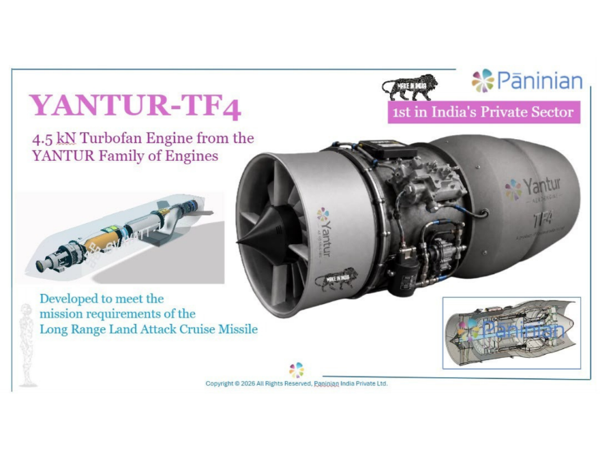
- In a major boost to the Atmanirbhar Bharat initiative, Indian startup Paninian India has announced a breakthrough in indigenous aero-engine technology through the development of Yantur, a fully indigenous turbofan engine programme. The announcement comes at a time when India is intensifying efforts to reduce dependence on foreign propulsion systems for military aircraft, drones, and future combat platforms. The programme is being seen as a significant milestone because fighter jet engines have traditionally been among the most difficult technologies to master, and India has largely depended on imported engines for its combat aircraft fleet.
- The development follows the recent success of private space company Skyroot Aerospace, indicating that India’s private sector is increasingly entering advanced strategic technology domains that were once dominated by government organisations and foreign suppliers.
- Background: Why Aero-Engines Matter
- A fighter aircraft engine is often considered the heart of the aircraft. It determines speed, thrust, maneuverability, fuel efficiency, and overall combat performance. Only a handful of countries, including the United States, Russia, the United Kingdom, France, and China, possess the capability to design and manufacture modern fighter jet engines indigenously.
- For decades, India has relied on imported engines such as:
- GE F404/F414 for the LCA Tejas
- AL-31FP for the Su-30MKI
- RD-33 for the MiG-29
- M88 for the Rafale
- Although India’s Kaveri engine programme achieved important technological progress, it could not meet the thrust requirements for frontline fighter aircraft. This continued dependence on foreign engines has remained a major strategic vulnerability.
- What is the Yantur Programme?
- The Yantur programme is a privately funded initiative aimed at developing an indigenous 4.5 kN-class turbofan engine. The engine is being designed primarily for:
- Autonomous combat aerial vehicles
- Loyal wingman drones
- High-speed unmanned aircraft
- Future light combat applications
- According to the company, Yantur is not merely a prototype but part of a broader propulsion ecosystem intended to support India’s next generation of indigenous aerospace platforms.
- Key Technical Features
- Indigenous Design
- The engine has been conceptualised and designed in India without relying on foreign blueprints. This is crucial because propulsion technology involves highly sensitive intellectual property and export restrictions.
- Advanced Materials
- The programme is expected to use high-temperature alloys, precision manufacturing, and advanced turbine technologies, which are essential for efficient operation under extreme thermal conditions.
- Modular Architecture
- A modular design allows easier upgrades and adaptation for different unmanned platforms, making the engine suitable for a wide range of defence applications.
- Digital Engine Control
- The engine is expected to incorporate digital control systems for better fuel management, reliability, and performance monitoring.
- Why This is a Big Deal
- 1. Entry of Private Sector into Strategic Propulsion
- Until now, India’s aero-engine efforts were led mainly by DRDO’s Gas Turbine Research Establishment (GTRE) and public sector entities. Yantur represents one of the first serious attempts by a private Indian company to enter the complex field of military jet propulsion.
- 2. Reduced Dependence on Imports
- Developing indigenous engines can help India avoid supply chain disruptions, export restrictions, and geopolitical pressures that often accompany foreign military procurement.
- 3. Support for Future Drone Warfare
- Modern warfare is increasingly moving towards unmanned systems. Indigenous engines will enable India to develop large numbers of autonomous combat drones without depending on imported propulsion systems.
- 4. Technology Spillover
- Aero-engine development generates expertise in metallurgy, precision machining, computational fluid dynamics, sensors, and control systems. These capabilities can benefit both the defence and civilian aerospace sectors.
- Connection with Atmanirbhar Bharat
- The government’s Atmanirbhar Bharat policy aims to make India self-reliant in critical technologies. Defence has been identified as a priority sector, with increasing emphasis on:
- Indigenous design and development
- Private sector participation
- Defence exports
- Reduction of import dependence
- Creation of a domestic aerospace manufacturing ecosystem
- Yantur aligns closely with these objectives and demonstrates how startups can contribute to national strategic capabilities.
- Challenges Ahead
- Despite the promising announcement, the road ahead is extremely challenging.
- Testing and Certification
- Jet engines must undergo thousands of hours of ground and flight testing before they can be certified for operational use.
- Thermal Management
- Managing temperatures inside the turbine section is one of the most difficult aspects of engine design.
- Reliability
- Military engines must operate reliably in diverse environmental conditions, including high altitudes, deserts, and maritime environments.
- Scaling Up
- Moving from a 4.5 kN engine to a full-scale fighter engine producing 80–100 kN of thrust will require significantly greater technological maturity and investment.
- Implications for India’s Defence Ecosystem
- The success of Yantur could encourage more Indian startups to enter high-technology defence sectors such as:
- Hypersonic propulsion
- Advanced materials
- Autonomous systems
- Space launch technologies
- Electronic warfare systems
- It also complements other indigenous programmes such as Tejas Mk2, AMCA (Advanced Medium Combat Aircraft), Ghatak UCAV, and CATS Warrior.
India’s First Flying Taxi Set to Transform Urban Transportation
- India is on the verge of entering a new era of urban transportation with the development of its first indigenous electric flying taxi. Developed by the ePlane Company, an aerospace startup incubated at IIT Madras, the project marks a significant milestone in India’s advanced aviation sector. The company recently unveiled the country’s first full-scale prototype of its electric vertical take-off and landing (eVTOL) aircraft, moving the project from the research stage to real-world testing. Flight testing is expected to begin in 2027, while commercial operations are targeted for 2028, making India one of the few countries actively developing electric air mobility solutions.
- Background
- Rapid urbanisation has led to severe traffic congestion in major Indian cities, resulting in increased travel time, fuel consumption, and air pollution. To address these challenges, countries across the world are investing in Urban Air Mobility (UAM), a concept that uses electric aircraft to transport passengers over short distances within cities.
- Electric flying taxis, also known as eVTOL (Electric Vertical Take-off and Landing) aircraft, are designed to take off and land vertically like helicopters while offering the efficiency, lower operating costs, and reduced emissions associated with electric propulsion. Unlike conventional helicopters, eVTOL aircraft are quieter, require less maintenance, and are expected to become a sustainable mode of urban transport.
- The ePlane Company
- The ePlane Company is a deep-tech aerospace startup incubated at IIT Madras. Founded by Professor Satya Chakravarthy, the company focuses on developing electric aviation technologies suited to India’s transportation needs.
- After nearly seven years of research, computational modelling, and smaller flying demonstrators, the company has successfully unveiled its first full-scale prototype, named e200X (PT-01). This achievement marks India’s transition from conceptual research to the practical development of electric air taxis.
- Key Features of the Flying Taxi
- The e200X has been designed specifically for short-distance urban travel and emergency mobility applications.
- Electric Propulsion
- The aircraft is powered entirely by electric motors, eliminating direct carbon emissions during flight and reducing operating costs compared to conventional helicopters.
- Vertical Take-off and Landing (eVTOL)
- The aircraft can take off and land vertically without requiring a runway, allowing operations from compact locations such as rooftops, dedicated vertiports, hospitals, and commercial buildings.
- Compact Design
- The flying taxi has a compact footprint, making it suitable for densely populated urban environments where space is limited. Its design aims to maximise efficiency while maintaining passenger safety.
- Development Roadmap
- The project has reached a crucial stage with the completion of its first full-scale prototype.
- The next phase involves:
- Extensive ground testing
- Safety validation
- Autonomous systems evaluation
- Flight testing beginning in 2027
- Regulatory certification
- Commercial deployment targeted for 2028
- These stages are essential before passenger operations can begin, ensuring compliance with aviation safety standards.
- Potential Applications
- Although commonly described as a “flying taxi,” the aircraft has several potential uses beyond passenger transport.
- Urban Passenger Transport
- The primary objective is to provide rapid transportation between different parts of major cities, significantly reducing travel time.
- Airport Connectivity
- Flying taxis could connect city centres with airports, bypassing traffic congestion and offering faster access for travellers.
- Emergency Medical Services
- The aircraft could transport medical personnel, emergency supplies, or critically ill patients more quickly than conventional road vehicles.
- Disaster Relief
- During floods, earthquakes, or other emergencies, eVTOL aircraft could deliver essential supplies and assist rescue operations in areas inaccessible by road.
- Advantages of Flying Taxis
- The introduction of electric flying taxis offers several potential benefits:
- Reduced urban traffic congestion
- Lower greenhouse gas emissions
- Faster intra-city travel
- Lower operating costs compared to helicopters
- Quieter operations
- Improved emergency response capabilities
- Promotion of indigenous aerospace innovation
- These advantages make Urban Air Mobility an important component of future smart-city transportation systems.
- Challenges Ahead
- Despite its promising potential, several challenges must be addressed before flying taxis become commercially viable.
- Regulatory Framework
- Civil aviation authorities will need to establish certification standards, operational rules, and air traffic management systems specifically for eVTOL aircraft.
- Infrastructure Development
- Cities will require dedicated vertiports, charging facilities, maintenance centres, and digital traffic management systems.
- Battery Technology
- Current battery technology limits flight endurance and payload capacity. Continued improvements in energy density will be essential for wider adoption.
- Public Acceptance
- Safety, affordability, and reliability will play a crucial role in gaining public confidence in this new mode of transportation.
- Significance for India
- The development of India’s first electric flying taxi demonstrates the country’s growing capability in advanced aerospace technologies. It aligns with the objectives of Atmanirbhar Bharat, Make in India, and sustainable urban development.
- The project also showcases the increasing contribution of Indian startups and academic institutions in developing globally competitive technologies. If successful, India could emerge as an important player in the rapidly expanding global Urban Air Mobility market.

India Expands Netra Mk-1A Fleet to Strengthen Airborne Surveillance Capabilities
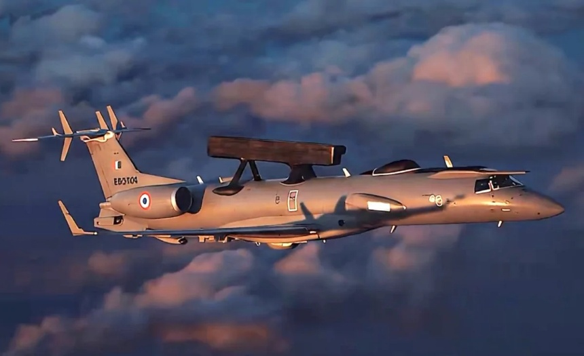
- India is taking another significant step towards strengthening its airborne surveillance and network-centric warfare capabilities by expanding its Netra Mk-1A Airborne Early Warning and Control (AEW&C) fleet. The programme has been launched as an interim solution to bridge the capability gap until the larger Netra Mk-2 airborne warning system becomes operational. By integrating advanced radar technology with additional Embraer ERJ-145 aircraft, the Indian Air Force (IAF) aims to significantly improve its ability to detect, track, and coordinate responses against aerial threats. This initiative also reinforces India’s commitment to Atmanirbhar Bharat by promoting indigenous defence technologies.
- Background
- Modern air warfare relies heavily on Airborne Early Warning and Control (AEW&C) systems. These aircraft function as airborne command centres equipped with powerful radars capable of detecting enemy aircraft, missiles, drones, and other aerial threats from long distances. They provide real-time surveillance, battle management, and communication support to fighter aircraft and ground-based air defence networks.
- India currently operates two major airborne surveillance platforms:
- Phalcon AWACS mounted on the Russian IL-76 aircraft with Israeli radar systems.
- Netra Mk-1 AEW&C, an indigenous system developed by the Defence Research and Development Organisation (DRDO) and mounted on the Brazilian Embraer ERJ-145 aircraft.
- Why Netra Mk-1A is Needed
- India has been developing the Netra Mk-2 programme, which will be installed on larger Airbus A321 aircraft. However, modifications to these aircraft have taken longer than expected, delaying the induction of the next-generation system.
- To prevent a temporary shortage in airborne surveillance capability, DRDO and the Indian Air Force decided to develop the Netra Mk-1A. This upgraded variant combines the proven Embraer platform with next-generation radar technology derived from the Netra Mk-2 programme, ensuring that India’s surveillance capability continues to expand while the larger system is under development.
- Key Features of Netra Mk-1A
- Advanced Indigenous Radar
- The upgraded aircraft will carry a more powerful Active Electronically Scanned Array (AESA) radar incorporating technologies developed for the Netra Mk-2 programme. This radar offers improved target detection, tracking accuracy, and electronic scanning performance.
- Enhanced Surveillance Capability
- Compared to the existing Netra Mk-1, the Mk-1A variant will provide greater situational awareness by detecting multiple airborne targets over larger distances and supporting faster threat assessment.
- Improved Electronic Warfare Systems
- The aircraft will include upgraded electronic support measures, communication systems, and mission management software, enabling better coordination between fighter aircraft, ground stations, and other military assets.
- Network-Centric Operations
- Netra Mk-1A will strengthen India’s network-centric warfare capability by sharing real-time battlefield information with various defence platforms, allowing quicker and more coordinated responses during military operations.
- Role of the Embraer ERJ-145 Platform
- The Netra Mk-1A will continue to use the Embraer ERJ-145 regional jet, which has already proven reliable as the platform for India’s first indigenous AEW&C system.
- Although the ERJ-145 cannot carry as much equipment or remain airborne as long as the larger Airbus A321 planned for Netra Mk-2, it offers several operational advantages:
- Proven operational reliability
- Lower operating costs
- Faster deployment
- Easier maintenance
- Quick integration of upgraded radar technology
- These characteristics make it an ideal interim platform until the larger AEW&C aircraft enter service.
- Operational Importance
- The expanded Netra Mk-1A fleet will play a crucial role in protecting India’s airspace.
- Its primary functions include:
- Early detection of enemy aircraft
- Monitoring cruise missiles and drones
- Tracking hostile aerial movements
- Airspace surveillance along sensitive borders
- Coordinating fighter interceptions
- Supporting integrated air defence operations
- Providing command-and-control during combat missions
- The aircraft significantly improves India’s ability to respond rapidly to evolving aerial threats.
- Contribution to Atmanirbhar Bharat
- The Netra programme is among India’s most successful indigenous defence aviation projects. It has been developed through collaboration between:
- DRDO
- Centre for Airborne Systems (CABS)
- Indian Air Force
- Indian defence industries
- The expansion of the Netra Mk-1A fleet reflects India’s growing capability to design and integrate advanced airborne surveillance technologies domestically, reducing dependence on imported systems.
- Bridge to Netra Mk-2
- The Netra Mk-1A is not intended to replace the future Netra Mk-2 but to serve as an operational bridge.
- The upcoming Netra Mk-2 will feature:
- Airbus A321 platform
- Greater endurance
- Higher payload capacity
- Larger radar coverage
- Enhanced command-and-control capability
- Long-range surveillance
- Until these aircraft are inducted, Netra Mk-1A will ensure that India’s airborne warning capability continues to grow without interruption.
- Strategic Significance
- The expansion of the Netra fleet comes at a time when air warfare is becoming increasingly dependent on information superiority and real-time surveillance. Airborne early warning systems act as force multipliers by enabling faster decision-making, improving air defence coordination, and enhancing operational effectiveness.
- With growing security challenges in the region, strengthening indigenous AEW&C capability enhances India’s preparedness while supporting long-term defence self-reliance.
Review Questions
- The 12th Meeting of the Heads of Border Services of the SCO member states was
held in:
A) Beijing, China
B) Moscow, Russia
C) Islamabad, Pakistan
D) New Delhi, India
Answer: C) Islamabad, Pakistan - India became a full member of the Shanghai Cooperation Organisation (SCO) in:
A) 2001
B) 2012
C) 2017
D) 2020
Answer: C) 2017 - The security wing of the Shanghai Cooperation Organisation (SCO) is known as:
A) ASEAN Defence Forum
B) Regional Anti-Terrorist Structure (RATS)
C) Collective Security Council
D) Eurasian Security Command
Answer: B) Regional Anti-Terrorist Structure (RATS) - The indigenous private fighter jet engine programme announced by Paninian India
is named:
A) Garuda
B) Shakti
C) Yantur
D) Vajra
Answer: C) Yantur - The Yantur engine is primarily being developed to power:
A) Main Battle Tanks
B) Autonomous combat drones and unmanned aircraft
C) Naval submarines
D) Helicopters only
Answer: B) Autonomous combat drones and unmanned aircraft - The Netra Mk-1A Airborne Early Warning and Control (AEW&C) system is
developed by:
A) HAL
B) BEL
C) DRDO
D) ISRO
Answer: C) DRDO - Netra Mk-1A is mounted on which aircraft platform?
A) Airbus A321
B) Boeing 737
C) Embraer ERJ-145
D) C-295 Transport Aircraft
Answer: C) Embraer ERJ-145 - India’s first indigenous electric flying taxi is being developed by:
A) Tata Advanced Systems
B) Hindustan Aeronautics Limited
C) The ePlane Company
D) Mahindra Aerospace
Answer: C) The ePlane Company - The ePlane Company, which developed India’s first flying taxi prototype, is
incubated at:
A) IIT Bombay
B) IIT Kanpur
C) IIT Madras
D) IISc Bengaluru
Answer: C) IIT Madras - Which of the following correctly matches the programme with its purpose?
Programme Purpose
A. Yantur Electric Flying Taxi
B. Netra Mk-1A Airborne Early Warning & Control
C. e200X Indigenous Turbofan Engine
A) A-3, B-2, C-1
B) A-2, B-3, C-1
C) A-1, B-2, C-3
D) A-3, B-1, C-2
Answer: A) A-3, B-2, C-1 - Priyadarshini-class Patrol Vessels Is Manufactured By
A. CSL
B. MDL
C. GRSE
D. None of the above
ANSWER: C - Indian Navy Founded On
A. 26 January 1945
B. 26 January 1950
C. 26 January 1960
D. 26 January 1970
ANSWER: B - With Which Nation India Holds 2+2 Dialogue?
A. Pakistan
B. Japan
C. USA
D. Both B& C
ANSWER: D - DRDO Lakshya Is A
A. Fighter Jet
B. Ship
C. Tank
D. UAV
ANSWER: D - Exercise Samudra Shakti Conducted B/w Indonesia &
A. India
B. Nepal
C. Bangladesh
D. Bhutan
ANSWER: A - Captain Rank of Indian Navy Equivalent to Which rank of IAF?
A. Flying Officer
B. Flight Lieutenant
C. Group Captain
D. None
ANSWER: C - Brussels Is The Capital Of
A. Belgium
B. Belize
C. Benin
D. Bhutan
ANSWER: A - “Jungle Nama” Book Is Written By
A. Jhumpa Lahiri
B. Amitav Ghosh
C. Hew Strachan
D. Nirupama Rao
ANSWER: B - Rapid Action Force Hq Is In
A. Mumbai
B. Lucknow
C. Surat
D. New Delhi
ANSWER: D - War Cry Of SIKH LIGHT INFANTRY Is
A. Garud ka hun bol pyare
B. Everywhere
C. Raja Ramachandra ki jai
D. Jo bole So Nihal, sat sri akal
ANSWER: D
ALSO READ:
- Latest Daily Current Affairs and Defence Updates
- Latest Daily Current Affairs June 2026[DOWNLOAD PDF]
- Latest Daily Current Affairs May 2026[DOWNLOAD PDF]
- Latest Daily Current Affairs April 2026[DOWNLOAD PDF]
- Latest Daily Current Affairs March 2026[DOWNLOAD PDF]
- Latest Daily Current Affairs February 2026[DOWNLOAD PDF]
- Latest Daily Current Affairs January 2026[DOWNLOAD PDF]
- Latest Daily Current Affairs November 2025[DOWNLOAD PDF]
- Latest Daily Current Affairs October 2025[DOWNLOAD PDF]
- Latest Daily Current Affairs August 2025[DOWNLOAD PDF]
- Latest Daily Current Affairs July 2025[DOWNLOAD PDF]
- Monthly Defence Current Affairs June 2025 [DOWNLOAD PDF]
- Monthly Defence Current Affairs May 2025 [DOWNLOAD PDF]


