




In Defence Current Affairs for 22July 2026, we will see the latest national and international current affairs news. These important current affairs will be beneficial for your upcoming NDA, CDS, CDS OTA, AFCAT, TA, Agniveer Army, Agniveer Navy, Agniveer Air Force, Women Military Police, INET, MNS, ACC exams, SCO, PCSL, CAPF, and SSB interviews, and direct entries for Army, Navy, and Air Force like SSC Tech, TGC, JAG, NCC, TES, 10+2 Cadet. Download a PDF file about current events at the end of this article. Let us now see the Current Affairs.
Defence Current Affairs 22 July 2026
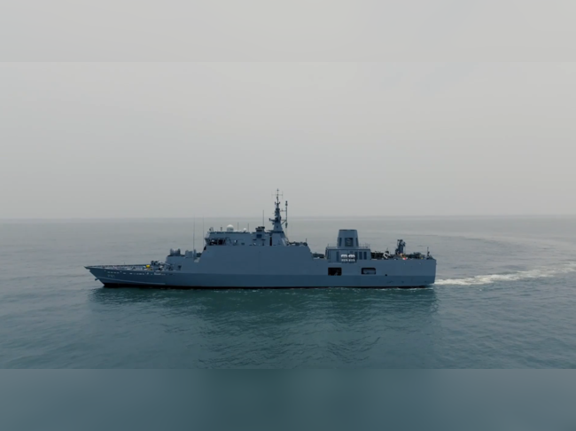
INS Malvan: Indian Navy Inducts Indigenous Submarine Hunter to Strengthen Coastal Defence
Introduction
The Indian Navy has further strengthened its maritime security capabilities with the induction of INS Malvan, the second Mahe-class Anti-Submarine Warfare Shallow Water Craft (ASW-SWC). Commissioned on 22 July 2026, the warship has been designed specifically to detect, track, and counter enemy submarines operating in India’s coastal waters. The induction of INS Malvan comes at a time when underwater activity in the Indian Ocean Region (IOR) is increasing, making anti-submarine warfare one of the Indian Navy’s highest operational priorities. The vessel also reflects India’s growing emphasis on Aatmanirbhar Bharat through indigenous warship design and construction.
Background
The Indian Ocean has become an increasingly strategic region due to expanding naval deployments by several countries. The growing presence of conventional and nuclear-powered submarines has created new security challenges for India, particularly around its coastline, ports, island territories, and vital sea lanes of communication.
To enhance coastal defence, the Indian Navy launched the Anti-Submarine Warfare Shallow Water Craft (ASW-SWC) Programme, under which 16 indigenous vessels are being built. These ships are intended to operate alongside larger destroyers, frigates, maritime patrol aircraft, and submarines, creating a multi-layered anti-submarine defence network. INS Malvan is the second vessel of this new generation of submarine hunters.
About INS Malvan
INS Malvan belongs to the Mahe-class Anti-Submarine Warfare Shallow Water Craft and has been constructed by Cochin Shipyard Limited (CSL), Kochi. The vessel incorporates over 80% indigenous content, demonstrating India’s increasing capability in designing, constructing, and integrating advanced naval platforms domestically.
The ship derives its name from Malvan, the historic coastal town in Maharashtra closely associated with the maritime legacy of Chhatrapati Shivaji Maharaj. It also continues the legacy of the earlier INS Malwan, which served the Indian Navy until 2003.
Key Features of INS Malvan
Dedicated Anti-Submarine Warfare Platform
INS Malvan has been specially designed to detect and neutralise hostile submarines operating in shallow coastal waters. Unlike larger warships built for multiple missions, its primary role is underwater surveillance and anti-submarine operations.
Advanced Sensors and Sonar
The vessel is equipped with modern sonar systems capable of locating submarines and underwater intruders. These sensors enable early detection, continuous tracking, and effective engagement of underwater threats.
Anti-Submarine Weapons
The warship carries specialised anti-submarine weapons, including lightweight torpedoes and rocket systems, enabling it to engage hostile submarines at close range during coastal defence missions.
Stealth and Propulsion
INS Malvan incorporates several stealth technologies to reduce its detectability during operations.
Its design features include:
- Reduced radar cross-section
- Low acoustic signature
- Reduced infrared signature
The vessel is powered by three 6 MW marine diesel engines coupled with water-jet propulsion, making it one of the largest Indian Navy warships to employ pump-jet technology. This propulsion system provides excellent manoeuvrability, especially in shallow waters, while reducing underwater noise that could reveal the ship’s position. It can achieve a maximum speed of about 25 knots, has an operational range of approximately 1,800 nautical miles at 14 knots, and an endurance of around 14 days.
Role in Coastal Security
INS Malvan has been designed primarily for operations in India’s littoral waters, where enemy submarines may attempt to operate close to ports, naval bases, and strategic coastal infrastructure.
Its operational roles include:
- Detection of hostile submarines
- Protection of naval bases and ports
- Coastal surveillance
- Escort of naval assets
- Underwater reconnaissance
- Maritime security operations
- Protection of critical Sea Lines of Communication (SLOCs)
The ship complements larger naval platforms by strengthening India’s anti-submarine warfare capability in areas where larger warships may have operational limitations.
Contribution to Aatmanirbhar Bharat
INS Malvan represents another important achievement under India’s Aatmanirbhar Bharat initiative. The project demonstrates the country’s ability to design and build sophisticated warships using indigenous technologies and industrial capabilities.
Several Indian defence companies, including Bharat Electronics Limited (BEL), Larsen & Toubro (L&T), and Mahindra Defence, have contributed to the programme by supplying critical systems and equipment. The high indigenous content reduces dependence on foreign suppliers while strengthening India’s domestic defence manufacturing ecosystem.
Strategic Importance
The induction of INS Malvan comes amid increasing submarine deployments by regional navies in the Indian Ocean Region. As underwater warfare becomes more significant, specialised anti-submarine vessels provide an effective and economical means of protecting coastal waters and strategic maritime assets.
The Mahe-class ASW-SWC programme will significantly improve the Indian Navy’s layered maritime defence architecture by working in coordination with:
- P-8I maritime patrol aircraft
- MH-60R anti-submarine helicopters
- Surface combatants
- Conventional submarines
- Integrated coastal surveillance systems
Together, these assets enhance India’s ability to monitor, deter, and respond to underwater threats across the Indian Ocean Region.
Operation Southern Readiness 26-2: Indian Navy Hosts Major Multinational Maritime Security Exercise
Introduction
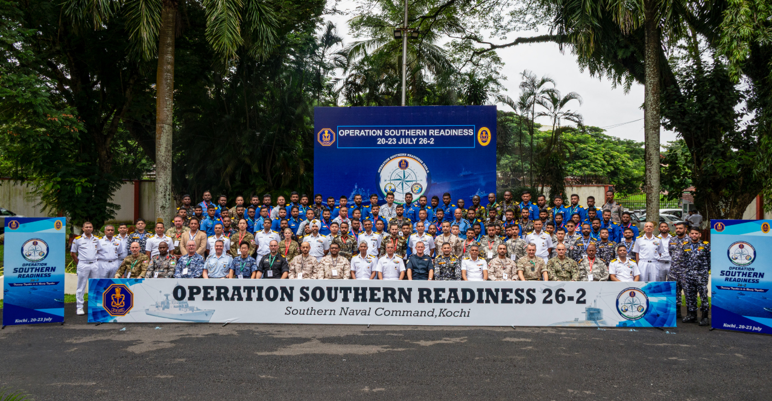
The Indian Navy has taken another significant step towards enhancing international maritime cooperation with the commencement of Operation Southern Readiness 26-2, a four-day multinational maritime security training engagement. Hosted by the Southern Naval Command at Kochi from 20 July 2026, the exercise brings together naval professionals, subject matter experts, and international organisations to strengthen maritime security capabilities through collaborative training and knowledge sharing.
The event highlights India’s expanding role in promoting regional maritime stability and demonstrates its growing leadership in multinational naval cooperation.
Background
Operation Southern Readiness 26-2 is being organised under the leadership of the Indian Navy-led Combined Task Force 154 (CTF 154) in partnership with the Combined Maritime Forces (CMF). Notably, this is the first time that Operation Southern Readiness is being conducted in India, making it an important milestone in the partnership between the Indian Navy and CMF.
The exercise has attracted 254 participants from 26 countries, supported by 74 facilitators, representatives from four international organisations, and several maritime security experts.
Role of Combined Task Force 154
Combined Task Force 154 serves as the dedicated Training Task Force of the Combined Maritime Forces. Currently commanded by the Indian Navy, the task force focuses on improving:
- Maritime capacity building
- Professional training
- Operational interoperability
- Readiness among partner nations
Through regular multinational engagements, CTF 154 aims to enhance cooperation in addressing common maritime security challenges.
Training Activities
The opening day of the exercise focused on Ship Management and Special Training. Participants attended professional sessions conducted by maritime experts while also receiving practical exposure to advanced naval training facilities.
A special session by the United Nations Office on Drugs and Crime (UNODC) discussed emerging maritime security threats in the Red Sea and the Western Indian Ocean, highlighting the importance of international cooperation in maintaining safe sea routes.
The practical training included:
- Ship handling techniques
- Navigation procedures
- Astro-navigation
- Maritime Distress Communication Systems
- Damage control operations
- Firefighting drills
These activities were conducted using the Indian Navy’s advanced simulation and training infrastructure.
Significance
Operation Southern Readiness 26-2 reflects India’s increasing contribution to global maritime security. By hosting multinational training programmes, the Indian Navy strengthens professional relationships with partner nations while improving collective preparedness to address piracy, maritime crime, disaster response, and other security challenges.
The exercise also showcases India’s world-class naval training infrastructure and reinforces its commitment to ensuring a secure and stable maritime environment.
Key Facts for Competitive Exams
| Particular | Details |
|---|---|
| Exercise | Operation Southern Readiness 26-2 |
| Started | 20 July 2026 |
| Venue | Southern Naval Command, Kochi |
| Organised by | Indian Navy-led CTF 154 with Combined Maritime Forces |
| Participants | 254 delegates from 26 countries |
| International Organisations | 4 |
| Major Focus | Maritime security training and interoperability |
Conclusion
Operation Southern Readiness 26-2 represents a major achievement in India’s maritime diplomacy. By bringing together participants from across the world for advanced naval training, the exercise strengthens regional cooperation, enhances professional skills, and contributes to safer international waters.
India Summons Russian Envoy Over MV Golden Leo Attack
Introduction
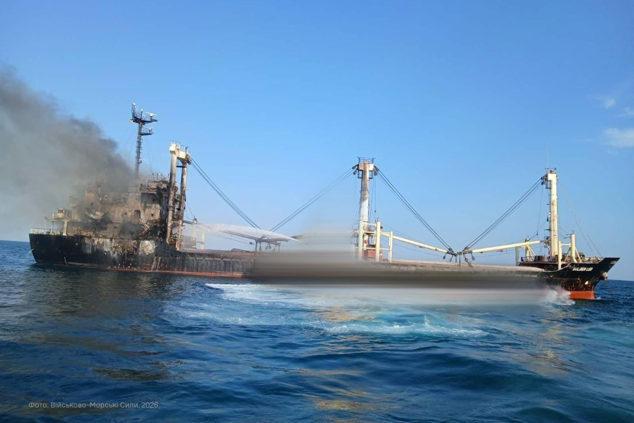
India strongly condemned the attack on the commercial vessel MV Golden Leo, which resulted in the deaths of four Indian crew members. In response to the incident, the Ministry of External Affairs (MEA) summoned Russian Charge d’Affaires Vladimir Ladanov to express India’s serious concern over the attack and emphasise the importance of protecting civilian shipping.
The incident highlights the risks faced by merchant vessels operating in conflict-affected regions and underlines the need to ensure the safety of international maritime trade.
Background
The attack occurred on 19 July 2026 while MV Golden Leo was departing from the port of Odesa. The vessel carried 17 crew members, including five Indian nationals.
The attack led to the death of four Indian crew members, while another Indian sailor sustained critical injuries and required hospitalisation.
India’s Diplomatic Response
Following the incident, the Ministry of External Affairs summoned the Russian diplomatic representative in New Delhi.
During the meeting, India:
- Expressed deep concern over the attack.
- Condemned the targeting of a commercial vessel.
- Requested that India’s concerns be conveyed to Moscow.
- Reiterated that attacks on civilian ships threaten international maritime security.
- Emphasised that the loss of innocent lives is unacceptable.
Support for Indian Nationals
The Government of India extended condolences to the families of the deceased sailors.
The Indian mission in Ukraine has been closely monitoring developments and providing all possible assistance to the affected Indian nationals and their families.
Importance of Maritime Security
Commercial shipping forms the backbone of global trade. Attacks on civilian vessels disrupt international commerce, threaten the safety of seafarers, and increase instability in maritime regions.
India has consistently supported the protection of freedom of navigation and secure sea lanes under international law.
Key Facts for Competitive Exams
| Particular | Details |
|---|---|
| Vessel | MV Golden Leo |
| Incident Date | 19 July 2026 |
| Port | Odesa |
| Indian Crew | Five |
| Indians Killed | Four |
| Diplomat Summoned | Vladimir Ladanov |
| Ministry | Ministry of External Affairs |
Conclusion
India’s diplomatic response to the MV Golden Leo incident demonstrates its commitment to protecting its citizens and supporting secure international maritime commerce. The incident also highlights the importance of safeguarding civilian shipping in conflict zones.
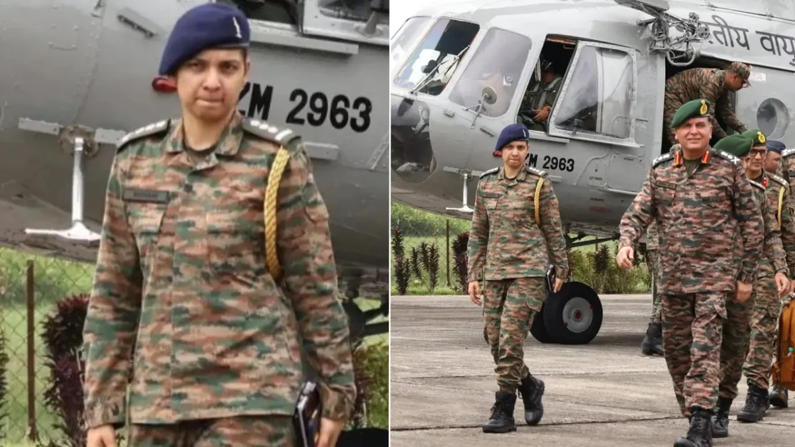
Captain Shivani Becomes First Woman Aide-de-Camp to the Chief of Army Staff
Introduction
The Indian Army has achieved another milestone in promoting greater inclusion by appointing Captain Shivani as the first-ever woman Aide-de-Camp (ADC) to the Chief of Army Staff, General Dhiraj Seth. The appointment reflects the Army’s continuing efforts to provide leadership opportunities based on merit, professionalism, and capability.
About the Appointment
An Aide-de-Camp is a senior military officer entrusted with assisting high-ranking commanders in official duties, ceremonial functions, and administrative responsibilities.
Captain Shivani’s appointment places her among a select group of officers assigned one of the most prestigious responsibilities in military service.
Significance
The appointment represents an important step in expanding the role of women officers within the Indian Army.
It demonstrates that opportunities for leadership continue to be guided by:
- Merit
- Professional excellence
- Capability
- Dedication to service
The achievement also inspires greater participation of women in various branches of the armed forces.
Indian Army’s Approach
The Indian Army has steadily expanded career opportunities for women officers while maintaining its focus on operational efficiency and professional standards.
Captain Shivani’s selection reflects the institution’s commitment to recognising talent irrespective of gender.
Key Facts
| Particular | Details |
|---|---|
| Officer | Captain Shivani |
| Appointment | Aide-de-Camp (ADC) |
| To | Chief of Army Staff |
| COAS | General Dhiraj Seth |
| Achievement | First woman ADC to the COAS |
Conclusion
Captain Shivani’s appointment marks an important chapter in the Indian Army’s journey towards greater inclusion while reinforcing the principles of merit and professional excellence.
Shaurya Squadron Signals Indian Army’s Transition Towards Technology-Driven Warfare
Introduction
The Indian Army is undergoing a comprehensive modernisation programme to prepare itself for future battlefield challenges. One of the latest developments in this transformation is the establishment of the Shaurya Squadron, which reflects the Army’s increasing emphasis on advanced technology, integration, and modern combat systems.
Need for Modernisation
The nature of warfare is rapidly evolving with increasing use of drones, artificial intelligence, electronic warfare, and network-centric operations.
To remain operationally effective, the Indian Army is reorganising its combat units and introducing specialised formations capable of responding to emerging threats.
Major Modernisation Initiatives
Several new formations have already been introduced as part of this transformation.
These include:
- Integrated Battle Groups for faster operational response.
- Ashni Platoons with surveillance and loitering strike capabilities.
- Shaktibaan Regiment for swarm drone operations and long-range precision strikes.
- Divyastra Battery integrating UAV-assisted targeting.
The Shaurya Squadron complements these initiatives by supporting armoured formations with advanced counter-drone capabilities.
Role of Shaurya Squadron
The squadron is expected to enhance the survivability and operational effectiveness of armoured units by integrating technology capable of countering drone-based threats during future conflicts.
Its role reflects the Army’s broader vision of combining traditional combat strength with modern technological capabilities.
Strategic Importance
The creation of Shaurya Squadron highlights India’s commitment to preparing for multi-domain warfare, where information, speed, precision, and technology play decisive roles.
The initiative also demonstrates the Army’s efforts to adapt to changing battlefield environments while maintaining combat readiness.
Key Facts for Competitive Exams
| Particular | Details |
|---|---|
| Formation | Shaurya Squadron |
| Organisation | Indian Army |
| Objective | Technology-enabled armoured warfare |
| Supports | Counter-drone integration |
| Modernisation Focus | Agile, integrated, technology-driven operations |
Review Questions
1. Operation Southern Readiness 26-2 is a military exercise conducted by which Indian Armed Force?
A) Indian Army
B) Indian Air Force
C) Indian Navy
D) Indian Coast Guard
Answer: B) Indian Air Force
2. The primary objective of Operation Southern Readiness 26-2 is to:
A) Conduct humanitarian assistance abroad
B) Enhance operational preparedness and combat readiness in Southern India
C) Test India’s nuclear deterrence capability
D) Conduct joint exercises with QUAD nations
Answer: B) Enhance operational preparedness and combat readiness in Southern India
3. INS Malvan, commissioned into the Indian Navy in July 2026, belongs to which class of warships?
A) Nilgiri-class Frigate
B) Kamorta-class Corvette
C) Mahe-class Anti-Submarine Warfare Shallow Water Craft (ASW-SWC)
D) Visakhapatnam-class Destroyer
Answer: C) Mahe-class Anti-Submarine Warfare Shallow Water Craft (ASW-SWC)
4. INS Malvan has been built by:
A) Mazagon Dock Shipbuilders Limited (MDL), Mumbai
B) Garden Reach Shipbuilders & Engineers (GRSE), Kolkata
C) Cochin Shipyard Limited (CSL), Kochi
D) Goa Shipyard Limited (GSL), Goa
Answer: C) Cochin Shipyard Limited (CSL), Kochi
5. India summoned the Russian envoy following an attack on which merchant vessel?
A) MV MSC Elsa
B) MV Golden Leo
C) MV Suez Canal
D) MV Arabian Star
Answer: B) MV Golden Leo
6. The attack on MV Golden Leo highlighted concerns regarding the security of:
A) Arctic shipping routes
B) Indian Ocean Region and maritime trade routes
C) Panama Canal
D) Mediterranean Sea
Answer: B) Indian Ocean Region and maritime trade routes
7. Captain Shivani created history by becoming the first-ever woman to serve as:
A) Commanding Officer of an Armoured Regiment
B) Aide-de-Camp (ADC) to the Chief of Army Staff
C) Director General of Military Nursing Services
D) Commander of the National Defence Academy
Answer: B) Aide-de-Camp (ADC) to the Chief of Army Staff
8. The appointment of Captain Shivani as Aide-de-Camp reflects the Indian Army’s commitment towards:
A) Privatization of defence production
B) Gender inclusion and women’s leadership in the Armed Forces
C) Expansion of overseas military bases
D) Compulsory military service for women
Answer: B) Gender inclusion and women’s leadership in the Armed Forces
9. Shaurya Squadron is associated with which arm of the Indian Army?
A) Army Aviation Corps
B) Corps of Engineers
C) Armoured Corps
D) Regiment of Artillery
Answer: C) Armoured Corps
10. The induction of Shaurya Squadron primarily signifies the Indian Army’s transition towards:
A) Mountain warfare only
B) Amphibious warfare
C) Technology-driven and network-centric armoured warfare
D) Space-based military operations
Answer: C) Technology-driven and network-centric armoured warfare
ALSO READ:
- Latest Daily Current Affairs and Defence Updates
- Latest Daily Current Affairs June 2026[DOWNLOAD PDF]
- Latest Daily Current Affairs May 2026[DOWNLOAD PDF]
- Latest Daily Current Affairs April 2026[DOWNLOAD PDF]
- Latest Daily Current Affairs March 2026[DOWNLOAD PDF]
- Latest Daily Current Affairs February 2026[DOWNLOAD PDF]
- Latest Daily Current Affairs January 2026[DOWNLOAD PDF]
- Latest Daily Current Affairs November 2025[DOWNLOAD PDF]
- Latest Daily Current Affairs October 2025[DOWNLOAD PDF]
- Latest Daily Current Affairs August 2025[DOWNLOAD PDF]
- Latest Daily Current Affairs July 2025[DOWNLOAD PDF]
- Monthly Defence Current Affairs June 2025 [DOWNLOAD PDF]
- Monthly Defence Current Affairs May 2025 [DOWNLOAD PDF]


