




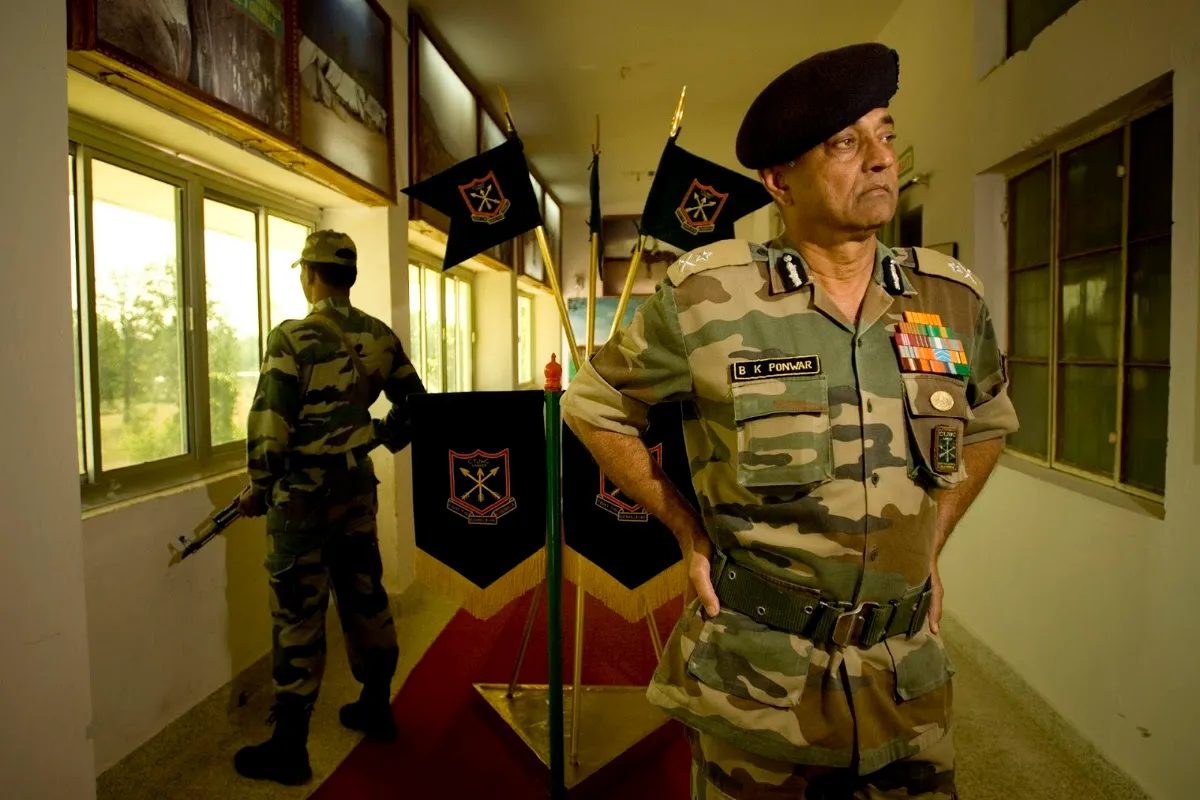
In an unfortunate turn of events, Brigadier Basant Kumar Ponwar (Retd), a revered veteran of the 1971 Indo-Pak War and a key figure in shaping India’s contemporary jungle warfare doctrine against Left Wing Extremism, passed away at the age of 77 at his parental home in Mhow, Indore district, Madhya Pradesh. His family confirmed the news on Wednesday, marking the end of an impactful life dedicated to military service.
Regarded as the architect of modern counter-guerrilla training, Ponwar was instrumental in transforming the Indian military’s approach to countering Maoist insurgencies, particularly in the forests of Bastar and neighboring regions. He is survived by his mother, Devika Ponwar, and two sons, both currently serving in the Indian Army.
Born on March 3, 1949, in Indore, Ponwar was commissioned into the 1st Battalion of the Maratha Light Infantry (1 MLI) in December 1969. His military service quickly accelerated; within two years, he found himself engaged in the significant 1971 Bangladesh Liberation War. Serving under the 95 Mountain Brigade, Ponwar participated in pivotal cross-border operations, leading ambushes alongside Mukti Bahini fighters and conducting raids against Pakistani positions. His crucial involvement as a link officer during the historic Tangail paradrop and in the swift advance toward Dhaka highlighted his tactical acumen.
Over a remarkable 36-year tenure in the Indian Army, Ponwar held command positions, notably serving as the Commandant of the Counter Insurgency and Jungle Warfare School (CIJWS) in Mizoram. Under his leadership, the school hosted the inaugural Indo-US joint exercise, Yudh Abhyas, in 2004, reflecting his commitment to advancing military collaboration. His contributions were recognized with prestigious awards, including the Ati Vishisht Seva Medal (AVSM) and the Vishisht Seva Medal (VSM), highlighting his exemplary service across numerous counter-insurgency operations in states such as Nagaland, Punjab, Tripura, and Chhattisgarh.
Following his retirement, Ponwar was appointed Inspector General of Police by the Chhattisgarh government, leveraging his extensive military expertise to address the mounting Maoist threat. In August 2005, he founded the Counter Terrorism and Jungle Warfare College (CTJWC) in Kanker, a noteworthy institution aimed at training police and paramilitary forces in jungle warfare tactics. Starting with a small group of nine experienced officers, the college rapidly expanded its scope, providing rigorous training that prepared over 37,000 personnel from various state police units and central paramilitary organizations, including the CRPF, BSF, ITBP, and SSB.
Ponwar’s training philosophy, encapsulated in his motto “Fight the guerrilla like a guerrilla,” guided the college for 18 years. His approach shifted the dynamics of security operations, enabling forces to operate effectively in previously inaccessible Naxal-dominated terrains. This transformation helped transition the campaign against Left Wing Extremism from mere containment to actively dismantling its influence, resulting in a notable reduction in affected districts over subsequent years.
Former Chhattisgarh Chief Minister Raman Singh honored Ponwar’s legacy, stressing his “historic contribution” in enhancing the proficiency of soldiers in jungle warfare, which “will forever remain unforgettable.” The Chhattisgarh Police also paid tribute to his immense courage and leadership, asserting that his efforts against Naxalism have left an indelible mark on the state’s security framework. Condolences poured in from Chief Minister Vishnu Deo Sai and other members of the security and veteran community.
Brigadier Ponwar’s life spanned traditional warfare and ongoing internal security challenges. From his early days on the battlefields of 1971 to the dense jungles of Bastar, he embodied a blend of operational experience and strategic vision. The establishment of the Counter Terrorism and Jungle Warfare College in Kanker is perhaps his most significant legacy, marking a critical advancement in India’s approach to counterinsurgency.
India mourns the loss of a soldier-scholar and institutional leader whose dedicated efforts over five decades have profoundly impacted the country’s strategic capabilities in jungle warfare, ensuring the nation remains prepared to tackle its persistent internal security challenges.


