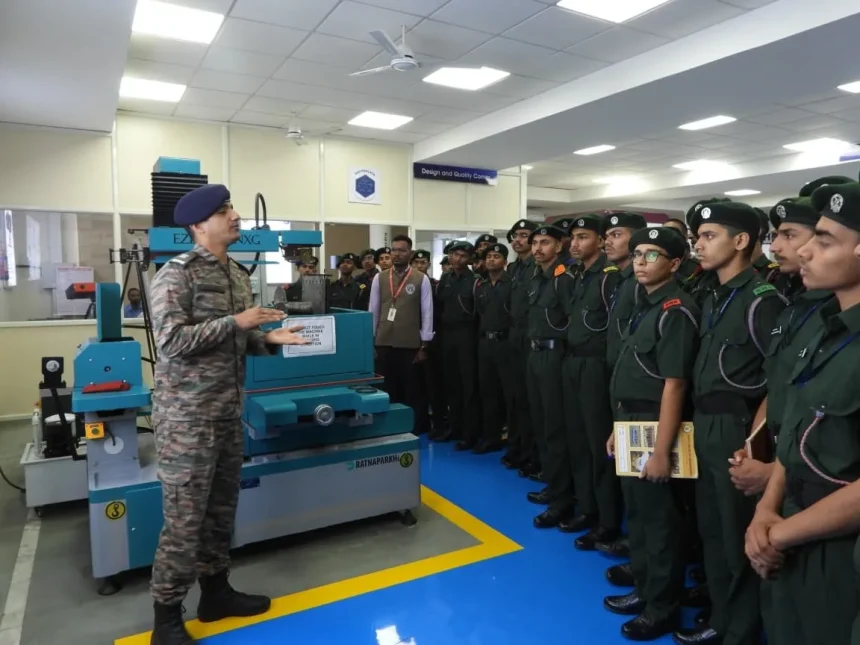
Sixty Class XII students from Bhonsala Military School, Nashik, spent October 29, 2026 at the Military College of Electronics and Mechanical Engineering (MCEME) in Secunderabad, where they were introduced to the Indian Army’s technical training environment and a range of emerging defence technologies.
What the students saw at MCEME
The visit gave the students a close look at the Army’s work in electronics, mechanical engineering, artificial intelligence, robotics and other advanced defence systems. According to the report, the tour was designed as a motivational exposure to military technology and the training ecosystem that supports it.
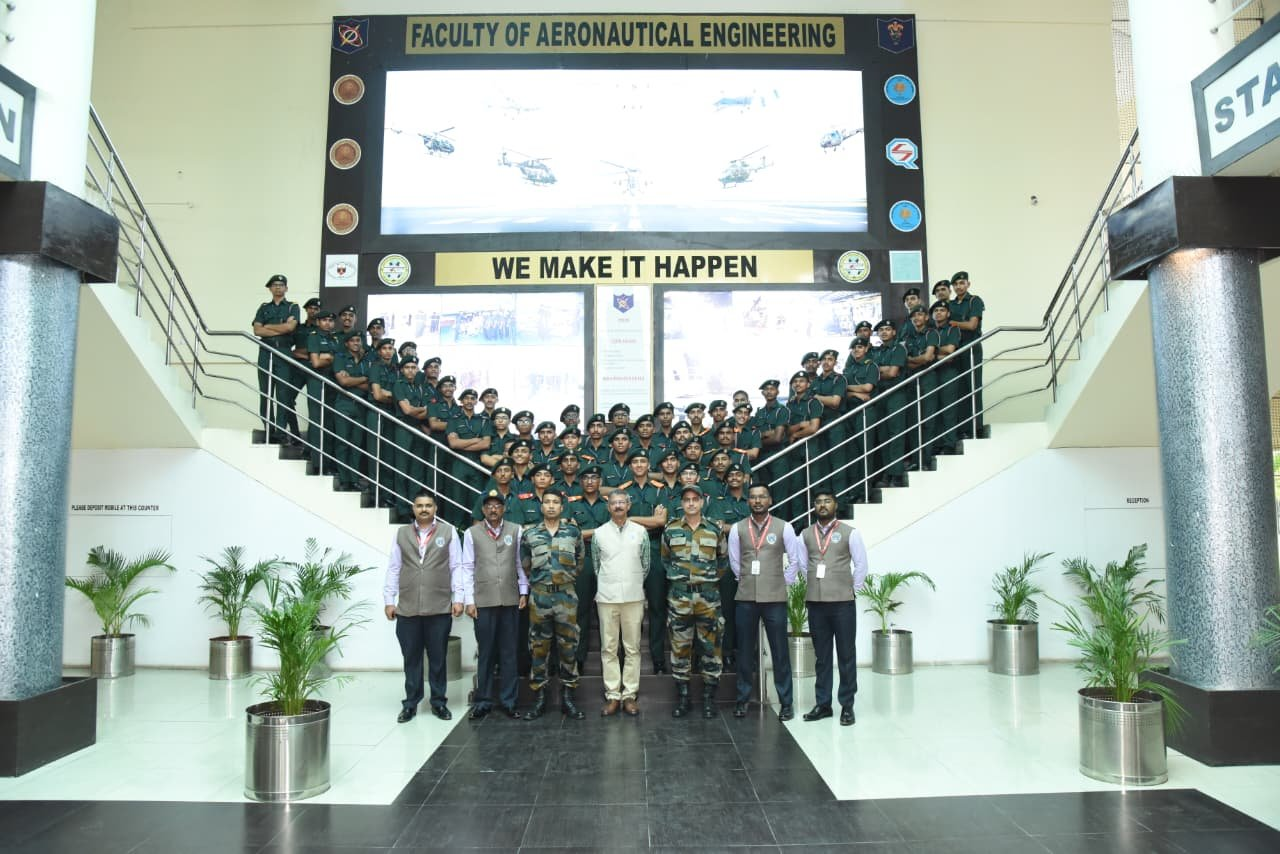
During the interaction, the students were briefed on MCEME’s role in providing advanced technical training to officers, Junior Commissioned Officers (JCOs) and technicians of the Corps of Electronics and Mechanical Engineers (EME). The briefing also highlighted the institution’s modern training methods, indigenous capability development efforts and infrastructure that supports operational readiness.
Faculties and laboratories visited
As part of the programme, the students toured several faculties, Centres of Excellence (CoEs) and advanced technical laboratories inside the institution. The facilities named in the report included Dronalaya, Yantralaya and Rachnalaya, which were presented as spaces that showcase emerging technologies and their potential use in modern military operations.
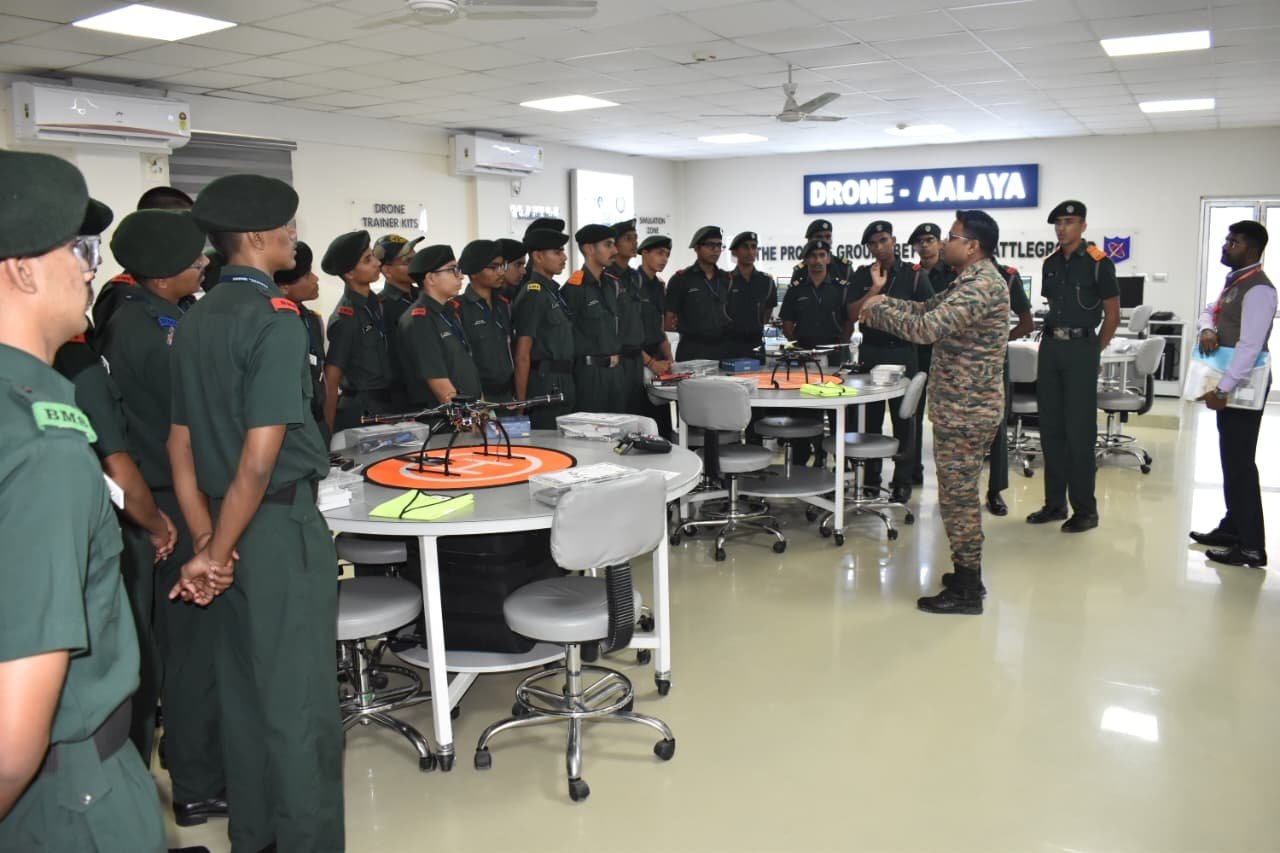
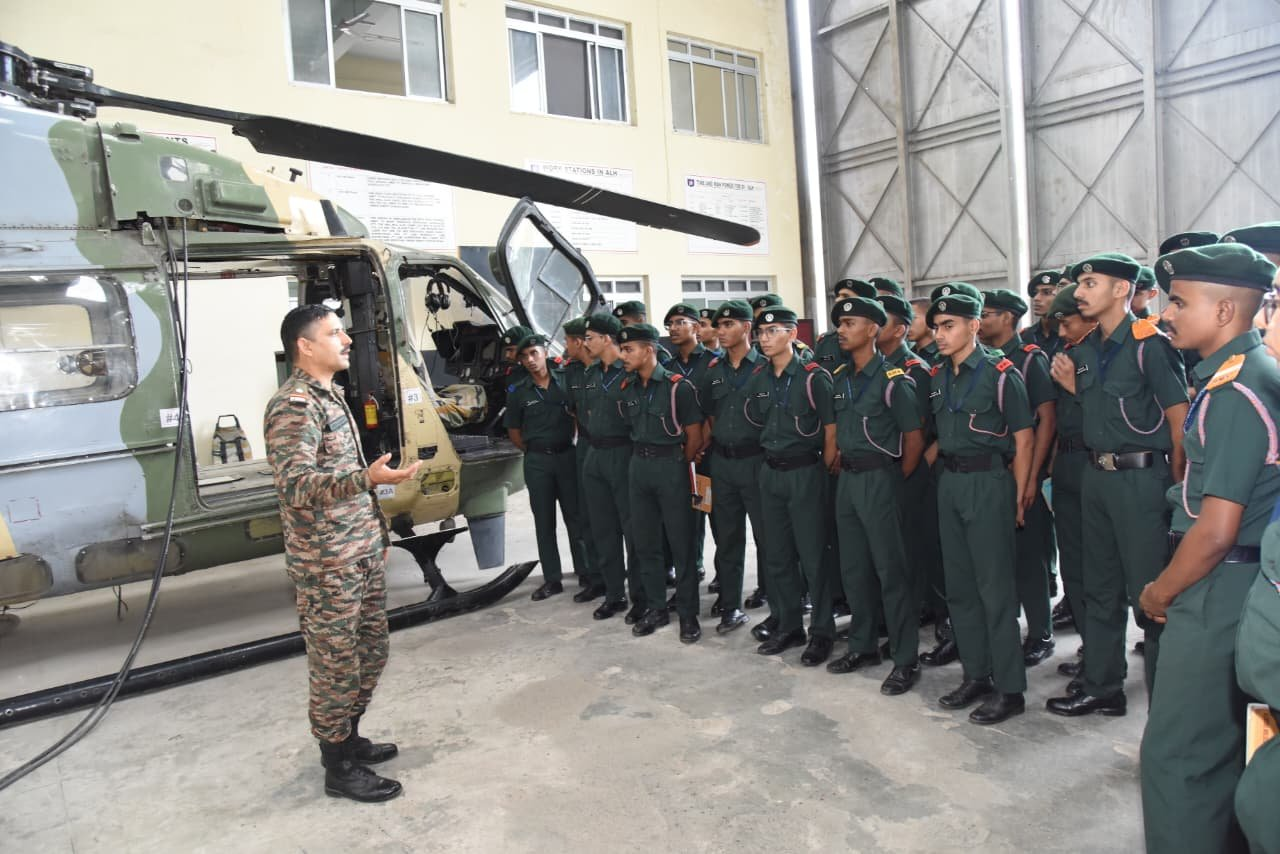
The visitors were also exposed to drones, robotics, artificial intelligence, additive manufacturing, electronic warfare, aviation systems and advanced communication technologies. The report says this interaction helped them see how such capabilities are being integrated into military operations and support systems.
MCEME’s wider role
MCEME is described as one of the Indian Army’s premier technical training institutions. Its stated role is to build the expertise needed to maintain, repair and support sophisticated military equipment and systems.
The institution also contributes to the Army’s effort toward technological self-reliance and indigenous defence capability by incorporating modern engineering practices and emerging technologies into its training programmes.
Why the visit was organised
For the students, the tour was meant to underline the growing importance of science, technology and engineering in national defence. The motivational aspect of the visit also aimed to encourage them to consider careers in the Indian Armed Forces and explore opportunities in defence technology, engineering and innovation.
The report presents the initiative as part of the Indian Army’s continued engagement with educational institutions, with the aim of encouraging scientific curiosity and inspiring the next generation to contribute to national security through technology, innovation and service.