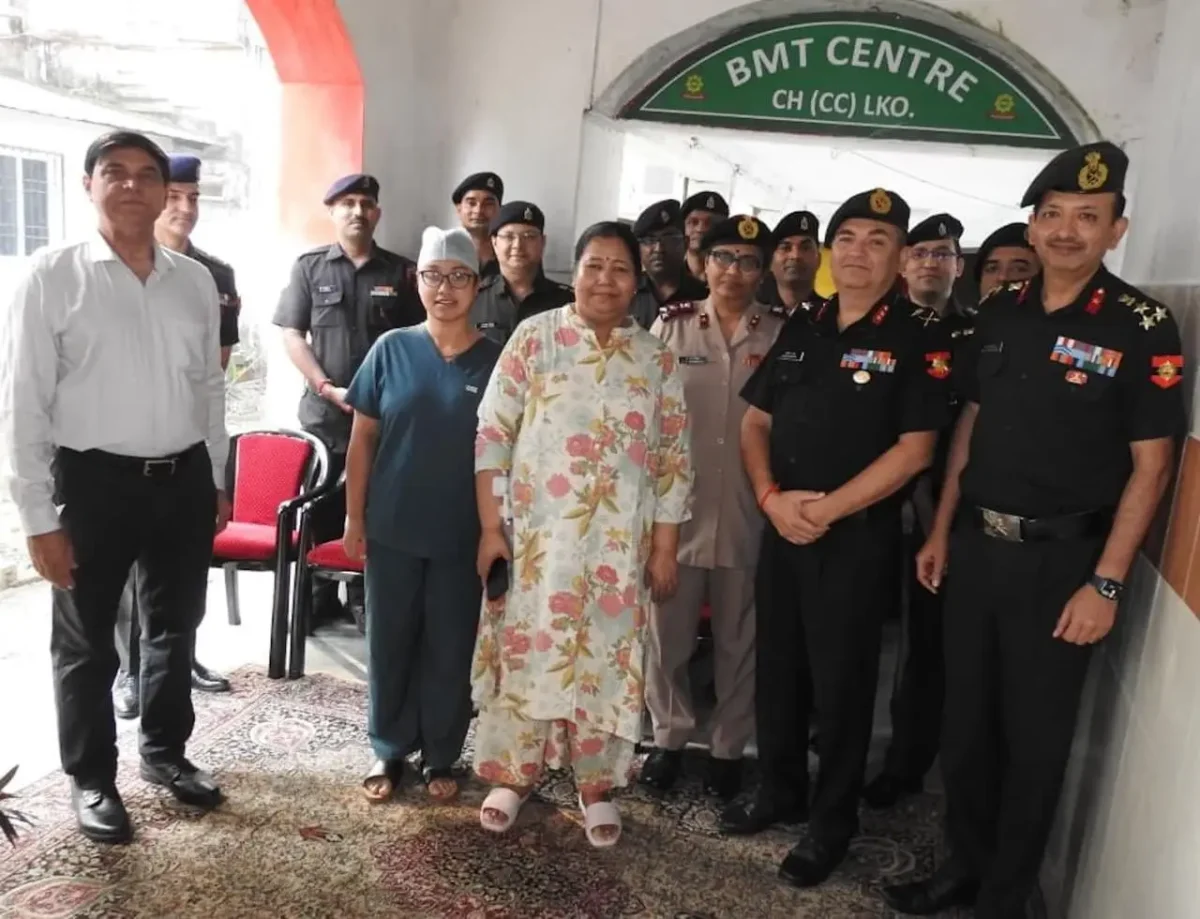
Lucknow, November 6, 2026: Command Hospital (Central Command), Lucknow, has carried out a first-of-its-kind medical procedure under the Indian Army’s Central Command by successfully administering Chimeric Antigen Receptor (CAR) T-cell therapy to a 57-year-old woman with Non-Hodgkin Lymphoma. The development marks a notable step for specialised cancer treatment within the Armed Forces Medical Services (AFMS).
Patient reported stable after treatment
According to the report, the patient underwent the advanced immunotherapy procedure at the hospital and is now stable and ready for discharge. This is stated to be the first successful CAR T-cell therapy case under the Indian Army’s Central Command.
With this treatment, Command Hospital, Lucknow, has also become the second government hospital in Uttar Pradesh to successfully administer CAR T-cell therapy. The first was Sanjay Gandhi Postgraduate Institute of Medical Sciences (SGPGI).
What CAR T-cell therapy does
CAR T-cell therapy is a form of cancer immunotherapy in which a patient’s T-cells are collected, modified in a laboratory to recognise particular proteins on cancer cells, and then returned to the body to attack malignant cells. The source describes it as an advanced treatment option for selected blood cancers.
The therapy is reported to be especially relevant for certain types of leukaemia and lymphoma, including cases that have not responded well to standard treatment. For patients with Non-Hodgkin Lymphoma, treatment options can vary depending on the type and stage of disease and may include chemotherapy, immunotherapy, targeted medicines, radiation therapy, or advanced cellular therapies such as CAR T-cell treatment.
Significance for military healthcare
The successful procedure at Command Hospital, Central Command, points to the growing capability of the institution to handle complex medical care and advanced cancer treatment. The report credits the outcome to the clinical expertise, dedication and coordinated work of the AFMS medical team involved.
It also reflects a wider effort by Armed Forces medical institutions to adopt modern healthcare technologies and expand access to specialised treatment. The achievement is presented as an important development for military medical services and their focus on clinical excellence, medical innovation and high-quality patient care.