In Current Affairs for 11 November 2026, we will see the latest national and international current affairs news. These important current affairs will be beneficial for your upcoming NDA, CDS, CDS OTA, AFCAT, TA, Agniveer Army, Agniveer Navy, Agniveer Air Force, Women Military Police, INET, MNS, ACC exams, SCO, PCSL, CAPF, and SSB interviews, and direct entries for Army, Navy, and Air Force like SSC Tech, TGC, JAG, NCC, TES, 10+2 Cadet. Download a PDF file about current events at the end of this article. Let us now see the Current Affairs.
Current Affairs 11 November 2026
Mahabharata, Rajatarangini and Arthashastra Added to UNESCO’s Memory of the World Asia-Pacific Register
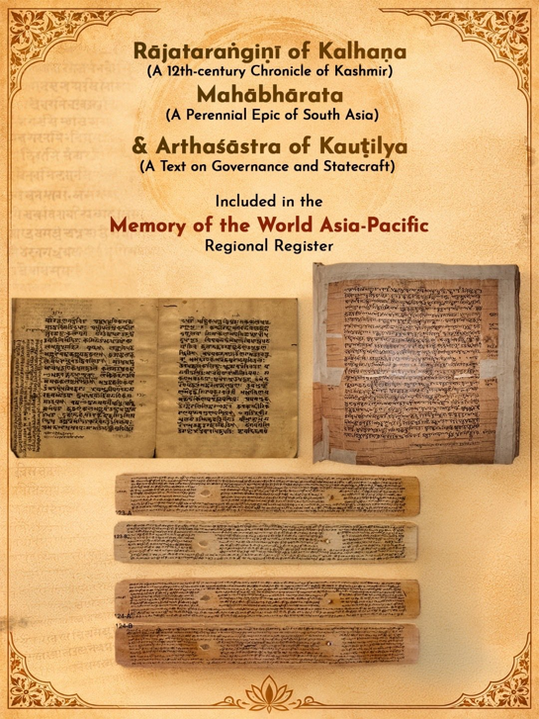
India has achieved an important milestone in the preservation of its literary and intellectual heritage, as manuscripts associated with three significant ancient Indian works—the Mahabharata, Rajatarangini and Arthashastra—have been included in UNESCO’s Memory of the World Asia-Pacific Regional Register.
The decision was taken during the 11th Session of the Memory of the World Committee for Asia and the Pacific (MOWCAP), held in Jakarta, Indonesia, from 2 to 6 November 2026. The nomination dossiers for these manuscripts were prepared by the Indira Gandhi National Centre for the Arts (IGNCA). With these additions, India’s total number of inscriptions in the regional register has reached six.
Important Manuscripts and Their Significance
The three works represent different dimensions of India’s intellectual tradition:
- Mahabharata: One of India’s two great Sanskrit epics, traditionally attributed to Maharishi Ved Vyasa. It explores themes such as dharma, ethics, duty, politics and human values through the conflict between the Pandavas and Kauravas. It also contains the Bhagavad Gita, a philosophical dialogue of 700 verses between Lord Krishna and Arjuna, forming part of the Bhishma Parva. The manuscript is preserved at the Bhandarkar Oriental Research Institute, Pune.
- Rajatarangini: Written by the Kashmiri historian Kalhana in Sanskrit during 1148–1149 CE, this historical work documents the rulers, royal dynasties, political developments and socio-cultural life of Kashmir. Its title means ‘River of Kings’. It was composed during the reign of King Jayasimha and consists of eight books known as Tarangas. The text is associated with the Sharada script and birch-bark manuscripts. It is preserved at the Oriental Research Library, Srinagar.
- Arthashastra: Traditionally attributed to Kautilya, also known as Chanakya or Vishnugupta, this ancient Sanskrit treatise deals with governance, administration, economics and military strategy. It is associated with the Mauryan period and Chandragupta Maurya. The work contains 15 books, 150 chapters and 180 sections. Its manuscript is preserved at the Oriental Research Institute, Mysuru.
About UNESCO’s Memory of the World Programme
UNESCO launched the Memory of the World Programme in 1992 to protect documentary heritage possessing exceptional historical, cultural and intellectual importance and to improve public access to it.
The programme maintains three categories of registers:
- International Register: Documents and records of global significance.
- Regional Registers: Documentary heritage important to a particular geographical region.
- National Registers: Heritage documents considered significant for an individual country.
The inclusion of these manuscripts recognises the importance of India’s historical literature, political thought and philosophical traditions while supporting their long-term preservation for future generations.
Supreme Court Declares National Book Trust a ‘State’ Under Article 12
The Supreme Court of India has ruled that the National Book Trust (NBT) falls within the definition of ‘State’ under Article 12 of the Indian Constitution. The decision brings the Trust within the constitutional framework governing Fundamental Rights and reinforces the principle that organisations exercising substantial government control can be subject to constitutional scrutiny.
The judgment was delivered on 6 November 2026 by a bench comprising Justice Prashant Kumar Mishra and Justice Augustine George Masih.
The Court observed that the Central Government exercises deep and pervasive control over the Trust’s administrative, financial and functional structure. It emphasised that government control must be assessed by considering the overall functioning of an organisation rather than examining any single factor in isolation.
Why Was NBT Considered a ‘State’?
The Supreme Court identified several features demonstrating the government’s extensive involvement in the functioning of the National Book Trust:
- Establishment: The Trust was established through Government of India resolutions dated 15 June 1957 and 28 September 1962.
- Appointment: Its Chairman is appointed by the Central Government and holds office at the government’s pleasure.
- Management: Government representatives have a significant presence in the Trust and its Executive Committee.
- Administration: The Executive Committee exercises administrative, managerial and decision-making powers.
- Financial supervision: A financial adviser is appointed by the Ministry of Finance.
- Reporting requirements: The Trust submits its annual reports and audited accounts to the government.
- Rule-making: Certain amendments to the Trust’s rules require government approval.
Considering these factors collectively, the Court concluded that the Trust is substantially controlled by the government.
The ruling also affirms an earlier 2012 judgment of the Delhi High Court, which had recognised the government’s extensive control over the organisation.
Understanding Article 12
Article 12 is included in Part III of the Constitution of India, which deals with Fundamental Rights. It defines the term ‘State’ for the purposes of this Part.
The definition includes:
- The Government and Parliament of India.
- The Government and Legislature of each State.
- All local authorities.
- Other authorities located within India’s territory or functioning under the control of the Government of India.
The expression ‘other authorities’ is particularly significant because it allows certain government-controlled bodies, beyond conventional government departments, to fall within the scope of constitutional obligations.
The judgment strengthens the principle that organisations substantially controlled by the government cannot automatically remain outside constitutional accountability merely because they operate through a separate institutional structure.
Blackbucks to Be Reintroduced into Chhattisgarh’s Gomarda Wildlife Sanctuary
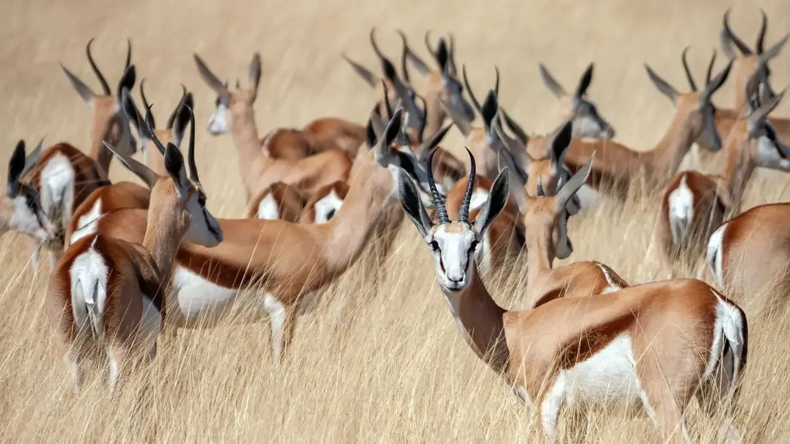
Chhattisgarh is preparing to bring blackbucks back to Gomarda Wildlife Sanctuary through a conservation initiative involving the relocation of 50 animals from Barnawapara Wildlife Sanctuary.
The species has reportedly remained absent from Gomarda for more than five decades. Its proposed reintroduction is expected to support wildlife conservation, improve biodiversity and strengthen the ecological balance of the sanctuary’s grassland habitats.
The relocation will draw upon earlier conservation efforts at Barnawapara, where measures to protect the species have helped increase its population.
About the Indian Blackbuck
The Indian blackbuck is an antelope species scientifically known as Antilope cervicapra. It belongs to the family Bovidae and the order Artiodactyla.
Important characteristics and habitat details include:
- Scientific name: Antilope cervicapra
- Common name: Indian Blackbuck
- Family: Bovidae
- Order: Artiodactyla
- Natural habitat: Grasslands, scrublands and open plains.
Blackbucks are closely associated with open landscapes, making the protection and restoration of suitable grassland ecosystems important for their conservation.
About Gomarda Wildlife Sanctuary
Gomarda Wildlife Sanctuary is situated in the Raigarh and Sarangarh-Bilaigarh region of Chhattisgarh. It was declared a wildlife sanctuary in 1975.
The sanctuary contains a combination of dry deciduous forests, grasslands and water resources. Its vegetation includes Sal, Bija, Tendu and bamboo.
The proposed relocation of blackbucks is expected to strengthen the sanctuary’s wildlife population and contribute to the conservation of grassland ecosystems.
The initiative also highlights the importance of restoring species to their historical habitats through planned conservation measures and cooperation between protected areas.
United States Set to Become First Country to Skip UN Human Rights Council’s Universal Periodic Review
The United States is set to become the first country to completely withdraw from participation in the Universal Periodic Review (UPR) conducted by the United Nations Human Rights Council.
The US review, initially scheduled for November 2025, was postponed to 10 November 2026. However, the process could not proceed because the US government did not send a delegation to participate.
The Trump administration has questioned the legitimacy of the Human Rights Council, alleging that the organisation is biased against the United States and Israel. Washington has also expressed dissatisfaction with the council’s approach towards addressing serious human rights violations.
What Is the Universal Periodic Review?
The Universal Periodic Review is a human rights assessment mechanism established by the United Nations Human Rights Council in 2006.
Its primary objective is to examine the human rights records of all 193 UN member countries at regular intervals, generally every four to five years.
The mechanism is designed to ensure that every UN member country is subject to review under the same international framework.
How Does the UPR Work?
The process generally involves the following stages:
- Regular assessment: Every UN member country undergoes a review approximately once every four to five years.
- Submission of information: The country under review provides information about its human rights situation.
- Interactive dialogue: Other member countries raise questions and make recommendations.
- Implementation: The reviewed country considers the recommendations and reports on the measures taken.
The US decision not to participate has prevented its scheduled review from taking place.
Background to the US Decision
In 2025, the United States withdrew from the Human Rights Council, citing concerns about what it considered an unfair approach towards America and Israel.
A US State Department spokesperson also questioned the organisation’s credibility and criticised what Washington viewed as its inadequate response to serious human rights violations.
The decision has generated concern among human rights organisations and civil society groups. Critics believe that non-participation by a major country could weaken the principle of universal accountability and potentially encourage other nations to avoid the review process.
The American Civil Liberties Union (ACLU) has also called for an update from the UN human rights chief regarding the human rights situation in the United States in early 2027.
The development has raised broader questions about international cooperation, accountability and the role of multilateral institutions in protecting human rights.
Anuj Shrivatri Becomes India’s 100th Chess Grandmaster
Indian chess has reached a historic milestone with Anuj Shrivatri becoming the country’s 100th Grandmaster (GM). Representing Madhya Pradesh, he secured the achievement after winning the 7th ASEAN Plus Individual Open Chess Championship held in the Philippines in November 2026.
His accomplishment is particularly significant because he has also become the first Grandmaster from Madhya Pradesh.
Anuj Shrivatri’s tournament performance included a defeat in the opening round. However, he recovered strongly, winning the final two rounds and finishing with 7 points out of 9.
The achievement coincided with his birthday and Diwali, making the occasion especially memorable. It also came nearly four decades after Viswanathan Anand became India’s first Grandmaster in 1988.
India’s Chess Journey
The achievement of India’s 100th Grandmaster reflects the country’s growing presence in international chess. From Viswanathan Anand’s historic breakthrough in 1988 to the emergence of new players from different states, Indian chess has continued to expand its competitive reach.
Anuj Shrivatri’s achievement also highlights the increasing geographical diversity of India’s chess talent.
What Is the Grandmaster Title?
The Grandmaster title is the highest standard title awarded to chess players by the International Chess Federation (FIDE).
Under the usual qualification route, players generally need to achieve three Grandmaster norms and attain a FIDE rating of at least 2500. Certain championships may also award the title directly under FIDE regulations.
The Grandmaster title recognises an exceptional level of chess ability and achievement in competitive tournaments.
By becoming India’s 100th Grandmaster, Anuj Shrivatri has added a significant chapter to the country’s chess history.

National Education Day 2026: Remembering Maulana Abul Kalam Azad
India observes National Education Day on 11 November every year to commemorate the birth anniversary of Maulana Abul Kalam Azad, the first Education Minister of independent India.
The day recognises his contribution to India’s education system and his role in strengthening the foundations of educational and cultural institutions after independence.
The Ministry of Human Resource Development announced the observance of National Education Day in 2008. Since then, 11 November has been dedicated to highlighting the importance of education and remembering Azad’s contribution to nation-building.
Maulana Abul Kalam Azad served as India’s Education Minister from 1947 until his death in 1958.
Contribution to India’s Educational and Cultural Development
Azad played an important role in promoting education, intellectual development and cultural activities in independent India. Several important institutions were established during his leadership and association with the country’s cultural development.
These include:
- Indian Council for Cultural Relations (ICCR): Established in 1950 to promote cultural relations between India and other countries. Maulana Azad served as its founder President.
- Sangeet Natak Akademi: Established in 1953 to encourage and promote performing arts.
- Sahitya Akademi: Established in 1954 to support and promote literature.
- Lalit Kala Akademi: Established in 1954 to encourage visual arts.
Significance of National Education Day
National Education Day serves as a reminder that education is essential for social progress, national development and individual empowerment.
The occasion encourages educational institutions, students and communities to reflect on the importance of accessible and quality education.
It also recognises the contribution of Maulana Abul Kalam Azad in shaping India’s educational and cultural institutions during the formative years of independence.

Gujarati New Year 2026: Bestu Varas Marks the Beginning of Vikram Samvat 2083
Gujarati New Year, popularly known as Bestu Varas, was celebrated on 10 November 2026, marking the beginning of Vikram Samvat 2083.
The festival is an important occasion for Gujarati communities and is observed on Kartik Shukla Pratipada, also known as Kartak Sud Ekam in the Gujarati calendar.
The day represents the beginning of a new year and is traditionally associated with prayers, family gatherings, temple visits and the exchange of greetings. People commonly greet one another with the traditional expression ‘Saal Mubarak’.
Religious and Cultural Significance
Gujarati New Year follows the Diwali celebrations. According to the information provided, Diwali was observed on 8 November 2026, while the continuation of Amavasya until sunrise on 9 November resulted in the New Year falling two days later, on 10 November.
The festival marks the beginning of the bright fortnight of the month of Kartik and is an important cultural occasion for Gujarati families and business communities.
Tradition of Chopda Pujan
One of the important business traditions associated with Diwali in Gujarat is Chopda Pujan.
The word ‘Chopda’ refers to traditional account books used by traders and business families for maintaining financial records.
During the ritual, people worship their new account books and seek blessings for prosperity, financial stability and success in the coming year.
Gujarati New Year therefore represents both a religious celebration and the beginning of a fresh financial and business cycle for many members of the community.
World Science Day for Peace and Development 2026
World Science Day for Peace and Development is observed annually on 10 November under the leadership of UNESCO. The day aims to strengthen public engagement with science and highlight its importance in achieving sustainable development and promoting peaceful cooperation.
The theme for 2026 is ‘Common Ground Through Science Diplomacy’. It highlights how scientific collaboration, research and dialogue can help countries build mutual understanding and strengthen international relationships.
Origin and Background
The idea of observing a World Science Day emerged during the World Conference on Science held in 1999 in Budapest, Hungary.
The conference emphasised the need to strengthen cooperation between science and society and encouraged greater public participation in scientific activities.
In 2001, UNESCO officially declared 10 November as World Science Day for Peace and Development. The first worldwide observance took place in 2002 under UNESCO’s auspices.
Theme 2026: Common Ground Through Science Diplomacy
Science diplomacy refers to the use of scientific cooperation and research-based engagement to strengthen relations between countries.
The 2026 theme highlights the role of science in:
- Building cooperation between nations.
- Encouraging joint research and innovation.
- Promoting dialogue and mutual understanding.
- Addressing shared global challenges.
- Supporting sustainable development.
The observance encourages scientists, governments and communities to work together and recognise science as an important instrument for international cooperation.
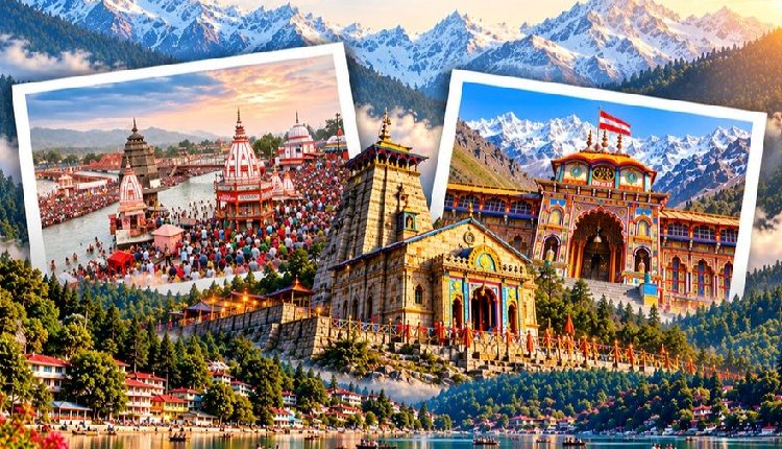
Uttarakhand Foundation Day 2026: Celebrating 26 Years of Statehood
Uttarakhand celebrates its Foundation Day on 9 November every year, commemorating its formation as a separate state on 9 November 2000 after its separation from Uttar Pradesh.
The state was initially named Uttaranchal and was officially renamed Uttarakhand in 2007.
Background of the Statehood Movement
The demand for a separate Uttarakhand state emerged from concerns that the administrative and developmental requirements of the Himalayan region were not receiving adequate attention within the larger state of Uttar Pradesh.
The movement gained considerable momentum through the participation of women, students, community organisations and political groups.
In 1994, protests for separate statehood intensified. One of the most significant and painful events occurred on 2 October 1994, when police opened fire on protesters at Rampur Tiraha. The incident became an important turning point in the history of the statehood movement.
Following years of public demand and political developments, Uttarakhand was formed on 9 November 2000.
Renaming of the State
The state was originally known as Uttaranchal. Parliament passed the Uttaranchal (Alteration of Name) Act, 2006 (Act No. 52 of 2006) to change its name to Uttarakhand.
The Act came into effect on 1 January 2007, officially giving the state its present name.
Cultural Identity of Uttarakhand
Uttarakhand has a distinctive cultural heritage shaped by its Himalayan geography and regional traditions.
Important cultural features include:
- Garhwali and Kumaoni: Major regional languages.
- Chholiya Dance: A traditional folk dance of the region.
- Aipan Art: A traditional decorative art form of Kumaon, featuring white geometric and ritual patterns on a red ochre background.
- Regional Folk Music: Traditional songs reflecting the culture and lifestyle of the Himalayan communities.
Uttarakhand Foundation Day celebrates the state’s historical journey, cultural identity and the aspirations of the people who contributed to its formation.
World Freedom Day 2026
World Freedom Day was observed on 9 November 2026, commemorating the fall of the Berlin Wall in 1989. The occasion highlights the importance of freedom, democracy and the struggle of people against political restrictions.
The day was declared by US President George W. Bush in 2001 to recognise the historical significance of the fall of the Berlin Wall and honour those who fought for freedom and democratic rights.
Historical Background: Division of Germany
Following the Second World War, Germany was divided into four occupation zones administered by the United States, the United Kingdom, France and the Soviet Union.
Berlin, despite being located within the Soviet-controlled zone, was also divided into four sectors.
The political division eventually resulted in the formation of two separate German states in 1949:
- Federal Republic of Germany (West Germany)
- German Democratic Republic (East Germany)
Berlin was also divided between the two political systems.
The Berlin Wall became a powerful symbol of the division between East and West during the Cold War.
Fall of the Berlin Wall
On 9 November 1989, East German officials opened the border crossings following growing public pressure and confusion surrounding newly announced travel regulations.
The opening of the crossings became a historic turning point in European history and symbolised the weakening of political divisions in the region.
In 2001, US President George W. Bush issued a presidential proclamation encouraging the observance of World Freedom Day on 9 November.
The day serves as a reminder of the importance of democratic values, individual liberties and the collective struggle for freedom.

National Legal Services Day 2026
India observes National Legal Services Day on 9 November every year to spread awareness about free legal aid and ensure that access to justice is not restricted by financial or social disadvantages.
The day commemorates the commencement of the Legal Services Authorities Act, 1987, which came into effect on 9 November 1995.
The observance also highlights the role of the National Legal Services Authority (NALSA) in providing legal assistance to eligible individuals and disadvantaged sections of society.
Objectives of National Legal Services Day
The initiative focuses on several important objectives:
- Free Legal Aid: Providing eligible individuals with legal advice, guidance and representation.
- Legal Awareness: Educating citizens about constitutional rights, legal protections and available remedies.
- Support for Vulnerable Groups: Extending assistance to women, children, Scheduled Castes, Scheduled Tribes, industrial workers and other eligible disadvantaged groups.
- Alternative Dispute Resolution: Encouraging the use of mechanisms such as Lok Adalats to resolve disputes.
Importance of Free Legal Aid
Access to justice is an important constitutional principle. Economic hardship or social disadvantage should not prevent eligible citizens from seeking legal remedies.
National Legal Services Day highlights the importance of an accessible legal system and encourages people to understand their rights and the legal support available to them.
Through awareness programmes and legal assistance initiatives, NALSA and other legal services institutions work towards making justice more accessible to all eligible sections of society.

National Cancer Awareness Day 2026
India observes National Cancer Awareness Day on 7 November every year to increase public understanding of cancer, its prevention, early detection and treatment.
The observance began in 2014 under the leadership of the then Union Health Minister, Dr. Harsh Vardhan, through the Union Ministry of Health and Family Welfare.
The initiative aims to encourage people to recognise potential warning signs, understand risk factors and seek timely medical assistance.
Understanding Cancer
Cancer refers to a group of diseases in which abnormal cells grow and divide uncontrollably. These cells can invade surrounding tissues and, in some cases, spread to other parts of the body through a process known as metastasis.
Cancer can develop in almost any part of the human body, making awareness, screening and early diagnosis important components of cancer control.
Common Cancers According to GLOBOCAN 2022
The PPT highlights the following common cancers based on GLOBOCAN 2022 data:
- Among males: Lip and oral cavity, lung and oesophagus.
- Among females: Breast, cervix uteri and ovary.
- Across both sexes: Breast, lip and oral cavity, and cervix uteri.
Government Focus on Cancer Screening
The awareness initiative is linked to broader efforts to improve screening, early diagnosis, treatment and referral services for common non-communicable diseases.
Three important cancers specifically highlighted under the programme are:
- Oral cancer.
- Breast cancer.
- Cervical cancer.
National Cancer Awareness Day encourages individuals and communities to understand the importance of timely screening and appropriate medical consultation. Early detection and access to treatment can play an important role in improving cancer outcomes.

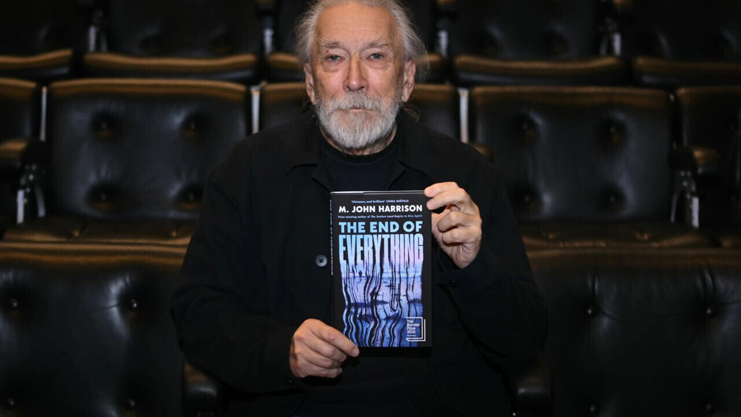
M. John Harrison Wins Booker Prize 2026 for ‘The End of Everything’
British author M. John Harrison has won the 2026 Booker Prize for his novel The End of Everything, published by Serpent’s Tail.
The winner was announced in the early hours of 10 November 2026 (Indian Standard Time) during a ceremony held at Old Billingsgate in London. The event was also livestreamed through the Booker Prize’s official channels.
As the winner, Harrison received prize money of £50,000, equivalent to approximately ₹62 lakh, along with the trophy named Iris.
About the Winning Novel
The End of Everything is the winning novel recognised by the 2026 Booker Prize jury. Its publication by Serpent’s Tail and its selection for the prestigious award have brought attention to Harrison’s literary work.
About the Booker Prize
The Booker Prize is one of the most prominent literary awards associated with contemporary fiction. Winning the award provides international recognition to an author and brings wider attention to the selected work.
M. John Harrison’s achievement adds another title to the history of the Booker Prize and recognises his contribution to contemporary literature.
Review Questions
Q1. Which three ancient Indian works were added to UNESCO’s Memory of the World Asia-Pacific Regional Register in November 2026?
A) Ramayana, Vedas and Puranas
B) Mahabharata, Rajatarangini and Arthashastra
C) Upanishads, Rigveda and Manusmriti
D) Arthashastra, Panchatantra and Ramayana
Correct Answer: B
Explanation: Manuscripts relating to the Mahabharata, Rajatarangini and Arthashastra were included during the 11th MOWCAP session held in Jakarta, Indonesia, from 2–6 November 2026.
Q2. Who wrote the historical Sanskrit text Rajatarangini?
A) Banabhatta
B) Kalhana
C) Kautilya
D) Ved Vyasa
Correct Answer: B
Explanation: Rajatarangini was written by Kashmiri historian Kalhana in 1148–1149 CE. It describes the history of Kashmir’s rulers and political developments.
Q3. The Supreme Court declared the National Book Trust (NBT) a ‘State’ under which Article of the Indian Constitution?
A) Article 14
B) Article 19
C) Article 21
D) Article 12
Correct Answer: D
Explanation: On 6 November 2026, the Supreme Court ruled that NBT falls within the definition of ‘State’ under Article 12 because of the extensive control exercised by the Central Government.
Q4. Gomarda Wildlife Sanctuary, where 50 blackbucks are proposed to be relocated, is located in which state?
A) Madhya Pradesh
B) Chhattisgarh
C) Jharkhand
D) Odisha
Correct Answer: B
Explanation: Gomarda Wildlife Sanctuary is located in Chhattisgarh, in the Raigarh and Sarangarh-Bilaigarh region. It was declared a wildlife sanctuary in 1975.
Q5. In which year was the United Nations Human Rights Council established the Universal Periodic Review (UPR)?
A) 1995
B) 2001
C) 2006
D) 2010
Correct Answer: C
Explanation: The UPR was established in 2006. It reviews the human rights records of all 193 UN member countries approximately every four to five years.
Q6. Who became India’s 100th Chess Grandmaster in November 2026?
A) Rameshbabu Praggnanandhaa
B) Arjun Erigaisi
C) Anuj Shrivatri
D) D. Gukesh
Correct Answer: C
Explanation: Anuj Shrivatri became India’s 100th Grandmaster after winning the 7th ASEAN Plus Individual Open Chess Championship in the Philippines. He also became the first Grandmaster from Madhya Pradesh.
Q7. National Education Day in India is observed every year on 11 November to commemorate the birth anniversary of whom?
A) Dr. S. Radhakrishnan
B) Maulana Abul Kalam Azad
C) Jawaharlal Nehru
D) Dr. Zakir Husain
Correct Answer: B
Explanation: National Education Day marks the birth anniversary of Maulana Abul Kalam Azad, India’s first Education Minister, who served from 1947 until his death in 1958.
Q8. What was the theme of World Science Day for Peace and Development 2026?
A) Science for a Sustainable Future
B) Science and Global Innovation
C) Common Ground Through Science Diplomacy
D) Science for Climate Action
Correct Answer: C
Explanation: The 2026 theme was ‘Common Ground Through Science Diplomacy’, highlighting the importance of scientific cooperation and dialogue in strengthening international relations.
Q9. Uttarakhand was formed as a separate state from Uttar Pradesh on which date?
A) 9 November 2000
B) 15 August 2000
C) 26 January 2001
D) 1 November 2000
Correct Answer: A
Explanation: Uttarakhand was established on 9 November 2000. It was initially named Uttaranchal and officially renamed Uttarakhand with effect from 1 January 2007.
Q10. Who won the Booker Prize 2026 for the novel The End of Everything?
A) Salman Rushdie
B) M. John Harrison
C) Kazuo Ishiguro
D) David Szalay
Correct Answer: B
Explanation: M. John Harrison won the 2026 Booker Prize for The End of Everything, published by Serpent’s Tail. He received £50,000 in prize money.