
In Current Affairs for 20 November 2026, we will see the latest national and international current affairs news. These important current affairs will be beneficial for your upcoming NDA, CDS, CDS OTA, AFCAT, TA, Agniveer Army, Agniveer Navy, Agniveer Air Force, Women Military Police, INET, MNS, ACC exams, SCO, PCSL, CAPF, and SSB interviews, and direct entries for Army, Navy, and Air Force like SSC Tech, TGC, JAG, NCC, TES, 10+2 Cadet. Download a PDF file about current events at the end of this article. Let us now see the Current Affairs.
Current Affairs 20 November 2026
World Children’s Day 2026
Date: 20 November 2026
Theme: My Day. My Rights. My Future.
World Children’s Day is observed every year on 20 November to promote awareness about children’s rights and encourage governments, institutions and communities to create a safe and supportive environment for children.
The occasion highlights the importance of protecting children from exploitation, abuse, trafficking and child labour while ensuring access to quality education, healthcare and equal opportunities.
The day is particularly significant because 20 November is associated with important milestones in the United Nations’ efforts to protect children’s rights, including the Declaration of the Rights of the Child and the Convention on the Rights of the Child.
Convention on the Rights of the Child (CRC)
The Convention on the Rights of the Child is an international agreement that recognises the civil, political, economic, social and cultural rights of children. Under the Convention, a child is generally defined as every human being below 18 years of age, unless the applicable law establishes an earlier age of majority.
Major Objectives of World Children’s Day
- Protection of Rights: Promoting awareness of children’s fundamental and human rights.
- Child Safety: Preventing abuse, exploitation, human trafficking and child labour.
- Education: Ensuring equal access to quality education and learning opportunities.
- Health and Nutrition: Improving healthcare, nutrition and overall well-being.
- Child Participation: Giving children opportunities to express their views on matters affecting their lives.
- Government Accountability: Encouraging governments and institutions to implement effective child-protection policies.
World Children’s Day serves as a reminder that children are entitled to dignity, protection, education and opportunities to build a better future.

Milkha Singh Birth Anniversary 2026
Born: 20 November 1929 | Birthplace: Govindpura, British India (now in Pakistan) | Nickname: The Flying Sikh
Milkha Singh, popularly known as the Flying Sikh, was one of India’s most celebrated track and field athletes. Born on 20 November 1929 in Govindpura, he became an iconic figure in Indian athletics through his outstanding performances in international sprinting competitions.
He specialised in the 200-metre and 400-metre events and brought international recognition to Indian athletics through his achievements.
Major International Achievements
Milkha Singh won two gold medals at the 1958 Asian Games in Tokyo, securing victories in both the 200m and 400m events. In the same year, he became the first Indian male athlete to win an individual athletics gold medal at the Commonwealth Games, achieving success in the 440-yard race at Cardiff.
At the 1962 Asian Games in Jakarta, he continued his remarkable performance by winning gold medals in the 400m and 4×400m relay events.
One of the most memorable moments of his sporting career came at the 1960 Rome Olympics, where he finished fourth in the men’s 400m final. Although he narrowly missed an Olympic medal, his performance remains an important chapter in Indian sporting history.
Olympic Participation
Milkha Singh represented India at three Olympic Games:
- 1956 – Melbourne Olympics
- 1960 – Rome Olympics
- 1964 – Tokyo Olympics
Important Awards and Recognition
- Nickname: Flying Sikh
- Sport: Athletics (Sprint)
- Specialities: 200m and 400m
- Highest civilian award mentioned in the presentation: Padma Shri
Major Medals
| Year | Competition | Achievement |
|---|---|---|
| 1958 | Asian Games, Tokyo – 200m | Gold |
| 1958 | Asian Games, Tokyo – 400m | Gold |
| 1958 | Commonwealth Games, Cardiff – 440 yards | Gold |
| 1962 | Asian Games, Jakarta – 400m | Gold |
| 1962 | Asian Games, Jakarta – 4×400m relay | Gold |
| 1964 | National Games, Calcutta – 400m | Silver |
Milkha Singh’s extraordinary determination, discipline and achievements made him a lasting inspiration for generations of Indian athletes.

Graça Machel Receives 2025 Indira Gandhi Prize
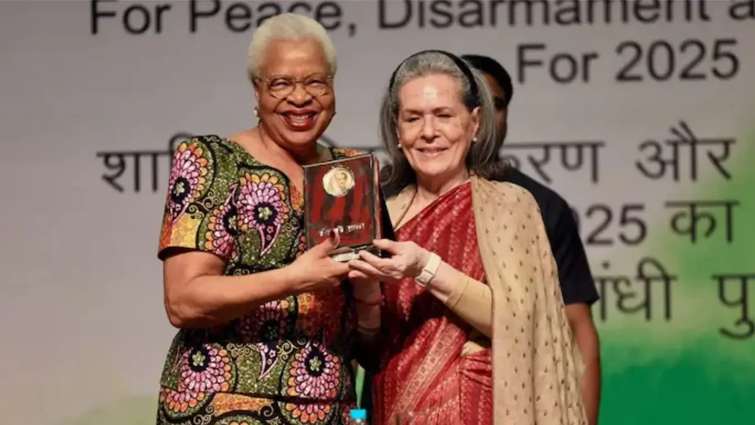
Graça Machel, a prominent politician and social activist from Mozambique, was awarded the 2025 Indira Gandhi Prize for Peace, Disarmament and Development in recognition of her contributions to education, social development and the protection of women and children’s rights.
The award was presented by Sonia Gandhi, Chairperson of the Indira Gandhi Memorial Trust, at Jawahar Bhawan in New Delhi.
The prize includes a citation and a monetary award of ₹1 crore. It recognises individuals and organisations whose efforts contribute significantly to international peace, disarmament and development.
About Graça Machel
Graça Machel was born in rural Mozambique in 1945. She became involved in the country’s independence movement through FRELIMO (Front for the Liberation of Mozambique).
After returning to Mozambique in 1973, she participated in the political movement against Portuguese colonial rule. During this period, she also worked as a teacher and contributed to educational and social initiatives.
Following Mozambique’s independence in 1975, she was appointed the country’s Minister of Education and Culture.
Her work has focused particularly on improving educational opportunities, strengthening social development and advancing the rights of women and children.
About the Indira Gandhi Prize
The Indira Gandhi Prize for Peace, Disarmament and Development is an international award that honours significant contributions towards promoting peace, disarmament and sustainable development.
The recognition of Graça Machel highlights the importance of education, equality and the protection of vulnerable sections of society in achieving long-term global development.
World’s Largest Religion May Change by 2035
According to the demographic projections discussed in the presentation, Islam is expected to become the world’s largest religious group by 2035, as the Muslim population is projected to grow faster than the Christian population.
The research examines demographic changes across 201 countries and territories, taking into account factors such as fertility rates, age distribution, mortality, migration and religious affiliation.
Global Religious Population: 2020 and 2070
| Religion | 2020 | Projected 2070 |
|---|---|---|
| Muslims | 2.02 billion | 3.64 billion |
| Christians | 2.27 billion | 2.96 billion |
| Unaffiliated | 1.91 billion | 1.72 billion |
| Hindus | 1.18 billion | 1.38 billion |
| Buddhists | 320 million | 250 million |
| Other religions | 170 million | 190 million |
| Jewish | 10 million | 20 million |
In 2020, Christianity was the world’s largest religious group, with approximately 2.27 billion followers, followed by Islam with around 2.02 billion. However, projections indicate that the Muslim population will expand at a comparatively faster pace.
By 2070, Muslims are projected to account for approximately 35.8% of the global population, compared with 29.1% for Christians.
Why Is the Muslim Population Growing Faster?
Two major demographic factors have been highlighted:
- Higher Fertility Rate: During 2020–2025, women in Muslim communities had an average of approximately 3.1 children, compared with 2.5 among Christian women.
- Younger Population: The Muslim population has a relatively younger age structure, meaning a larger proportion of its population is expected to enter reproductive age in the coming years.
Projected Muslim Population in Selected Countries
| Country | 2020 Population | 2070 Projection |
|---|---|---|
| Indonesia | 239 million | Projected to decline |
| Pakistan | 227 million | 461 million |
| India | 213 million | 334 million |
| Bangladesh | 151 million | Not specified |
| Nigeria | 120 million | Projected to become the third-largest |
Pakistan is projected to have the world’s largest Muslim population by 2070, followed by India and Nigeria.
Religious Composition of India’s Population
The presentation also highlights possible changes in India’s religious composition by 2070.
| Religious Group | 2020 | 2070 Projection |
|---|---|---|
| Hindu | 79.4% | 75.8% |
| Muslim | 15.2% | 19.6% |
| Christian | 2.2% | 2.2% |
| Other | 2.5% | 1.8% |
| Buddhist | 0.7% | 0.6% |
Although India’s Hindu population is projected to increase in absolute numbers by approximately 176 million between 2020 and 2070, its share of the total population may decline.
These figures represent long-term demographic projections rather than confirmed future outcomes.
India and Japan Unveil Logo for 75 Years of Diplomatic Relations
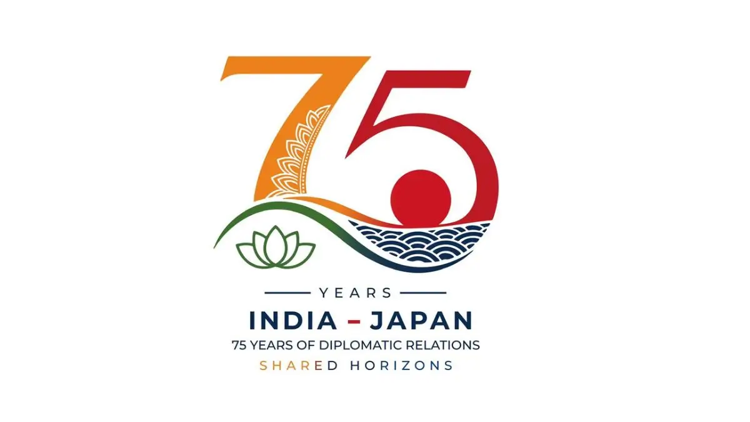
India and Japan have unveiled a special commemorative logo to mark 75 years of diplomatic relations in 2027. The logo was jointly launched by India’s External Affairs Minister S. Jaishankar and Japan’s Foreign Minister Toshimitsu Motegi during an event in Tokyo.
Both countries have decided to celebrate 2027 as the India-Japan Year of Shared Horizons, highlighting their long-standing friendship, cultural connections and strategic partnership.
Key Features of the Commemorative Logo
The design combines traditional cultural elements from both countries.
- Number 7: Incorporates patterns traditionally associated with India.
- Number 5: Features Japan’s rising sun symbol and traditional Seigaiha wave patterns.
- Base of the Sun: Represents an Indian oil lamp, with the sun symbolising its flame.
- Two Flowing Ribbons: Connect the numbers and represent the shared future and common horizons of India and Japan.
- Lotus Flower: Symbolises India.
Colours and Slogan
The logo uses four major colours:
- Saffron
- Green
- Red
- Navy Blue
The slogan featured in the design is “Shared Horizons”.
Designer of the Logo
The commemorative logo was designed by Akhil Cleatus, a student pursuing a Master’s degree in Interaction Design at the National Institute of Design (NID), Bengaluru.
History of India-Japan Diplomatic Relations
Diplomatic relations between India and Japan formally began on 28 April 1952, when the Treaty of Peace between the two countries came into effect.
The 75-year milestone in 2027 will provide an opportunity to strengthen bilateral cooperation in areas such as trade, investment, technology, infrastructure, defence and cultural exchange.
India Named Destination of the Year 2027 by Travel + Leisure
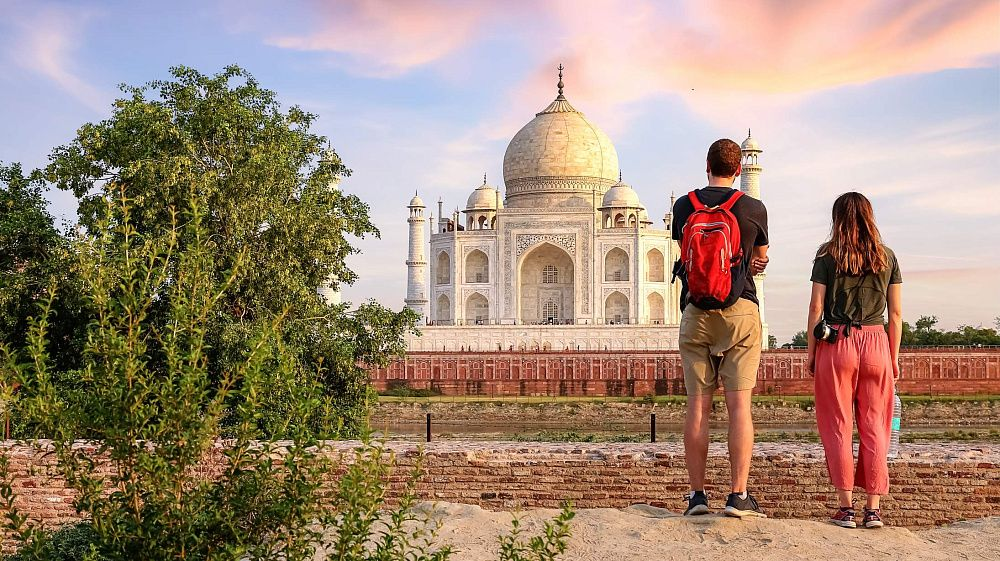
India has been selected as the Destination of the Year 2027 by the international travel magazine Travel + Leisure.
The recognition highlights India’s diverse tourism offerings, including historical monuments, natural landscapes, wildlife destinations, cultural festivals and luxury travel experiences.
India’s geographical and cultural diversity makes it an attractive destination for international travellers seeking different types of experiences.
Major Attractions Highlighted in the Recognition
1. Heritage Tourism
India offers numerous historical and architectural attractions, including:
- Taj Mahal in Agra.
- Udaipur in Rajasthan.
- Chandni Chowk in Delhi.
2. Wildlife Tourism
India’s tiger reserves, particularly those located in Madhya Pradesh, provide opportunities for wildlife safaris and nature exploration.
3. Nature Tourism
Some of the important natural attractions highlighted include:
- Beaches of Lakshadweep.
- Caves of Meghalaya.
4. Cultural Tourism
The Hornbill Festival of Nagaland is an important cultural attraction showcasing the traditions, heritage, music and cultural diversity of the state’s indigenous communities.
5. Luxury and Wellness Tourism
India also offers a wide range of premium hospitality, wellness, relaxation and luxury travel experiences.
The recognition as Destination of the Year 2027 highlights India’s potential as a major international tourism destination and showcases its combination of heritage, nature, culture and modern hospitality.
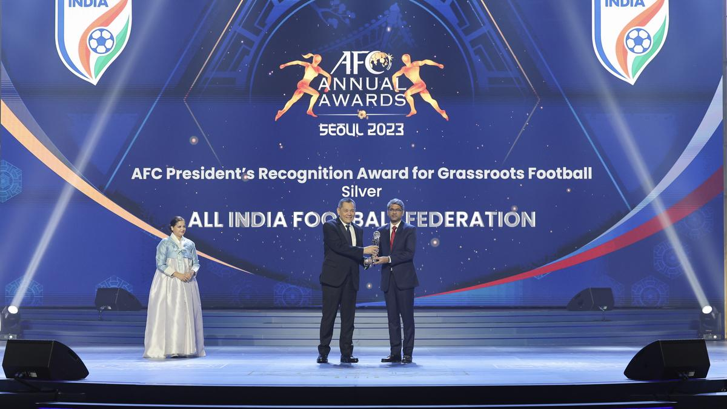
AIFF Wins First AFC Gold Award
The All India Football Federation (AIFF) achieved a major international milestone by receiving the Gold distinction in the Asian Football Confederation’s (AFC) Member Association of the Year category.
The award ceremony took place on 19 November 2026 at Aksra Theatre King Power in Bangkok, Thailand.
This was the first time that AIFF received the Gold distinction in this category. Earlier, the federation had been recognised in the Developing category in 2016.
India’s Football Achievements in 2026
The award recognised the progress made by Indian football, particularly through the achievements of its national teams in regional competitions.
During 2026, AIFF recorded:
- Five championship titles.
- Three runner-up finishes.
- Four championship victories by Indian women’s teams.
Major Achievements of Indian Women’s Football Teams
- Senior Women’s Team: Won the SAFF Women’s Championship in February 2026.
- Under-19 Women’s Team: Captured the SAFF U19 Women’s Championship in February 2026.
- AFC Women’s Asian Cup: The senior women’s team qualified for the tournament for the first time.
- Under-17 Women’s Team: Reached the quarter-finals of the tournament for the first time.
- Under-20 Women’s Team: Qualified for the AFC U20 Women’s Asian Cup for the first time in two decades.
These performances demonstrated the growing competitiveness of Indian women’s football at the regional and continental levels.
Other AFC Award Winners
The AFC Member Association of the Year categories also recognised the achievements of other national football associations:
| Country | Award Distinction |
|---|---|
| Japan | Platinum |
| Thailand | Diamond |
| Bangladesh | Ruby |
| India | Gold |
The recognition represents an important achievement for Indian football and reflects the progress made by the country’s football administration and national teams.
Review Questions
Q1. World Children’s Day is observed every year on which date?
A) 14 November
B) 20 November
C) 24 October
D) 10 December
Correct Answer: B) 20 November
Explanation: World Children’s Day is celebrated on 20 November to promote children’s rights and well-being. The 2026 theme is My Day. My Rights. My Future.
Q2. What was the nickname of legendary Indian athlete Milkha Singh?
A) Golden Boy
B) Flying Sikh
C) Haryana Hurricane
D) Sprint King
Correct Answer: B) Flying Sikh
Explanation: Milkha Singh was popularly known as the Flying Sikh. He finished fourth in the men’s 400m final at the 1960 Rome Olympics.
Q3. Who received the 2025 Indira Gandhi Prize for Peace, Disarmament and Development?
A) Malala Yousafzai
B) Graça Machel
C) Ngozi Okonjo-Iweala
D) Ellen Johnson Sirleaf
Correct Answer: B) Graça Machel
Explanation: Graça Machel, a politician and social activist from Mozambique, received the 2025 award for her contributions to education, social development and women’s and children’s rights.
Q4. According to the demographic projections discussed in the presentation, which religion is expected to become the world’s largest religious group by 2035?
A) Christianity
B) Hinduism
C) Islam
D) Buddhism
Correct Answer: C) Islam
Explanation: The projections indicate that the Muslim population may surpass the Christian population by 2035, primarily due to higher fertility rates and a younger population structure.
Q5. India and Japan will celebrate 75 years of diplomatic relations in which year?
A) 2026
B) 2027
C) 2028
D) 2030
Correct Answer: B) 2027
Explanation: India and Japan will commemorate 75 years of diplomatic relations in 2027 under the theme India-Japan Year of Shared Horizons.
Q6. Who designed the commemorative logo marking 75 years of India-Japan diplomatic relations?
A) Satish Gujral
B) Akhil Cleatus
C) Raghunath Krishna Joshi
D) Manish Malhotra
Correct Answer: B) Akhil Cleatus
Explanation: Akhil Cleatus, a student pursuing a Master’s degree in Interaction Design at the National Institute of Design (NID), Bengaluru, designed the logo.
Q7. Which international travel magazine named India the ‘Destination of the Year 2027’?
A) National Geographic
B) Condé Nast Traveller
C) Travel + Leisure
D) Lonely Planet
Correct Answer: C) Travel + Leisure
Explanation: Travel + Leisure recognised India for its diverse tourism attractions, including heritage sites, wildlife destinations, natural landscapes and cultural festivals.
Q8. The All India Football Federation (AIFF) received which distinction at the 2026 AFC Awards?
A) Platinum
B) Diamond
C) Gold
D) Ruby
Correct Answer: C) Gold
Explanation: AIFF received its first Gold distinction in the AFC Member Association of the Year category at the awards ceremony held in Bangkok, Thailand.
Q9. Where was the 2026 AFC Awards ceremony held?
A) Tokyo, Japan
B) Bangkok, Thailand
C) New Delhi, India
D) Kuala Lumpur, Malaysia
Correct Answer: B) Bangkok, Thailand
Explanation: The AFC Awards ceremony was held on 19 November 2026 at Aksra Theatre King Power in Bangkok, Thailand.
Q10. In which year did the Treaty of Peace between India and Japan come into effect, establishing diplomatic relations?
A) 1947
B) 1950
C) 1952
D) 1955
Correct Answer: C) 1952
Explanation: India-Japan diplomatic relations formally began on 28 April 1952, when the Treaty of Peace between the two countries came into effect.