




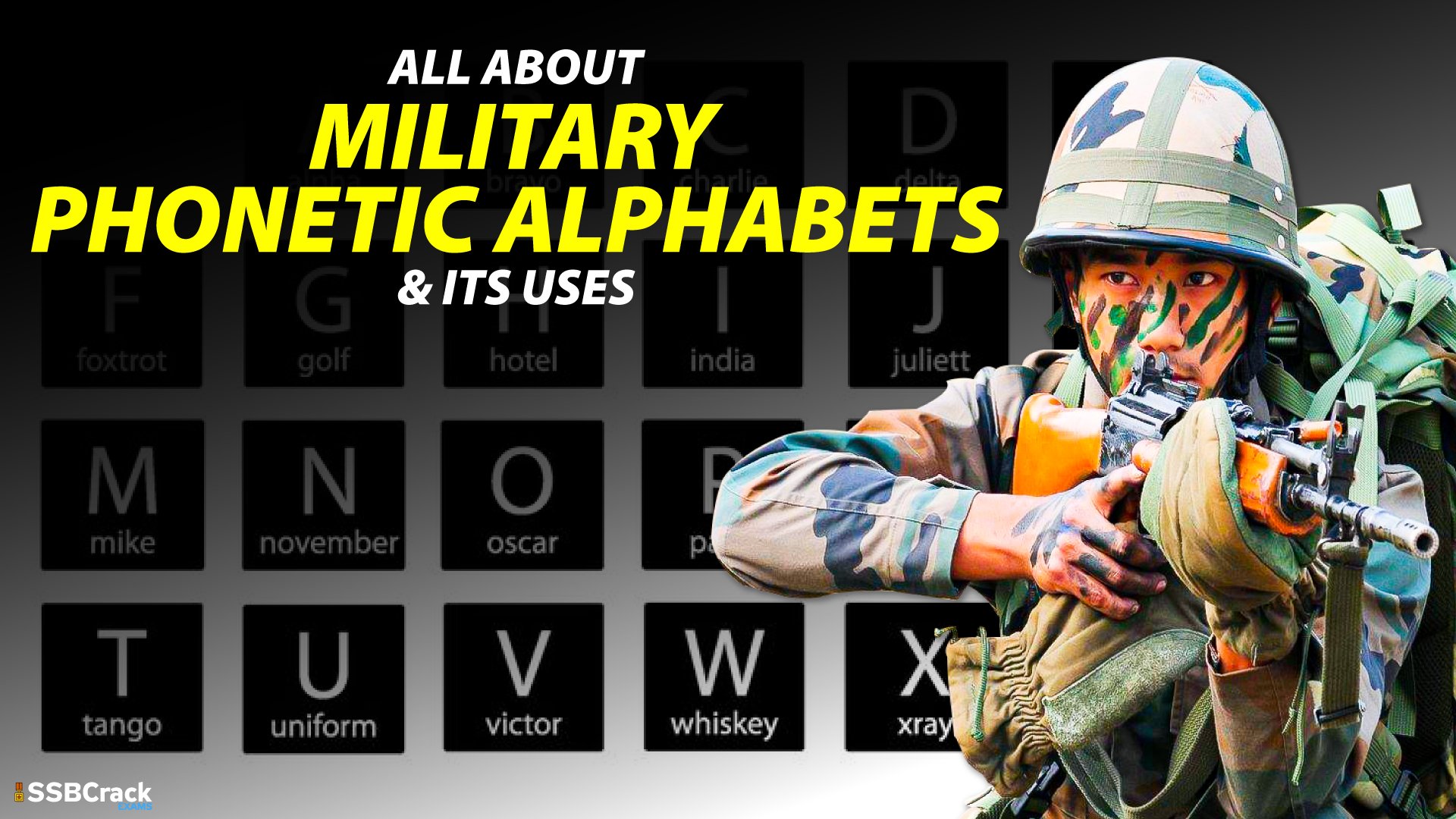
Jai Hind future warriors today we are going to discuss military phonetic alphabets and their uses.The military alphabet is more accurately known as IRDS (International Radiotelephony Spelling Alphabet and was developed by the ICAO (International Civil Aviation Organization) to reduce pronunciation discrepancies during oral radio communications. It is the same phonetic alphabet that NATO uses.
History of Military Phonetic Alphabets
- In 1941, the U.S. adopted the Joint Army/Navy radiotelephony alphabet to standardize communication among all branches of the U.S. military, though many nations used their own versions, and the Royal Air Force adopted a similar alphabet to the U.S.
- The system created by the U.S. would later be called Able Baker after the letters “A” and “B.” In 1943, the U.S., U.K., and Australian armed forces modified the Able Baker alphabet to streamline communication between allied nations.
- The Military Phonetic Alphabet was finalized in 1957, and is officially called the International Radiotelephony Spelling Alphabet (IRSA). This alphabet, developed by the International Civil Aviation Organization (ICAO), is used by both the United States and NATO. Only four words, – Charlie, Mike, Victor, and X-Ray, – are still used from the Able Baker alphabet. The old military alphabet included no longer in use words such as Jig, King, Love and Yoke. The British, during WWI, used terms such as Apples, Pudding and Queenie.
Use of Military Phonetic Alphabets
As many letters in the English language sound similar—as in, “M” and “N” or “B” and “D”—the Military Phonetic Alphabet is crucial to help service members relay mission status, locations, codes, and other important information. For example, if directions are being issued to “muster at building ABC,” proper use of the Military Phonetic Alphabet would be to say “muster at building Alpha-Bravo-Charlie.”
On a larger scale, clarity in communication during military operations can be the difference between losing a comrade or bringing everyone home. For instance, to successfully convey to its command that the first phase of a mission has been completed, a squadron would report back “Alpha” (the first word in the alphabet), the second phase would be “Bravo” and so on. Likewise, “Oscar Mike” can be used to convey that the team is on the move.
Military Alphabet
| Character | Code-Word |
| A | Alpha |
| B | Bravo |
| C | Charlie |
| D | Delta |
| E | Echo |
| F | Foxtrot |
| G | Golf |
| H | Hotel |
| I | India |
| J | Juliett |
| K | Kilo |
| L | Lima |
| M | Mike |
| N | November |
| O | Oscar |
| P | Papa |
| Q | Quebec |
| R | Romeo |
| S | Sierra |
| T | Tango |
| U | Uniform |
| V | Victor |
| W | Whiskey |
| X | X-Ray |
| Y | Yankee |
| Z | Zulu |
Conclusion
Hope this post was informative for you. For more such posts related to defence exams and SSB Interview stay tuned.
To crack the SSB Interview, You can join our SSB interview live classes batch and we recommend you to Enroll SSB INTERVIEW ONLINE COURSE. Trusted by thousands of defence aspirants.
Also Read:


