




In Current Affairs for 13 May 2026, we will see the latest national and international current affairs news. These important current affairs will be beneficial for your upcoming NDA, CDS, CDS OTA, AFCAT, TA, Agniveer Army, Agniveer Navy, Agniveer Air Force, Women Military Police, INET, MNS, ACC exams, SCO, PCSL, CAPF, and SSB interviews, and direct entries for Army, Navy, and Air Force like SSC Tech, TGC, JAG, NCC, TES, 10+2 Cadet. Download a PDF file about current events at the end of this article. Let us now see the Current Affairs.
Current Affairs 13 May 2026
India Launches Bharat Maritime Insurance Pool
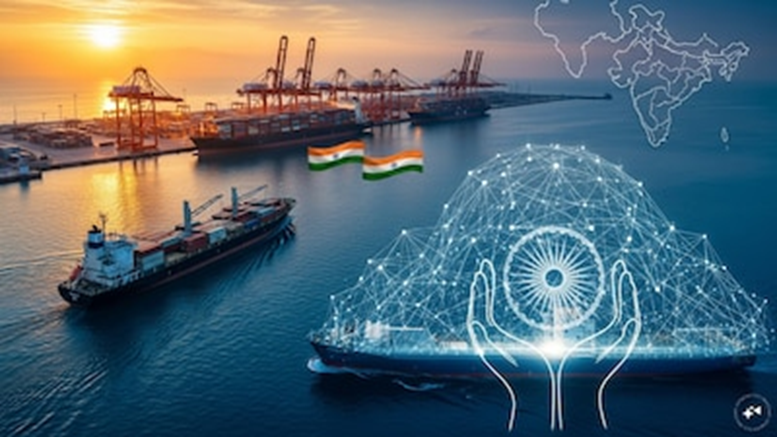
India launched the Bharat Maritime Insurance Pool (BMIP) in New Delhi on 12 May 2026 to strengthen the country’s maritime security and reduce dependence on foreign insurers. The insurance pool will provide coverage for Indian ships operating on international sea routes, including areas classified as war-risk or high-risk zones.
The BMIP has a total coverage value of USD 1.5 billion and is backed by a sovereign guarantee of USD 1.4 billion from the Government of India. The initiative was approved by the Union Cabinet in April 2026 at a time when global geopolitical tensions had increased maritime insurance premiums and created uncertainty for shipping companies.
The Bharat Maritime Insurance Pool is designed as a domestic insurance arrangement for maritime risks. It provides several types of insurance coverage, including:
- Hull and Machinery Insurance – covers physical damage to ships and onboard machinery.
- Cargo Insurance – protects goods transported through sea routes from loss or damage.
- Protection and Indemnity (P&I) Insurance – covers third-party liabilities such as pollution, collisions, and injuries.
- War Risk Insurance – provides protection against risks arising from war or conflict situations.
The pool is administered by General Insurance Corporation of India (GIC Re). Participating insurers combine their underwriting capacity to issue policies under this framework.
The BMIP can independently handle claims up to USD 100 million. If claims exceed this limit, the sovereign guarantee will act as a backup support mechanism after reserves and contributions from member insurers are exhausted.
The launch of BMIP is considered an important step toward strengthening India’s maritime trade ecosystem, improving insurance accessibility for Indian shipping companies, and ensuring continuity of overseas trade during global uncertainties.
Maize Emerges as India’s Largest Ethanol Feedstock
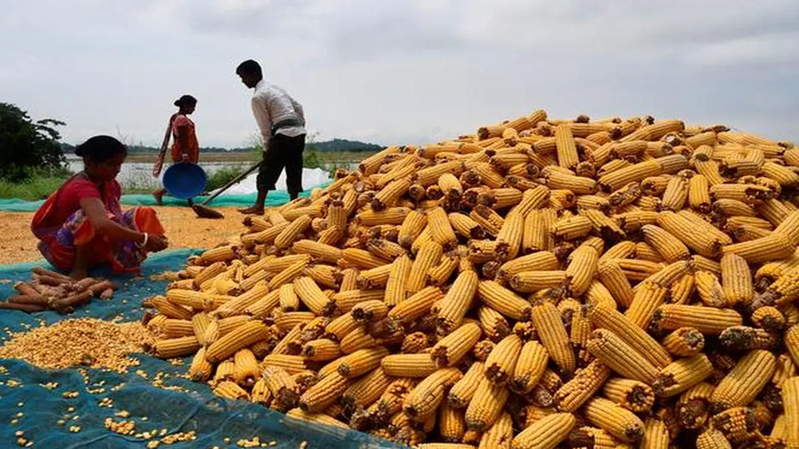
Maize has become India’s largest single feedstock for ethanol production as of 12 May 2026. During the first half of the Ethanol Supply Year (ESY) 2025–26, maize-based ethanol production reached 182 crore litres, making it the leading contributor among grain-based feedstocks.
India’s total ethanol supplies crossed 515 crore litres during the same period, fulfilling nearly 49% of the contracted volume of 1,059 crore litres.
Traditionally, India’s ethanol industry depended heavily on sugarcane-based feedstocks. However, grain-based distilleries contributed around 333 crore litres to the national ethanol pool between November 2025 and April 2026, with maize emerging as the dominant grain source.
Maize belongs to the Poaceae family and is widely used in food processing, animal feed, starch production, and industrial alcohol manufacturing. Compared to sugarcane, maize has several advantages:
- shorter cultivation cycle,
- multiple cropping seasons,
- lower irrigation requirements,
- suitability for water-stressed regions.
These advantages make maize an attractive option for expanding India’s ethanol production capacity.
India’s ethanol blending programme aims to achieve the E20 target, which means blending 20% ethanol with petrol. Meeting this target requires diversified and sustainable feedstock supplies.
The government of Uttar Pradesh has set a target to expand maize cultivation to 11.3 lakh hectares in 2026–27 to support the growing ethanol industry. The state already has a large network of grain-based distilleries and is one of India’s key maize-producing regions.
Globally, ethanol policies are also evolving. The United States Environmental Protection Agency issued the Renewable Fuel Standard rule for 2026 and 2027, maintaining the conventional ethanol requirement at 15 billion gallons. In the United States, corn remains the primary feedstock for ethanol production.
The increasing role of maize in India’s biofuel sector reflects the country’s efforts to improve energy security, reduce crude oil imports, and promote cleaner fuel alternatives.
St Stephen’s College Appoints First Female Principal
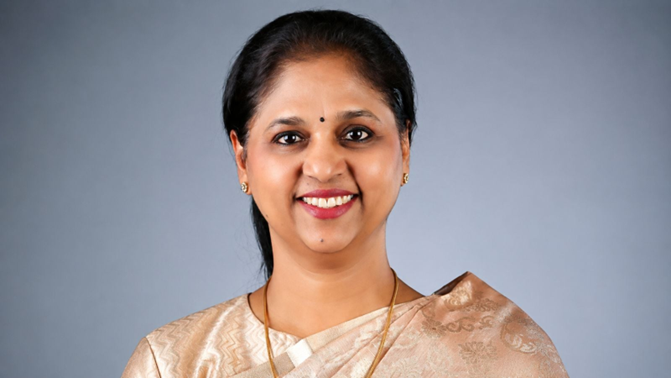
St Stephen’s College appointed Professor Susan Elias as its first female principal on 12 May 2026. She will officially assume office as the institution’s 14th principal on 1 June 2026.
Founded in 1881, St Stephen’s College is one of the oldest and most prestigious constituent colleges of University of Delhi. Although women students were admitted to the college from 1975 onwards, the position of principal remained occupied only by men until 2026.
The principal of a college is responsible for academic administration, faculty management, institutional governance, and coordination of educational activities.
Professor Susan Elias is a computer scientist and experienced academic administrator with more than three decades of experience in teaching, research, and university administration. Before this appointment, she served as Pro Vice Chancellor (Research) at Chandigarh University Uttar Pradesh from January to May 2026.
She succeeds Professor John Varghese, whose tenure saw administrative disagreements between the college and the University of Delhi.
The appointment of Professor Susan Elias marks a significant milestone in the history of St Stephen’s College and reflects the growing representation of women in leadership roles within Indian higher education institutions.
Pakistan Explores “Islamic NATO” Defence Cooperation
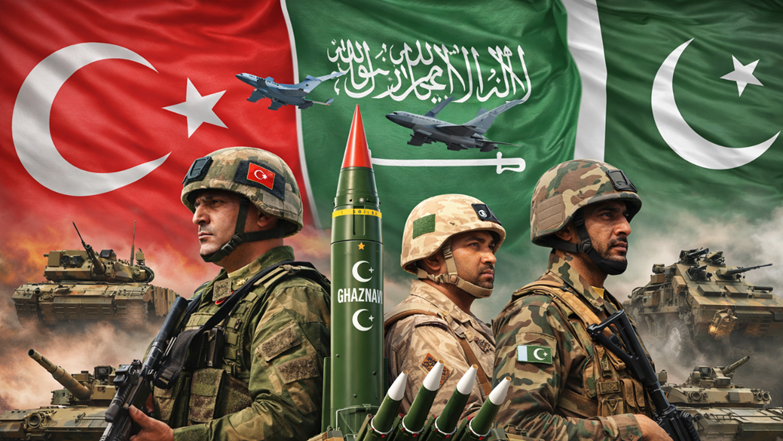
Pakistan has initiated discussions with Gulf nations, including Qatar and Turkiye, regarding a broader regional defence and economic arrangement informally described as an “Islamic NATO”.
The proposal follows the Strategic Mutual Defence Agreement signed between Pakistan and Saudi Arabia in September 2025. Under the agreement, aggression against one country is considered an attack on both parties.
Pakistan and Saudi Arabia already maintain strong economic and security relations. On 15 April 2026, Saudi Arabia extended financial assistance worth USD 3 billion to Pakistan to help address its economic financing gap.
Talks regarding the inclusion of Qatar and Turkiye are currently at different stages. Turkiye possesses a well-developed defence industry and extensive military modernisation experience, while Qatar has actively participated in regional security initiatives in West Asia.
The proposed grouping is aimed at:
- strengthening regional stability,
- enhancing collective security,
- reducing dependence on external powers,
- improving defence cooperation among participating nations.
The idea of an “Islamic NATO” gained attention after a 2025 Israeli strike on Doha raised concerns about Gulf security and regional deterrence capabilities.
During the 2026 Iran conflict, Pakistan officially maintained neutrality, condemned attacks from all sides, and participated in diplomatic mediation efforts.
Rajiv Memani as CII President for 2026–27
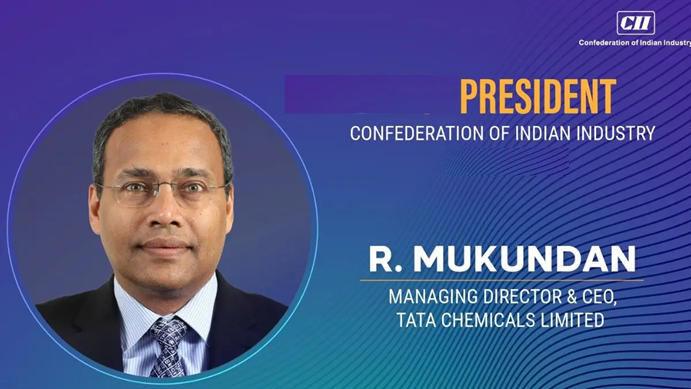
Confederation of Indian Industry (CII) announced leadership changes for the 2026–27 term. Rajiv Memani completed his tenure, and R Mukundan, CEO and Managing Director of Tata Chemicals, assumed office as the new President of CII.
The Confederation of Indian Industry is one of India’s leading non-governmental, industry-led business associations. Established in 1895 and headquartered in New Delhi, CII works closely with the government on economic policy, industrial growth, competitiveness, and sustainable development.
The organization represents:
- over 9,000 direct members,
- nearly 300,000 indirect members through industry associations.
R Mukundan brings more than three decades of leadership experience from the Tata Group. Under his leadership, CII is expected to focus on industrial competitiveness, innovation, manufacturing growth, sustainability, and India’s long-term economic development goals.
Review Questions
- What is the main objective of the Bharat Maritime Insurance Pool (BMIP)?
A. To promote air transport insurance
B. To provide maritime insurance cover for Indian vessels
C. To regulate fisheries in India
D. To increase port taxes
Answer: B. To provide maritime insurance cover for Indian vessels
Explanation: BMIP was launched to provide insurance protection for Indian ships, including coverage in war-risk and high-risk maritime zones.
- Which organization administers the Bharat Maritime Insurance Pool?
A. LIC of India
B. Reserve Bank of India
C. General Insurance Corporation of India
D. IRDAI
Answer: C. General Insurance Corporation of India
Explanation: The BMIP is administered by General Insurance Corporation of India (GIC Re).
- Which type of insurance covers third-party liabilities such as pollution and collisions?
A. Cargo Insurance
B. War Risk Insurance
C. Protection and Indemnity (P&I) Insurance
D. Hull Insurance
Answer: C. Protection and Indemnity (P&I) Insurance
Explanation: P&I insurance covers liabilities related to injuries, pollution, and collision claims.
- Which crop emerged as India’s largest ethanol feedstock in 2026?
A. Wheat
B. Rice
C. Sugarcane
D. Maize
Answer: D. Maize
Explanation: Maize became the largest contributor to grain-based ethanol production in India during ESY 2025–26.
- What does the E20 target refer to in India’s ethanol programme?
A. 20% export of ethanol
B. 20% ethanol blending with petrol
C. 20 ethanol plants in every state
D. 20 crore litres ethanol reserve
Answer: B. 20% ethanol blending with petrol
Explanation: The E20 target aims to blend 20% ethanol with petrol to reduce dependence on fossil fuels.
- Which state set a target of increasing maize cultivation to 11.3 lakh hectares for ethanol production?
A. Punjab
B. Maharashtra
C. Uttar Pradesh
D. Bihar
Answer: C. Uttar Pradesh
Explanation: Uttar Pradesh announced expansion of maize cultivation to support the ethanol industry.
- Who became the first female principal of St Stephen’s College?
A. Nirmala Sitharaman
B. Susan Elias
C. Gagandeep Kang
D. Sudha Murty
Answer: B. Susan Elias
Explanation: St Stephen’s College appointed Professor Susan Elias as its first female principal in 2026.
- St Stephen’s College is a constituent college of which university?
A. Jawaharlal Nehru University
B. Banaras Hindu University
C. University of Delhi
D. Jamia Millia Islamia
Answer: C. University of Delhi
Explanation: St Stephen’s College is one of the oldest constituent colleges of University of Delhi.
- The proposed “Islamic NATO” discussions involve Pakistan and which of the following countries?
A. Japan and South Korea
B. Qatar and Turkiye
C. Russia and China
D. France and Germany
Answer: B. Qatar and Turkiye
Explanation: Pakistan discussed regional defence cooperation with Qatar and Turkiye under the idea of an “Islamic NATO”.
- Who became the President of the Confederation of Indian Industry (CII) for 2026–27?
A. Rajiv Memani
B. N Chandrasekaran
C. R Mukundan
D. Kumar Mangalam Birla
Answer: C. R Mukundan
Explanation: R Mukundan, CEO and MD of Tata Chemicals, assumed office as President of Confederation of Indian Industry for 2026–27.


