


In Current Affairs for 13 October 2026, we will see the latest national and international current affairs news. These important current affairs will be beneficial for your upcoming NDA, CDS, CDS OTA, AFCAT, TA, Agniveer Army, Agniveer Navy, Agniveer Air Force, Women Military Police, INET, MNS, ACC exams, SCO, PCSL, CAPF, and SSB interviews, and direct entries for Army, Navy, and Air Force like SSC Tech, TGC, JAG, NCC, TES, 10+2 Cadet. Download a PDF file about current events at the end of this article. Let us now see the Current Affairs.
Current Affairs 13 October 2026
International Day for Disaster Risk Reduction 2026
Theme: “Resilience Starts at Home”
The International Day for Disaster Risk Reduction (IDDRR) is observed annually on 13 October to promote awareness about disaster prevention, risk reduction and community preparedness. In 2026, the United Nations is marking the occasion under the theme “Resilience Starts at Home.”
The theme highlights the importance of making homes safer and more resilient to natural and other disasters. It emphasises affordable housing, reliable early-warning systems, improved construction standards and active community participation in disaster preparedness.
However, disaster resilience cannot be achieved through household-level measures alone. Governments also have an important responsibility to ensure proper land-use planning, enforce suitable building codes and incorporate sustainability into development policies. Communities must be informed about local hazards and have access to timely, relevant risk information.
Background and Significance
The United Nations General Assembly established the International Day for Disaster Risk Reduction in 1989 to encourage a worldwide culture of disaster awareness and risk prevention. Since then, the day has been observed every year on 13 October.
An important milestone came in 2015, when countries adopted the Sendai Framework for Disaster Risk Reduction at the Third United Nations World Conference on Disaster Risk Reduction in Sendai, Japan.
The framework promotes a comprehensive approach to reducing disaster risks and losses, with an emphasis on prevention, preparedness and resilience.
The 2026 campaign reinforces the message that disaster risk reduction begins with safer homes but requires coordinated action from individuals, communities and governments.
Key facts for exams:
- Observed on: 13 October
- 2026 theme: “Resilience Starts at Home”
- Established by the UN General Assembly: 1989
- Important international framework: Sendai Framework for Disaster Risk Reduction, adopted in 2015
Shubman Gill Wins His Fifth ICC Player of the Month Award
Indian cricket captain Shubman Gill has secured his fifth ICC Player of the Month award in the men’s category, further extending his record in this award category, according to the supplied presentation.
His latest recognition follows impressive performances in the One Day International (ODI) series against the West Indies, during which he scored both a century and a double century.
Gill’s five awards place him level with Hayley Matthews, captain of the West Indies women’s cricket team, who has also received the award five times.
Shubman Gill’s ICC Monthly Awards
The presentation lists the following earlier awards for Gill:
- January 2023
- September 2023
- February 2025
- July 2025
- The latest award following the ODI series against the West Indies
Shafali Verma Named Women’s Player of the Month
India’s all-rounder Shafali Verma was selected as the ICC Women’s Player of the Month for September 2026, following her performances in the Women’s Asia Cup and the Asian Games held in Nagoya, Japan.
As stated in the presentation, Verma scored 360 runs in seven T20 International matches, averaging 72 at a strike rate of 184.61. She also took six wickets during the reported period.
This was her second ICC monthly award. Her previous recognition came in November 2025, following India’s success in the Women’s Cricket World Cup.
These awards recognise individual performances in international cricket and highlight the contributions of Indian players in both the men’s and women’s games.
Key facts for exams:
- Indian men’s player: Shubman Gill
- Women’s Player of the Month for September 2026: Shafali Verma
- Hayley Matthews: West Indies women’s team captain
- Shafali Verma’s reported September statistics: 360 runs and six wickets

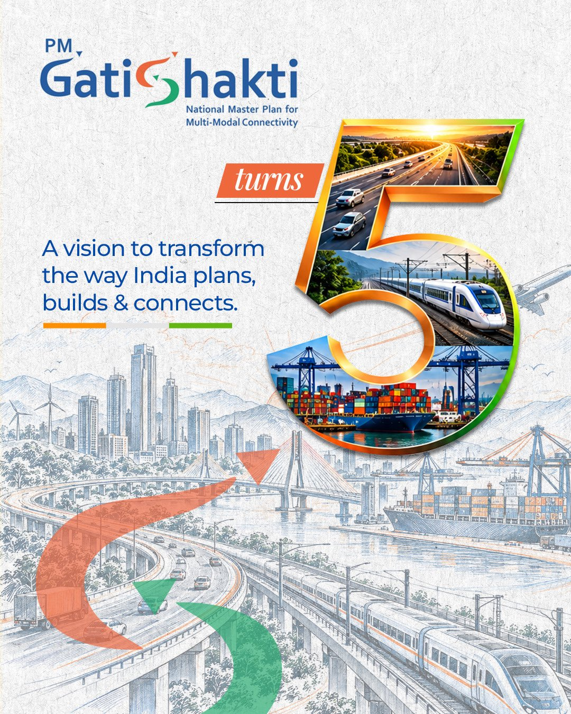
PM Gati Shakti National Master Plan Completes Five Years
The PM Gati Shakti National Master Plan (PMGS-NMP) completed five years on 13 October 2026. Launched in 2021, the initiative aims to improve infrastructure planning and implementation by bringing information from different ministries, states and Union Territories onto a common digital platform.
The plan uses a Geographic Information System (GIS)-based platform to integrate infrastructure-related data. This helps authorities coordinate projects, identify connectivity gaps and improve planning across different transport and logistics networks.
Multimodal Connectivity and Infrastructure Development
PM Gati Shakti brings together planning for roads, railways, ports, airports, waterways and logistics infrastructure. Its objective is to improve coordination among infrastructure projects, reduce delays and support more efficient implementation.
According to the presentation, the platform covers 58 central ministries and departments and 36 states and Union Territories.
The plan also focuses on seven key infrastructure engines that work together to improve multimodal connectivity and support integrated infrastructure development.
Role of Digital Logistics
Digital initiatives complement PM Gati Shakti by improving information exchange across government logistics systems.
One such initiative is the Unified Logistics Interface Platform (ULIP), which connects logistics-related government systems through Application Programming Interfaces (APIs).
As reported in the presentation, by July 2026, ULIP had integrated 46 government logistics systems belonging to 12 central ministries through 142 APIs.
Significance
PM Gati Shakti seeks to strengthen India’s infrastructure ecosystem through coordinated planning, improved connectivity and digital integration. Better coordination between transport networks can support logistics efficiency, facilitate the movement of goods and people, and improve the implementation of development projects.
Key facts for exams:
- Five-year milestone: 13 October 2026
- Launched: 2021
- Technology: GIS-based integrated platform
- Coverage: 58 central ministries and departments, and 36 states and Union Territories
- ULIP figures reported for July 2026: 46 government logistics systems, 12 central ministries and 142 APIs
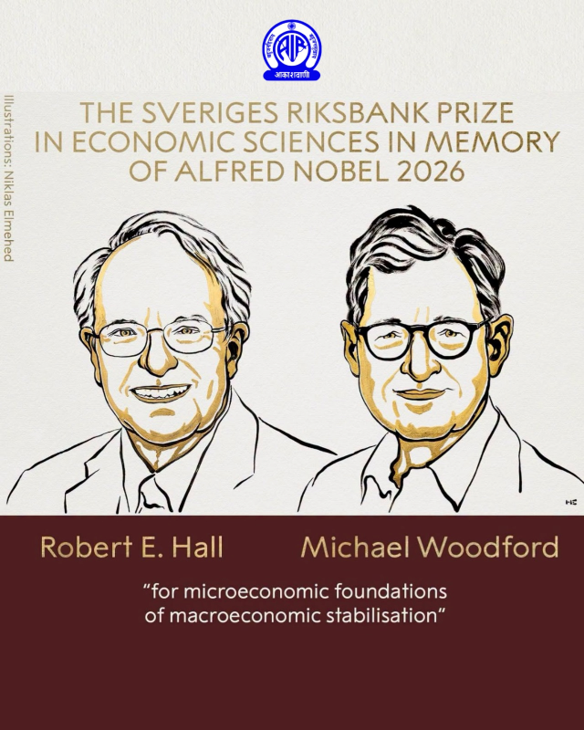
Robert E. Hall and Michael Woodford Receive the 2026 Economics Nobel
American economists Robert E. Hall and Michael Woodford received the 2026 Sveriges Riksbank Prize in Economic Sciences in Memory of Alfred Nobel on 12 October 2026, according to the supplied presentation.
The Royal Swedish Academy of Sciences awarded the prize for their research on the microeconomic foundations of macroeconomic stabilisation. Hall is affiliated with Stanford University, while Woodford is affiliated with Columbia University.
Understanding Their Research
Macroeconomics examines the economy as a whole, including output, employment, inflation and economic growth. Microeconomics, in contrast, studies the decisions of individual households and businesses.
The laureates’ research connects these two levels of analysis by examining how decisions made by households and firms influence overall economic performance.
Their work also explores how stabilisation policies affect business cycles—the fluctuations in economic activity that occur over time.
These foundations are important for understanding how policy decisions influence employment, production and prices. New Keynesian economic models, for example, combine microeconomic decision-making with factors such as price rigidities, which can prevent prices from adjusting immediately when economic conditions change.
Background of the Economics Prize
The prize’s formal name is the Sveriges Riksbank Prize in Economic Sciences in Memory of Alfred Nobel. Sweden’s central bank established it in 1968, and it was first awarded in 1969.
Unlike the five original Nobel Prizes specified in Alfred Nobel’s 1895 will, the Economics Prize was established later.
The 2026 prize carried a total award of 12 million Swedish kronor, to be divided equally between the two recipients.
Key facts for exams:
- 2026 laureates: Robert E. Hall and Michael Woodford
- Awarding institution: Royal Swedish Academy of Sciences
- Research area: Microeconomic foundations of macroeconomic stabilisation
- Total prize money: 12 million Swedish kronor
- Economics Prize established: 1968
- First awarded: 1969
India Hosts First BIMSTEC Home Ministers’ Meeting
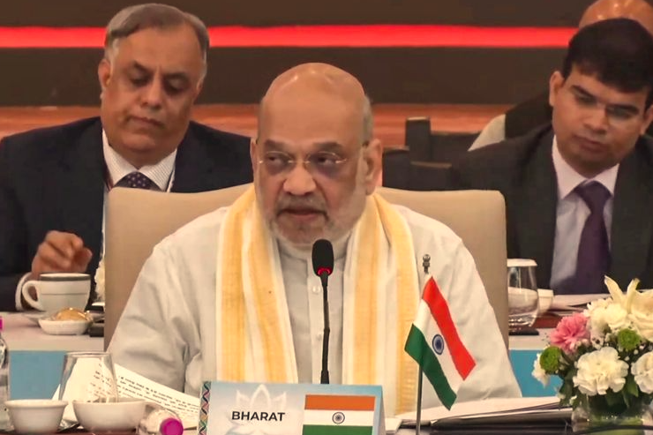
India is hosting the first BIMSTEC Home Ministers’ Meeting in New Delhi on 13 October 2026. Union Home Minister Amit Shah is chairing the meeting, which brings together delegations from all seven member states of the regional organisation.
The meeting focuses on strengthening cooperation against shared security challenges, including terrorism, transnational organised crime, narcotics-related threats, radicalisation, human trafficking, illicit financial flows and cybercrime.
BIMSTEC Member Countries
BIMSTEC stands for the Bay of Bengal Initiative for Multi-Sectoral Technical and Economic Cooperation. Established on 6 June 1997, it promotes regional cooperation among countries connected to the Bay of Bengal.
Its seven members are:
- Bangladesh
- Bhutan
- India
- Myanmar
- Nepal
- Sri Lanka
- Thailand
According to the presentation, Bangladesh’s Home Minister, Salahuddin Ahmed, is not attending the meeting. A delegation led by Home Affairs Senior Secretary Manzur Morshed Chowdhury is representing Bangladesh.
Major Security Priorities
The meeting’s agenda reflects the cross-border nature of contemporary security threats.
- Terrorism: Cooperation to prevent and respond to terrorist activities.
- Transnational organised crime: Action against criminal networks operating across national boundaries.
- Narcotics and trafficking: Stronger coordination to address illicit drug networks and human trafficking.
- Radicalisation: Cooperation to counter processes that can encourage extremist violence.
- Illicit financial flows: Measures against unlawful or improperly recorded cross-border movement of money.
- Cyber threats: Coordination to address security risks arising from digital systems and networks.
Significance for Regional Cooperation
The meeting provides an opportunity for BIMSTEC members to improve information-sharing, strengthen law-enforcement coordination and develop joint approaches to cross-border crime.
As the countries face security threats that can extend across several jurisdictions, regional cooperation is important for effective prevention, investigation and response.
Key facts for exams:
- Organisation: BIMSTEC
- Full form: Bay of Bengal Initiative for Multi-Sectoral Technical and Economic Cooperation
- Established: 6 June 1997
- Meeting venue: New Delhi
- Chair: Union Home Minister Amit Shah
- Total member states: Seven
Review Questions
Q1. What was the theme of the International Day for Disaster Risk Reduction 2026?
A) Building a Disaster-Free World
B) Resilience Starts at Home
C) Early Warning for All
D) Sustainable Communities for the Future
Answer: B) Resilience Starts at Home
Q2. In which year did the United Nations General Assembly establish the International Day for Disaster Risk Reduction?
A) 1985
B) 1987
C) 1989
D) 1992
Answer: C) 1989
Q3. Which Indian cricketer received his fifth ICC Player of the Month award in the men’s category, according to the presentation?
A) Virat Kohli
B) Rohit Sharma
C) Shubman Gill
D) Jasprit Bumrah
Answer: C) Shubman Gill
Q4. Who was named the ICC Women’s Player of the Month for September 2026?
A) Smriti Mandhana
B) Shafali Verma
C) Harmanpreet Kaur
D) Deepti Sharma
Answer: B) Shafali Verma
Q5. In which year was the PM Gati Shakti National Master Plan launched?
A) 2019
B) 2020
C) 2021
D) 2022
Answer: C) 2021
Q6. The Unified Logistics Interface Platform (ULIP) integrates government logistics systems through which technology?
A) Blockchain exclusively
B) Application Programming Interfaces (APIs)
C) Satellite telephony
D) Quantum computing
Answer: B) Application Programming Interfaces (APIs)
Q7. Who received the 2026 Sveriges Riksbank Prize in Economic Sciences in Memory of Alfred Nobel, according to the presentation?
A) Robert E. Hall and Michael Woodford
B) Esther Duflo and Abhijit Banerjee
C) Paul Krugman and Joseph Stiglitz
D) Daron Acemoglu and Simon Johnson
Answer: A) Robert E. Hall and Michael Woodford
Q8. What was the research area recognised by the 2026 Economics Prize in the supplied presentation?
A) International trade and globalisation
B) Microeconomic foundations of macroeconomic stabilisation
C) Behavioural economics and consumer choice
D) Economic inequality and poverty reduction
Answer: B) Microeconomic foundations of macroeconomic stabilisation
Q9. Which organisation’s first Home Ministers’ Meeting was hosted by India in New Delhi on 13 October 2026?
A) ASEAN
B) SAARC
C) BIMSTEC
D) BRICS
Answer: C) BIMSTEC
Q10. In which year was BIMSTEC established?
A) 1995
B) 1997
C) 2001
D) 2005
Answer: B) 1997