




In Current Affairs for 14 July 2026, we will see the latest national and international current affairs news. These important current affairs will be beneficial for your upcoming NDA, CDS, CDS OTA, AFCAT, TA, Agniveer Army, Agniveer Navy, Agniveer Air Force, Women Military Police, INET, MNS, ACC exams, SCO, PCSL, CAPF, and SSB interviews, and direct entries for Army, Navy, and Air Force like SSC Tech, TGC, JAG, NCC, TES, 10+2 Cadet. Download a PDF file about current events at the end of this article. Let us now see the Current Affairs.
Current Affairs 14 July 2026
Centre Renames Central Vista as “Kartavya Bhawan Area”
Introduction
The Government of India has officially renamed the Central Vista redevelopment area as the Kartavya Bhawan Area (also referred to as the Kartavya Bhawan Complex). The announcement was made by Union Minister Manohar Lal during the Central Public Works Department (CPWD) Foundation Day celebrations. The renaming reflects the government’s effort to promote a stronger sense of public duty and move away from colonial-era terminology.
Why Was the Name Changed?
According to the government, the new name symbolizes the spirit of “Kartavya” (Duty) and emphasizes the responsibility of public institutions and civil servants towards the nation and its citizens. It also aligns with the broader objective of giving India’s administrative landmarks names that better represent the country’s values and identity.
Components of the Kartavya Bhawan Area
The Kartavya Bhawan Area includes:
- Existing Kartavya Bhawans housing various government offices.
- Kartavya Path, the ceremonial boulevard connecting Rashtrapati Bhavan and India Gate.
- The upcoming Common Central Secretariat, which will accommodate several Union Ministries.
- Future government office complexes developed under the Central Vista Redevelopment Project.
Significance
The renaming provides a unified identity to India’s central administrative district and reinforces the importance of public service, accountability, and national responsibility.
Conclusion
The transformation of Central Vista into the Kartavya Bhawan Area represents not only an infrastructure upgrade but also a symbolic shift toward governance rooted in duty and service to the people.

MeitY Launches NIDAR 2.0 to Promote Indigenous Drone Innovation
Introduction
The Ministry of Electronics and Information Technology (MeitY), in collaboration with the Drone Federation India (DFI), has launched NIDAR 2.0 (National Innovation Challenge for Drone Application and Research) for the 2026–27 period under the SwaYaan Initiative. The programme aims to strengthen India’s indigenous drone ecosystem and encourage innovation among students.
Objectives
NIDAR 2.0 seeks to:
- Promote drone research and development.
- Encourage innovation in autonomous drone technology.
- Develop indigenous drone electronics.
- Support the vision of Atmanirbhar Bharat and Viksit Bharat @2047.
Key Features
- Prize pool of over ₹65 lakh.
- Startup incubation support.
- Internship opportunities.
- Cloud computing assistance.
- Focus on research, entrepreneurship, and skill development.
Innovation Tracks
Track 1: Drone Innovation
Participants will design fully autonomous drones capable of performing real-world missions using advanced technologies.
Track 2: Component Innovation
This track focuses on developing indigenous drone components and electronic systems to reduce dependence on imports.
VEGA Processor
A major highlight of the programme is the use of the VEGA processor, an indigenous family of microprocessors developed by the Centre for Development of Advanced Computing (C-DAC) under MeitY’s Microprocessor Development Programme.
Conclusion
NIDAR 2.0 is expected to accelerate India’s self-reliance in drone technology by nurturing innovation, developing skilled professionals, and strengthening the domestic drone manufacturing ecosystem.
NAMASTE Day 2026: Recognising the Contribution of Sanitation Workers
Introduction
India will observe the 3rd NAMASTE Day on 14 July 2026, marking three years since the launch of the National Action for Mechanized Sanitation Ecosystem (NAMASTE) Scheme. The celebrations will be led by the Ministry of Social Justice and Empowerment, with the main event taking place at Rabindra Sadan, Kolkata.
About NAMASTE Day
NAMASTE Day is dedicated to acknowledging the invaluable contribution of sanitation workers and promoting safe, dignified, and mechanised sanitation practices.
The observance honours:
- Sewer workers
- Septic tank workers
- Waste pickers
- Former manual scavengers
About the NAMASTE Scheme
Launched during the 2023–24 financial year, the NAMASTE Scheme aims to:
- Eliminate hazardous manual sanitation work.
- Promote mechanised cleaning technologies.
- Improve worker safety.
- Ensure dignity and social security for sanitation workers.
Importance
The initiative supports safer working conditions, modern sanitation systems, and the elimination of manual scavenging while promoting social justice and inclusive development.
Conclusion
NAMASTE Day highlights the essential role played by sanitation workers and reinforces India’s commitment to modern, technology-driven, and humane sanitation services.
India Notifies Tariff Rate Quota Allocation Procedure under India–Oman CEPA
Introduction
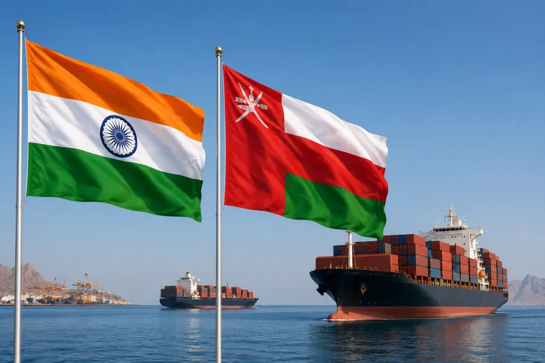
India has notified the Tariff Rate Quota (TRQ) allocation procedure under the India–Oman Comprehensive Economic Partnership Agreement (CEPA), which came into force on 1 June 2026. The notification provides a framework for importers to access concessional tariff benefits under the agreement.
About India–Oman CEPA
The CEPA is a bilateral free trade agreement designed to:
- Increase trade and investment.
- Strengthen economic cooperation.
- Provide preferential market access.
- Reduce or eliminate customs duties on eligible products.
What is a Tariff Rate Quota (TRQ)?
A Tariff Rate Quota (TRQ) allows a specified quantity of goods to be imported at reduced or zero customs duty. Imports beyond the prescribed quota are subject to the normal tariff rates.
Key Provisions
- Concessional tariffs are available within the notified quota.
- Importers must follow the prescribed allocation procedure.
- A valid Certificate of Origin issued by the competent authority in Oman is mandatory.
- Quotas will be managed according to India’s financial year (1 April–31 March).
Significance
The TRQ mechanism promotes balanced trade while protecting domestic industries. It also facilitates smoother implementation of the India–Oman CEPA.
Conclusion
The notification of the TRQ allocation procedure marks an important step in operationalising the India–Oman CEPA and strengthening bilateral economic relations.
India to Host BRICS Labour and Employment Ministers’ Meeting 2026
Introduction
As part of its BRICS Chairship 2026, India will host the BRICS Labour and Employment Ministers’ Meeting in Hyderabad on 15–16 July 2026. The meeting will focus on strengthening cooperation in labour policies, employment generation, workforce development, and social protection.
About BRICS
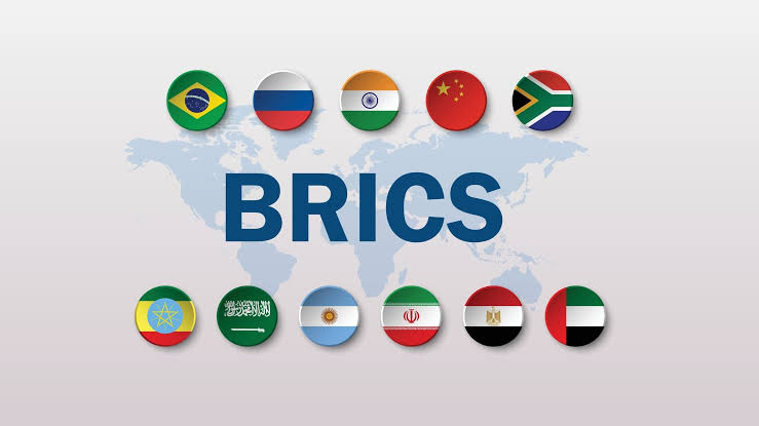
BRICS is a grouping of major emerging economies that collaborates on issues related to economic development, governance, technology, labour, health, education, and international cooperation.
Key Agenda
The meeting will focus on:
- Labour market formalisation.
- Employment generation.
- Skill development and workforce upskilling.
- Social security and labour welfare.
- Women’s participation in the workforce.
Representatives from BRICS member countries and international organisations are expected to participate.
India’s BRICS Chairship Theme
India’s BRICS Presidency in 2026 is guided by the theme:
“Building for Resilience, Innovation, Cooperation and Sustainability.”
Significance
The meeting will provide an opportunity for BRICS nations to exchange best practices, strengthen labour cooperation, and promote inclusive economic growth through improved employment policies.
Conclusion
Hosting the BRICS Labour and Employment Ministers’ Meeting reinforces India’s leadership role within BRICS and highlights its commitment to creating resilient labour markets and sustainable employment opportunities
Review Questions
1. The Government of India has renamed the Central Vista redevelopment area as:
A) Rajpath Complex
B) Kartavya Bhawan Area
C) Rashtrapati Complex
D) Bharat Bhawan
Answer: B) Kartavya Bhawan Area
2. The term “Kartavya” in the newly renamed Kartavya Bhawan Area primarily signifies:
A) Prosperity
B) Freedom
C) Duty and Responsibility
D) Unity
Answer: C) Duty and Responsibility
3. NIDAR 2.0, launched by MeitY, is associated with the promotion of:
A) Electric Vehicles
B) Artificial Intelligence in Healthcare
C) Indigenous Drone Innovation
D) Quantum Computing
Answer: C) Indigenous Drone Innovation
4. NIDAR 2.0 has been launched under which initiative?
A) Digital India
B) SwaYaan Initiative
C) Startup India
D) Skill India Mission
Answer: B) SwaYaan Initiative
5. The indigenous VEGA processor used in NIDAR 2.0 has been developed by:
A) DRDO
B) ISRO
C) C-DAC
D) BEL
Answer: C) C-DAC (Centre for Development of Advanced Computing)
6. India observed the 3rd NAMASTE Day on:
A) 10 July 2026
B) 12 July 2026
C) 14 July 2026
D) 15 July 2026
Answer: C) 14 July 2026
7. The NAMASTE Scheme primarily aims to:
A) Promote Smart Cities
B) Mechanize sanitation work and eliminate hazardous manual practices
C) Improve rural road connectivity
D) Increase digital literacy in villages
Answer: B) Mechanize sanitation work and eliminate hazardous manual practices
8. Under the India–Oman Comprehensive Economic Partnership Agreement (CEPA), a Tariff Rate Quota (TRQ) allows:
A) Unlimited imports without customs duty
B) Imports at reduced or zero duty up to a specified limit
C) Export subsidies for all products
D) Duty-free exports only
Answer: B) Imports at reduced or zero duty up to a specified limit
9. India will host the BRICS Labour and Employment Ministers’ Meeting 2026 in:
A) New Delhi
B) Mumbai
C) Hyderabad
D) Bengaluru
Answer: C) Hyderabad
10. India’s BRICS Chairship theme for 2026 is:
A) One Earth, One Family, One Future
B) Together for Inclusive Growth
C) Building for Resilience, Innovation, Cooperation and Sustainability
D) Shared Prosperity through Innovation
Answer: C) Building for Resilience, Innovation, Cooperation and Sustainability


