





In Current Affairs for 25 July 2026, we will see the latest national and international current affairs news. These important current affairs will be beneficial for your upcoming NDA, CDS, CDS OTA, AFCAT, TA, Agniveer Army, Agniveer Navy, Agniveer Air Force, Women Military Police, INET, MNS, ACC exams, SCO, PCSL, CAPF, and SSB interviews, and direct entries for Army, Navy, and Air Force like SSC Tech, TGC, JAG, NCC, TES, 10+2 Cadet. Download a PDF file about current events at the end of this article. Let us now see the Current Affairs.
Current Affairs 25 July 2026
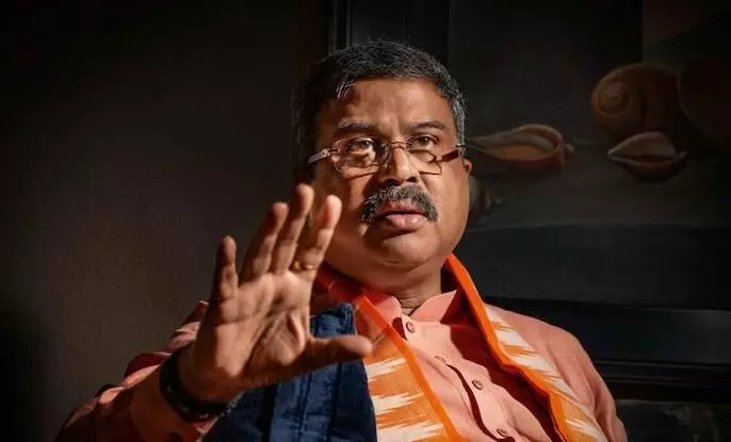
Dharmendra Pradhan Resigns as Union Education Minister
Union Education Minister Dharmendra Pradhan resigned from his post following weeks of protests over alleged irregularities in public examinations, particularly the NEET-UG examination controversy. According to his statement, the decision was taken to restore confidence in the education system and allow students to focus on their academic pursuits.
The resignation came amid increasing demands from students and various organizations seeking greater transparency and fairness in examination processes. In his statement, Pradhan emphasized that education is the foundation of national development and acknowledged the concerns expressed by the country’s youth. He also noted that the government had already initiated action against cases of examination malpractice and expressed hope that his resignation would help reduce tensions surrounding the issue.
Key Highlights
- Resignation linked to protests over examination irregularities.
- Focus on restoring trust in the education system.
- Government reiterated its commitment to preventing examination malpractice.
Cabinet Approves Stronger Anti-Paper Leak Law
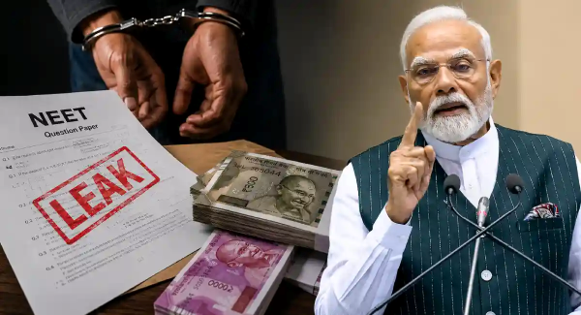
The Union Cabinet has approved amendments to strengthen legal action against examination paper leaks by making punishments significantly more stringent. The proposal seeks to amend the Public Examination (Prohibition of Unfair Means) Act, 2024, with the objective of protecting the integrity of public examinations across the country.
Under the revised provisions, the maximum punishment has been increased to 10 years of imprisonment, while the maximum financial penalty has been raised to ₹10 crore. The minimum jail term for paper leak offences will also increase from three years to five years. In addition, the government plans to facilitate faster trials through the establishment of special courts to deal with organized examination-related crimes.
Key Highlights
- Amendment to the Public Examination Act, 2024.
- Maximum imprisonment increased to 10 years.
- Maximum fine raised to ₹10 crore.
- Minimum imprisonment increased from 3 to 5 years.
- Special courts proposed for speedy trials.
Rajasthan Launches State Water Plan 2047
The Government of Rajasthan has unveiled the Rajasthan State Water Plan 2047, providing a long-term roadmap for improving water security through river-linking projects, groundwater conservation, rainwater harvesting, and greater public participation. The plan was launched on 24 July 2026 to address the state’s growing water requirements.
Among the major initiatives included in the plan is the Ramjal Setu Link Project, which aims to provide drinking water to 17 districts and irrigation facilities for approximately 4.84 lakh hectares of agricultural land. Another major development is the implementation of the Yamuna Water Agreement, under which 1,917 cusecs of Yamuna water will be supplied to the Shekhawati region through a 295-kilometre pipeline, benefiting nearly 7.5 million people.
The plan also highlights investments under AMRUT 2.0, with ₹5,100 crore allocated for drinking water infrastructure across 178 urban local bodies. Additionally, more than 1.5 million rural households are receiving tap water connections under the Jal Jeevan Mission.
Key Highlights
- Rajasthan State Water Plan 2047 launched on 24 July 2026.
- Ramjal Setu Link Project to benefit 17 districts.
- Yamuna Water Agreement to supply 1,917 cusecs of water.
- ₹5,100 crore allocated under AMRUT 2.0.
- Expansion of rural tap water connections under Jal Jeevan Mission.
HCLTech to Invest ₹14,257 Crore in Odisha AI Data Centre
HCLTech has announced an investment of ₹14,257 crore to establish its first Artificial Intelligence (AI) Data Centre in Odisha. The project, announced on 24 July 2026, will be developed at the upcoming Odisha Sovereign AI Park in partnership with Indian AI startup Sarvam and the Government of Odisha. The initiative represents one of the country’s largest investments in AI infrastructure and is expected to strengthen India’s vision of becoming a global leader in artificial intelligence.
An AI data centre is a specialized computing facility designed to process artificial intelligence workloads such as machine learning model training, data storage, inference, and high-speed networking. These facilities require powerful computing systems, advanced cooling technology, reliable power supply, and low-latency connectivity to support complex AI applications.
The Odisha Sovereign AI Park is planned as a state-level AI infrastructure hub that will integrate high-performance computing with Indian AI models and real-world applications. The project aligns with India’s sovereign AI strategy and is expected to support multilingual and sector-specific AI solutions for both government and private organizations. It is projected to generate nearly 5,000 employment opportunities, while a Memorandum of Understanding (MoU) between HCLTech, Sarvam, and the Odisha Government was signed on 24 July 2026.
Key Highlights
- Investment: ₹14,257 crore
- Location: Odisha Sovereign AI Park
- Partners: HCLTech, Sarvam & Government of Odisha
- Expected Employment: Around 5,000 jobs
- Supports India’s Sovereign AI Mission
India and Romania Sign Three Cooperation Agreements
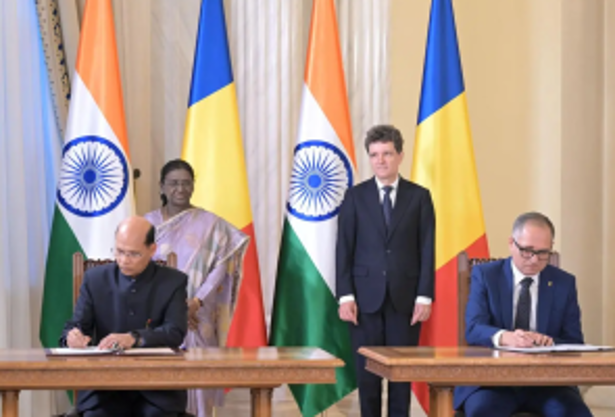
India and Romania have strengthened their bilateral partnership by signing three agreements during the state visit of President Droupadi Murmu to Bucharest on 23 July 2026. The agreements were finalized after delegation-level discussions with Romanian President Nicuşor Dan, reflecting the commitment of both nations to expand cooperation in multiple sectors.
The agreements focus on science and technology, sports cooperation, and Indian studies. A key agreement was signed between India’s Department of Science and Technology and Romania’s National Authority for Research to promote collaborative research, innovation, and scientific exchange. Another important initiative provides for the establishment of a Chair of Indian Studies at the University of Bucharest, with support from the Indian Council for Cultural Relations (ICCR) to promote Indian language, culture, and academic research.
To commemorate 80 years of diplomatic relations, both countries also agreed to celebrate 2028 as the “India–Romania Year of Innovation.” The initiative aims to encourage greater collaboration in education, research, technology, culture, and innovation.
Key Highlights
- Agreements signed on 23 July 2026 in Bucharest.
- Cooperation in science & technology, sports, and Indian studies.
- Chair of Indian Studies to be established at the University of Bucharest.
- 2028 to be celebrated as the India–Romania Year of Innovation.
Indian Scientists Develop Low-Cost Zinc-Air Battery Technology
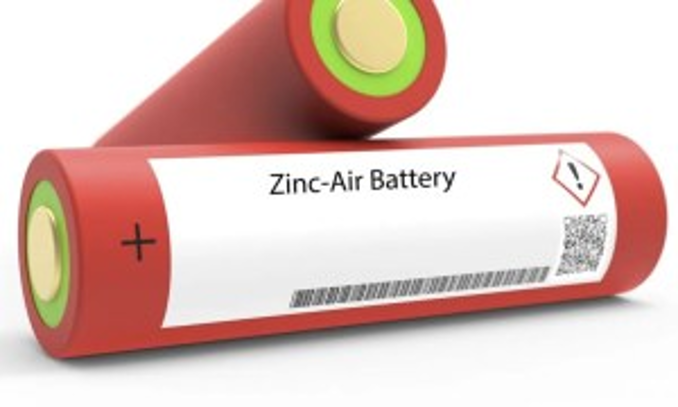
Indian researchers have developed low-cost zinc-air battery technologies, offering a promising alternative to conventional lithium-ion batteries for future energy storage applications. The research, carried out during 2024–2025, focuses on improving battery performance through advanced electrolytes, catalysts, and mechanically rechargeable systems.
Zinc-air batteries generate electricity through the chemical reaction between zinc, which acts as the anode, and oxygen from the atmosphere, which serves as the cathode reactant. These batteries are known for their high theoretical energy density, lower cost, and the abundant availability of zinc, making them attractive for stationary energy storage and electric vehicles.
A research team led by Dr. S. Devaraj at SASTRA Deemed University, with support from the Department of Science and Technology (DST), developed an innovative nanofluid electrolyte using silica and zinc oxide nanoparticles. Laboratory tests showed that the electrolyte remained stable for more than three months, indicating its potential for long-term rechargeable battery applications.
Key Highlights
- Developed as a low-cost alternative to lithium-ion batteries.
- Uses zinc as the anode and oxygen from air as the cathode.
- Research led by Dr. S. Devaraj at SASTRA Deemed University.
- Electrolyte contains silica and zinc oxide nanoparticles.
- Supported by the Department of Science and Technology.
Cabinet Approves BHAVYA Rasayan Scheme
The Union Cabinet has approved the Bharat Audyogik Vikas Yojana Rasayan (BHAVYA Rasayan) scheme to accelerate the development of India’s chemical manufacturing sector. Approved on 24 July 2026, the scheme has a total financial outlay of ₹3,030 crore and will be implemented from FY 2026–27 to FY 2030–31.
The scheme aims to establish three dedicated chemical parks equipped with world-class common infrastructure, essential utilities, and administrative support. Of the total allocation, ₹3,000 crore has been earmarked for infrastructure development, while ₹30 crore has been reserved for administrative expenses. These parks are expected to improve industrial efficiency, strengthen supply chains, and promote investment in the chemical sector.
Chemical parks function as specialized industrial clusters where manufacturers can share infrastructure, logistics, and utilities. Such facilities help reduce production costs, enhance competitiveness, and encourage the growth of both bulk and specialty chemical industries. The BHAVYA Rasayan Scheme is expected to boost India’s manufacturing capabilities and support long-term industrial development.
Key Highlights
- Scheme Name: BHAVYA Rasayan (Bharat Audyogik Vikas Yojana Rasayan)
- Approved on 24 July 2026
- Total Outlay: ₹3,030 crore
- Three dedicated chemical parks to be established.
- Implementation Period: FY 2026–27 to FY 2030–31
- ₹3,000 crore for infrastructure and ₹30 crore for administration.
Review Questions
1. HCLTech has announced an investment of ₹14,257 crore to establish its first AI Data Centre in which state?
A. Karnataka
B. Telangana
C. Tamil Nadu
D. Odisha
Answer: D. Odisha
Explanation: HCLTech will establish its first AI Data Centre at the Odisha Sovereign AI Park with an investment of ₹14,257 crore.
2. HCLTech’s AI Data Centre project in Odisha is being developed in collaboration with which Indian AI startup?
A. Krutrim AI
B. Sarvam
C. Niramai AI
D. Gnani AI
Answer: B. Sarvam
Explanation: The project is a joint initiative of HCLTech, Sarvam, and the Government of Odisha.
3. Approximately how many employment opportunities are expected to be created through HCLTech’s AI Data Centre project?
A. 2,500
B. 3,000
C. 5,000
D. 10,000
Answer: C. 5,000
Explanation: The project is expected to generate around 5,000 jobs.
4. India and Romania signed three agreements during the state visit of which Indian dignitary?
A. Prime Minister Narendra Modi
B. Vice President Jagdeep Dhankhar
C. External Affairs Minister S. Jaishankar
D. President Droupadi Murmu
Answer: D. President Droupadi Murmu
Explanation: The agreements were signed during President Droupadi Murmu’s visit to Bucharest on 23 July 2026.
5. India and Romania agreed to celebrate which year as the “India–Romania Year of Innovation”?
A. 2026
B. 2027
C. 2028
D. 2030
Answer: C. 2028
Explanation: The year 2028 will commemorate 80 years of diplomatic relations between the two countries.
6. Zinc-air batteries generate electricity using zinc and which of the following?
A. Hydrogen
B. Nitrogen
C. Carbon dioxide
D. Oxygen from the air
Answer: D. Oxygen from the air
Explanation: Zinc-air batteries use zinc as the anode and oxygen from the atmosphere as the cathode reactant.
7. The low-cost zinc-air battery technology mentioned in the article was developed by a team led by:
A. Dr. Raghunath Mashelkar
B. Dr. Tessy Thomas
C. Dr. S. Devaraj
D. Dr. Ajay Kumar
Answer: C. Dr. S. Devaraj
Explanation: The research team at SASTRA Deemed University was led by Dr. S. Devaraj.
8. The BHAVYA Rasayan Scheme has been approved for the development of:
A. Pharmaceutical parks
B. Textile parks
C. Electronics manufacturing parks
D. Chemical parks
Answer: D. Chemical parks
Explanation: The scheme provides financial assistance for establishing three dedicated chemical parks.
9. What is the total financial outlay approved under the BHAVYA Rasayan Scheme?
A. ₹2,500 crore
B. ₹3,000 crore
C. ₹5,000 crore
D. ₹3,030 crore
Answer: D. ₹3,030 crore
Explanation: The scheme has a total allocation of ₹3,030 crore, including ₹3,000 crore for infrastructure and ₹30 crore for administration.
10. The BHAVYA Rasayan Scheme will be implemented during which period?
A. FY 2025–26 to FY 2028–29
B. FY 2026–27 to FY 2029–30
C. FY 2026–27 to FY 2030–31
D. FY 2027–28 to FY 2031–32
Answer: C. FY 2026–27 to FY 2030–31
Explanation: The scheme will remain in operation from FY 2026–27 to FY 2030–31.


