




In Current Affairs for 27 June 2026, we will see the latest national and international current affairs news. These important current affairs will be beneficial for your upcoming NDA, CDS, CDS OTA, AFCAT, TA, Agniveer Army, Agniveer Navy, Agniveer Air Force, Women Military Police, INET, MNS, ACC exams, SCO, PCSL, CAPF, and SSB interviews, and direct entries for Army, Navy, and Air Force like SSC Tech, TGC, JAG, NCC, TES, 10+2 Cadet. Download a PDF file about current events at the end of this article. Let us now see the Current Affairs.
Current Affairs 27 June 2026
World MSME Day 2026
Every year on 27 June, countries across the globe celebrate World Micro, Small and Medium-sized Enterprises (MSME) Day to acknowledge the significant role played by small businesses in economic development. MSMEs are considered the backbone of many economies as they generate employment, encourage innovation, promote entrepreneurship, and contribute to inclusive growth.
The 2026 theme, “Empowering MSMEs through Innovation and Sustainable Industrial Development,” highlights the importance of adopting new technologies and environmentally sustainable practices to strengthen small enterprises.
MSMEs are instrumental in achieving several United Nations Sustainable Development Goals (SDGs). Their contribution extends to reducing poverty (SDG 1), promoting gender equality (SDG 5), creating decent jobs and economic growth (SDG 8), fostering industry and innovation (SDG 9), reducing inequalities (SDG 10), and encouraging responsible production and consumption (SDG 12). Across the world, these enterprises continue to support resilient and sustainable economic progress.
India Launches World’s First Nuclear-Heat Hydrogen Production Facility
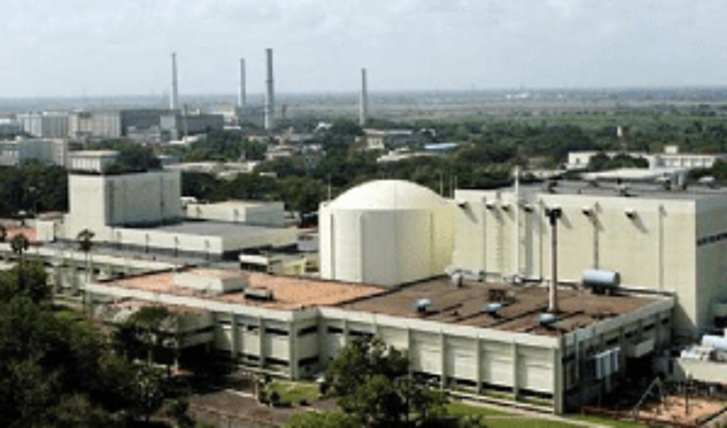
India has achieved a major milestone in clean energy by inaugurating the world’s first hydrogen production facility powered by nuclear process heat. The facility was commissioned on 26 June 2026 at the Indira Gandhi Centre for Atomic Research (IGCAR) in Kalpakkam, Tamil Nadu.
Unlike conventional methods that mainly depend on electricity, this innovative plant produces hydrogen using the Copper-Chlorine thermochemical cycle, where high-temperature nuclear heat drives the chemical reactions needed to split water into hydrogen and oxygen. The required heat is supplied by the Fast Breeder Test Reactor (FBTR) located within the IGCAR campus.
The Copper-Chlorine technology has been developed indigenously by the Bhabha Atomic Research Centre (BARC), representing a significant advancement in India’s clean hydrogen programme. This breakthrough is expected to strengthen India’s efforts towards achieving energy security and reducing carbon emissions.
India Successfully Conducts First Jet Aircraft Landing Using GAGAN Navigation
India has successfully completed its first satellite-guided landing approach for a jet aircraft using the indigenous GAGAN navigation system. The trial was conducted on 27 June 2026 at Udaipur Airport, where an IndiGo Airbus A320 performed the approach under the supervision of the Directorate General of Civil Aviation (DGCA).
GAGAN (GPS Aided GEO Augmented Navigation) is India’s Satellite-Based Augmentation System jointly developed by the Indian Space Research Organisation (ISRO) and the Airports Authority of India (AAI). The system improves GPS accuracy through geostationary satellites and ground-based reference stations.
The successful demonstration used Localiser Performance with Vertical Guidance (LPV), enabling aircraft to receive both horizontal and vertical navigation guidance even at airports without an Instrument Landing System (ILS). GAGAN delivers navigation accuracy of nearly three metres, improving operational safety and efficiency, particularly at smaller airports.
India remains the first country in the Asia-Pacific region to operate a fully functional Satellite-Based Augmentation System for civil aviation.

West Bengal Plans to Introduce Uniform Civil Code Bill
The West Bengal Government is preparing to introduce a Uniform Civil Code (UCC) Bill in the State Assembly during the Budget Session on 29 June 2026.
The proposed legislation aims to establish a common legal framework governing marriage, divorce, inheritance, and adoption for all citizens, irrespective of religion. The constitutional basis for such legislation is found in Article 44, which places the Uniform Civil Code among the Directive Principles of State Policy.
According to reports, the draft legislation includes provisions such as equal inheritance rights, prohibition of polygamy, invalidation of child marriages, and compulsory registration of live-in relationships.
If enacted, West Bengal would become the fourth Indian state to implement a Uniform Civil Code after Uttarakhand, Gujarat, and Assam.
ISRO Advances Semi-Cryogenic Engine Development
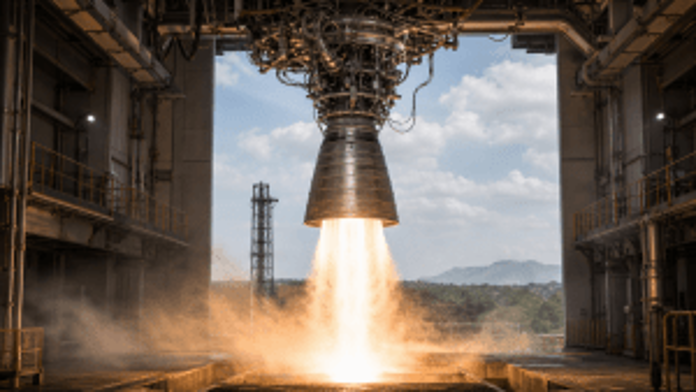
The Indian Space Research Organisation (ISRO) has successfully completed another important test in the development of its semi-cryogenic rocket engine. On 24 June 2026, engineers carried out a hot test of the engine’s power head at the ISRO Propulsion Complex, Mahendragiri, Tamil Nadu.
During the test, the engine generated 175 tonnes of thrust, achieving nearly 88% of its planned performance target. This marks the eighth successful hot test conducted under the Power Head Test Article programme.
The new SC120 semi-cryogenic stage is powered by the SE2000 engine, capable of producing approximately 2,000 kilonewtons of thrust. It is being designed to replace the existing L110 core stage used in the LVM3 launch vehicle.
The propulsion system operates using liquid oxygen (LOX) as the oxidiser and kerosene as the fuel, offering greater efficiency and cost-effectiveness compared to conventional propulsion systems.
ISRO has also recently completed successful tests of the CE20 cryogenic engine and a 3D-printed PS4 engine, demonstrating continuous progress in India’s indigenous space propulsion technologies.
Review Questions
1. World MSME Day is observed every year on which date?
A) 21 June
B) 25 June
C) 27 June
D) 30 June
Answer: C) 27 June
Explanation: World MSME Day is observed annually on 27 June to recognize the contribution of Micro, Small and Medium-sized Enterprises to employment, innovation, and economic development.
2. What is the theme of World MSME Day 2026?
A) MSMEs for Global Growth
B) Green Economy for All
C) Empowering MSMEs through Innovation and Sustainable Industrial Development
D) Inclusive Business Revolution
Answer: C) Empowering MSMEs through Innovation and Sustainable Industrial Development
Explanation: The 2026 theme emphasizes innovation and sustainable industrial practices to strengthen MSMEs.
3. India inaugurated the world’s first hydrogen production facility using nuclear process heat at which location?
A) Trombay, Maharashtra
B) Kota, Rajasthan
C) Kalpakkam, Tamil Nadu
D) Kudankulam, Tamil Nadu
Answer: C) Kalpakkam, Tamil Nadu
Explanation: The facility was inaugurated at the Indira Gandhi Centre for Atomic Research (IGCAR), Kalpakkam.
4. Which thermochemical process is used in India’s new nuclear-heat hydrogen production facility?
A) Sulfur-Iodine Cycle
B) Steam Reforming
C) Alkaline Electrolysis
D) Copper-Chlorine Cycle
Answer: D) Copper-Chlorine Cycle
Explanation: The facility uses the Copper-Chlorine thermochemical cycle, developed by BARC, to produce hydrogen.
5. GAGAN stands for:
A) Geo Augmented Global Aviation Network
B) Global Air Guidance and Navigation
C) GPS Aided GEO Augmented Navigation
D) Geostationary Aviation Guidance and Network
Answer: C) GPS Aided GEO Augmented Navigation
Explanation: GAGAN is India’s Satellite-Based Augmentation System jointly developed by ISRO and AAI.
6. Which aircraft was used during India’s first jet aircraft landing using the GAGAN navigation system?
A) Boeing 737 MAX
B) Airbus A350
C) ATR-72
D) IndiGo Airbus A320
Answer: D) IndiGo Airbus A320
Explanation: An IndiGo Airbus A320 successfully carried out the satellite-guided landing approach at Udaipur Airport.
7. Article 44 of the Constitution of India is related to which of the following?
A) Fundamental Rights
B) Emergency Provisions
C) Uniform Civil Code
D) Right to Education
Answer: C) Uniform Civil Code
Explanation: Article 44, under the Directive Principles of State Policy, encourages the State to secure a Uniform Civil Code for all citizens.
8. If passed, West Bengal would become the ________ state to implement the Uniform Civil Code.
A) Second
B) Third
C) Fourth
D) Fifth
Answer: C) Fourth
Explanation: West Bengal would become the fourth state, after Uttarakhand, Gujarat, and Assam, to implement a Uniform Civil Code.
9. The semi-cryogenic propulsion stage being developed by ISRO is designated as:
A) PSLV-C60
B) GSLV Mk III
C) CE20
D) SC120
Answer: D) SC120
Explanation: The SC120 semi-cryogenic stage is powered by the SE2000 engine and is intended to replace the L110 core stage of the LVM3 launch vehicle.
10. Which combination of propellants is used in ISRO’s semi-cryogenic rocket engine?
A) Liquid Hydrogen and Liquid Oxygen
B) Nitrogen Tetroxide and UDMH
C) Solid Fuel and Liquid Oxygen
D) Liquid Oxygen (LOX) and Kerosene
Answer: D) Liquid Oxygen (LOX) and Kerosene
Explanation: ISRO’s semi-cryogenic engine uses Liquid Oxygen (LOX) as the oxidizer and kerosene as the fuel, providing higher efficiency and lower operational costs.


