In Current Affairs for 07 January 2026, we will see the latest national and international current affairs news. These important current affairs will be beneficial for your upcoming NDA, CDS, CDS OTA, AFCAT, TA, Agniveer Army, Agniveer Navy, Agniveer Air Force, Women Military Police, INET, MNS, ACC exams, SCO, PCSL, CAPF, and SSB interviews, and direct entries for Army, Navy, and Air Force like SSC Tech, TGC, JAG, NCC, TES, 10+2 Cadet. Download a PDF file about current events at the end of this article. Let us now see the Current Affairs.
Defence Current Affairs 07 January 2026
India Accelerates Defence and Space Modernisation on Multiple Fronts
India is taking decisive steps to strengthen its national security and technological self-reliance across land, sea, air and space domains. Recent initiatives by the armed forces and ISRO reflect a long-term strategy focused on modernisation, indigenous capability building and future-ready defence infrastructure.
India Builds a Robust Shield Against Drone Threats
With the growing use of drones in modern warfare, India is rapidly upgrading its defences to counter unmanned aerial threats. As part of this effort, the government is pursuing Mission Sudarshan Chakra, aimed at creating a comprehensive air defence architecture. Complementing this initiative, the Indian armed forces are developing a joint Counter Unmanned Aerial System (CUAS) grid designed specifically to detect, track and neutralise hostile drones.
This CUAS grid will function independently of existing air defence networks such as the Indian Air Force’s Integrated Air Command and Control System (IACCS). By networking all counter-drone systems operated by the Army, Navy and Air Force, the grid will ensure seamless monitoring of drone activity across sensitive areas.
The system will be linked with Joint Air Defence Centres (JADC) of all three services, enabling coordinated and real-time responses. It will also integrate numerous counter-drone systems acquired over the past decade. In addition, the Indian Army is deploying air defence guns in populated regions to safeguard civilians and critical infrastructure from aerial threats posed by drones and hostile aircraft.
Pinaka MLRS Upgrade Marks Shift to Life-Cycle Modernisation
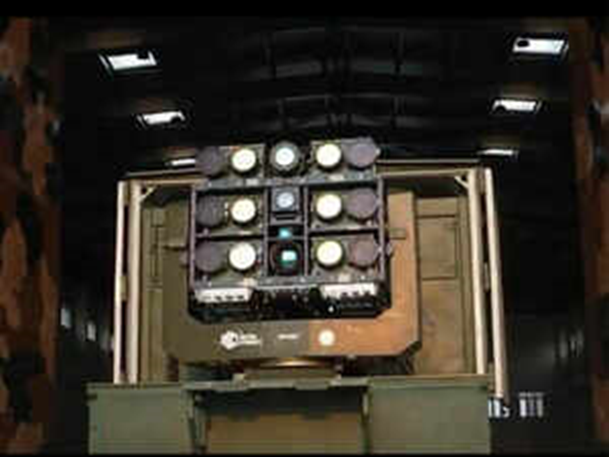
In a significant move towards cost-effective modernisation, the Indian Army has partnered with Tata Advanced Systems Limited (TASL) and the 510 Army Base Workshop (ABW) to overhaul and upgrade the Pinaka Multiple Launch Rocket System (MLRS). This initiative reflects a shift away from replacing ageing platforms toward extending their operational life through structured mid-life upgrades.
Rather than purchasing new launchers, the Army is enhancing existing Pinaka systems that have been in service for over 15 years. These launchers, exposed to heavy operational use and challenging environments, will undergo detailed refurbishment along with major capability upgrades.
Under the public-private partnership model, TASL will execute the initial batch of upgrades, applying its expertise in system integration and design. The focus will be on modern fire-control systems, advanced electronics and structural changes required to support guided rocket technologies, ensuring the Pinaka system remains battlefield-relevant for years to come.
Indian Navy Expands Presence with New Base at Haldia
To strengthen maritime security in the eastern seaboard, the Indian Navy is establishing a new naval base at Haldia in West Bengal. This development will enhance India’s operational reach in the Bay of Bengal, a region witnessing increased strategic activity and extra-regional naval presence.
Located on the Hooghly River near its junction with the Haldi River, Haldia offers direct access to the Bay of Bengal and lies about 130 km from the Sandheads deep-sea area. The existing Haldia Dock Complex, operational since the 1970s, already supports large cargo vessels and provides ready infrastructure for naval adaptation.
The new base will mainly support smaller warships, including Fast Interceptor Crafts and Water Jet Fast Attack Crafts. These assets are crucial for coastal defence, anti-piracy operations, maritime surveillance and humanitarian assistance. The move strengthens India’s deterrence posture while leveraging the Navy’s flexibility without escalating regional tensions.
ISRO Studies Orbiting AI Data Centres
India’s space ambitions are expanding beyond launches and satellites, as ISRO explores the feasibility of orbit-based Artificial Intelligence data centres. Confirmed by the Department of Space in Parliament, this initiative aims to bring edge computing to space, allowing satellites to process and store data directly in orbit.
By reducing dependence on ground stations, orbiting AI systems can significantly cut data transmission delays and ease bandwidth limitations. This capability is especially valuable for time-sensitive applications such as satellite imagery analysis and advanced communications.
Preliminary assessments suggest the concept is technically feasible due to progress in onboard processors, satellite hardware and solar power systems. However, challenges remain, including high launch costs, the need for ultra-fast optical inter-satellite links, space debris management and regulatory approvals for large satellite constellations.
‘Soorya’ NGLV Reflects Industry-Led Space Transformation
ISRO is also reshaping India’s space ecosystem through an industry-driven approach to its Next Generation Launch Vehicle (NGLV), informally known as “Soorya.” Unlike traditional models dominated by government facilities, this programme is being designed from the outset with deep private sector participation.
Under this framework, industry players will act as co-developers and long-term production partners rather than mere suppliers. Indian companies are expected to invest early in infrastructure for prototyping, manufacturing, engine development and vehicle integration.
ISRO’s assurance of long-term production contracts makes these investments commercially viable, reducing uncertainty for private players. This approach aims to create a strong indigenous industrial base capable of supporting high launch frequency and rapid scaling for heavy-lift missions, positioning India as a competitive global space power.
Review Questions
- What is the primary objective of creating a joint Counter Unmanned Aerial
System (CUAS) grid?
A. To replace existing air defence systems
B. To counter enemy missile attacks
C. To foil enemy drone attacks
D. To control civilian air traffic
ANSWER: C - The joint CUAS grid will function separately from which existing air defence
network of the Indian Air Force?
A. Akash Missile Network
B. Integrated Air Command and Control Systems (IACCS)
C. National Air Defence Grid
D. Ballistic Missile Defence System
ANSWER: B - Which organisations have partnered to overhaul and upgrade the Pinaka
Multiple MRL?
A. DRDO and HAL
B. ISRO and BEL
C. Tata Advanced Systems Limited (TASL) and 510 Army Base Workshop
D. L&T and Ordnance Factory Board
ANSWER: C - The new Indian Navy base at Haldia will primarily support which category of
vessels?
A. Aircraft carriers
B. Nuclear submarines
C. Large destroyers
D. Fast Interceptor Crafts and fast attack crafts
ANSWER: D - What is the key advantage of ISRO’s proposed orbiting AI data centres?
A. Reduced satellite manufacturing costs
B. Elimination of ground stations
C. Lower latency and reduced bandwidth dependency
D. Increased launch frequency
ANSWER: C - Defence Industrial Corridors Was Inaugurated In
A. 2018
B. 2021
C. 2022
D. 2016
ANSWER: A - The Karakorams Range covers parts of
A. Afghanistan, China, Indonesia
B. Afghanistan, China, India
C. Afghanistan, China, India, Pakistan, and Tajikistan
D. None of the above
ANSWER: C - Army War College Is In
A. Mhow
B. New Delhi
C. Noida
D. Nagpur
ANSWER: A - Sarvatra Vijay Is The Motto Of
A. RAJPUT REGIMENT
B. DOGRA REGIMENT
C. SIKH REGIMENT
D. None of the above
ANSWER: A - Where Is The Training Command of The IAF?
A. Bengaluru
B. Vishakhapatnam
C. Pune
D. Mumbai
ANSWER: A - Exercise Cope India Conducted b/w
A. USA
B. Russia
C. Israel
D. Japan
ANSWER: A - “Kartavyam Anvatma” (Duty before death) Is The Motto Of
A. RAJPUT REGIMENT
B. DOGRA REGIMENT
C. SIKH REGIMENT
D. None of the above
ANSWER: B - The Cheetah Is A
A. Helicopter
B. Machine Gun
C. UAV
D. Fighter Jet
ANSWER: A - INS Khanderi Is A
A. Destroyer
B. OPV
C. Submarine
D. Tank
ANSWER: C - Which of the following is NOT a landlocked country?
A. Laos
B. Serbia
C. Ethiopia
D. Cambodia
ANSWER: D - “THE ROOM ON THE ROOF ” Book Is Written By
A. Ruskin Bond
B. Satyajit Ray
C. Manohar Malgonkar
D. Nirad C. Chaudhuri
ANSWER: A - Exercise Lamitiye Conducted b/w India &
A. Qatar
B. Oman
C. UAE
D. Seychelles
ANSWER: D - Rashtriya Raksha University Is In
A. Gandhinagar
B. Mumbai
C. New Delhi
D. Chennai
ANSWER: A - HSTDV Stands For
A. Hypersonic Technology Vehicle
B. Hypersonic Technology Demonstrator Vehicle
C. Hypersonic Technology Detonator Vehicle
D. None of the above
ANSWER: B - Joint Ex B/w The India And Singapore Is Called:
A. Bold Kurukshetra
B. SLINEX
C. Indra
D. Yudha Abhyas
ANSWER: A
ALSO READ:
- Latest Daily Current Affairs and Defence Updates
- Latest Daily Current Affairs November 2025[DOWNLOAD PDF]
- Latest Daily Current Affairs October 2025[DOWNLOAD PDF]
- Latest Daily Current Affairs August 2025[DOWNLOAD PDF]
- Latest Daily Current Affairs July 2025[DOWNLOAD PDF]
- Monthly Defence Current Affairs June 2025 [DOWNLOAD PDF]
- Monthly Defence Current Affairs May 2025 [DOWNLOAD PDF]
- Monthly Defence Current Affairs April 2025 [DOWNLOAD PDF]
- Monthly Defence Current Affairs March 2025 [DOWNLOAD PDF]
- Monthly Defence Current Affairs February 2025 [DOWNLOAD PDF]
- Monthly Defence Current Affairs January 2025 [DOWNLOAD PDF]
- Defence Current Affairs Year End Review 2024
- Monthly Defence Current Affairs November 2024 [DOWNLOAD PDF]
- Monthly Defence Current Affairs October 2024 [DOWNLOAD PDF]
- Monthly Defence Current Affairs September 2024 [DOWNLOAD PDF]
- Monthly Defence Current Affairs August 2024 [DOWNLOAD PDF]
- Monthly Defence Current Affairs July 2024 [DOWNLOAD PDF]
- Monthly Defence Current Affairs June 2024 [DOWNLOAD PDF]