In Current Affairs for 08 January 2026, we will see the latest national and international current affairs news. These important current affairs will be beneficial for your upcoming NDA, CDS, CDS OTA, AFCAT, TA, Agniveer Army, Agniveer Navy, Agniveer Air Force, Women Military Police, INET, MNS, ACC exams, SCO, PCSL, CAPF, and SSB interviews, and direct entries for Army, Navy, and Air Force like SSC Tech, TGC, JAG, NCC, TES, 10+2 Cadet. Download a PDF file about current events at the end of this article. Let us now see the Current Affairs.
Defence Current Affairs 08 January 2026
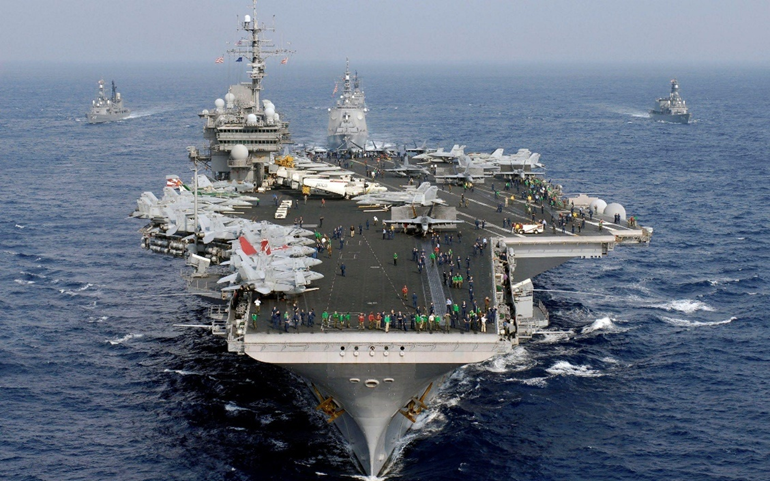
Indian Armed Forces Accelerate Modernisation Across Air, Land and Sea
India’s armed forces are undergoing a rapid transformation to address emerging threats and future warfare requirements. From unmanned combat formations and advanced missiles to naval expansion and indigenous upgrades, recent developments highlight a decisive shift towards technology-driven military strength.
Indian Army to Raise Shaktibaan Regiments for Drone Warfare
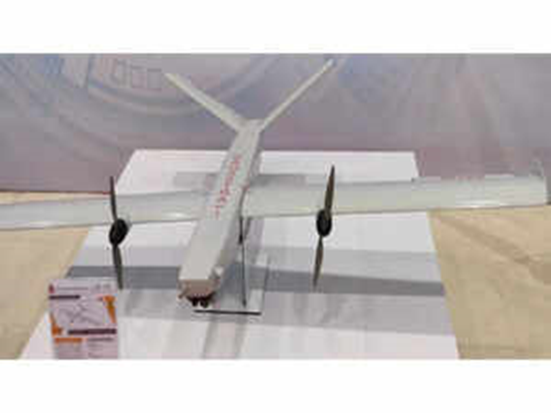
In a significant move to strengthen unmanned combat capabilities, the Indian Army is in the process of raising 15 to 20 specialised “Shaktibaan” regiments dedicated to drone-based warfare. These new formations will be equipped with swarm drones, loitering munitions, and long-endurance unmanned aerial vehicles (UAVs) capable of engaging targets ranging from 5 kilometres to nearly 500 kilometres.
These regiments will function under the Regiment of Artillery, with some initial units already operational. The restructuring plan, conceptualised under the leadership of Army Chief General Upendra Dwivedi, reflects the Army’s transition towards modern, network-centric warfare.
For long-range precision strikes beyond 400 kilometres, the Artillery already operates BrahMos supersonic cruise missiles and is inducting extended-range Pinaka rocket systems with a reach of 120 kilometres.
To equip the first Shaktibaan regiment, the Army is preparing to issue a fast-track procurement tender for around 850 loitering munitions, along with associated launch systems. The estimated project cost is about ₹2,000 crore, with Indian defence firms such as Solar Defence and Aerospace, AdDefence, and RapheM expected to compete.
Additionally, the Artillery will also raise 35–40 “Divyastra” drone batteries, integrated within artillery divisions, to deliver lethal precision strikes using multiple drone types. Loitering munitions like Nagastra, SkyStriker, Harpy, and Harop have already demonstrated their effectiveness during Operation Sindoor, where enemy infrastructure and bases were successfully neutralised.
Indian Navy to Commission a Record 19 Warships in 2026
The year 2026 is set to become historic for the Indian Navy, with plans to commission 19 warships in a single year, the highest induction ever achieved. This milestone reflects the rapid growth of India’s indigenous shipbuilding ecosystem and its ambition to emerge as a formidable blue-water navy.
Among the most prominent additions will be the Nilgiri-class stealth frigates, displacing approximately 7,400 tonnes. These warships incorporate advanced stealth design, reduced radar signatures, and integrated sensors, significantly improving survivability in contested maritime environments. Their induction will substantially enhance India’s anti-submarine warfare (ASW) and surface combat capabilities across the Indian Ocean Region (IOR).
These inductions also align with the Navy’s long-term objective of operating around 200 warships by 2035, including three indigenous aircraft carriers and six nuclear-powered submarines. Projects such as Project 75I for next-generation submarines and Next Generation Missile Vessels will further drive force expansion. The entry of private players, including Adani’s proposed shipyard at Kochi, is expected to diversify and strengthen shipbuilding capacity.
L&T Secures Indian Army Contract to Upgrade Pinaka Rocket Systems
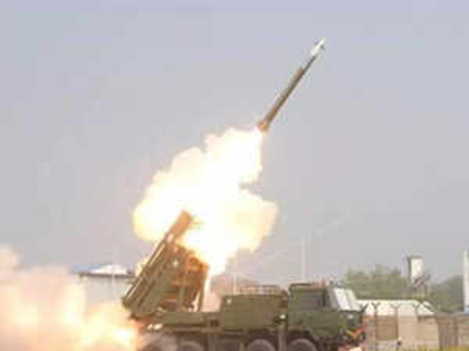
Engineering major Larsen & Toubro (L&T) has received a key order from the Corps of Electronics and Mechanical Engineers (EME) of the Indian Army for the upgrade, overhaul, and obsolescence management of the indigenous Pinaka Multi-Rocket Launcher System.
The project focuses on replacing outdated components, modernising critical subsystems, and providing long-term technical assistance to Army Base Workshops. This collaboration marks a major step in strengthening life-cycle support for Made-in-India artillery systems through a robust public-private partnership model.
Initially, L&T will carry out a pilot overhaul of the Pinaka launcher and Battery Command Post in partnership with 510 Army Base Workshop (ABW). Once the pilot phase is completed successfully, further upgrades will be undertaken by 510 ABW, with L&T continuing to supply key spares, technical expertise, and quality supervision.
Indian Navy’s First Training Squadron to Deploy to Southeast Asia
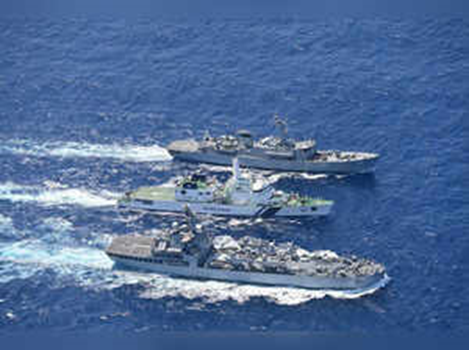
The Indian Navy is preparing to deploy its First Training Squadron (1TS) on a long-range training mission to Southeast Asia, reaffirming India’s commitment to maritime cooperation and regional engagement.
The deployment will include INS Tir, INS Shardul, INS Sujata, along with the Indian Coast Guard ship Sarathi. This mission forms part of the training programme for officers undergoing the 110th Integrated Officers’ Training Course (IOTC).
Beyond professional training, the Long Range Training Deployment (LRTD) aims to promote maritime diplomacy, goodwill, and collaborative security efforts with partner nations in the region, reflecting India’s cooperative approach to maintaining stability in the Indo-Pacific.
DRDO Cleared to Develop BM-04 Short-Range Ballistic Missile
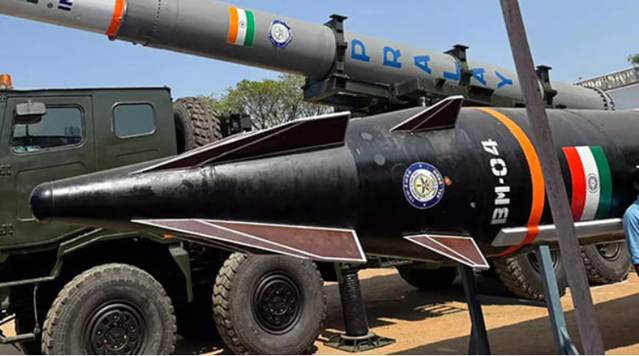
India’s missile capabilities are set to expand further with the Defence Research and Development Organisation (DRDO) receiving approval to develop the BM-04 short-range ballistic missile (SRBM). Following the grant of Acceptance of Necessity (AoN), the programme is expected to move swiftly towards development and testing.
The BM-04 fills a critical gap between existing systems. While Pinaka rockets serve tactical roles up to 90 kilometres and Agni missiles cater to long-range strategic deterrence, the BM-04 will provide precision strike capability in the 400 to 1,500 kilometre range.
Designed for conventional precision warfare, the missile can neutralise high-value targets such as command centres, airbases, and logistics hubs without resorting to nuclear payloads, thereby reinforcing India’s graduated response and conventional deterrence doctrine.
Technically, the BM-04 weighs around 11.5 tonnes, measures 10.2 metres in length, and carries a 500-kg conventional warhead. Powered by a two-stage solid-fuel propulsion system, it offers rapid launch readiness and mobility. Advanced guidance using inertial navigation, GPS, and NavIC ensures resistance to electronic jamming, with a CEP of under 30 metres. Control fins and aerodynamic surfaces allow mid-course manoeuvring to evade enemy air defences.
Conclusion
These developments collectively underline India’s focused push towards self-reliance, technological superiority, and joint-force integration. Whether through unmanned combat units, naval expansion, missile innovation, or indigenous system upgrades, the Indian Armed Forces are steadily evolving to meet the demands of future conflicts.
Review Questions
- The primary role of the Shaktibaan Regiments being raised by the Indian Army
is to:
A. Operate nuclear-capable ballistic missiles
B. Conduct armoured warfare operations
C. Carry out unmanned and drone-based combat missions
D. Provide air defence cover to infantry units
ANSWER: C - Which of the following weapon systems is already used by the Indian Army for
long-range strikes beyond 400 km?
A. Pralay missile
B. BrahMos cruise missile
C. Akash surface-to-air missile
D. Nagastra loitering munition
ANSWER: B - The commissioning of 19 warships by the Indian Navy in 2026 is significant
because it:
A. Marks the first induction of nuclear submarines
B. Represents the largest single-year naval induction in India’s history
C. Completes Project 75I submarine programme
D. Signals the retirement of older destroyers
ANSWER: B - The BM-04 ballistic missile is best described as:
A. An intercontinental nuclear missile
B. A tactical rocket system with 90 km range
C. A conventional precision-strike missile with 400–1,500 km range
D. An air-launched cruise missile
ANSWER: C - Larsen & Toubro’s contract with the Indian Army primarily focuses on:
A. Manufacturing new Pinaka rocket launchers
B. Exporting Pinaka systems to foreign countries
C. Overhauling and upgrading existing Pinaka launcher systems
D. Integrating Pinaka with BrahMos units
ANSWER: C - Madagascar Is Located In
A. Indian Ocean
B. Arabian Sea
C. South China Sea
D. Maldives
ANSWER: A - World Report on Health of Refugee and Migrants is released by which of the
following organisation?
A. World Economic Forum
B. United Nations Human Rights Commission
C. World Bank
D. World Health Organisation
ANSWER: D - Who is known as India’s missile woman?
A. Dr. Aditi Pant
B. Dr. Indira Hinduja
C. Dr. Tessy Thomas
D. Koneru Humpy
ANSWER: C - Which one of the following pairs of islands is separated from each other by the
‘Ten Degree Channel’?
A. Andaman and Nicobar
B. Nicobar and Sumatra
C. Maldives and Lakshadweep
D. Sumatra and Java
ANSWER: A - SEPECAT Jaguar Is A
A. Fighter Jet
B. Ship
C. Tank
D. None
ANSWER: A - Transport Aircraft of IAF Is
A. C-17 Globemaster
B. Tejas
C. Apache
D. Illyushin 78
ANSWER: A - War Cry Of RAJPUTANA RIFLES Is
A. Garud ka hun bol pyare
B. Everywhere
C. Raja Ramachandra ki jai
D. Charge and Attack
ANSWER: C - Joint Exercises B/w The India And USA Is Called:
A. Surya Kiran
B. Vajra Prahar
C. Yudha Abhyas
D. Both B & C
ANSWER: D - LEMOA Stands For
A. Logistics Exchange Memorandum of Agreement
B. Logistics Exchange Memorandum of Appeal
C. Logistics Extra Memorandum of Agreement
D. All are correct.
ANSWER: A - Captain Rank of Indian Navy Equivalent to Which rank of IAF?
A. Flying Officer
B. Flight Lieutenant
C. Group Captain
D. None
ANSWER: C - Heron TP Drone Is Made By
A. Brazil
B. India
C. Israel
D. USA
ANSWER: C - Kampala Is The Capital Of
A. Uganda
B. Qatar
C. UAE
D. Tuvalu
ANSWER: A - “The Battle of Belonging” Book Is Written By
A. Shashi Tharoor
B. Sitaram Yechuri
C. Hew Strachan
D. APJ Abdul Kalam
ANSWER: A - Joint Exercises B/w The India And Oman Is Called:
A. Yama
B. SLINEX
C. Indra
D. AL NAGAH
ANSWER: D - “Naam Namak Nishaan” Is The Motto Of
A. THE GRENADIERS
B. Rajputana Rifles
C. Gorkha
D. None
ANSWER: A
ALSO READ:
- Latest Daily Current Affairs and Defence Updates
- Latest Daily Current Affairs November 2025[DOWNLOAD PDF]
- Latest Daily Current Affairs October 2025[DOWNLOAD PDF]
- Latest Daily Current Affairs August 2025[DOWNLOAD PDF]
- Latest Daily Current Affairs July 2025[DOWNLOAD PDF]
- Monthly Defence Current Affairs June 2025 [DOWNLOAD PDF]
- Monthly Defence Current Affairs May 2025 [DOWNLOAD PDF]
- Monthly Defence Current Affairs April 2025 [DOWNLOAD PDF]
- Monthly Defence Current Affairs March 2025 [DOWNLOAD PDF]
- Monthly Defence Current Affairs February 2025 [DOWNLOAD PDF]
- Monthly Defence Current Affairs January 2025 [DOWNLOAD PDF]
- Defence Current Affairs Year End Review 2024
- Monthly Defence Current Affairs November 2024 [DOWNLOAD PDF]
- Monthly Defence Current Affairs October 2024 [DOWNLOAD PDF]
- Monthly Defence Current Affairs September 2024 [DOWNLOAD PDF]
- Monthly Defence Current Affairs August 2024 [DOWNLOAD PDF]
- Monthly Defence Current Affairs July 2024 [DOWNLOAD PDF]
- Monthly Defence Current Affairs June 2024 [DOWNLOAD PDF]