





In Defence Current Affairs for 30 July 2026, we will see the latest national and international current affairs news. These important current affairs will be beneficial for your upcoming NDA, CDS, CDS OTA, AFCAT, TA, Agniveer Army, Agniveer Navy, Agniveer Air Force, Women Military Police, INET, MNS, ACC exams, SCO, PCSL, CAPF, and SSB interviews, and direct entries for Army, Navy, and Air Force like SSC Tech, TGC, JAG, NCC, TES, 10+2 Cadet. Download a PDF file about current events at the end of this article. Let us now see the Current Affairs.
Defence Current Affairs 30 July 2026
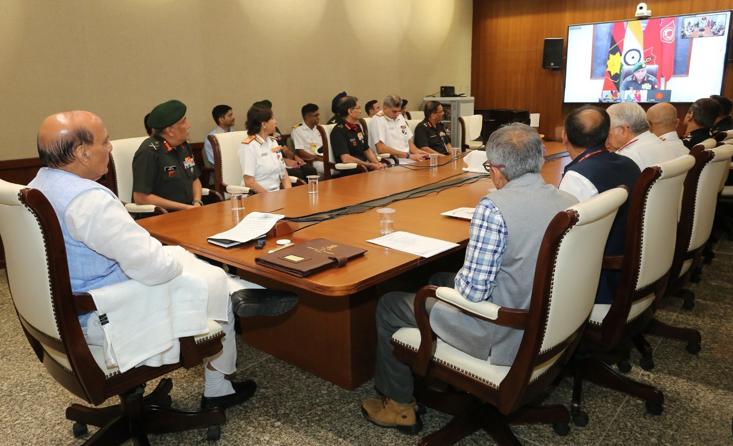
Raksha Mantri Inaugurates India’s First Department of Military Medicine
Defence Minister Rajnath Singh virtually inaugurated the Department of Military Medicine at the Command Hospital (Central Command), Lucknow, Uttar Pradesh, on 29 July 2026. The initiative marks the establishment of India’s first dedicated academic and operational department exclusively devoted to military medicine, strengthening the country’s preparedness for future military and humanitarian challenges.
Background
Modern warfare demands specialized medical support capable of responding to combat injuries, chemical and biological threats, disaster situations, and humanitarian assistance operations. Recognising these evolving requirements, the Ministry of Defence has established a dedicated department to develop advanced military medical capabilities.
Key Highlights
The newly established department will focus on:
- Military Trauma and Damage Control
- Combat Psychiatry and Mental Resilience
- Environmental and Operational Medicine
- Military Medical Logistics
- Chemical, Biological, Radiological, Nuclear and Explosive (CBRNE) Medical Response
- Emergency Medicine and Critical Care
- Disaster Medicine and Humanitarian Assistance & Disaster Relief (HADR)
- Research, Audit and Data Analytics
The department will also promote indigenous research, develop military medical doctrines, and create specialised expertise to support future battlefield requirements.
Significance
The initiative will enhance the Indian Armed Forces’ combat medical readiness, strengthen disaster response capabilities, and improve preparedness against emerging security threats. It also supports India’s objective of building self-reliant defence institutions through research and innovation.
Key Points
- Location: Command Hospital (Central Command), Lucknow
- Inaugurated By: Rajnath Singh
- Date: 29 July 2026
- Purpose: Military medicine, research, and operational readiness
- Special Focus: CBRNE response, HADR, trauma care, combat psychiatry
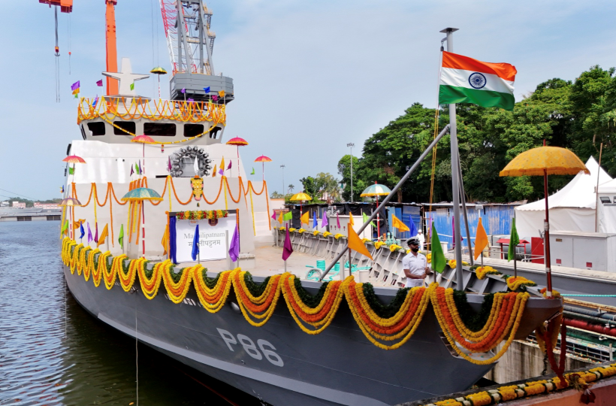
Indian Navy Launches Machilipatnam, Seventh ASW Shallow Water Craft
The Indian Navy launched Machilipatnam (BY 529), the seventh Anti-Submarine Warfare Shallow Water Craft (ASW SWC), on 29 July 2026. The vessel has been built by Cochin Shipyard Limited (CSL) and represents another milestone in India’s indigenous naval shipbuilding programme under the Aatmanirbhar Bharat initiative.
Background
The ship derives its name from the historic port city of Machilipatnam in Andhra Pradesh, which has long been associated with India’s maritime trade and cultural heritage.
The ASW SWC programme aims to strengthen the Navy’s coastal defence and anti-submarine warfare capabilities in the Indian Ocean Region.
Key Highlights
Machilipatnam has been designed to perform multiple operational roles, including:
- Underwater surveillance
- Anti-Submarine Warfare (ASW)
- Low Intensity Maritime Operations (LIMO)
- Mine warfare operations
The vessel incorporates more than 80% indigenous content, demonstrating the growing capabilities of India’s defence manufacturing sector.
Significance
The launch enhances the Indian Navy’s ability to detect and counter underwater threats while promoting indigenous shipbuilding. It also contributes to strengthening maritime security and safeguarding India’s strategic interests in the Indian Ocean Region.
Key Points
- Ship: Machilipatnam (BY 529)
- Builder: Cochin Shipyard Limited
- Type: Anti-Submarine Warfare Shallow Water Craft (ASW SWC)
- Indigenous Content: Over 80%
- Major Roles: ASW, underwater surveillance, LIMO, mine warfare
Britain Announces £8.4 Billion Investment for Dreadnought-Class Nuclear Submarines
The United Kingdom has announced an investment of £8.4 billion for the next phase of its Dreadnought-Class nuclear submarine programme. The investment is part of Britain’s long-term nuclear deterrence strategy and is expected to support thousands of skilled jobs and apprenticeships over the coming decade.
Background
The Dreadnought-Class submarines will replace the existing Vanguard-class fleet and form the backbone of the UK’s continuous at-sea nuclear deterrent.
The programme is also linked with Britain’s broader defence modernisation efforts and the AUKUS security partnership involving Australia, the United Kingdom, and the United States.
Key Highlights
- Total investment: £8.4 billion
- BAE Systems will receive £5.9 billion for constructing four submarines.
- The first submarine, HMS Dreadnought, is expected to enter service in the early 2030s after sea trials.
- The UK plans to allocate more than £63 billion over the next four years towards strengthening its nuclear deterrent.
Significance
The programme reinforces Britain’s strategic nuclear capabilities while supporting defence manufacturing, technological advancement, and employment. It also strengthens cooperation under the AUKUS framework.
Key Points
- Country: United Kingdom
- Investment: £8.4 billion
- Programme: Dreadnought-Class Nuclear Submarines
- Builder: BAE Systems
- Expected Service Entry: Early 2030s

India Plans 40 Permanent Subsidiary Intelligence Bureau Offices Along Bangladesh Border
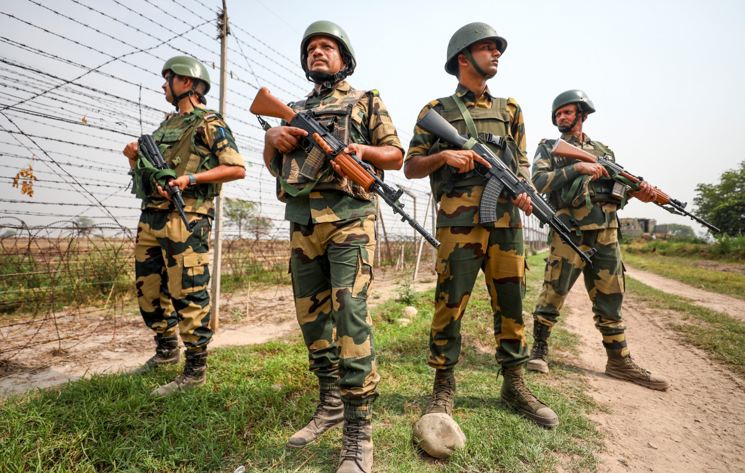
The Ministry of Home Affairs (MHA) has proposed establishing around 40 permanent Subsidiary Intelligence Bureau (SIB) offices across the border districts of West Bengal to strengthen intelligence gathering and border security along the India–Bangladesh border.
Background
Most existing SIB units currently operate from rented premises. The government intends to establish permanent office-cum-residential campuses to improve operational efficiency, confidentiality, and infrastructure.
Key Highlights
- Approximately 50 acres of land will be required.
- Each office will occupy around 1–1.5 acres.
- Permanent campuses will replace rented facilities.
- The proposal has been discussed between the Union Home Ministry and the West Bengal Government.
- The initiative complements ongoing efforts to strengthen security along the 2,217-km India–Bangladesh border, including new BSF infrastructure.
The proposed offices will be established across districts such as:
- Cooch Behar
- Jalpaiguri
- Darjeeling
- North Dinajpur
- South Dinajpur
- Malda
- Murshidabad
- Nadia
- North 24 Parganas
Significance
The project is expected to enhance intelligence collection, improve surveillance, strengthen counter-infiltration measures, and support more effective border management.
Key Points
- Organisation: Subsidiary Intelligence Bureau (SIB)
- Ministry: Ministry of Home Affairs
- Proposed Offices: Around 40
- Location: Border districts of West Bengal
- Objective: Improve intelligence and border security
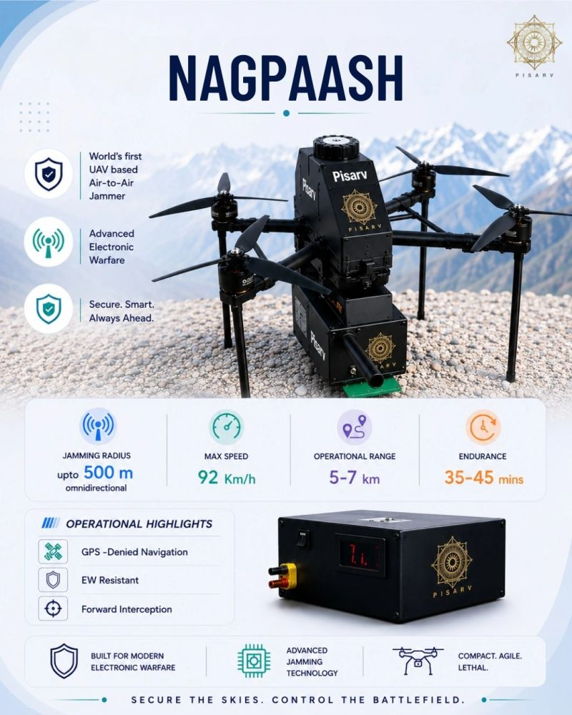
Nagpaash Becomes World’s First UAV-Based Air-to-Air Electronic Warfare Jammer
Indian defence technology company Pisarv Technologies has unveiled Nagpaash, described as the world’s first UAV-based air-to-air electronic warfare jammer. The system represents a major advancement in India’s indigenous electronic warfare capabilities for future battlefields.
Background
Electronic warfare has become a critical component of modern military operations. Nagpaash combines an unmanned aerial vehicle with advanced electronic jamming capabilities, allowing it to disrupt enemy communication systems and electronic sensors directly from the air.
Key Highlights
The system offers several advanced capabilities:
- Omnidirectional jamming radius of up to 500 metres
- Ability to disrupt hostile communication systems and drones
- Operation in GPS-denied environments
- Top speed of 92 km/h
- Operational range of 5–7 km
- Flexible deployment in contested airspace
Unlike conventional ground-based jammers, Nagpaash can carry out electronic attack missions while airborne, providing greater mobility and operational flexibility.
Significance
Nagpaash strengthens India’s indigenous defence technology ecosystem and enhances the Armed Forces’ ability to counter modern aerial threats, including drones and electronic warfare systems. It also reflects India’s growing capabilities in next-generation unmanned and electronic warfare technologies.
Key Points
- Developer: Pisarv Technologies
- System: Nagpaash
- Type: UAV-based Air-to-Air Electronic Warfare Jammer
- Jamming Radius: Up to 500 metres
- Top Speed: 92 km/h
- Operational Range: 5–7 km
- Special Feature: Operates effectively in GPS-denied environments
Review Questions
- The Department of Military Medicine, inaugurated by Defence Minister Rajnath
Singh, has been established at:
A) AIIMS, New Delhi
B) Armed Forces Medical College, Pune
C) Command Hospital (Central Command), Lucknow
D) Army Hospital (Research & Referral), New Delhi
Answer: C) Command Hospital (Central Command), Lucknow - Which of the following is NOT a major focus area of the newly established
Department of Military Medicine?
A) Combat Psychiatry
B) CBRNE Medical Response
C) Disaster Medicine
D) Space Tourism Research
Answer: D) Space Tourism Research - Machilipatnam (BY 529), launched by the Indian Navy, is the:
A) Fifth Survey Vessel (Large)
B) Sixth Missile Corvette
C) Seventh Anti-Submarine Warfare Shallow Water Craft (ASW SWC)
D) Eighth Offshore Patrol Vessel
Answer: C) Seventh Anti-Submarine Warfare Shallow Water Craft (ASW SWC) - Machilipatnam (BY 529) has been constructed by:
A) Mazagon Dock Shipbuilders Limited (MDL)
B) Garden Reach Shipbuilders & Engineers (GRSE)
C) Goa Shipyard Limited (GSL)
D) Cochin Shipyard Limited (CSL)
Answer: D) Cochin Shipyard Limited (CSL) - Britain has announced an investment of £8.4 billion for which defence
programme?
A) Astute-Class Submarines
B) Type 26 Frigates
C) Queen Elizabeth-Class Aircraft Carriers
D) Dreadnought-Class Nuclear Submarine Programme
Answer: D) Dreadnought-Class Nuclear Submarine Programme - The Dreadnought-Class submarines are intended to replace the:
A) Trafalgar-Class
B) Astute-Class
C) Vanguard-Class
D) Swiftsure-Class
Answer: C) Vanguard-Class - The Ministry of Home Affairs has proposed establishing around 40 permanent
Subsidiary Intelligence Bureau (SIB) offices primarily along the border of:
A) India–Pakistan
B) India–Myanmar
C) India–Nepal
D) India–Bangladesh
Answer: D) India–Bangladesh - The proposed permanent SIB offices will mainly be established in the border
districts of:
A) Assam
B) Tripura
C) Meghalaya
D) West Bengal
Answer: D) West Bengal - Nagpaash, developed by Pisarv Technologies, is described as the world’s first:
A) AI-enabled Kamikaze Drone
B) Hypersonic UAV
C) Laser-Based Drone Interceptor
D) UAV-based Air-to-Air Electronic Warfare Jammer
Answer: D) UAV-based Air-to-Air Electronic Warfare Jammer - Which feature makes Nagpaash particularly effective in modern electronic
warfare?
A) Supersonic speed above Mach 2
B) Ability to launch cruise missiles
C) Nuclear propulsion system
D) Capability to operate in GPS-denied environments
Answer: D) Capability to operate in GPS-denied environments - LEMOA Stands For
A. Logistics Exchange Memorandum of Agreement
B. Logistics Exchange Memorandum of Appeal
C. Logistics Extra Memorandum of Agreement
D. All are correct
ANSWER: A - Captain Rank of Indian Navy Equivalent to Which rank of IAF?
A. Flying Officer
B. Flight Lieutenant
C. Group Captain
D. None
ANSWER: C - ADGPI Stands For
A. Additional Directorate General of Public Info
B. Additional Directorate Generate of Public Information
C. Additional Directorate General of Public Information
D. None of the above
ANSWER: C - War Cry Of SIKH LIGHT INFANTRY Is
A. Garud ka hun bol pyare
B. Everywhere
C. Raja Ramachandra ki jai
D. Jo bole So Nihal, sat sri akal
ANSWER: D - Bridgetown Is The Capital Of
A. Belgium
B. Bulgaria
C. Brunei
D. Barbados
ANSWER: D - “Portraits of Power: Half a Century of Being at Ringside” Book Is Written By
A. Salman Khurshid
B. Shantanu Gupta
C. Chetan Bhagat
D. N K Singh
ANSWER: D - Air Marshal Rank of IAF Equivalent to Which rank of Indian Navy
A. Flying Officer
B. Vice Admiral
C. Admiral
D. None
ANSWER: B - Army Service Corps Centre Is In
A. Bengaluru
B. Chennai
C. Gaya
D. None of the above
ANSWER: A - Predator B (MQ-9 Reaper) Is A
A. Helicopter
B. Machine Gun
C. UAV
D. Fighter Jet
ANSWER: C - Heron TP Drone Is Made By
A. Brazil
B. India
C. Israel
D. USA
ANSWER: C
ALSO READ:
- Latest Daily Current Affairs and Defence Updates
- Latest Daily Current Affairs June 2026[DOWNLOAD PDF]
- Latest Daily Current Affairs May 2026[DOWNLOAD PDF]
- Latest Daily Current Affairs April 2026[DOWNLOAD PDF]
- Latest Daily Current Affairs March 2026[DOWNLOAD PDF]
- Latest Daily Current Affairs February 2026[DOWNLOAD PDF]
- Latest Daily Current Affairs January 2026[DOWNLOAD PDF]
- Latest Daily Current Affairs November 2025[DOWNLOAD PDF]
- Latest Daily Current Affairs October 2025[DOWNLOAD PDF]
- Latest Daily Current Affairs August 2025[DOWNLOAD PDF]
- Latest Daily Current Affairs July 2025[DOWNLOAD PDF]
- Monthly Defence Current Affairs June 2025 [DOWNLOAD PDF]
- Monthly Defence Current Affairs May 2025 [DOWNLOAD PDF]


