The Defence Procurement Board (DPB) has taken a significant step towards modernising the Indian Air Force’s (IAF) capabilities by approving a proposal for the acquisition of 60 medium transport aircraft. This initiative marks a crucial advancement in the long-standing plan to upgrade the IAF’s tactical airlift fleet, reflecting a broader commitment to enhancing national security through modernisation.
The programme is projected to cost approximately ₹1 lakh crore and will be executed under the “Buy and Make” strategy. This approach entails the acquisition of 12 aircraft in flyaway condition, while the remaining 48 units are set to be manufactured domestically in collaboration with local industries. This dual approach not only aims to enhance the IAF’s operational capability but also aims to bolster the country’s defense manufacturing capabilities.
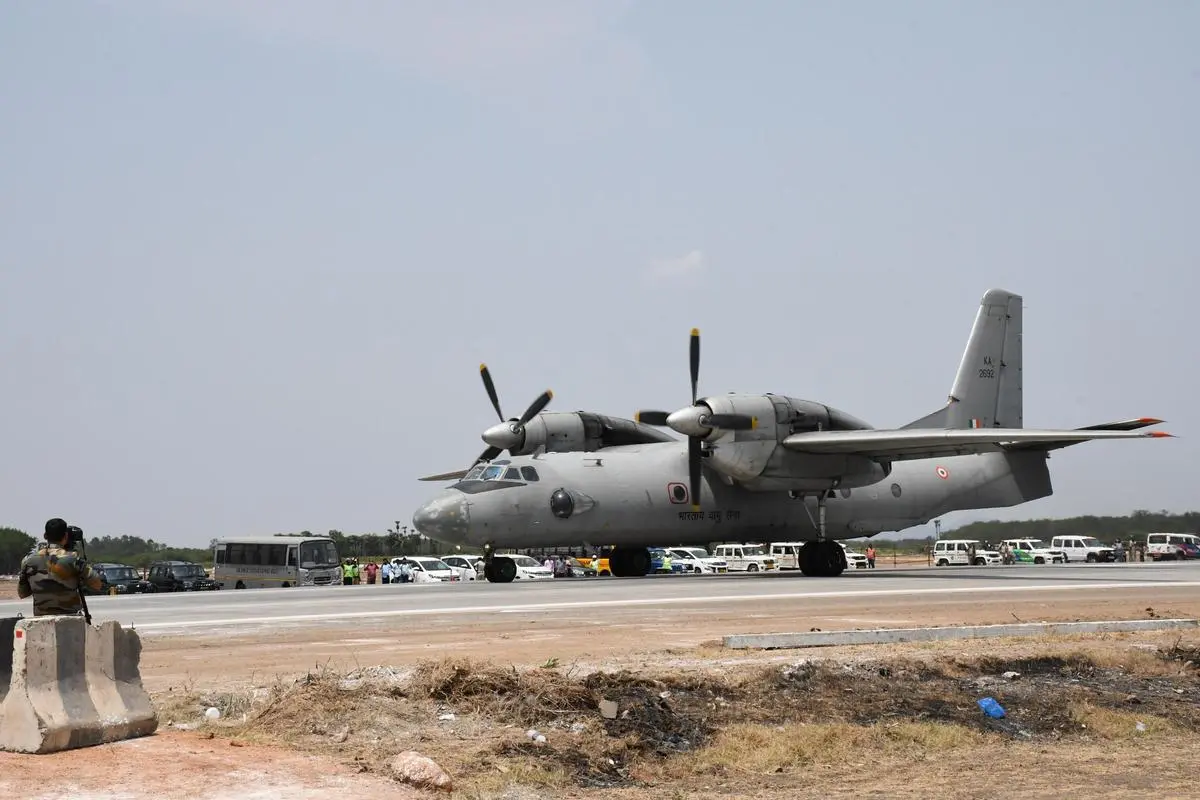
The need for new aircraft arises from the aging Antonov An-32 fleet, which has been in service since the mid-1980s. As this fleet faces escalating maintenance challenges and a dwindling supply of spare parts, the introduction of newer aircraft is both timely and essential. Additionally, the new aircraft are expected to take on some tasks currently performed by the older Il-76 transport aircraft, helping to streamline the IAF’s operational fleet.
The medium transport aircraft are anticipated to fill a vital gap between light transport platforms and heavy-lift aircraft, significantly aiding the IAF in troop deployment, equipment movement, and operations in difficult terrains. These aircraft will be designed to operate efficiently in high-altitude environments and from short or semi-prepared runways, including Advanced Landing Grounds located in strategically important areas like Ladakh and the Northeastern region.
Recent experiences during the Eastern Ladakh military standoff underscored the importance of robust airlift capabilities, demonstrating the necessity of rapidly sustaining forces in remote, high-altitude regions where ground mobility is severely restricted.
The competition for this lucrative procurement programme is expected to be fierce, with three major international contenders likely to enter the fray. Brazil’s Embraer, in collaboration with Mahindra Defence, has submitted the C-390 Millennium, a jet-powered aircraft boasting a payload capacity of around 26 tonnes.
Lockheed Martin is proposing the C-130J Super Hercules, an aircraft already operational within the IAF, which offers the advantage of an existing logistics ecosystem and a manufacturing partnership with Tata Advanced Systems.
On the other hand, Airbus has presented the A400M Atlas, a larger entrant capable of carrying over 30 tonnes, though it exceeds the IAF’s current requirements.
The final selection will hinge not only on the operational capabilities of these aircraft but also on factors such as technology transfer, domestic production commitments, and the establishment of a long-term sustainment ecosystem, which align with India’s broader push for defence indigenisation.
With the recent approval from the DPB, the proposal is now poised to advance to the Defence Acquisition Council (DAC) for Acceptance of Necessity (AoN). Following that, the initiative will enter the tendering and evaluation phase, moving closer to a key enhancement in the IAF’s operational framework.