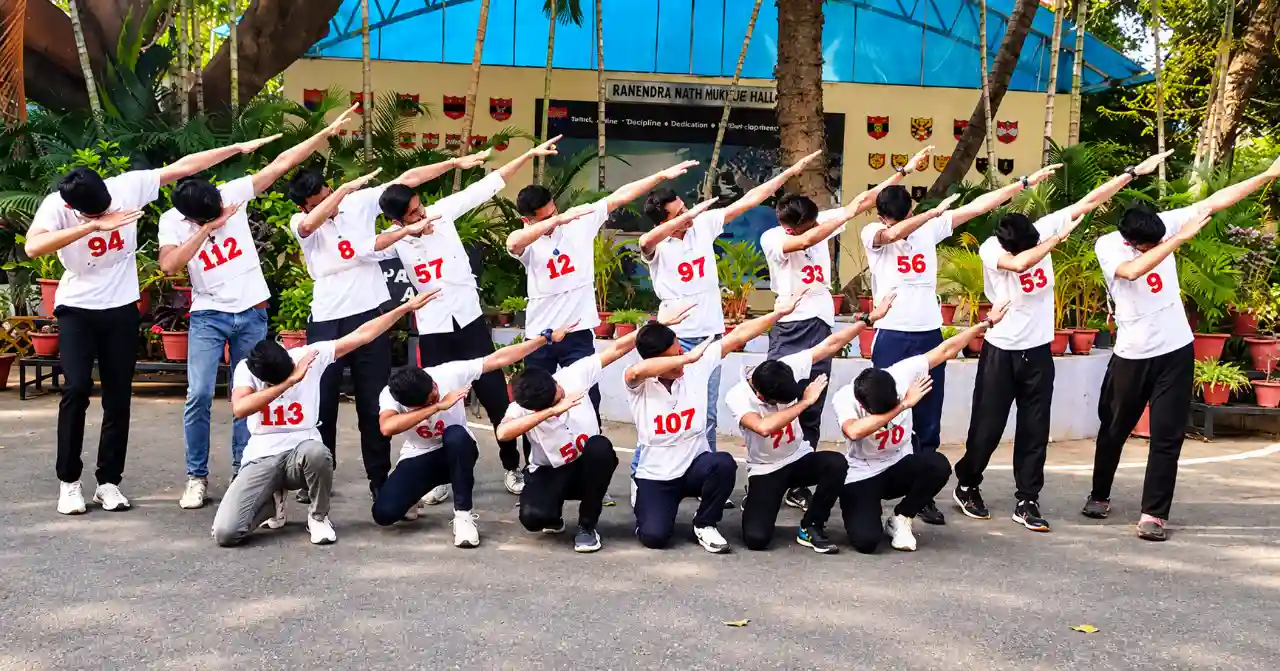
Can you crack the SSB Interview in your first attempt? Absolutely. Many candidates receive their SSB recommendation on their very first attempt, while others need additional opportunities to develop and demonstrate their potential.
The Services Selection Board (SSB) Interview is one of the most challenging stages of joining the Indian Armed Forces as a commissioned officer. Unlike a conventional examination, the SSB evaluates a candidate’s personality, intelligence, leadership potential, decision-making, social adjustment and other Officer Like Qualities (OLQs).
Whether you are appearing for NDA, CDS, AFCAT, TES, NCC Special Entry or another officer entry, your first SSB attempt can be successful if you understand the selection process, prepare systematically and remain genuine throughout the assessment.
However, cracking the SSB in the first attempt is not about learning secret tricks, memorising psychological responses or pretending to possess all 15 Officer Like Qualities.
It is about understanding yourself, developing the right habits and demonstrating your natural strengths through everyday behaviour.
Here are 5 solid tips to crack the SSB Interview in your first attempt, along with practical preparation methods, common mistakes and a 30-day preparation plan.
Can You Really Crack SSB Interview in First Attempt?
Yes. Being a fresher does not automatically place you at a disadvantage.
Every candidate is assessed on their demonstrated suitability for officer training, not simply the number of SSB attempts they have made.
A first-time candidate may perform well because of genuine self-awareness, sound reasoning, effective communication, teamwork and a willingness to accept responsibility.
However, candidates must understand that there is no guaranteed formula for recommendation.
The SSB assessment includes several stages, and your overall performance is considered by different assessors.
The most effective approach is to prepare for every stage while continuing to develop your personality.
Understand the SSB Interview Selection Process
Before discussing the five tips, you should understand the basic SSB selection process.
| Stage | Tests and activities | Main preparation focus |
|---|---|---|
| Stage I – Screening | OIR Tests and PPDT | Reasoning, observation, narration and group discussion |
| Psychology Tests | TAT, WAT, SRT and Self-Description | Understanding test formats and expressing genuine responses |
| GTO Tasks | Group discussions, planning, outdoor tasks and related activities | Cooperation, initiative, practical reasoning and communication |
| Personal Interview | PIQ-based and other personal questions | Self-awareness, life experiences, clarity and motivation |
| Conference | Final assessment interaction | Overall assessment by the board |
The sequence and scheduling of individual activities may vary between selection boards and entry types.
Candidates who qualify in Stage I proceed to the subsequent assessment activities. The standard SSB process is commonly described as a five-day assessment, although reporting and departure arrangements can vary.
Understanding this process will help you reduce uncertainty and prepare appropriately.
Tip 1: Be Yourself – Authenticity Is Your Biggest Strength
The first and most important tip for cracking SSB in your first attempt is to remain genuine.
Many freshers make the mistake of copying the behaviour, answers and opinions of candidates who have already received recommendations.
They watch several interview videos, read dozens of success stories and attempt to reproduce the same answers during their own assessments.
While learning from others is useful, blindly imitating their personalities can create inconsistencies.
The SSB is not looking for identical candidates who speak the same way, write similar psychological responses or demonstrate artificially confident behaviour.
It is attempting to identify candidates with the potential to perform the responsibilities of an officer.
Why Authenticity Matters in SSB
Consider a candidate who is naturally quiet but dependable, observant and effective at solving problems.
If that candidate tries to dominate every group discussion simply because someone suggested that leadership means speaking the most, their behaviour may become unnatural and counterproductive.
Instead, they should focus on contributing meaningful ideas, listening to others and taking initiative when appropriate.
Similarly, a candidate who has never organised a major event should not invent leadership achievements.
Even small, genuine responsibilities can provide meaningful examples of initiative and dependability.
How to Develop Your Natural Personality
Begin by identifying your actual strengths, weaknesses, interests and achievements.
Ask yourself:
- What responsibilities do I handle regularly?
- How do I behave when working with other people?
- What do my friends appreciate about me?
- How do I respond when something goes wrong?
- What activities do I genuinely enjoy?
- What improvements have I made over the past year?
Write down real examples from school, college, work, sports and family life.
These examples will help you answer personal interview questions naturally.
Golden rule: Do not prepare to act like an officer for five days. Develop habits and qualities that make you a responsible person in everyday life.
Tip 2: Be Honest and Know Yourself Thoroughly
The second tip is to develop self-awareness and communicate honestly.
During the SSB Personal Interview, the Interviewing Officer may explore your educational background, family relationships, friends, hobbies, responsibilities, achievements and reasons for joining the Armed Forces.
Most of these questions are connected to your actual life experiences.
This is why knowing yourself is just as important as knowing the SSB selection procedure.
Prepare Your Personal Information Questionnaire
Your Personal Information Questionnaire (PIQ) provides an important starting point for the Personal Interview.
Before attending your SSB, prepare the following information:
- Class 10, Class 12 and graduation marks.
- Schools and colleges attended.
- Favourite subjects and teachers.
- Close friends and their qualities.
- Family members and responsibilities.
- Sports participation and achievements.
- Hobbies and extracurricular activities.
- Important personal achievements and setbacks.
- Previous SSB attempts, if any.
- Reasons for joining the Indian Armed Forces.
Do not merely memorise these facts. Understand the experiences behind them.
Example: Answering Questions About Academic Performance
Suppose the Interviewing Officer asks:
“Your Class 10 marks were good, but your Class 12 percentage decreased. What happened?”
An unrealistic answer would be to blame teachers or claim that the examination was unfair without further explanation.
A better answer could be:
“Sir, I initially found the Class 11 science syllabus challenging and did not maintain a consistent study routine. My performance was affected, but I gradually improved my preparation. I learned the importance of regular revision and better time management.”
This example demonstrates how a candidate can explain an actual setback while accepting responsibility.
Your own answer should reflect the real circumstances.
Prepare for Rapid-Fire Questions
The Interviewing Officer may ask several questions together.
For example:
“Tell me about your education, favourite subjects, teachers, closest friends, sports achievements and extracurricular activities.”
Instead of panicking, remember the main topics and answer them in sequence.
For detailed practice, read our guide on 20 Rapid Fire Questions Asked in SSB Interview.
You can also study the 6 CIQs Asked in SSB Interview to understand commonly discussed personal interview question categories.
Important: There is no requirement to give a perfect answer to every question. If you do not know something, acknowledge it politely instead of inventing information.
Tip 3: Prepare for Every SSB Test, Not Just the Personal Interview
A common mistake among first-time candidates is spending most of their preparation time on personal interview questions while neglecting Screening, Psychology and GTO Tasks.
SSB selection involves a broader assessment of personality and suitability.
You should understand the purpose and format of every major test.
A. Prepare for SSB Screening: OIR and PPDT
Stage I screening generally includes the Officer Intelligence Rating (OIR) tests and Picture Perception and Description Test (PPDT).
OIR questions commonly involve verbal and non-verbal reasoning.
Preparation may include:
- Number and letter series.
- Analogies.
- Coding and decoding.
- Classification.
- Spatial reasoning.
- Pattern identification.
- Other reasoning questions.
Practise solving questions accurately under time constraints.
For PPDT, candidates are typically required to observe a picture, construct a story, narrate it and participate in a group discussion.
Your story should be coherent and based on the information you reasonably interpret from the picture.
During narration, speak clearly and explain your story without rushing.
In the group discussion, listen to other candidates and contribute constructively.
Do not assume that shouting, interrupting or speaking continuously will improve your chances.
B. Understand SSB Psychological Tests
The psychological assessment commonly includes four tests.
Thematic Apperception Test (TAT): Candidates write stories based on picture stimuli.
Word Association Test (WAT): Candidates respond to words within a limited time.
Situation Reaction Test (SRT): Candidates describe how they would respond to different situations.
Self-Description Test (SDT): Candidates reflect on their personality and how important people in their lives may perceive them.
These tests require familiarity with their format and time constraints.
However, memorising artificial responses is not an effective preparation method.
For example, candidates sometimes believe every TAT story must involve a heroic rescue or that every WAT response must contain an artificially positive statement.
Such rigid formulas can reduce the naturalness and relevance of responses.
Instead, practise expressing sensible, realistic thoughts and actions.
For structured preparation, you may use the SSB Interview Psychological Tests Workbook.
C. Prepare for GTO Tasks
Group Testing Officer activities assess candidates in group and individual settings.
Common tasks include group discussions, group planning exercises, progressive group tasks, half-group tasks, command tasks, lecturettes and individual obstacles, subject to the applicable testing format.
The most important preparation areas are:
- Communication.
- Teamwork.
- Practical problem-solving.
- Decision-making.
- Initiative.
- Confidence.
- Physical fitness.
- Cooperation with other candidates.
You do not need to be the loudest or physically strongest person in your group.
Instead, focus on making useful contributions, supporting the team and approaching problems sensibly.
D. Prepare for the SSB Personal Interview
The Personal Interview should be prepared through genuine self-reflection and communication practice.
Be familiar with your academic journey, relationships, interests, responsibilities, setbacks and career motivation.
For additional preparation guidance, read our 25 Golden Tips for SSB Personal Interview.
Golden rule: Prepare for the complete assessment. Excelling in only one activity does not guarantee recommendation.
Tip 4: Develop Officer Like Qualities Through Daily Activities
Officer Like Qualities, commonly known as OLQs, are central to understanding the qualities associated with officer potential.
Candidates often make the mistake of memorising the names of all 15 OLQs without actually developing the underlying behaviours.
The most useful approach is to practise these qualities through everyday responsibilities.
The 15 Officer Like Qualities
The commonly described OLQs include:
- Effective Intelligence
- Reasoning Ability
- Organising Ability
- Power of Expression
- Social Adaptability
- Cooperation
- Sense of Responsibility
- Initiative
- Self-Confidence
- Speed of Decision
- Ability to Influence the Group
- Liveliness
- Determination
- Courage
- Stamina
These qualities are not developed simply by reading their definitions.
They become meaningful through experience.
How to Develop OLQs in Everyday Life
| OLQ | Practical activity |
|---|---|
| Initiative | Volunteer to organise a college or community activity |
| Responsibility | Take ownership of a regular household or academic task |
| Cooperation | Participate actively in team sports or group projects |
| Effective Intelligence | Solve practical problems using available resources |
| Power of Expression | Practise explaining ideas in a clear and concise manner |
| Organising Ability | Plan a small event or coordinate a group assignment |
| Determination | Work consistently towards a challenging personal goal |
| Social Adaptability | Interact respectfully with people from different backgrounds |
| Stamina | Maintain a consistent, suitable physical fitness routine |
| Self-Confidence | Gradually take on responsibilities outside your comfort zone |
Example: Developing Leadership Without a Formal Position
Suppose you are a college student and your group is struggling to complete a project.
You volunteer to divide the tasks, discuss a realistic deadline with your teammates and monitor progress.
When a team member encounters a problem, you help the group reorganise the work.
This experience can help you develop organising ability, cooperation, initiative and a sense of responsibility.
You do not need to be the official team leader to contribute meaningfully.
Improve Your Physical Fitness
Physical fitness is also valuable for the demanding outdoor activities involved in the SSB process and for a future military career.
Depending on your fitness level, build a sustainable routine involving walking or running, bodyweight exercises, flexibility and suitable sports.
Avoid excessive training immediately before your SSB reporting date.
Consistency is more important than attempting an extreme fitness transformation in a few days.
Golden rule: Develop qualities through actions, not through memorised definitions.
Tip 5: Make Your Group Better Instead of Trying to Dominate It
One of the biggest misunderstandings about SSB group tasks is the belief that a candidate must dominate every discussion to demonstrate leadership.
Leadership is not the same as speaking the most.
A good team member contributes relevant ideas, listens to others, takes initiative and helps the group move towards a solution.
During a group discussion, some candidates may speak aggressively because they believe being loud demonstrates confidence.
Others may remain completely silent because they fear making mistakes.
Neither extreme is ideal.
How to Perform Better in Group Discussions
Begin by understanding the topic.
When you have a relevant point, express it clearly.
Support your argument with reasonable examples or facts.
Listen when other candidates speak and respond to their ideas respectfully.
If the discussion becomes disorganised, you may help bring attention back to the main topic without attempting to control everyone.
Avoid unnecessary arguments.
How to Approach Outdoor GTO Tasks
During group obstacles and planning activities, concentrate on the assigned problem.
Understand the instructions and applicable rules.
Suggest practical solutions when you identify them.
Support teammates and remain involved even when your suggestion is not selected.
Be willing to modify an idea when another candidate proposes a better solution.
Example of Effective Group Behaviour
Imagine that your group is trying to move equipment across an obstacle.
One candidate suggests an approach, but it does not work.
Instead of criticising that candidate, you examine the problem, suggest a practical adjustment and help the group test it.
This demonstrates cooperation, reasoning and initiative.
The objective is not to receive individual attention at every moment.
It is to make an effective contribution to the group’s performance.
Golden rule: Good leadership creates progress for the team rather than competition for attention.
30-Day SSB Interview Preparation Plan for Freshers
If you have approximately one month before your first SSB attempt, use this structured preparation plan.
| Days | Main focus | Preparation activities |
|---|---|---|
| 1–5 | Understand the SSB process | Study the testing stages, attempt OIR questions and learn PPDT basics |
| 6–10 | Screening preparation | Practise reasoning, picture stories, narration and group discussions |
| 11–15 | Psychological tests | Practise TAT, WAT, SRT and SDT formats under realistic time limits |
| 16–20 | Personal Interview | Review PIQ, prepare personal experiences and practise rapid-fire questions |
| 21–25 | GTO preparation | Improve teamwork, communication, problem-solving and fitness |
| 26–28 | Mock assessments | Complete timed practice sessions and review mistakes |
| 29–30 | Final preparation | Revise essential details, prepare documents and rest adequately |
This is a suggested preparation schedule rather than an official SSB programme.
Personality development, communication, fitness and self-awareness should be practised continuously throughout the month.
10 Common Mistakes Freshers Must Avoid in SSB Interview
- Memorising psychological responses: Fixed stories and sentences may prevent you from expressing realistic thoughts.
- Trying to impress assessors: Exaggerated behaviour can distract from genuine performance.
- Dominating group discussions: Speaking excessively without listening does not automatically demonstrate leadership.
- Ignoring screening preparation: Candidates should prepare thoroughly for OIR and PPDT because screening determines progression to Stage II.
- Giving false PIQ information: Your educational records, achievements and personal details should be accurate.
- Lacking knowledge about hobbies: Be prepared to explain the activities you genuinely pursue.
- Neglecting physical fitness: Regular physical activity can help prepare you for demanding outdoor tasks.
- Ignoring current affairs: Develop awareness of important national, international and defence-related developments.
- Comparing yourself constantly with other candidates: Concentrate on your own performance instead of trying to copy others.
- Believing recommendation depends on one perfect test: The SSB assessment considers multiple aspects of personality across different activities.
SSB First Attempt Preparation Checklist
Before reporting to your SSB centre, make sure you have prepared the following areas:
- Understand Stage I and Stage II assessment formats.
- Practise verbal and non-verbal reasoning questions.
- Practise PPDT picture observation, storytelling and narration.
- Become familiar with TAT, WAT, SRT and Self-Description.
- Understand the purpose of common GTO tasks.
- Review your PIQ thoroughly.
- Prepare for personal interview and rapid-fire questions.
- Reflect on your strengths, weaknesses and achievements.
- Develop awareness of current affairs and defence developments.
- Maintain suitable physical fitness.
- Check your call letter, documents and reporting instructions.
- Get adequate sleep before reporting.
Is SSB Coaching Necessary to Crack the Interview in First Attempt?
No. Formal coaching is not compulsory for receiving an SSB recommendation.
Many candidates prepare independently by studying the selection process, practising the test formats, participating in team activities and reflecting on their experiences.
However, structured guidance may help freshers understand unfamiliar tests and receive useful feedback on communication and preparation.
Coaching should be treated as a preparation resource, not as a guarantee of selection.
Be cautious of programmes that promise recommendation or claim to possess secret psychological answers.
For broader preparation, the Let’s Crack SSB Interview book provides material covering Screening, Psychology Tests, GTO Tasks and Personal Interview.
You can also explore SSB Interview preparation courses for structured study and practice.
What Should You Do on the First Day of SSB Interview?
The first day is particularly important because Stage I screening determines which candidates proceed to further assessment.
Arrive according to your reporting instructions and ensure you have the necessary documents.
Listen carefully to the instructions given by the staff.
During OIR, manage your time and concentrate on accuracy.
During PPDT, observe the picture carefully, write a coherent story and narrate it clearly.
In the group discussion, participate meaningfully, listen to other candidates and maintain composure.
Do not assume that loud narration or aggressive discussion will guarantee screening in.
Your objective is to demonstrate clear thinking and constructive participation.
Frequently Asked Questions About Cracking SSB in First Attempt
1. Is it possible to crack SSB Interview in the first attempt?
Yes. First-time candidates can receive recommendations if they demonstrate the required potential during the assessment. There is no rule that candidates must attend multiple SSBs before being recommended.
2. How should a fresher prepare for the SSB Interview?
Start by understanding the selection process. Practise OIR and PPDT, learn the formats of psychological tests, prepare for group tasks and review your personal background for the interview.
3. Can I crack SSB without coaching?
Yes. Coaching is not mandatory. Independent preparation, practical experiences, communication skills, self-awareness and familiarity with the test formats can support effective preparation.
4. Which test is most important in SSB?
Every assessment component has a role. Screening is important because candidates must qualify in Stage I to proceed further. Final recommendation is based on a broader assessment rather than a single test.
5. How many days are required to prepare for SSB?
There is no fixed preparation period. Candidates may benefit from several weeks of structured familiarisation, but developing personality, responsibility, communication and teamwork is a continuous process.
6. Can an introvert crack SSB in the first attempt?
Yes. Being introverted does not automatically make someone unsuitable. Candidates should focus on communicating effectively, contributing to group activities and demonstrating genuine strengths.
7. Is English fluency compulsory for SSB selection?
Candidates should follow the applicable instructions concerning language. Clear communication is important, but using complicated vocabulary or speaking with a particular accent is not a requirement for demonstrating officer potential.
8. What are the biggest reasons freshers struggle in SSB?
Common preparation difficulties include unfamiliarity with the test format, weak communication, poor time management, inadequate understanding of personal experiences and unrealistic expectations about the assessment.
9. Should I memorise TAT, WAT and SRT answers?
No. You should become familiar with the test formats and time limits without relying on copied or artificial responses.
10. What if I am not recommended in my first SSB attempt?
A non-recommendation does not prevent you from improving or applying again, subject to eligibility. Reflect on your experience, develop relevant skills and prepare for subsequent opportunities.
Final Words: Your First Attempt Can Be Your Best Attempt
Cracking the SSB Interview in the first attempt is a meaningful goal, but it should not become a source of unnecessary pressure.
You cannot control every aspect of the assessment, but you can control the quality of your preparation, your habits and your willingness to learn.
Understand the SSB procedure, remain truthful, prepare for every test, develop Officer Like Qualities through real experiences and contribute positively during group activities.
Do not attempt to become a different person simply for the five days of SSB.
Instead, work towards becoming a more responsible, capable, confident and self-aware version of yourself.
Remember these five principles: Be yourself, know yourself, prepare thoroughly, develop your qualities and contribute to your team.
Whether you are appearing through NDA, CDS, AFCAT or another officer entry, approach your first SSB with determination, humility and a genuine willingness to demonstrate your potential.