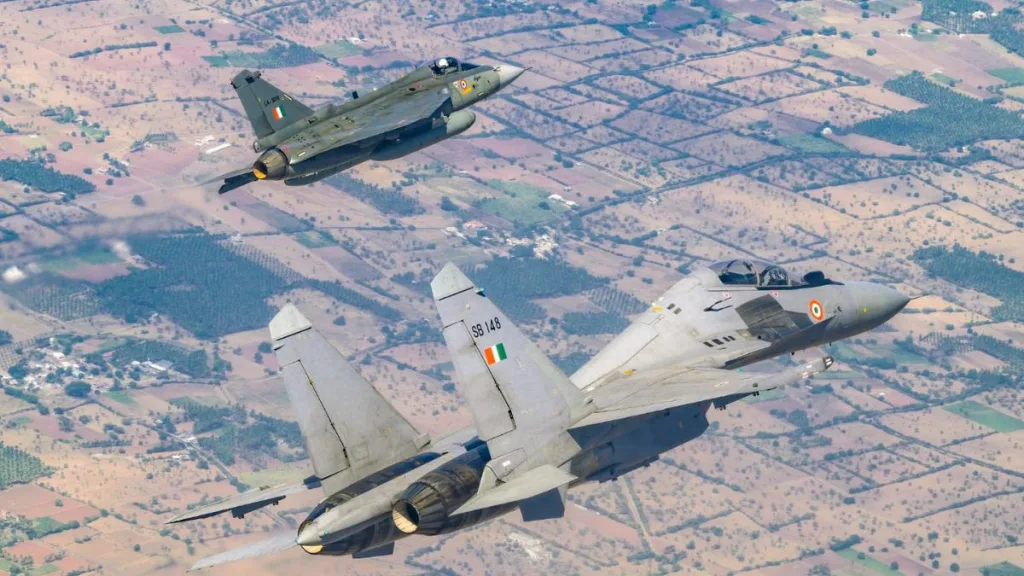
India has issued a Notice to Airmen (NOTAM) indicating temporary airspace restrictions for an Indian Air Force (IAF) exercise along the southern sector of the India–Pakistan border scheduled from March 5 to March 12. This announcement has captured significant attention across the border, as it designates specific airspace for military operations during the planned drill.
The implementation of such airspace restrictions is a standard protocol prior to large-scale military exercises. The primary aim is to ensure that civilian aircraft steer clear of operational zones, thereby preventing potential safety hazards during the drill.
Security officials in Pakistan are closely monitoring the situation, particularly since the country’s defense planners are currently grappling with multiple security commitments. These responsibilities include managing borders with Afghanistan and Iran while also maintaining maritime surveillance in the Arabian Sea amidst increasing regional instability.
Reports indicate that Pakistani forces have repositioned additional air and ground assets in anticipation of the forthcoming exercise. Analysts observe that Pakistan’s security apparatus is under considerable pressure due to these simultaneous operational duties on multiple fronts.
The southern corridor along the India–Pakistan border, especially the Rajasthan–Sindh sector, has historically been a focal point for military drills conducted by both nations, particularly during times of heightened strategic tension. The current geopolitical climate in West Asia, which has already disrupted aviation routes, further amplifies the significance of this exercise.
Since the implementation of Operation Sindoor, the issuance of NOTAMs for border-area exercises has become a more pronounced feature of military signaling between India and Pakistan. Both nations routinely reserve airspace to conduct operational drills with the aim of maintaining preparedness and readiness in light of ongoing tensions.