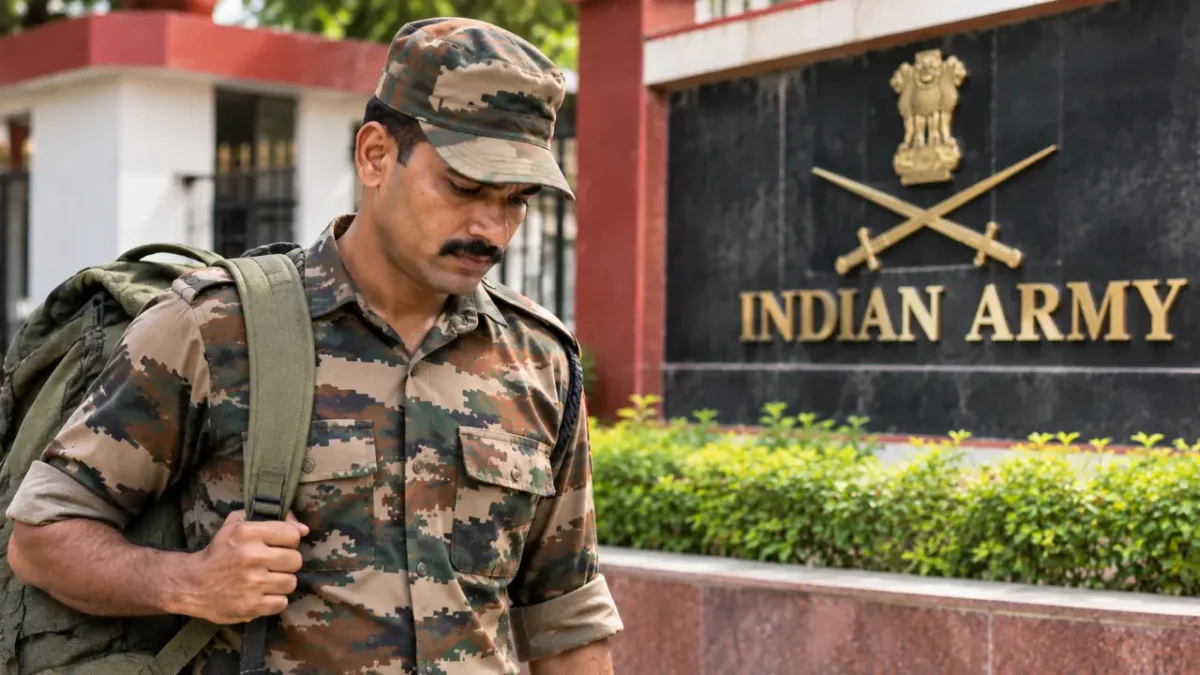
A former Indian Army Sapper’s challenge to his dismissal over more than four years of unauthorized absence has been rejected by the Punjab and Haryana High Court. A division bench of Justice Harsimran Singh Sethi and Justice Mandarjeet Yadav upheld the 2015 dismissal of Harbhal Singh and dismissed his petition against an Armed Forces Tribunal (AFT) order dated April 8, 2026.
Absence after annual leave
Singh enrolled in the Army in March 2002. He went on annual leave in November 2011, due to end on December 24, 2011, but did not return to his unit when the leave expired. He remained absent without authorization for more than four years. The Army declared him a deserter, began disciplinary proceedings in 2015 and dismissed him from service on April 20, 2015.
Court rejects medical-incapacity claim
Singh told the High Court that he had been mentally unwell for over four years and that this had prevented him from returning to duty. He argued that the Army authorities and the AFT had not adequately considered his circumstances. The bench found, however, that he had provided no concrete documentary evidence or medical records to support his claim of mental incapacity.
The court said prolonged unauthorized absence could not be treated as ordinary absence or overlooked in a disciplined force. It also referred to a Supreme Court precedent of March 11, 2019, which held that unauthorized absence exceeding 302 days without leave is not condonable in the armed forces, given the standards of discipline and operational responsibility required.
Dismissal upheld
The High Court observed that the Army had followed the applicable rules and prescribed procedure. It said that, without procedural irregularity or a violation of natural justice, neither the High Court nor the AFT could act as an appellate authority to re-appreciate evidence or replace the competent military authority’s view with its own.
The petition was dismissed, leaving Singh’s dismissal from service in place. The ruling underscored the consequences of prolonged unauthorized absence and found no evidentiary basis for the medical explanation he had offered.