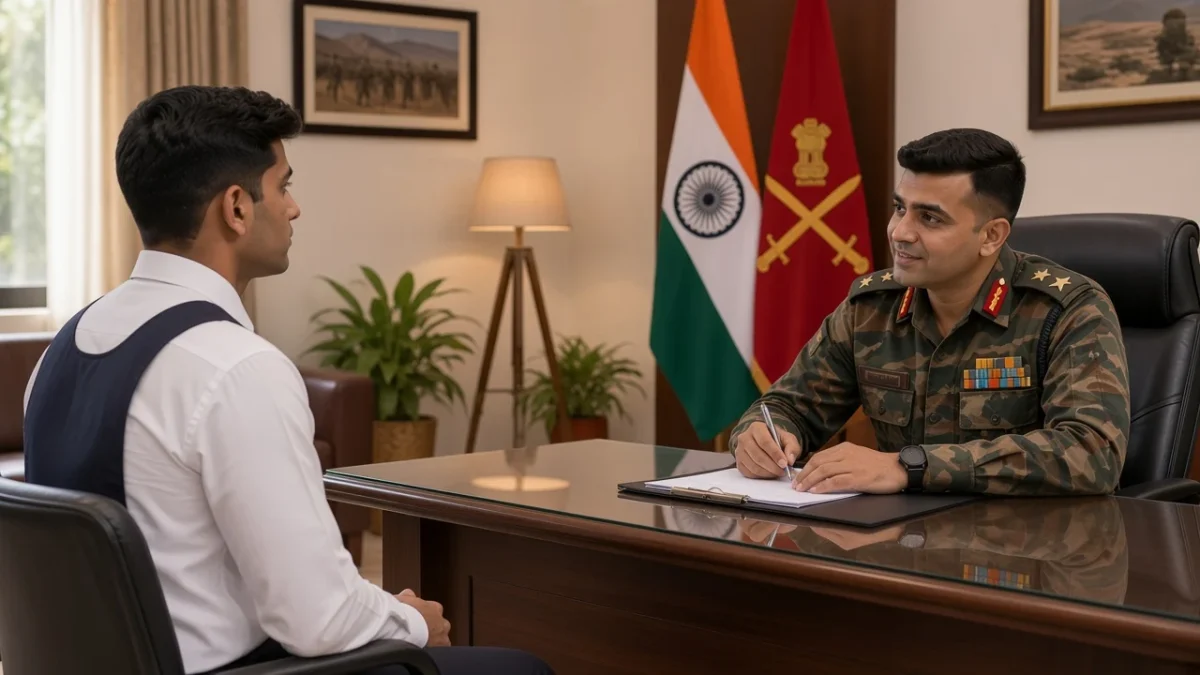
Every SSB aspirant hears the term OLQs, or Officer Like Qualities, within days of starting preparation. The Services Selection Board does not select candidates for their marks, degrees or English alone. It looks for 15 qualities that predict whether a young person can be trained into an effective officer of the Indian Army, Navy or Air Force.
These 15 OLQs are traditionally grouped into four factors: planning and organising, social adjustment, social effectiveness and dynamic qualities. The psychologist, the Group Testing Officer (GTO) and the Interviewing Officer each assess you through different techniques over the five-day SSB, and the final decision is taken at the conference. This guide explains each OLQ in simple words, how it shows up during the SSB, and practical ways to develop it in daily life. You cannot fake these qualities for five days, but you can genuinely build them.
1. Effective Intelligence
Factor: Factor I: Planning and Organising
What it means: Using your intelligence practically to solve real problems with the resources available
Effective intelligence is not the same as a high IQ. It is your ability to apply common sense and knowledge to practical situations, especially when resources or time are limited. In the SSB it shows up in how you solve situation reaction tests, the planning exercise and GTO tasks such as the progressive group task and command task, where you must use the given materials smartly.
How to develop it: Solve practical problems at home and in college rather than waiting for others, play strategy and puzzle games, and after every real-life problem ask yourself what the simplest workable solution would have been.
2. Reasoning Ability
Factor: Factor I: Planning and Organising
What it means: Thinking logically, analysing information and reaching sound conclusions
Reasoning ability is the capacity to look at a situation, separate facts from assumptions and reach a logical conclusion. It is tested directly in the verbal and non-verbal reasoning questions of the Officer Intelligence Rating test, and indirectly in group discussions and lecturettes where you must argue a point with logic.
How to develop it: Practise reasoning questions regularly, read editorials and identify the argument behind them, and discuss current issues with friends while backing each claim with a reason.
3. Organising Ability
Factor: Factor I: Planning and Organising
What it means: Arranging people, time and resources systematically to achieve a goal
An officer constantly organises men, materials and time. In the SSB this quality is visible when you plan a group planning exercise, divide work in a group task, or describe how you handled an event or college fest in the interview. Even the way you manage your time and belongings during the five days says something about you.
How to develop it: Take responsibility for organising events at school, college, NCC or in your locality, keep a daily schedule, and learn to break big tasks into small steps with clear timelines.
4. Power of Expression
Factor: Factor I: Planning and Organising
What it means: Conveying your ideas clearly, confidently and convincingly
Power of expression is not about fancy English. It is about putting your thoughts across in a clear, organised and confident way, in Hindi or English. Assessors notice it in the group discussion, lecturette, interview and even in your written tests, where you must express complete ideas in limited time.
How to develop it: Speak on a random topic for three minutes daily, read aloud, record yourself, and practise summarising news articles in a few lines. Simple words used clearly beat complicated words used wrongly.
5. Social Adaptability
Factor: Factor II: Social Adjustment
What it means: Adjusting comfortably to new people, places and situations
Officers serve across India, live with people from every region and religion, and move frequently. Social adaptability is your ability to mix easily with your group, respect differences and feel at home in new surroundings. At the SSB, your interaction with fellow candidates, from day one in the barracks to the GTO tasks, shows how adaptable you are.
How to develop it: Travel, join group activities, make friends outside your usual circle, and participate in team sports. Learn a few phrases from other Indian languages and take a real interest in different cultures.
6. Cooperation
Factor: Factor II: Social Adjustment
What it means: Working willingly with others for a common goal
The armed forces run on teamwork. Cooperation means supporting the group’s plan even when it is not yours, helping weaker members and putting the team’s success above personal credit. GTOs watch closely whether you work with the group in tasks or try to shine alone.
How to develop it: Play team games, volunteer in group projects, and practise listening fully before responding. In group tasks, accept a good idea from someone else and help implement it.
7. Sense of Responsibility
Factor: Factor II: Social Adjustment
What it means: Doing your duty dependably, even when no one is watching
A sense of responsibility means you can be trusted with a task and will see it through. It covers your duty towards your family, studies, society and the nation. In the interview, assessors look at how you have handled responsibilities so far, and in psychological tests your responses reveal whether you take ownership or shift blame.
How to develop it: Take on regular duties at home, keep your commitments however small, help your community, and own your mistakes honestly instead of making excuses.
8. Initiative
Factor: Factor III: Social Effectiveness
What it means: Taking the first step and starting action without being told
Initiative is the ability to act first in a new or uncertain situation. In the group discussion, it may mean opening the discussion or bringing it back on track; in GTO tasks, it may mean proposing a workable idea first. Initiative must be sensible, not reckless, and it does not mean dominating others.
How to develop it: Volunteer for tasks, start activities in your college or locality, and whenever you notice a problem, take one small step to fix it instead of waiting.
9. Self Confidence
Factor: Factor III: Social Effectiveness
What it means: Believing in your ability to handle tasks and face challenges
Self confidence is a calm belief in yourself, built on preparation and past experience. It shows in your body language, eye contact, voice, and willingness to attempt difficult obstacles or individual tasks. Overconfidence and arrogance, however, are clearly noticed and work against you.
How to develop it: Set small goals and achieve them, improve your fitness, prepare thoroughly for every test, and step out of your comfort zone regularly through public speaking or adventure activities.
10. Speed of Decision
Factor: Factor III: Social Effectiveness
What it means: Making sound decisions quickly under time pressure
Officers often have to decide quickly with incomplete information. Speed of decision is tested in situation reaction tests, word association tests, the planning exercise and GTO tasks, all of which are timed. The aim is a quick decision that is also reasonable, not a hasty one.
How to develop it: Practise timed SRTs and WATs honestly, make everyday decisions quickly instead of overthinking, and review your decisions afterwards to learn from them.
11. Ability to Influence the Group
Factor: Factor III: Social Effectiveness
What it means: Persuading others to accept your ideas through logic and example
An officer leads by influence, not just authority. This OLQ is about convincing your group through sound ideas, good manners and personal example. In the group discussion and GTO tasks, assessors watch whether others listen to you and follow your plan willingly.
How to develop it: Lead small teams, practise presenting your viewpoint with reasons, respect others’ views, and set an example by doing first what you ask others to do.
12. Liveliness
Factor: Factor III: Social Effectiveness
What it means: Staying cheerful, energetic and positive, even under pressure
Liveliness is a positive, buoyant attitude that keeps you and those around you motivated in tough conditions. A lively candidate stays cheerful during long tasks, encourages others and does not get disheartened by setbacks. It is visible throughout the SSB, especially during outdoor tasks.
How to develop it: Keep a sense of humour, pursue hobbies and sports you enjoy, maintain good sleep and fitness, and practise looking for the positive side of difficult situations.
13. Determination
Factor: Factor IV: Dynamic
What it means: Sticking to a goal despite difficulties and setbacks
Determination is the quality of not giving up. Officers must complete missions whatever the obstacles. In the SSB, determination shows in how you keep attempting a difficult obstacle or task, and in your life history, such as how you have pursued goals despite failures. Repeaters can display this quality well if they show genuine improvement.
How to develop it: Set long-term goals with clear milestones, finish what you start, and treat every failure as feedback rather than a reason to quit.
14. Courage
Factor: Factor IV: Dynamic
What it means: Facing physical and moral challenges and taking calculated risks
Courage includes both physical courage, such as attempting the high obstacles in the GTO series, and moral courage, such as standing up for what is right or admitting a mistake. Assessors look for calculated risk-taking, not foolhardiness.
How to develop it: Take part in adventure activities such as trekking, swimming or rock climbing, speak up honestly when it matters, and face your fears in small, steady steps.
15. Stamina
Factor: Factor IV: Dynamic
What it means: Enduring physical and mental stress for long periods
Stamina is your capacity to keep performing over long, demanding periods. The SSB itself tests it, with long days of written tests, group tasks and the interview. Mental stamina matters as much as physical endurance, since psychological tests require sustained concentration.
How to develop it: Run regularly, build strength with push-ups, sit-ups and pull-ups, sleep and eat well, and practise full-length psychological test sets in one sitting to build mental endurance.
How the SSB Assesses OLQs
- Stage I: The Officer Intelligence Rating test and the Picture Perception and Description Test give an early view of your intelligence, expression and group behaviour.
- Psychologist: Thematic Apperception Test, Word Association Test, Situation Reaction Test and Self Description show your thoughts and natural responses.
- GTO: Group discussions, planning exercise, group tasks, lecturette and outdoor tasks show your behaviour in a group.
- Interviewing Officer: The personal interview examines your background, achievements and how you think.
- Conference: All assessors meet to reach a final decision on each candidate.
Because three different assessors use three different techniques, consistency matters. Your real personality has to appear in all of them, which is why memorised answers rarely work. Read more in our guide on what are Officer Like Qualities and the most common SSB personal interview questions.
Conclusion
The 15 Officer Like Qualities are not a checklist to memorise before the SSB; they are a description of the kind of person the armed forces want to lead their soldiers, sailors and air warriors. Every aspirant already has many of them to some degree. The task is to identify your weak areas honestly and strengthen them through real activities: sports, responsibilities, social work, reading and regular practice of SSB tests.
Start working on these qualities months before your SSB date. Small daily habits, such as keeping commitments, helping others, speaking confidently and staying fit, add up to the officer-like personality that assessors are looking for.
Frequently Asked Questions
1. How many OLQs are there in the SSB?
There are 15 Officer Like Qualities, grouped into four factors: planning and organising, social adjustment, social effectiveness and dynamic qualities.
2. Do I need all 15 OLQs to be recommended?
Assessors look for an overall level of OLQs across the factors rather than perfection in every quality. A serious weakness in a key area can, however, affect your result.
3. Can OLQs be developed?
Yes. OLQs are shaped by habits and experiences, so regular sports, responsibilities, group activities, reading and practice can strengthen them over time.
4. Which SSB tests assess OLQs?
All of them. The psychological tests, GTO tasks and personal interview each assess OLQs through different techniques, and the conference combines their views.
5. Can I fake OLQs during the SSB?
It is very difficult. The five-day process uses several independent assessors and methods, so inconsistent or memorised behaviour usually shows. Genuine development is the better strategy.