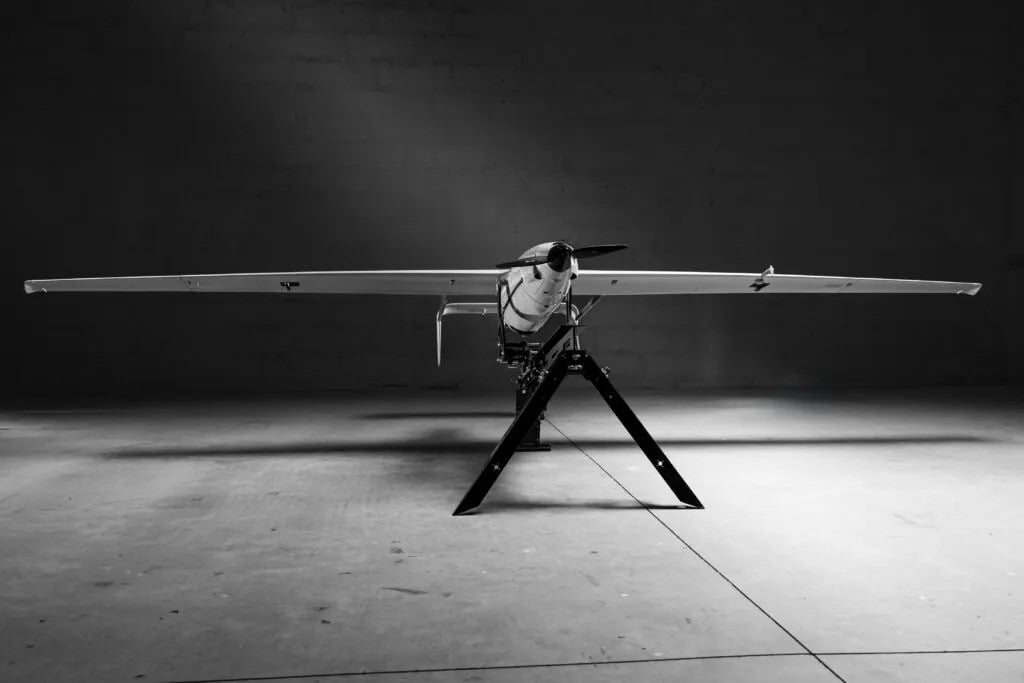
Skyeton has unveiled a significant enhancement to its Raybird unmanned aerial vehicle (UAV), implementing a hydrogen fuel cell-powered electric motor that promises to extend flight durations while reducing noise levels.
The upgraded Raybird utilizes a hydrogen-electric propulsion system, which allows the drone to remain airborne for approximately 12 hours. Engineers at Skyeton are ambitiously working towards increasing this endurance to an impressive 20 hours. This advancement represents a notable shift from traditional internal combustion engines, which are typically less efficient and produce more noise.
One of the standout features of the new propulsion system is its low heat generation. This characteristic, combined with the UAV’s capacity to operate at high altitudes and maintain near-silent performance, makes the Raybird substantially more difficult to detect during missions. The reduced thermal signature is particularly advantageous for operations requiring stealth and discretion.
Skyeton’s initiative showcases a commitment to advancing UAV technology, focusing on sustainable energy solutions that not only enhance operational capabilities but also align with global efforts to reduce carbon emissions.
As the demand for more efficient and quieter drones grows in various sectors, including surveillance and environmental monitoring, the updated Raybird could serve as a pivotal tool in modern aerial technology.