




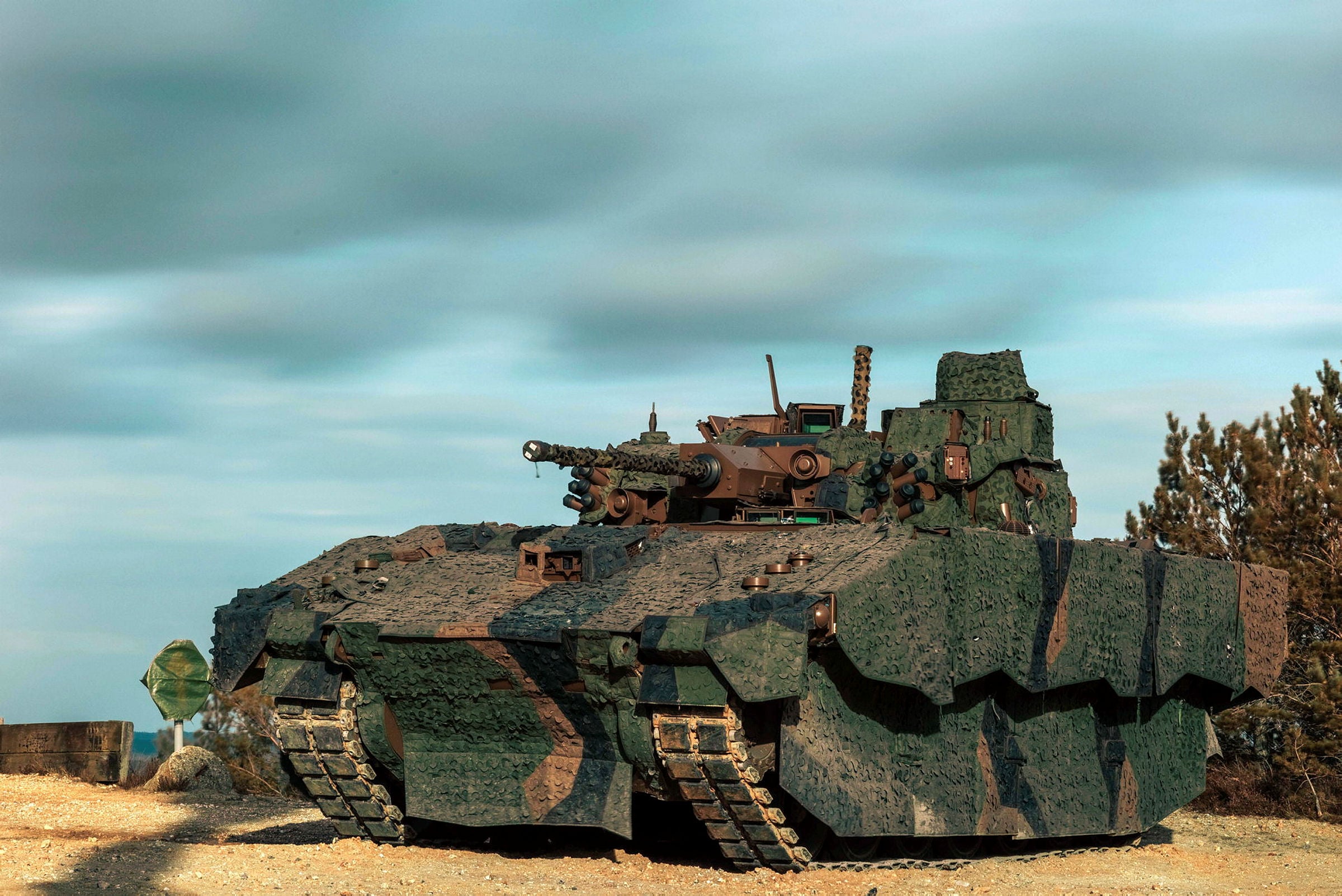
The Ajax fighting vehicle, a flagship project of the British Army, is at the forefront of transforming modern armored warfare. Designed to operate in complex battlefield environments, Ajax incorporates advanced digital technologies, providing military commanders with enhanced situational awareness, rapid target acquisition, and real-time data processing.
Developed by General Dynamics UK, Ajax is not just a singular vehicle, but a modular family of all-terrain, tracked armored fighting vehicles intended to replace aging military platforms that have been operational since the 1970s. Its inception dates back to the early 2010s when the UK Ministry of Defence selected General Dynamics UK as part of the Future Rapid Effects System (FRES) program. Originally intended to see deliveries by 2017, the program has faced numerous setbacks including technical challenges related to safety, such as excessive noise and vibrations, leading to significant delays in the timeline for operational deployment.
As of now, the Ajax family includes several variants designed for specific battlefield roles. The Ajax variant serves as the primary reconnaissance and strike vehicle, equipped to deliver real-time intelligence while engaging threats with a standard 40mm cannon. Other variants include Ares, tasked with protected mobility and reconnaissance; Athena, which functions as a command-and-control hub; Apollo, for frontline repairs; Atlas, an armored recovery vehicle; and Argus, focused on engineering reconnaissance.
The Ajax vehicle integrates a sophisticated digital architecture, enabling rapid processing of battlefield information. Its open-architecture design facilitates seamless data sharing and networking among units, enhancing operational effectiveness in complex situations. Additionally, the platform boasts advanced sensors and armaments, ensuring both firepower and protection against a variety of threats.
However, despite these advancements, the Ajax program has been mired in controversy. Ongoing issues regarding crew comfort and operational readiness have raised concerns within defense circles. The aforementioned problems with noise and vibration are notable challenges that have delayed the rollout of the vehicle, prompting discussions about the importance of human-system integration in modern military technology. Furthermore, questions about the relative level of passive protection against anti-armor threats persist.
Despite these setbacks, the Ajax family is forming the backbone of future Armoured and Deep Reconnaissance Strike Brigades in the UK and aims to bolster NATO interoperability efforts. As interest grows internationally, other NATO nations, including Poland, are considering potential acquisitions of the platform, indicating a broader recognition of the need for advanced, network-capable combat vehicles in modern military operations.
Looking forward, Ajax’s evolution is set to continue with the potential for new variants, such as infantry fighting vehicles and mortar carriers. The inherent flexibility of its digital architecture means future upgrades can be incorporated to keep pace with emerging technological requirements. Nevertheless, the program still faces significant challenges, including the need to achieve full operational capability, rectify crew comfort issues, and validate long-term performance in combat scenarios—these factors will be critical in defining Ajax’s legacy within modern military capabilities.


