




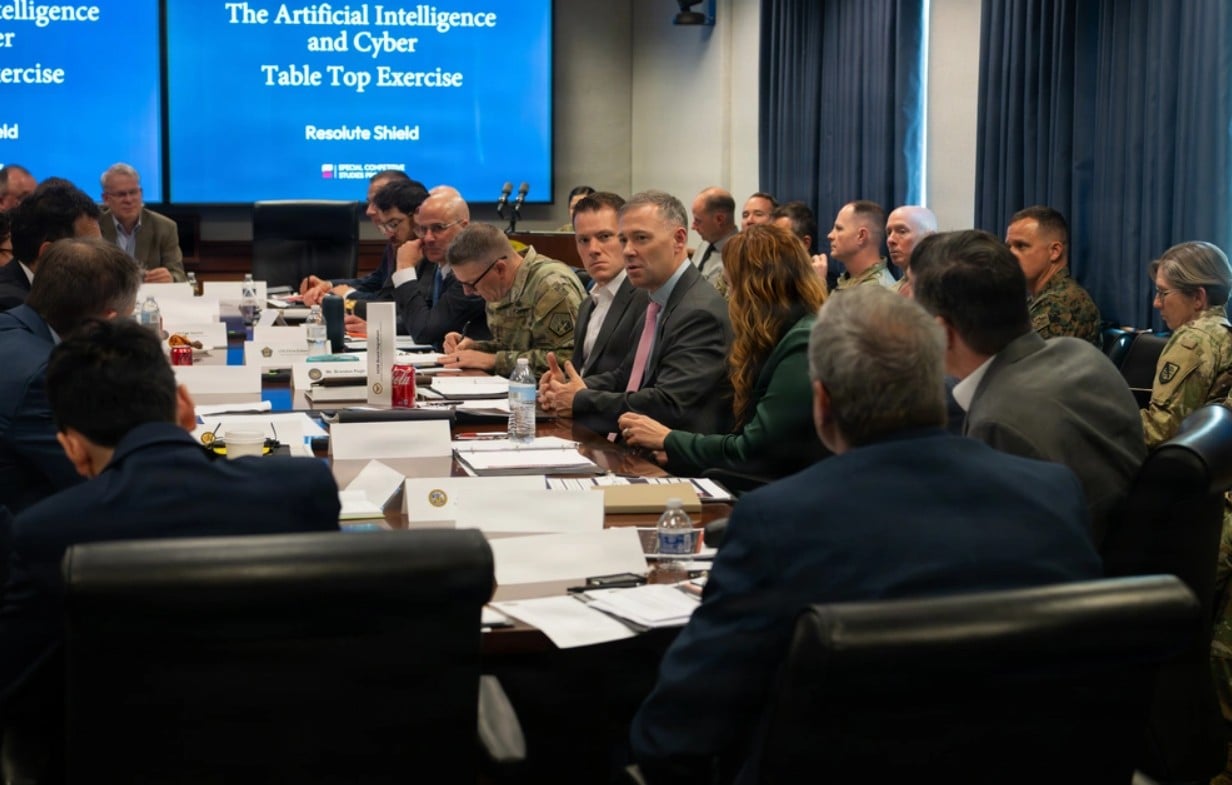
In a significant development aimed at enhancing national cybersecurity, military officials collaborated with top executives from leading technology firms during a recent tabletop exercise at the Pentagon. This event, marked as AI TTX 2.0, focused on the capacity of agentic artificial intelligence (AI) systems to engage and neutralize large-scale cyberattacks more swiftly than traditional human responses.
The exercise was orchestrated by the Office of the Principal Cyber Advisor and saw participation from major tech players including Amazon Web Services, Google, Microsoft, OpenAI, CrowdStrike, and Palo Alto Networks. This diverse group of stakeholders collaborated with army leadership and key defense organizations such as US Cyber Command and US Army Cyber Command, illustrating a concerted effort to bridge military needs with technological innovations.
The discussions centered on how advanced AI capabilities could dramatically shorten response times during cyber incidents, taking advantage of AI’s ability to process vast amounts of data and execute decisions far quicker than human counterparts. The aim of AI TTX 2.0 was to explore and enhance the integration of AI tools within military frameworks, thereby increasing the overall resilience of national infrastructure against evolving cyber threats.
This initiative is part of a broader trend wherein military and tech sectors increasingly converge to address the complexities of modern warfare and cybersecurity. The exercises not only provided a platform for testing the effectiveness of AI in simulated scenarios but also fostered collaboration that could lead to more robust defense strategies in the face of emerging cyber challenges.
The outcomes and insights from AI TTX 2.0 are expected to inform future operational protocols and enhance the United States’ readiness to confront cyber adversaries, ensuring that response mechanisms evolve in tandem with technological advancements.


