




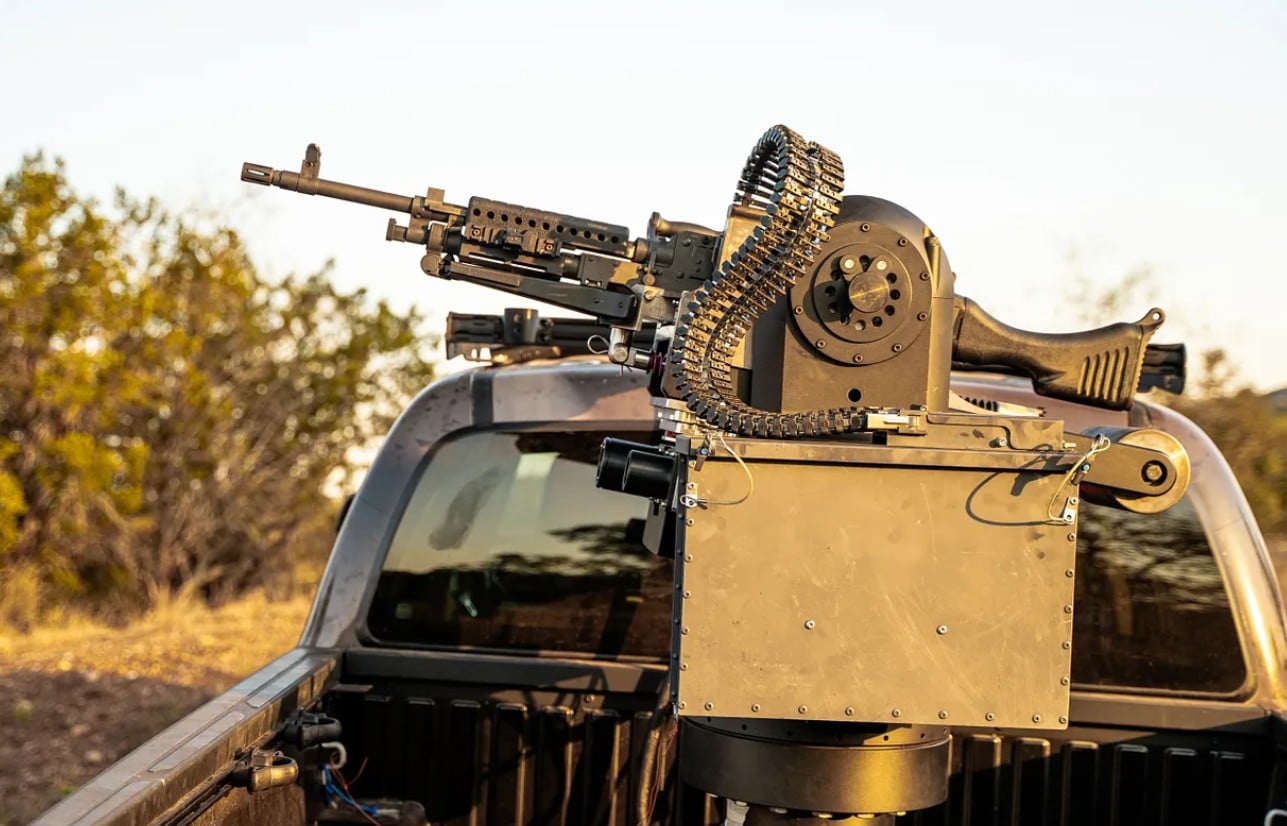
The US Army Applications Lab has chosen Allen Control Systems to advance the integration of its Bullfrog autonomous weapon station into five of the military’s primary combat vehicles. This contract, valued at $1.5 million, could potentially extend to $4.5 million through additional options.
The deployment of Bullfrog on key platforms is aimed at facilitating rapid prototyping while allowing soldiers to provide immediate feedback on the weapon station powered by artificial intelligence. Major Colby Burkhart, the Project Lead for the Army Applications Lab, commented that this initiative will assist the Army in making well-informed decisions regarding scalable solutions to tackle the evolving threat posed by low-cost, weaponized drones.
The Bullfrog system is designed as a lightweight, low-power autonomous weapon station that identifies, tracks, and engages hostile unmanned systems. It fits both mobile operations and static defense roles, including protection for crucial infrastructure.
Notably, Bullfrog is capable of targeting unmanned aerial systems and operates in either autonomous or semi-autonomous modes, requiring human authorization for firing. The system’s AI-enabled software supports target detection, identification, tracking, and queuing while minimizing the need for operator input.
Importantly, Bullfrog employs a fully passive sensor suite that ensures target detection and engagement without emitting signals that could expose its location. The weapon station is compatible with standard NATO 7.62×51 mm ammunition and boasts a maximum cyclic rate of fire of 850 rounds per minute. Weighing approximately 300 pounds (136 kilograms) without ammunition, Bullfrog is designed to utilize conventional service weapons, significantly lowering the cost per engagement, which can reportedly be as low as $10 for each successful targeting attempt.
This strategic initiative by the U.S. Army aims to enhance its capabilities in modern warfare by integrating advanced technology to meet the challenges posed by increasingly sophisticated unmanned threats.


