




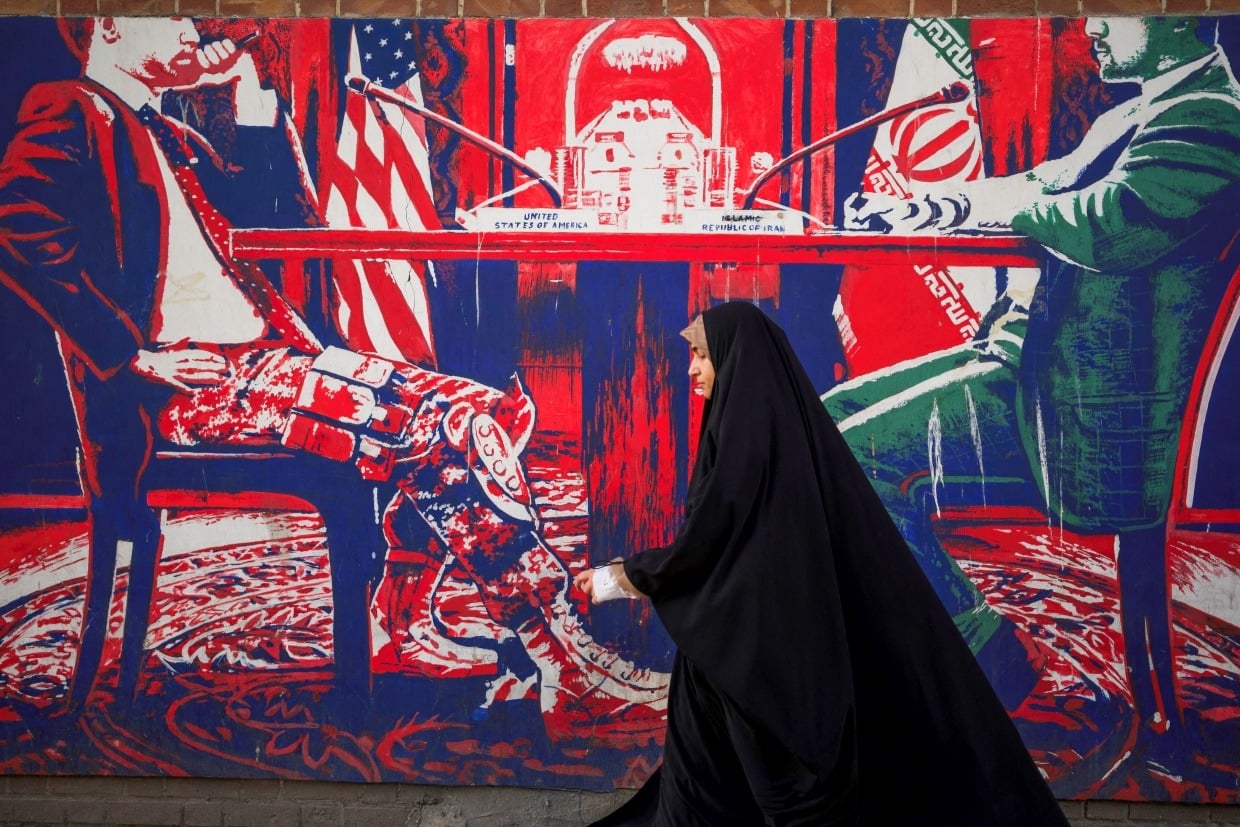
The White House issued a stern message on Wednesday, advising Iran to consider entering negotiations with the United States as President Trump hinted at potential military intervention. This warning comes in the wake of renewed indirect talks mediated by Oman, which resumed following Trump’s aggressive stance towards Iran, particularly after a violent crackdown on protesters in the country.
Amid ongoing tensions, Trump has hinted at military action in various public statements, further intensifying the situation. A previous round of negotiations between the two countries fell apart last June when Israel conducted unexpected airstrikes against Iran, which sparked a brief conflict that the United States joined, targeting Iranian nuclear sites.
White House Press Secretary Karoline Leavitt urged Iran to strike a deal, declaring it “wise” for them to engage with the Trump administration. In a post on his Truth Social account, Trump suggested that the U.S. might initiate strikes against Iran as military assets continue to build up in the Middle East. He also cautioned the United Kingdom against relinquishing control over the Chagos Islands, pointing out the Diego Garcia airbase as a strategic location in case Iran did not comply with U.S. demands.
Reports from CNN and CBS indicated that U.S. military forces could be ready to carry out strikes against Iran as soon as this weekend, although Trump has yet to make a definitive decision. The Wall Street Journal added that the President received briefings on military strategies designed to inflict maximum damage, including plans to target Iranian political and military leaders in an effort to destabilize the current regime.
In response to escalating tensions, Iranian Foreign Minister Abbas Araghchi announced that Tehran is in the process of drafting a framework for future negotiations with Washington. Following a second round of Oman-mediated talks in Geneva, Araghchi noted that the two nations had reached consensus on several guiding principles, although U.S. Vice President JD Vance stressed that Iran had not fully acknowledged all of America’s demands.
Iranian President Masoud Pezeshkian affirmed on Wednesday that Iran does not seek war; however, he indicated that the nation would not acquiesce to U.S. pressure. “Should we accept that?” he asked, referring to the expectation of subservience to U.S. demands.
In a related development, Araghchi spoke with Rafael Grossi, head of the United Nations’ International Atomic Energy Agency (IAEA), highlighting Iran’s commitment to establish a coherent framework for ongoing talks. Yet, Iran has restricted IAEA inspectors’ access to certain sites targeted by foreign airstrikes and has accused the agency of bias.
Additionally, U.S. Energy Secretary Chris Wright reiterated America’s commitment to preventing Iran from acquiring nuclear weapons, expressing that any Iranian aspirations in that regard are completely unacceptable.
While diplomatic efforts continue, the risk of military confrontation looms large. The U.S. is bolstering its military presence in the region, having dispatched a second aircraft carrier to join the USS Abraham Lincoln and its fleet of nearly 80 aircraft positioned close to the Iranian coastline. In a show of strength, Iran’s Islamic Revolutionary Guard Corps has also commenced military exercises in the strategically significant Strait of Hormuz, a crucial channel for global oil transit. Reports from Iranian state television indicated intentions to temporarily halt traffic in parts of the strait during these drills for safety measures.
As both sides navigate a precarious situation, the focus remains on whether diplomatic discussions can yield a resolution or if military action will eventually surface as a prevailing option.


