




In Defence Current Affairs for 13 May 2026, we will see the latest national and international current affairs news. These important current affairs will be beneficial for your upcoming NDA, CDS, CDS OTA, AFCAT, TA, Agniveer Army, Agniveer Navy, Agniveer Air Force, Women Military Police, INET, MNS, ACC exams, SCO, PCSL, CAPF, and SSB interviews, and direct entries for Army, Navy, and Air Force like SSC Tech, TGC, JAG, NCC, TES, 10+2 Cadet. Download a PDF file about current events at the end of this article. Let us now see the Current Affairs.
Defence Current Affairs 13 May 2026
TATA Advanced Systems Rolls Out First Made-In-India C-295 Aircraft
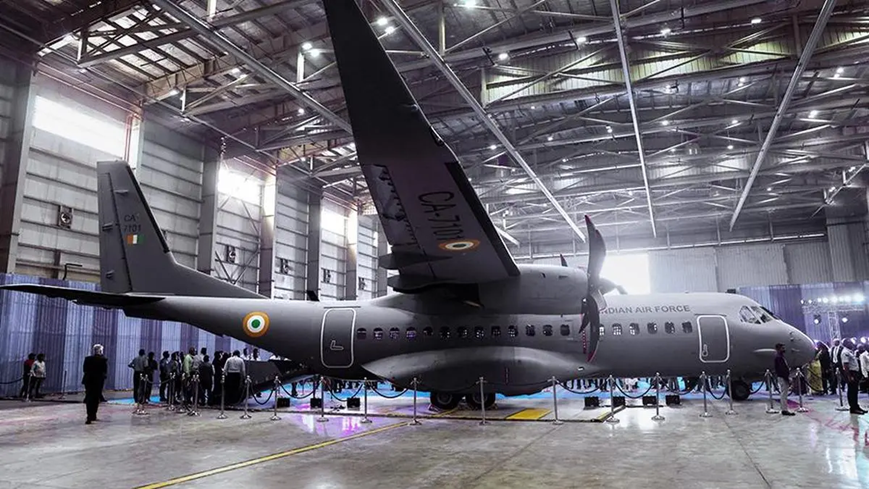
India’s defence manufacturing sector achieved a historic milestone as Tata Advanced Systems Limited (TASL) rolled out the first Made-in-India C-295 military transport aircraft from its Vadodara facility in Gujarat. The aircraft has been developed in partnership with Airbus under the Government of India’s “Make in India” initiative.
The C-295 project is part of a ₹21,935 crore agreement signed between India and Spain in 2021 for 56 aircraft for the Indian Air Force. Under the deal:
- 16 aircraft are being delivered directly from Spain.
- The remaining 40 aircraft will be manufactured and assembled in India by Tata Advanced Systems.
The Vadodara Final Assembly Line represents a major breakthrough because it is the first private-sector military aircraft manufacturing facility in India. The aircraft will strengthen the Indian Air Force’s tactical airlift capability and replace the ageing Avro transport fleet.
The C-295 aircraft can:
- Carry troops and cargo,
- Operate from short and rough airstrips,
- Perform medical evacuation missions,
- Support disaster relief operations.
Experts believe this project will boost India’s aerospace ecosystem, create jobs, and increase indigenous defence manufacturing capability. It also demonstrates growing cooperation between India and global defence companies like Airbus.
Trump to Raise Taiwan Arms Sales and Jimmy Lai Issue With Xi Jinping
US President Donald Trump announced that he plans to discuss American arms sales to Taiwan and the imprisonment of Hong Kong media tycoon Jimmy Lai during his upcoming meeting with Chinese President Xi Jinping in Beijing.
Taiwan remains one of the most sensitive issues in US-China relations. China considers Taiwan a part of its territory, while the United States continues to support Taiwan’s defence capabilities through arms sales.
Another major issue is the case of Jimmy Lai, a pro-democracy businessman and media owner in Hong Kong who is currently imprisoned under Hong Kong’s national security laws. Western countries have repeatedly expressed concern regarding freedom of speech and human rights in Hong Kong.
Trump’s statement signals that tensions between Washington and Beijing may continue over:
- Taiwan’s security,
- Human rights concerns,
- Strategic competition in the Indo-Pacific region.
Analysts believe the discussions could significantly influence future US-China diplomatic and military relations.
- What is Taiwan?
- Taiwan is an island located in East Asia, near the southeastern coast of China. Its capital city is Taipei.
- Taiwan operates with its own:
- Government
- Military
- Constitution
- Currency
- Elections
- However, China considers Taiwan part of its territory under the “One China Policy.”
- Location of Taiwan
- Taiwan is located:
- East of China
- North of the Philippines
- South of Japan
- The narrow water body between China and Taiwan is called the Taiwan Strait.
- Capital and Currency
- Capital: Taipei
- Currency: New Taiwan Dollar (TWD)
- Official Language: Mandarin Chinese
- Why is Taiwan Important?
- 1. Global Technology Hub
- Taiwan is one of the world’s biggest semiconductor producers.
- Taiwan Semiconductor Manufacturing Company is the world’s leading chip manufacturing company. Many global companies depend on Taiwanese semiconductor chips.
- 2. Strategic Location
- Taiwan is located in a very important maritime region in the Indo-Pacific. Control over Taiwan would affect:
- Global trade routes
- Naval power balance
- Regional security
- 3. US-China Tensions
- The issue of Taiwan is one of the biggest reasons for tension between:
- United States
- China
- The US supports Taiwan’s defence through arms sales, while China strongly opposes foreign involvement.
- One China Policy
- The “One China Policy” means:
- China claims Taiwan is part of China.
- Countries maintaining diplomatic relations with China usually do not officially recognize Taiwan as an independent country.
- However, many countries maintain unofficial economic and trade relations with Taiwan.
- Taiwan’s Government
- Taiwan functions as a democratic country with:
- President
- Parliament
- Multi-party elections
- The current political system developed after the Chinese Civil War in 1949, when the Nationalist government moved to Taiwan.
- Economy of Taiwan
- Taiwan has a highly developed economy based on:
- Electronics
- Semiconductors
- Technology exports
- Manufacturing
- Major exports include:
- Computer chips
- Electronic equipment
- Machinery
- Important for Exams
- Key Points
- Capital: Taipei
- Currency: New Taiwan Dollar
- Strait: Taiwan Strait
- Major company: TSMC
- Issue linked with: China-US relations
- Known for: Semiconductor industry
Russia to Deploy New Sarmat Nuclear Missile This Year
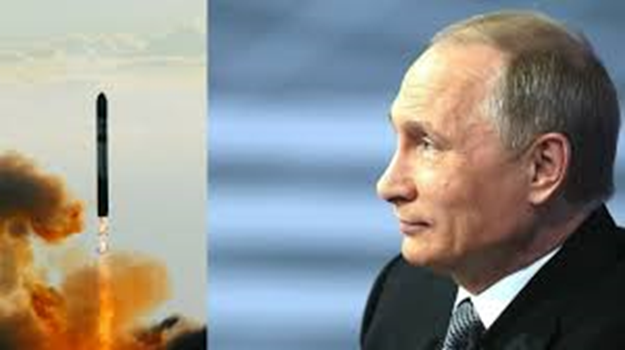
Russian President Vladimir Putin stated that Russia will deploy its new RS-28 Sarmat intercontinental ballistic missile by the end of 2026. The announcement came after Russia claimed a successful test launch of the missile.
The Sarmat missile is considered one of the world’s most powerful nuclear-capable missiles. According to Russian officials:
- It has an extremely long range,
- It can carry multiple nuclear warheads,
- It is designed to bypass advanced missile defence systems.
Russia views the Sarmat missile as an important part of modernizing its strategic nuclear forces amid ongoing tensions with Western countries over the Ukraine conflict.
However, Western analysts have questioned some of Russia’s claims regarding the missile’s capabilities. Previous tests reportedly faced delays and technical challenges before the latest launch.
The deployment of Sarmat is expected to:
- Strengthen Russia’s nuclear deterrence,
- Increase global strategic tensions,
- Trigger renewed debate on nuclear arms control.
Pentagon Says US Cost of Iran War Nearing $29 Billion
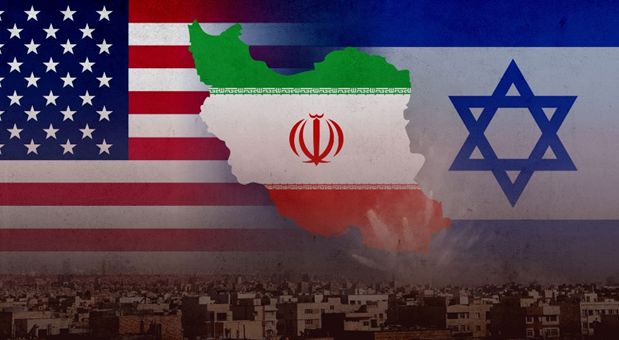
The Pentagon has revealed that the ongoing US military conflict with Iran has cost nearly $29 billion so far. The updated figure is around $4 billion higher than earlier estimates released in April.
According to Pentagon officials, the cost includes:
- Military operations,
- Equipment repairs,
- Replacement of damaged systems,
- Operational and logistical expenses.
The growing financial burden has become a political issue in the United States, especially ahead of upcoming elections. Critics argue that prolonged military operations could affect America’s economy and military readiness.
The conflict has also increased instability in the Middle East and raised concerns regarding:
- Global oil prices,
- Regional security,
- International diplomacy.
Military analysts believe the rising cost highlights the economic challenges of prolonged warfare in modern times.
Israel Sends Iron Dome Defence System to UAE Amid Iranian Threats
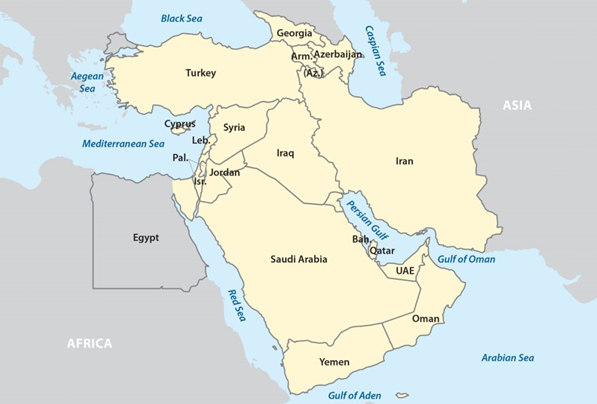
Reports indicate that Israel has deployed Iron Dome air defence systems and personnel to the United Arab Emirates amid increasing tensions linked to Iran. The information was confirmed by US Ambassador Mike Huckabee.
The Iron Dome is Israel’s advanced missile defence system designed to intercept short-range rockets and aerial threats. The deployment reflects growing defence cooperation between Israel and the UAE after both countries normalized relations through the Abraham Accords in 2020.
The move is seen as a response to rising Iranian missile threats in the region. Defence experts believe it demonstrates:
- Increasing security coordination in the Middle East,
- Expanding Israel-UAE strategic partnership,
- Growing concerns over regional missile attacks.
The deployment also highlights how regional countries are strengthening defence systems amid ongoing geopolitical instability in West Asia
What is the Iron Dome?
The Iron Dome is a mobile air defence system developed by Israel to intercept and destroy short-range rockets, artillery shells, and drones.
It is one of the world’s most advanced missile defence systems.
Developed By
The system was developed by:
- Rafael Advanced Defense Systems
- With support from the United States
The Iron Dome became operational in 2011.
Main Purpose
The Iron Dome is designed to protect:
- Cities
- Military bases
- Civilian areas
- Critical infrastructure
from incoming aerial threats.
How Does Iron Dome Work?
The system works in three main steps:
1. Detection
A radar system detects incoming rockets.
2. Tracking
The system calculates:
- Speed
- Direction
- Target area
3. Interception
If the rocket is likely to hit a populated area, an interceptor missile is launched to destroy it in the air.
Important Features
- Highly mobile system
- Works in all weather conditions
- Can intercept multiple rockets simultaneously
- High interception success rate
- Uses Tamir interceptor missiles
Why is Iron Dome Important?
The system became globally famous due to repeated conflicts in the Middle East where Israel faced rocket attacks from militant groups.
It has significantly reduced civilian casualties and infrastructure damage.
Recent Developments
Reports recently indicated that Israel deployed Iron Dome systems in the United Arab Emirates amid rising tensions linked to Iran.
This reflects increasing defence cooperation in West Asia.
Limitations
Despite its effectiveness, Iron Dome has some limitations:
- Expensive interceptor missiles
- Difficulties against massive rocket barrages
- Limited range against long-distance ballistic missiles
For long-range threats, Israel also uses systems like:
- David’s Sling
- Arrow Missile Defence System
Review Questions
1. The first Made-in-India C-295 aircraft was rolled out by:
A) HAL
B) DRDO
C) Tata Advanced Systems
D) BEL
Answer: C) Tata Advanced Systems
2. The C-295 aircraft project in India is a partnership between Tata Advanced Systems and:
A) Boeing
B) Lockheed Martin
C) Dassault Aviation
D) Airbus
Answer: D) Airbus
3. The C-295 aircraft is mainly used for:
A) Space missions
B) Tactical transport operations
C) Nuclear attacks
D) Naval warfare
Answer: B) Tactical transport operations
4. The C-295 aircraft will replace which old aircraft fleet in the Indian Air Force?
A) Mirage 2000
B) Sukhoi Su-30
C) Avro aircraft
D) Jaguar aircraft
Answer: C) Avro aircraft
5. The Final Assembly Line of the C-295 aircraft is located in:
A) Bengaluru
B) Hyderabad
C) Vadodara
D) Pune
Answer: C) Vadodara
6. Taiwan is considered a sensitive issue mainly between:
A) India and Pakistan
B) Russia and Ukraine
C) USA and China
D) Japan and South Korea
Answer: C) USA and China
7. Jimmy Lai is associated with:
A) Russia
B) Hong Kong democracy movement
C) Taiwan military
D) NATO
Answer: B) Hong Kong democracy movement
8. Jimmy Lai is known as a:
A) Scientist
B) Military officer
C) Media tycoon
D) Diplomat
Answer: C) Media tycoon
9. The Sarmat missile belongs to:
A) China
B) India
C) USA
D) Russia
Answer: D) Russia
10. The Sarmat missile is a type of:
A) Cruise missile
B) Surface-to-air missile
C) Intercontinental ballistic missile
D) Anti-tank missile
Answer: C) Intercontinental ballistic missile
11. The full form of MIRV is:
A) Multiple Integrated Rocket Vehicle
B) Multiple Independently Targeted Re-entry Vehicle
C) Missile Integrated Radar Vehicle
D) Military Intercept Response Vehicle
Answer: B) Multiple Independently Targeted Re-entry Vehicle
12. The Sarmat missile is designed mainly for:
A) Cargo transport
B) Air defence
C) Nuclear deterrence
D) Surveillance
Answer: C) Nuclear deterrence
13. According to Pentagon estimates, the US-Iran conflict cost is nearing:
A) $10 billion
B) $15 billion
C) $29 billion
D) $50 billion
Answer: C) $29 billion
14. The Pentagon is the headquarters of:
A) NATO
B) US Department of Defense
C) CIA
D) FBI
Answer: B) US Department of Defense
15. The Iron Dome defence system belongs to:
A) Russia
B) India
C) Israel
D) France
Answer: C) Israel
16. The Iron Dome system is mainly used to:
A) Launch satellites
B) Intercept rockets and missiles
C) Transport troops
D) Conduct cyber warfare
Answer: B) Intercept rockets and missiles
17. Israel reportedly sent the Iron Dome system to:
A) Saudi Arabia
B) Qatar
C) UAE
D) Egypt
Answer: C) UAE
18. The Abraham Accords are related to:
A) Climate agreements
B) Nuclear disarmament
C) Normalization of relations between Israel and Arab nations
D) Trade agreements in Europe
Answer: C) Normalization of relations between Israel and Arab nations
19. The C-295 project is considered important for:
A) Agricultural development
B) Space tourism
C) Make in India initiative
D) Railway modernization
Answer: C) Make in India initiative
20. The deployment of advanced missile systems by countries mainly affects:
A) Tourism only
B) Global strategic stability
C) Sports events
D) Weather forecasting
Answer: B) Global strategic stability
ALSO READ:
- Latest Daily Current Affairs and Defence Updates
- Latest Daily Current Affairs April 2026[DOWNLOAD PDF]
- Latest Daily Current Affairs March 2026[DOWNLOAD PDF]
- Latest Daily Current Affairs February 2026[DOWNLOAD PDF]
- Latest Daily Current Affairs January 2026[DOWNLOAD PDF]
- Latest Daily Current Affairs November 2025[DOWNLOAD PDF]
- Latest Daily Current Affairs October 2025[DOWNLOAD PDF]
- Latest Daily Current Affairs August 2025[DOWNLOAD PDF]
- Latest Daily Current Affairs July 2025[DOWNLOAD PDF]
- Monthly Defence Current Affairs June 2025 [DOWNLOAD PDF]
- Monthly Defence Current Affairs May 2025 [DOWNLOAD PDF]
- Monthly Defence Current Affairs April 2025 [DOWNLOAD PDF]
- Monthly Defence Current Affairs March 2025 [DOWNLOAD PDF]
- Monthly Defence Current Affairs February 2025 [DOWNLOAD PDF]
- Monthly Defence Current Affairs January 2025 [DOWNLOAD PDF]


