




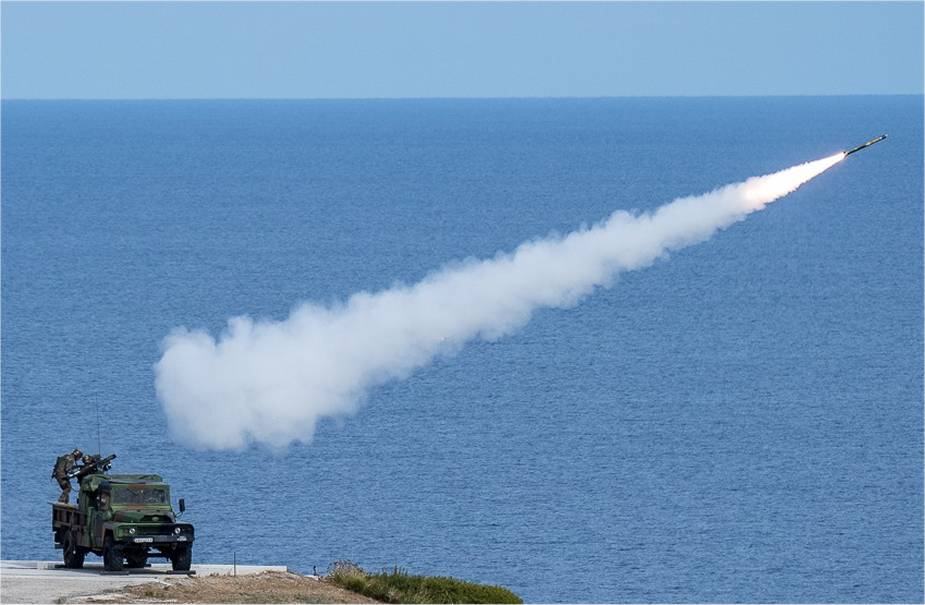
In contemporary military operations, the definition of air defense has evolved significantly. Modern threats often fly at low altitudes and at high speeds, maneuvering unpredictably to evade traditional radar systems. This shift has highlighted the need for advanced solutions like the Mistral missile, which is designed for short-range air defense.
The Mistral, developed by MBDA, is categorized as a Very Short-Range Air Defense (VSHORAD) system and is highly adept at intercepting a variety of low-flying targets, including aircraft, helicopters, drones, and cruise missiles. Unlike conventional shoulder-fired systems, the Mistral operates from stabilized platforms such as vehicles, naval mounts, and helicopters, which enhances accuracy and control during engagement.
Equipped with fire-and-forget, infrared-guided missile technology, the Mistral allows operators to target threats efficiently, with the added benefit of being able to relocate immediately after launch, enhancing survivability in combat scenarios. Over the years, the system has evolved from the original Mistral 1 into the current Mistral 3, which features an imaging infrared seeker and enhanced resistance to countermeasures, making it formidable against modern threats.
The origins of the Mistral project can be traced back to 1974 under France’s SATCP initiative, aimed at creating a mobile, effective short-range air defense system. With Matra as the prime contractor, the Mistral has grown into one of the most widely adopted VSHORAD systems around the globe. The first operational version entered service in 1990, followed by subsequent iterations that improved capabilities and reduced vulnerabilities to enemy countermeasures.
The Mistral missile family encompasses several variants, including the Mistral MANPADS, which offers dismounted troops an effective air defense solution, and the Mistral SIMBAD-RC, designed for naval applications. Each variant enhances operational versatility, making it applicable across varied environments.
Functionally, the Mistral is built around its infrared guidance system, which enables rapid engagement of aerial threats. Upon launch, the missile locks onto the target’s heat signature, with its onboard guidance continuously adjusting to ensure an accurate intercept. This system’s two-stage rocket motor allows for impressive speeds, reaching up to Mach 2.7, making it effective against fast-moving and low-flying threats.
The global usage of the Mistral speaks to its effectiveness, with adoption by over 30 nations, including Australia and Belgium. Its operational history includes deployments in significant conflicts such as the Second Congo War and the ongoing situation in Ukraine, where it has been employed to counter low-flying aircraft and drones.
Looking ahead, the relevance of the Mistral missile is projected to grow as military landscapes shift toward more mobile and distributed air defense systems. As the threat of drones and low-signature munitions expands, the Mistral provides a critical layer of defense, complementing larger air defense systems. This adaptability ensures that the Mistral will remain a key component of future military air operation strategies, continuing its legacy as a reliable and versatile defense solution.


