




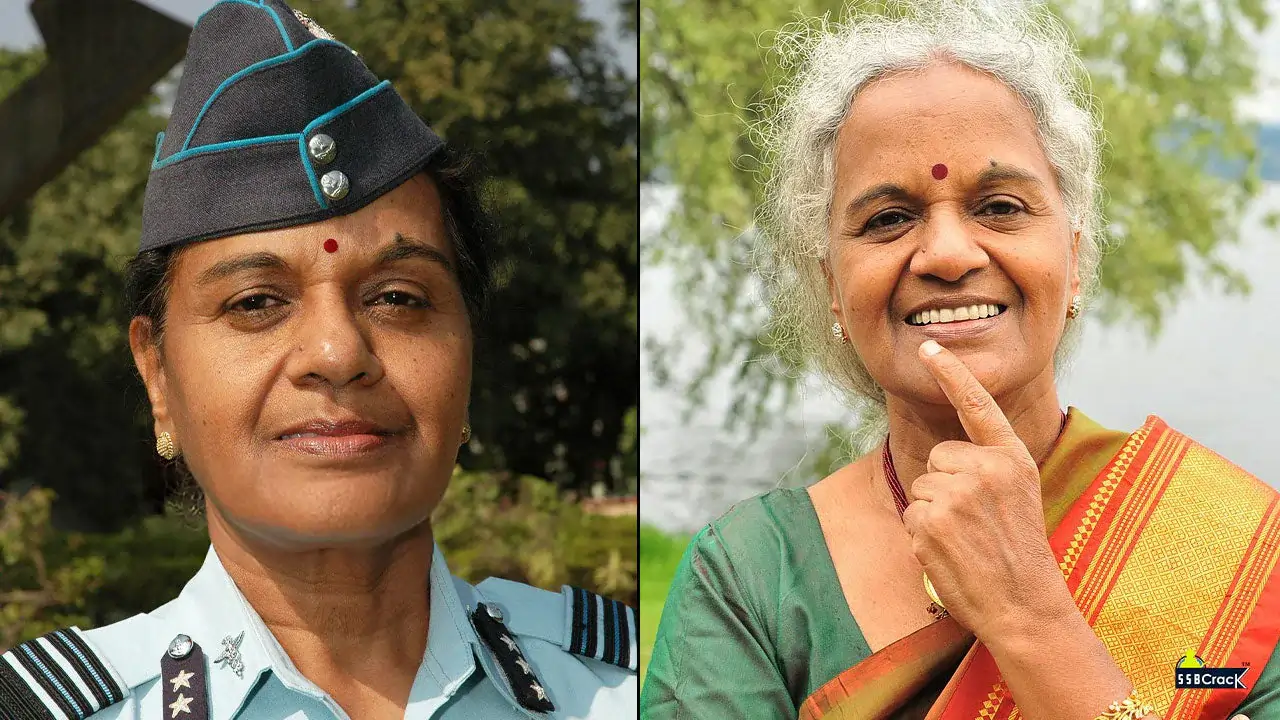
Air Marshal Padmavathy Bandopadhyay is celebrated as a pioneering figure in the annals of the Indian Armed Forces, attributed not only with considerable achievements but also as a formidable presence in aviation medicine. She made history by becoming the first woman officer of the Indian Air Force to attain the rank of Air Marshal, exemplifying how determination and excellence can forge pathways previously untouched by women in the military.
Born on November 4, 1944, in Tirupati, Padmavathy Swaminathan was raised in a Tamil-speaking Iyer family. Her early years were shaped by responsibility, particularly during her mother’s battle with tuberculosis, which left a lasting impression and influenced her journey toward medicine. Living in proximity to esteemed physician Dr. S.I. Padmavati and observing the medical practices at Safdarjung Hospital only intensified her aspirations to become a doctor.
Defying the societal norms of her time, her father encouraged her academic pursuits, enabling her to shift from humanities to sciences. She completed her pre-medical education at Kirori Mal College, University of Delhi, and later joined the Armed Forces Medical College in Pune. Upon her graduation in 1968, she embarked on a career that would etch her name into military history.
Commissioned into the Army Medical Corps on January 22, 1968, Bandopadhyay was promptly seconded to the Indian Air Force, marking the beginning of a distinguished career at the Air Force Hospital in Bangalore. That same year, she married Flight Lieutenant Sati Nath Bandopadhyay, a union that garnered attention as they became the first husband-and-wife duo in the Indian Air Force to receive a President’s award in the same ceremony.
One of the seminal moments in her career arose during her assignment at Air Force Hospital, Halwara, in Punjab, during the 1971 Indo-Pak War. Handling critical medical duties while supporting surgical teams, her commitment and innovation shone through, earning her the Vishisht Seva Medal in 1973 for her exemplary service.
Bandopadhyay’s trailblazing spirit was further demonstrated in 1975 when she became the first woman officer in the Armed Forces to specialize in Aviation Medicine. Her academic prowess grew as she obtained a Diploma in Aerospace Medicine, an MSc in Defence Sciences, an MD in Physiology, and eventually, a PhD in High Altitude Physiology. In 1978, she proudly stood as the first woman Armed Forces officer to complete the Defence Services Staff College course at Wellington, thereby shattering existing barriers in a predominantly male environment.
As she ascended the ranks, her reputation for expertise and dedication only amplified. Promoted to Wing Commander in 1985, she continued through the ranks, ultimately achieving the title of Air Marshal on October 1, 2004. Her elevation represented a landmark moment in the Indian Air Force and a beacon of hope for women in military service across India.
Her tenure as Air Officer Commanding of the Air Force Central Medical Establishment in Delhi was marked by significant advancements in medical evaluation and the overall modernization of military medical systems. She contributed to the establishment of improved medical standards and infrastructure, prioritizing the well-being of aircrew personnel.
Beyond her administrative roles, Bandopadhyay made noteworthy contributions to military medicine through various research projects. Her inquiries encompassed crucial topics, including hypoxia, G-stress, and the impacts of high-altitude environments on pilot performance. Her research not only enriched the domain of aviation medicine but also guided acclimatization protocols for soldiers deployed in extreme conditions.
In a historic feat, she participated in an Indo-Russian expedition to the Arctic in 1989-90, where she became the first Indian woman to conduct scientific research at the North Pole. This initiative produced valuable insights into human adaptability in extreme climatic conditions, earning her the Indira Priyadarshini Award for her contributions.
Her expertise was particularly crucial during the 1999 Kargil conflict, where she contributed to medical preparedness efforts within the Indian Air Force. Undertaking initiatives such as telemedicine implementation and advocating for advanced medical diagnostics underscored her commitment to operational readiness.
Throughout her career, she was recognized with multiple prestigious awards, including the Vishisht Seva Medal, the Ati Vishisht Seva Medal, and the Param Vishisht Seva Medal. In January 2020, she was honored with the Padma Shri, making her the first woman officer in the Indian Air Force to receive this civilian accolade for her distinguished service in medicine.
Following her retirement, Air Marshal Bandopadhyay continued to impact society through health initiatives, public welfare efforts, and gender sensitization projects. Her focus on empowering women and promoting education persists in her outreach efforts, particularly for economically disadvantaged groups.
Her inspiring journey—from a young caretaker to a pioneering Air Marshal—illustrates the power of resilience and determination. Bandopadhyay breaks not only personal and professional barriers but also constructs new paradigms for future generations, fostering an atmosphere of progress and opportunity for women in the Armed Forces. Her legacy extends beyond military ranks and accolades; she significantly impacted perceptions and capabilities within the Indian Armed Forces, and she remains a source of motivation for future aspirants serving the nation with honor.


