




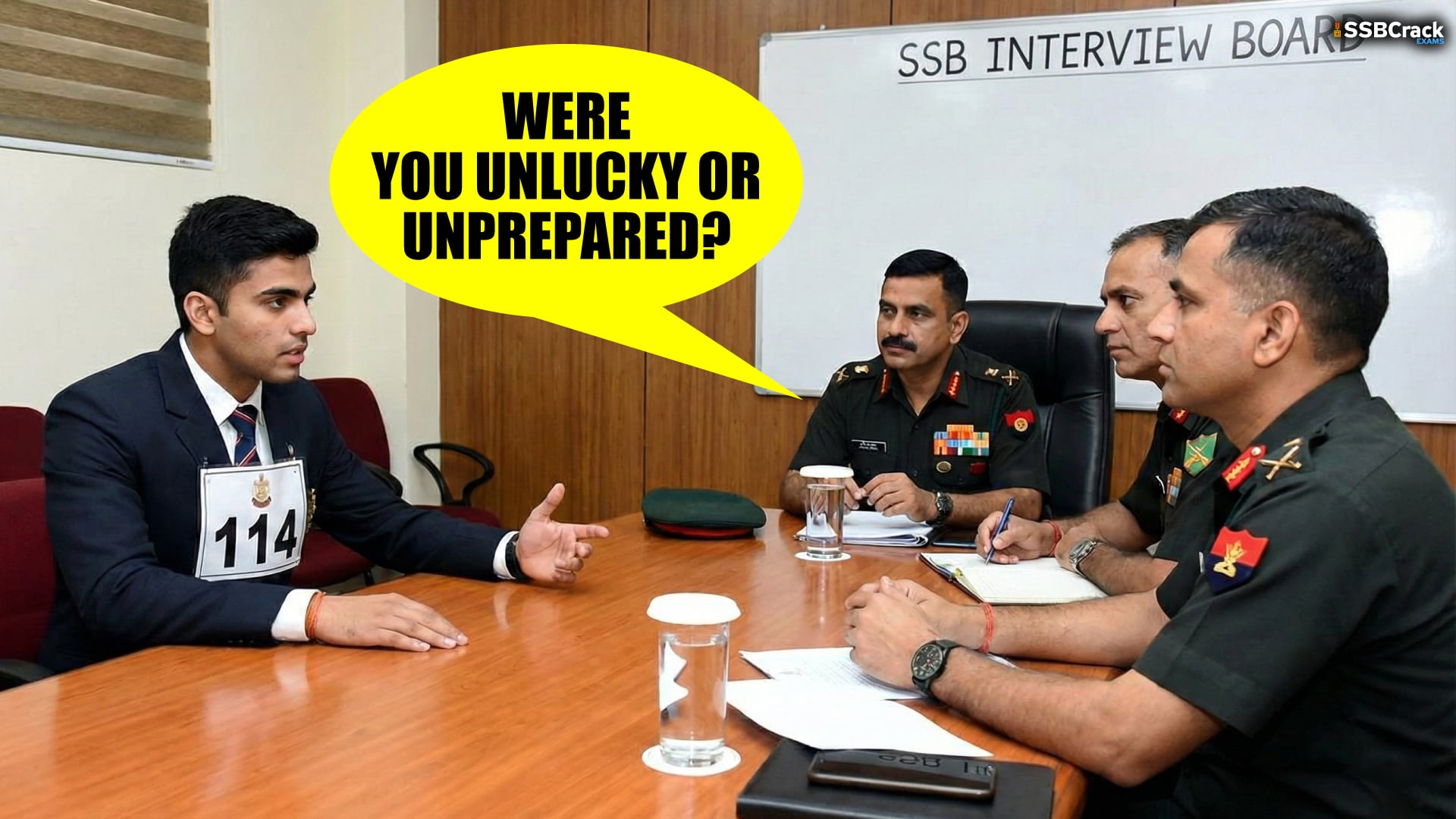
Many candidates get screened out in their very first SSB attempt and often believe that they are not suitable for the Armed Forces. In reality, screening out simply means that the assessors could not find enough evidence of Officer Like Qualities within the limited time available during Stage-I.
If you are a screened-out candidate, your next SSB interview becomes extremely important because assessors may want to know what you learned from your previous experience and how you have improved yourself.
In this article, we will discuss 20 important interview questions frequently asked to screened-out candidates, understand why they are asked, how to answer them, and see sample responses that can help you prepare effectively.
1. You were screened out earlier. What do you think was the reason?
Why it is asked
To check self-awareness, honesty, maturity and ability to analyze personal shortcomings.
How to answer
- Accept responsibility.
- Mention specific areas.
- Explain corrective actions.
Sample Answer
“I believe I was screened out because I lacked confidence during group discussions and could not express my ideas effectively. After that experience, I started participating in debates, group discussions and public speaking activities in my college. I have become more confident and organized in expressing my thoughts.”
2. How did you react after getting screened out?
Why it is asked
To assess emotional stability and resilience.
How to answer
- Be positive.
- Show learning attitude.
- Avoid blaming the system.
Sample Answer
“Initially I was disappointed because I had prepared sincerely. However, after reviewing my performance, I treated it as a learning opportunity. I identified my weaknesses and worked systematically on them.”
3. What improvements have you made since your last SSB?
Why it is asked
To evaluate growth mindset and initiative.
How to answer
Mention measurable improvements.
Sample Answer
“I have improved my communication skills, physical fitness and current affairs awareness. I regularly read newspapers, participate in group discussions and follow a structured fitness routine.”
4. What did you learn from your previous SSB experience?
Why it is asked
To assess learning ability.
How to answer
Mention practical lessons.
Sample Answer
“I learned that originality, teamwork and clear communication are more important than memorized answers. I also understood the importance of being natural and confident throughout the process.”
5. Did you receive any feedback from assessors?
Why it is asked
To verify honesty and reflection.
How to answer
State facts only.
Sample Answer
“No direct feedback was provided, but from my performance I felt that I needed to improve participation and confidence during group tasks.”
6. What was your strongest performance area during the previous SSB?
Why it is asked
To assess confidence and self-evaluation.
How to answer
Mention strengths realistically.
Sample Answer
“I believe I performed well in psychological tests because I responded naturally and maintained consistency in my stories and reactions.”
7. What was your weakest area during the previous SSB?
Why it is asked
To test honesty and self-awareness.
How to answer
Accept weakness and mention improvement.
Sample Answer
“My weakest area was group discussion participation. I hesitated to enter the discussion at the right time. Since then I have practiced speaking in groups regularly.”
8. Why do you want to join the Armed Forces despite being screened out?
Why it is asked
To check motivation and determination.
How to answer
Focus on service, leadership and responsibility.
Sample Answer
“My motivation remains unchanged because I admire the values of discipline, leadership and national service. One unsuccessful attempt has strengthened my determination rather than reducing it.”
9. Did you attend any coaching after getting screened out?
Why it is asked
To understand preparation methods.
How to answer
Be truthful.
Sample Answer
“I attended a guidance program to understand the SSB process better, but I focused mainly on improving my personality, communication skills and general awareness through self-development activities.”
10. What changes have occurred in your life since the last attempt?
Why it is asked
To assess personal development.
How to answer
Mention achievements and responsibilities.
Sample Answer
“I completed a leadership project in college, organized an event and became more active in sports. These experiences improved my teamwork and decision-making abilities.”
11. Why should we select you this time?
Why it is asked
To evaluate confidence and suitability.
How to answer
Connect improvements with officer qualities.
Sample Answer
“Compared to my previous attempt, I am more confident, physically fit and communicative. I have actively worked on my weaknesses and developed stronger leadership and teamwork skills.”
12. What is the biggest lesson failure has taught you?
Why it is asked
To assess maturity and resilience.
How to answer
Show constructive learning.
Sample Answer
“Failure taught me that consistent self-improvement is more important than immediate success. It helped me become more disciplined and patient.”
13. Did screening out affect your confidence?
Why it is asked
To check emotional strength.
How to answer
Acknowledge temporary disappointment but show recovery.
Sample Answer
“It affected me temporarily because I had high expectations. However, I quickly focused on self-improvement and converted that disappointment into motivation.”
14. What would you do if you are screened out again?
Why it is asked
To assess perseverance.
How to answer
Show determination and practicality.
Sample Answer
“I would analyze my shortcomings again, continue improving myself and attempt future opportunities while simultaneously pursuing my education and career goals.”
15. What qualities do you think an officer must possess?
Why it is asked
To check understanding of officer-like qualities.
How to answer
Link qualities with examples.
Sample Answer
“An officer should possess integrity, responsibility, effective intelligence, leadership, courage, teamwork and emotional stability. These qualities help inspire and lead others in challenging situations.”
16. Have you worked on your communication skills? How?
Why it is asked
To verify genuine efforts.
How to answer
Give specific actions.
Sample Answer
“Yes. I joined discussion groups, practiced extempore speaking, participated in presentations and improved my reading habits to increase fluency and confidence.”
17. What is your biggest strength today?
Why it is asked
To assess confidence and self-awareness.
How to answer
Support with evidence.
Sample Answer
“My biggest strength is adaptability. During college projects, I successfully coordinated people from different backgrounds and managed unexpected challenges effectively.”
18. What is one weakness you are still working on?
Why it is asked
To check honesty and improvement orientation.
How to answer
Mention a manageable weakness.
Sample Answer
“I sometimes spend extra time analyzing options before making decisions. To improve, I practice making quicker decisions during daily activities and group tasks.”
19. Tell me about a situation where you improved after criticism.
Why it is asked
To assess receptiveness to feedback.
How to answer
Use a real example.
Sample Answer
“My teacher once pointed out that I spoke too softly during presentations. I consciously practiced voice projection and participated in public speaking events, which significantly improved my confidence.”
20. What makes you different from other candidates?
Why it is asked
To assess individuality and self-belief.
How to answer
Focus on experiences and qualities, not superiority.
Sample Answer
“Every candidate brings unique strengths. My combination of persistence, willingness to learn from setbacks and consistent self-improvement efforts has shaped me into a more mature and determined individual.”
Quick Tips for Screened-Out Candidates
DO:
✔ Accept responsibility for shortcomings.
✔ Show learning and improvement.
✔ Be natural and genuine.
✔ Support claims with examples.
✔ Demonstrate resilience and determination.
DON’T:
✘ Blame assessors or the system.
✘ Memorize artificial answers.
✘ Exaggerate achievements.
✘ Sound defensive or negative.
✘ Pretend to be someone else.
Conclusion
Remember, being screened out is not a judgment on your potential; it is simply feedback that you need to present your qualities more effectively. The SSB is looking for trainable officer-like qualities, and every unsuccessful attempt provides valuable lessons for personal growth.
If you focus on self-improvement, develop confidence through real-life experiences, and remain honest during the interview, your next attempt can be significantly stronger than the previous one.
If you found this video useful, like the video, share it with fellow defence aspirants, and subscribe to the channel for more SSB Interview guidance, psychology preparation, OLQ development techniques and real interview questions. Jai Hind!


