




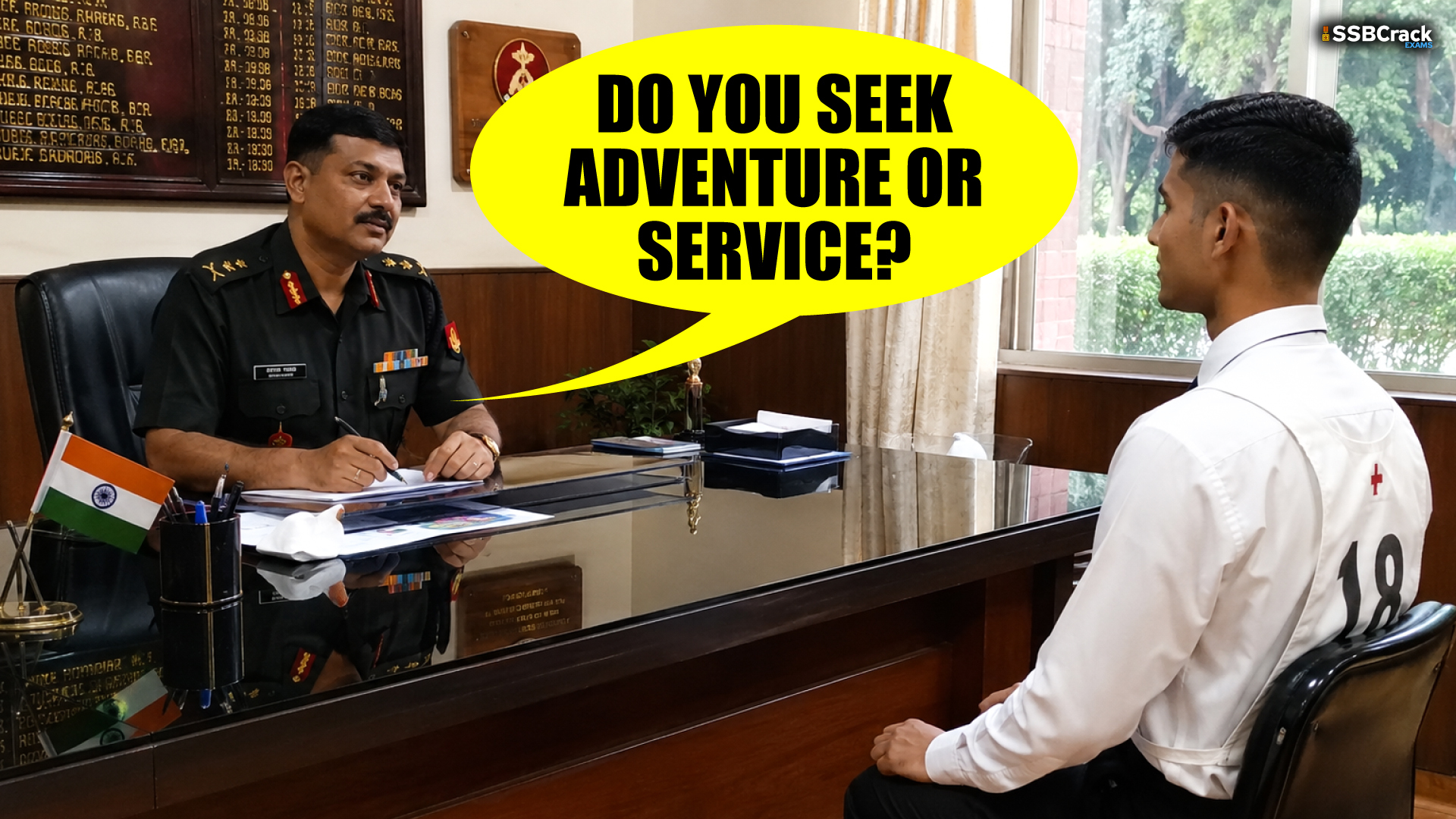
The Indian Army is not just a profession; it is a way of life built upon leadership, courage, responsibility, discipline, and service before self. During the SSB Interview, the Interviewing Officer tries to understand whether a candidate possesses the potential to lead soldiers in difficult situations and make sound decisions under pressure.
Many aspirants focus only on current affairs and factual knowledge, but the Interviewing Officer is often more interested in your personality, attitude, leadership potential, and real-life experiences.
In this article, we will discuss 20 unique SSB Interview questions specifically for Army aspirants. We will understand why these questions are asked, how to answer them effectively, and examine sample responses that reflect Officer Like Qualities expected in future Army officers.
1. What attracts you most about the Indian Army?
Why it is asked
To assess your understanding of military service and motivation.
How to answer
Mention leadership, service, responsibility, challenge, and teamwork.
Sample Answer
“What attracts me most is the opportunity to lead soldiers, serve the nation, and work in an environment that demands courage, discipline, and continuous self-improvement.”
2. Why do you think Army officers are respected in society?
Why it is asked
To assess your understanding of the officer’s role.
How to answer
Focus on responsibility, sacrifice, and leadership.
Sample Answer
“Army officers are respected because they accept immense responsibility, lead from the front, and dedicate themselves to protecting the nation and its citizens.”
3. What qualities should a platoon commander possess?
Why it is asked
To assess leadership understanding.
How to answer
Mention practical leadership qualities.
Sample Answer
“A platoon commander should possess courage, integrity, responsibility, sound judgment, empathy, communication skills, and the ability to inspire confidence among soldiers.”
4. If your team is physically exhausted during a task, what would you do?
Why it is asked
To assess leadership and concern for subordinates.
How to answer
Balance mission accomplishment with troop welfare.
Sample Answer
“I would assess the situation, motivate the team, distribute workload efficiently, and ensure that everyone remains focused while also monitoring their physical condition.”
5. Have you ever taken responsibility for a group activity?
Why it is asked
To assess leadership experiences.
How to answer
Use a real example.
Sample Answer
“I led a college event committee where I coordinated schedules, delegated tasks, and ensured smooth execution of the event.”
6. What does ‘Service Before Self’ mean to you?
Why it is asked
To assess values and commitment.
How to answer
Explain the concept practically.
Sample Answer
“It means prioritizing duty, responsibility, and the welfare of others above personal comfort or gain whenever circumstances demand it.”
7. How do you react when plans suddenly change?
Why it is asked
To assess adaptability.
How to answer
Demonstrate flexibility and problem-solving.
Sample Answer
“I quickly reassess the situation, identify alternatives, and adjust my actions according to the new circumstances.”
8. What is more important for an Army officer: intelligence or character?
Why it is asked
To assess values and reasoning.
How to answer
Provide a balanced answer.
Sample Answer
“Both are important, but character forms the foundation because intelligence without integrity and responsibility may not inspire trust or effective leadership.”
9. Describe a situation where you motivated others.
Why it is asked
To assess influencing ability.
How to answer
Provide a genuine example.
Sample Answer
“During exam preparation, some classmates were discouraged. I organized group study sessions and encouraged them to focus on consistent effort.”
10. What would you do if one of your team members was underperforming?
Why it is asked
To assess leadership and interpersonal skills.
How to answer
Focus on support and improvement.
Sample Answer
“I would identify the reason behind the problem, provide guidance and encouragement, and help the individual improve while maintaining team standards.”
11. What is the difference between authority and leadership?
Why it is asked
To assess leadership understanding.
How to answer
Explain clearly.
Sample Answer
“Authority comes from position, whereas leadership comes from the ability to influence, guide, and earn the trust of others.”
12. Have you ever made a difficult decision?
Why it is asked
To assess judgment and responsibility.
How to answer
Provide a real-life example.
Sample Answer
“I had to choose between participating in a competition and focusing on academics during exams. I evaluated priorities and chose the option that best supported my long-term goals.”
13. How would you handle failure during training?
Why it is asked
To assess resilience.
How to answer
Focus on learning and improvement.
Sample Answer
“I would identify my shortcomings, seek feedback, improve my preparation, and approach the next opportunity with greater determination.”
14. What role does discipline play in success?
Why it is asked
To assess your understanding of discipline.
How to answer
Connect discipline with daily habits.
Sample Answer
“Discipline ensures consistency in effort, helps maintain focus, and enables individuals to achieve goals even when motivation fluctuates.”
15. How would you handle criticism from a senior officer?
Why it is asked
To assess emotional maturity.
How to answer
Show willingness to learn.
Sample Answer
“I would listen carefully, understand the reason for the criticism, and use it as an opportunity to improve my performance.”
16. What would you do if you were given a task outside your comfort zone?
Why it is asked
To assess confidence and initiative.
How to answer
Demonstrate willingness to learn.
Sample Answer
“I would approach the task positively, gather necessary information, seek guidance if required, and put in my best effort to complete it successfully.”
17. What lesson have sports taught you?
Why it is asked
To assess teamwork and competitiveness.
How to answer
Mention practical lessons.
Sample Answer
“Sports have taught me teamwork, perseverance, discipline, leadership, and the importance of handling victory and defeat gracefully.”
18. If selected, what kind of officer would you like to become?
Why it is asked
To assess aspirations and leadership philosophy.
How to answer
Focus on leadership and service.
Sample Answer
“I would like to become a competent and dependable officer who leads by example, earns the trust of subordinates, and remains committed to mission accomplishment.”
19. What is one quality you admire in soldiers?
Why it is asked
To assess respect for military service.
How to answer
Choose a meaningful quality.
Sample Answer
“I admire their unwavering dedication to duty and their willingness to face challenges and hardships in the service of the nation.”
20. Why should the Army invest in training you?
Why it is asked
To assess confidence and self-belief.
How to answer
Highlight qualities relevant to military leadership.
Sample Answer
“I possess qualities such as responsibility, perseverance, adaptability, teamwork, and a strong desire to learn. I am prepared to work hard and continuously develop myself into an effective officer.”
Common Traits Seen in Recommended Army Aspirants
They accept responsibility willingly.
They demonstrate initiative in daily life.
They remain calm under pressure.
They possess practical leadership experiences.
They communicate clearly and confidently.
They display resilience after setbacks.
They understand the realities of military service.
They balance confidence with humility.
Common Mistakes to Avoid
Giving textbook answers.
Over-glorifying military life without understanding responsibilities.
Avoiding discussion of failures.
Blaming others for mistakes.
Showing poor awareness of leadership responsibilities.
Giving unrealistic examples.
Trying to impress instead of being genuine.
Closing Lines
Remember, the SSB Interview is not looking for a ready-made officer. It is looking for an individual who possesses the potential to become one.
The Army trains skills, knowledge, and military tactics. However, qualities such as integrity, responsibility, courage, teamwork, initiative, and determination must already be visible in your personality.
Focus on your real-life experiences, learn from your successes and failures, and answer every question honestly and confidently.
Keep preparing, keep improving, and keep marching toward your dream of becoming an Army Officer.
Jai Hind!


