




In Defence Current Affairs for 15 July 2026, we will see the latest national and international current affairs news. These important current affairs will be beneficial for your upcoming NDA, CDS, CDS OTA, AFCAT, TA, Agniveer Army, Agniveer Navy, Agniveer Air Force, Women Military Police, INET, MNS, ACC exams, SCO, PCSL, CAPF, and SSB interviews, and direct entries for Army, Navy, and Air Force like SSC Tech, TGC, JAG, NCC, TES, 10+2 Cadet. Download a PDF file about current events at the end of this article. Let us now see the Current Affairs.
Defence Current Affairs 15 July 2026
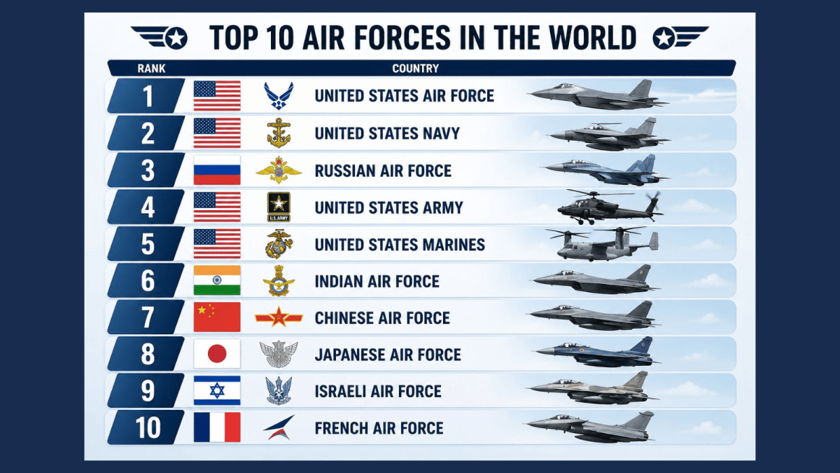
Global Air Power Rankings 2026
- The Indian Air Force (IAF) has once again demonstrated its growing operational strength by retaining its position as the world’s third most powerful air force in the 2026 Global Air Power Rankings released by the World Directory of Modern Military Aircraft (WDMMA). This marks the fifth consecutive year that the IAF has secured the third position, highlighting its consistent modernization and combat capability. Notably, the IAF has been ranked ahead of China’s People’s Liberation Army Air Force (PLAAF), reinforcing India’s strategic air power in the Indo-Pacific region.
- About the WDMMA Global Air Power Rankings
- The World Directory of Modern Military Aircraft (WDMMA) publishes annual rankings that evaluate the strength of military air forces across the globe. Rather than relying solely on the number of aircraft, the assessment considers several factors, including:
- Fleet quality and technological capability
- Combat readiness
- Modernization and future acquisition plans
- Aircraft diversity and operational effectiveness
- Overall force structure and strategic capability
- This comprehensive evaluation provides a more accurate picture of an air force’s operational strength than aircraft numbers alone.
- India’s Performance in the 2026 Rankings
- According to the latest rankings:
- The Indian Air Force retained the third position among national air forces for the fifth consecutive year.
- The IAF continues to rank ahead of China’s PLAAF.
- In the broader ranking of all military aviation branches (including separate U.S. military air arms), the IAF is placed sixth globally.
- The ranking reflects India’s growing emphasis on quality, modernization, and operational capability rather than numerical superiority.
- Factors Behind India’s Strong Ranking
- Several factors have contributed to the IAF’s continued high ranking:
- Modern Fighter Fleet
- The IAF operates a diverse fleet that includes:
- Rafale multirole fighter aircraft
- Su-30MKI heavy fighters
- Mirage-2000
- MiG-29 upgraded variants
- LCA Tejas light combat aircraft
- Indigenous Modernization
- India is steadily increasing the use of indigenous defence technologies through programmes such as:
- LCA Tejas induction
- Advanced radar and missile systems
- Indigenous electronic warfare capabilities
- Expansion of domestic aerospace manufacturing
- Operational Experience
- The IAF possesses extensive operational experience gained through:
- High-altitude operations
- Joint military exercises
- Humanitarian Assistance and Disaster Relief (HADR) missions
- Integrated operations with the Army and Navy
- Future Capability Enhancement
- Several planned acquisitions and modernization projects are expected to further strengthen the IAF in the coming years, including new fighter aircraft, advanced unmanned systems, force multipliers, and indigenous defence platforms.
- Importance for India
- The ranking reflects India’s increasing capability to safeguard its airspace and respond to evolving security challenges. A strong air force enhances:
- National security
- Strategic deterrence
- Regional stability
- Disaster response capability
- International defence cooperation
- It also strengthens India’s position as a major military power in the Indo-Pacific region.
Raksha Rajya Mantri Reviews CSD Operations to Strengthen Services for Defence Personnel
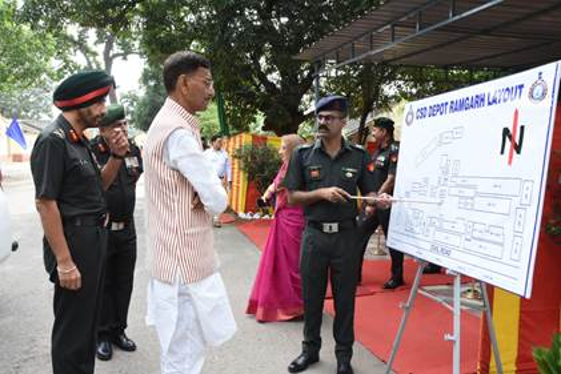
- Raksha Rajya Mantri Shri Sanjay Seth chaired the 80th Meeting of the Board of Control Canteen Services (BOCCS) in Ranchi, Jharkhand, on 14 July 2026. The meeting focused on reviewing the functioning of the Canteen Services Department (CSD) and discussing measures to improve operational efficiency, modernize infrastructure, and enhance services for serving Armed Forces personnel, ex-servicemen, and their dependents. The review reaffirmed the Government’s commitment to providing quality welfare services while promoting indigenous products and cooperative institutions.
- Major Agenda of the Meeting
- The Board deliberated on several operational and administrative issues aimed at strengthening the CSD network across the country. Key agenda items included:
- Increasing budgetary support for the CSD.
- Modernization of CSD depots with advanced warehousing and logistics facilities.
- Extension of Central and State Government subsidies on electric two-wheelers purchased through CSD.
- Inclusion of products manufactured by cooperative institutions in the CSD supply chain.
- Review of human resource management and administrative reforms.
- Improving accessibility of assistive devices for Divyang defence personnel, ex-servicemen, and their dependents.
- Senior officials from the Ministry of Defence, Defence Services, and the Canteen Services Department participated in the meeting.
- Promoting ‘Aatmanirbhar Bharat’ and Indigenous Products
- Shri Sanjay Seth highlighted that the transformation of the CSD is driven by continuous reforms and a beneficiary-centric approach. He emphasized that the department is actively supporting the Government’s flagship initiatives of:
- Aatmanirbhar Bharat
- Vocal for Local
- Sehkar Se Samriddhi
- As part of this initiative, CSD is expanding the availability of products manufactured by Indian cooperative organizations and local producers through its nationwide supply network.
- Support to Cooperative Institutions
- The Raksha Rajya Mantri reviewed the implementation of decisions taken during the previous BOCCS meeting held on 12 March 2026. Under these decisions, products manufactured by several cooperative organizations are being gradually introduced into the CSD product portfolio, including:
- Tribal Cooperative Marketing Development Federation of India Limited (TRIFED)
- Khadi and Village Industries Commission (KVIC)
- National Agricultural Cooperative Marketing Federation of India Limited (NAFED)
- National Cooperative Organics Limited (NCOL)
- This initiative is expected to:
- Provide greater market opportunities for artisans, tribal communities, and farmers.
- Promote indigenous manufacturing.
- Strengthen cooperative institutions.
- Support inclusive economic growth.
- Modernisation of CSD Depots
- During his visit, Shri Sanjay Seth inspected the CSD Depot at Ramgarh, one of the five pilot depots selected for modernization. He reviewed the ongoing infrastructure upgrades aimed at transforming the depot into a modern warehousing and logistics centre capable of meeting future operational requirements.
- The Ramgarh project is expected to serve as a model for the phased modernization of CSD depots across India, improving inventory management, distribution efficiency, and customer service.
- Focus on Welfare of Ex-Servicemen
- The meeting also reviewed various welfare initiatives designed for ex-servicemen and their families. Shri Sanjay Seth appreciated the efforts being made to improve accessibility, simplify service delivery, and ensure greater convenience for veterans.
- Special emphasis was placed on making assistive devices more easily available to Divyang members of the Armed Forces, ex-servicemen, and their dependents.
- Significance
- The review reflects the Government’s continued efforts to modernize the Canteen Services Department while enhancing welfare measures for the defence community. The reforms are expected to:
- Improve service quality and operational efficiency.
- Promote indigenous and cooperative products.
- Strengthen logistics infrastructure.
- Enhance welfare benefits for serving personnel and veterans.
- Support the vision of self-reliant and inclusive economic development.
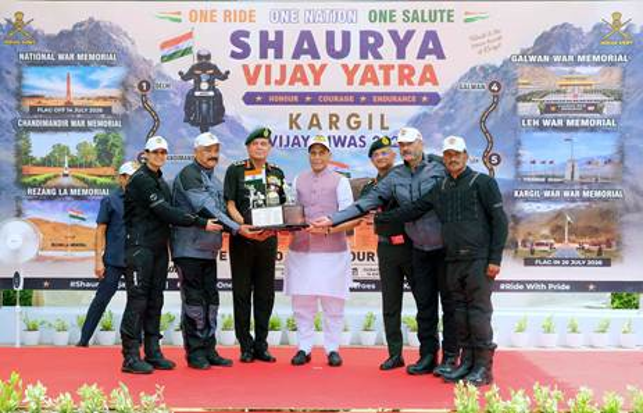
Kargil Vijay Diwas 2026: Honouring India’s Brave Heroes
- Kargil Vijay Diwas is observed every year on 26 July to commemorate India’s victory in the Kargil War of 1999 against Pakistan. The day pays tribute to the courage, sacrifice, and unwavering patriotism of the soldiers of the Indian Armed Forces who successfully recaptured strategic mountain peaks occupied by Pakistani intruders in the Kargil sector of Jammu and Kashmir (now in the Union Territory of Ladakh).
- In 2026, India marks the 27th Kargil Vijay Diwas, remembering the brave soldiers whose sacrifices safeguarded the nation’s sovereignty and territorial integrity.
- Background of the Kargil War
- The Kargil conflict began in May 1999, when Pakistani soldiers and armed infiltrators crossed the Line of Control (LoC) and occupied several strategic heights in the Kargil, Dras, Batalik, and Mushkoh sectors.
- The intrusion threatened National Highway-1A (now NH-1), the vital road connecting Srinagar with Leh. In response, the Indian Armed Forces launched Operation Vijay to evict the intruders and restore Indian control over the occupied territories.
- After nearly three months of intense high-altitude warfare, India achieved victory on 26 July 1999, forcing Pakistan to withdraw its forces.
- Operation Vijay
- Operation Vijay was the military campaign launched by the Indian Army to recapture the occupied positions.
- Key Highlights
- Operation Name: Operation Vijay
- Duration: May – 26 July 1999
- Conflict Area: Kargil, Dras, Batalik, and Mushkoh sectors
- Objective: Evict Pakistani intruders and restore Indian territory
- Outcome: Decisive victory for India
- The operation involved coordinated efforts by the Indian Army, Indian Air Force (Operation Safed Sagar), and other security agencies.
- Role of the Indian Air Force
- The Indian Air Force played a crucial role through Operation Safed Sagar, providing:
- Precision air strikes.
- Aerial reconnaissance.
- Logistics support.
- Close air support to ground troops.
- The operation marked the first large-scale use of air power by India in such high-altitude warfare.
- Heroes of the Kargil War
- Several soldiers displayed extraordinary courage during the conflict.
- Some of the most decorated heroes include:
- Captain Vikram Batra (PVC)
- Lieutenant Manoj Kumar Pandey (PVC)
- Grenadier Yogendra Singh Yadav (PVC)
- Rifleman Sanjay Kumar (PVC)
- Captain Anuj Nayyar (MVC)
- Major Rajesh Adhikari (MVC)
- Their bravery continues to inspire generations of Indians.
- Important Facts
- Date Observed: 26 July every year
- First Observed: 1999
- War Duration: May–July 1999
- Indian Military Operation: Operation Vijay
- IAF Operation: Operation Safed Sagar
- Highest Battlefield: Over 16,000–18,000 feet
- War Memorial: Kargil War Memorial, Dras (Ladakh)
- Kargil War Memorial
- The Kargil War Memorial, located at Dras in Ladakh, was built to honour the soldiers who laid down their lives during the war. It houses the names of the martyrs engraved on the memorial wall and remains one of India’s most important military memorials.
- Significance of Kargil Vijay Diwas
- Kargil Vijay Diwas serves as a reminder of:
- The supreme sacrifice of India’s soldiers.
- The importance of protecting national sovereignty.
- The courage and professionalism of the Indian Armed Forces.
- The spirit of patriotism and national unity.
- The day also educates young generations about one of India’s most significant military victories.
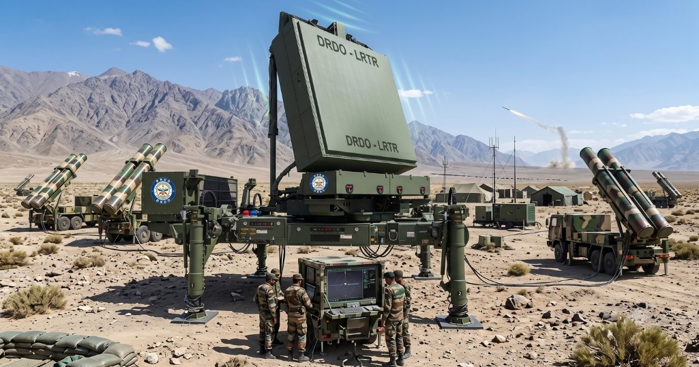
DRDO Developing Advanced S-Band Radar Technologies to Strengthen India’s Defence Capabilities
- The Defence Research and Development Organisation (DRDO) is making significant progress in the development of advanced S-Band radar technologies, aimed at enhancing India’s surveillance, tracking, and air defence capabilities. These next-generation radar systems are expected to improve target detection, multi-target tracking, and battlefield awareness while supporting India’s vision of Aatmanirbhar Bharat in defence technology. The initiative reflects India’s growing focus on indigenous radar development for airborne, naval, and ground-based defence platforms.
- What is S-Band Radar?
- S-Band radar operates in the frequency range of approximately 2–4 GHz and is widely used for long-range surveillance and target tracking. Compared to higher-frequency radars, S-Band systems offer:
- Long-range target detection.
- Better performance in adverse weather conditions.
- Reliable tracking of aircraft, missiles, and drones.
- Enhanced early-warning capabilities.
- Improved maritime and airspace surveillance.
- DRDO’s Advanced Radar Development Efforts
- DRDO is working on modern Active Electronically Scanned Array (AESA) radar technologies that can electronically steer radar beams without moving mechanical parts. These systems provide:
- Faster target acquisition.
- Simultaneous tracking of multiple targets.
- Greater resistance to electronic jamming.
- Improved operational reliability.
- Reduced maintenance requirements.
- A major focus area is the development of shared-aperture radar technology, allowing multiple frequency bands such as S-Band and X-Band to operate from a single radar array. This reduces system size and weight while increasing operational flexibility.
- Role of Shared-Aperture Technology
- The new radar architecture combines different radar functions within a single antenna structure.
- Key Advantages
- Simultaneous surveillance and precision tracking.
- Reduced space and weight requirements.
- Lower installation and maintenance costs.
- Improved survivability and operational efficiency.
- Better suitability for modern warships, aircraft, and integrated air-defence systems.
- VEGA and Indigenous Electronics Support
- The radar development programme is supported by indigenous microelectronics and advanced signal-processing technologies. DRDO and associated research institutions are testing various prototypes to improve electromagnetic isolation, power efficiency, and overall system performance. These efforts contribute to India’s growing self-reliance in critical defence technologies.
- Applications of the New Radar Systems
- The advanced S-Band radar technologies are expected to support:
- Long-range air surveillance.
- Missile tracking and guidance.
- Naval fleet protection.
- Airborne early warning systems.
- Integrated air and missile defence networks.
- Detection of low-observable and high-speed aerial threats.
- Importance for India’s Defence Preparedness
- Modern warfare increasingly depends on advanced sensors and network-centric operations. Indigenous radar development reduces dependence on foreign suppliers and ensures greater control over critical technologies. These systems will strengthen India’s ability to monitor its airspace and maritime boundaries while supporting future defence platforms.
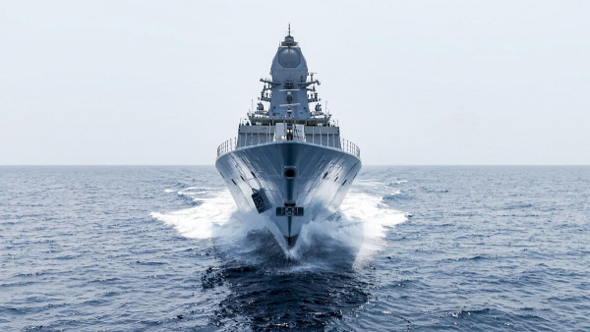
INS Mahendragiri Commissioned With Rolls-Royce MTU Engines
- The Indian Navy has commissioned INS Mahendragiri (F38), the sixth Project 17A Nilgiri-class stealth frigate, into its Eastern Fleet at Visakhapatnam on 11 July 2026. The commissioning ceremony was presided over by Defence Minister Rajnath Singh, who described the warship as a symbol of India’s growing self-reliance in defence manufacturing. With over 75% indigenous content, INS Mahendragiri significantly enhances India’s maritime combat capability and supports the vision of Aatmanirbhar Bharat.
- About INS Mahendragiri
- INS Mahendragiri is an advanced guided-missile stealth frigate built under Project 17A, an upgraded version of the Shivalik-class frigates. The ship has been designed by the Indian Navy’s Warship Design Bureau and constructed by Mazagon Dock Shipbuilders Limited (MDL), Mumbai. It is the sixth ship commissioned under the seven-vessel Project 17A programme.
- Key Features
- Class: Project 17A Nilgiri-class Stealth Frigate
- Pennant Number: F38
- Length: Approximately 149 metres
- Displacement: Around 6,670 tonnes
- Indigenous Content: More than 75%
- Builder: Mazagon Dock Shipbuilders Limited (MDL)
- Designed by: Indian Navy’s Warship Design Bureau
- Fleet: Eastern Fleet
- The warship incorporates advanced stealth technologies that reduce its radar, infrared, and acoustic signatures, making it difficult for enemy sensors to detect. It is equipped with modern sensors, electronic warfare systems, integrated platform management systems, and advanced weapon systems capable of performing multiple naval missions.
- Combat Capabilities
- INS Mahendragiri is designed to undertake a wide range of operations, including:
- Anti-air warfare
- Anti-surface warfare
- Anti-submarine warfare
- Maritime surveillance
- Escort operations
- Fleet air defence
- Its modern combat management system enables simultaneous engagement of multiple threats while operating in challenging maritime environments.
- Project 17A Programme
- Project 17A is one of India’s flagship indigenous warship-building programmes aimed at strengthening the Indian Navy with next-generation stealth frigates.
- The seven ships under Project 17A are:
- INS Nilgiri
- INS Himgiri
- INS Udaygiri
- INS Taragiri
- INS Dunagiri
- INS Mahendragiri
- INS Vindhyagiri
- These warships feature improved stealth characteristics, enhanced automation, advanced sensors, and superior combat capability compared to the earlier Project 17 frigates.
- Significance
- The commissioning of INS Mahendragiri is a major milestone for India’s maritime security and indigenous defence industry. The warship:
- Strengthens the operational capability of the Indian Navy.
- Enhances India’s presence in the Indian Ocean Region (IOR).
- Supports the goal of building a 200-ship Navy in the coming decade.
- Demonstrates the success of India’s indigenous warship design and construction capabilities.
- Promotes the vision of Aatmanirbhar Bharat by reducing dependence on foreign defence imports.
Review Questions
1. According to the WDMMA Global Air Power Rankings 2026, the Indian Air Force (IAF) has been ranked:
A) 1st
B) 2nd
C) 3rd
D) 4th
Answer: C) 3rd
2. For how many consecutive years has the Indian Air Force retained the world’s third position in the WDMMA rankings?
A) Three years
B) Four years
C) Five years
D) Six years
Answer: C) Five years
3. Which country’s air force was ranked below the Indian Air Force in the 2026 WDMMA rankings?
A) Russia
B) France
C) China
D) United Kingdom
Answer: C) China
4. The WDMMA Global Air Power Rankings primarily assess air forces based on:
A) Number of fighter aircraft only
B) Defence budget only
C) Overall combat capability, modernization, logistics, and fleet quality
D) Number of pilots only
Answer: C) Overall combat capability, modernization, logistics, and fleet quality
5. The 80th meeting of the Board of Control Canteen Services (BOCCS) was held in:
A) New Delhi
B) Jaipur
C) Ranchi
D) Lucknow
Answer: C) Ranchi
6. The 80th BOCCS meeting was chaired by:
A) Defence Minister Rajnath Singh
B) Raksha Rajya Mantri Sanjay Seth
C) CDS General Anil Chauhan
D) Navy Chief Admiral Dinesh K. Tripathi
Answer: B) Raksha Rajya Mantri Sanjay Seth
7. Which of the following was one of the major agenda items discussed during the BOCCS meeting?
A) Expansion of Metro Rail
B) Modernisation of CSD Depots
C) New Passport Policy
D) River Linking Project
Answer: B) Modernisation of CSD Depots
8. Which flagship initiative was highlighted while promoting indigenous products through the CSD network?
A) Digital India
B) Startup India
C) Aatmanirbhar Bharat
D) Smart Cities Mission
Answer: C) Aatmanirbhar Bharat
9. Kargil Vijay Diwas is observed every year on:
A) 15 August
B) 26 July
C) 21 October
D) 16 December
Answer: B) 26 July
10. Kargil Vijay Diwas commemorates India’s victory in which year?
A) 1965
B) 1971
C) 1999
D) 2001
Answer: C) 1999
11. The military operation launched by the Indian Army during the Kargil War was known as:
A) Operation Meghdoot
B) Operation Vijay
C) Operation Trident
D) Operation Cactus
Answer: B) Operation Vijay
12. The Indian Air Force’s operation during the Kargil War was named:
A) Operation Rakshak
B) Operation Safed Sagar
C) Operation Shakti
D) Operation Parakram
Answer: B) Operation Safed Sagar
13. The Kargil War Memorial is located at:
A) Leh
B) Srinagar
C) Dras
D) Kargil Town
Answer: C) Dras
14. DRDO is developing a new Advanced S-Band Radar primarily for:
A) Civil Aviation
B) Weather Forecasting
C) Air Defence and Surveillance
D) Maritime Tourism
Answer: C) Air Defence and Surveillance
15. The Advanced S-Band Radar is being developed by:
A) HAL
B) BEL
C) DRDO
D) ISRO
Answer: C) DRDO
16. INS Mahendragiri belongs to which class of warships?
A) Kolkata-class Destroyer
B) Shivalik-class Frigate
C) Project 17A Nilgiri-class Stealth Frigate
D) Kamorta-class Corvette
Answer: C) Project 17A Nilgiri-class Stealth Frigate
17. INS Mahendragiri was constructed by:
A) Garden Reach Shipbuilders & Engineers (GRSE)
B) Cochin Shipyard Limited (CSL)
C) Mazagon Dock Shipbuilders Limited (MDL)
D) Goa Shipyard Limited (GSL)
Answer: C) Mazagon Dock Shipbuilders Limited (MDL)
18. INS Mahendragiri has an indigenous content of approximately:
A) 50%
B) 60%
C) 75%
D) 90%
Answer: C) 75%
19. INS Mahendragiri has been inducted into which fleet of the Indian Navy?
A) Western Fleet
B) Southern Fleet
C) Eastern Fleet
D) Training Fleet
Answer: C) Eastern Fleet
20. INS Mahendragiri is powered by which marine engines?
A) General Electric LM2500 only
B) Rolls-Royce MTU Engines
C) Wärtsilä Marine Engines
D) Caterpillar Marine Engines
Answer: B) Rolls-Royce MTU Engines
ALSO READ:
- Latest Daily Current Affairs and Defence Updates
- Latest Daily Current Affairs June 2026[DOWNLOAD PDF]
- Latest Daily Current Affairs May 2026[DOWNLOAD PDF]
- Latest Daily Current Affairs April 2026[DOWNLOAD PDF]
- Latest Daily Current Affairs March 2026[DOWNLOAD PDF]
- Latest Daily Current Affairs February 2026[DOWNLOAD PDF]
- Latest Daily Current Affairs January 2026[DOWNLOAD PDF]
- Latest Daily Current Affairs November 2025[DOWNLOAD PDF]
- Latest Daily Current Affairs October 2025[DOWNLOAD PDF]
- Latest Daily Current Affairs August 2025[DOWNLOAD PDF]
- Latest Daily Current Affairs July 2025[DOWNLOAD PDF]
- Monthly Defence Current Affairs June 2025 [DOWNLOAD PDF]
- Monthly Defence Current Affairs May 2025 [DOWNLOAD PDF]


