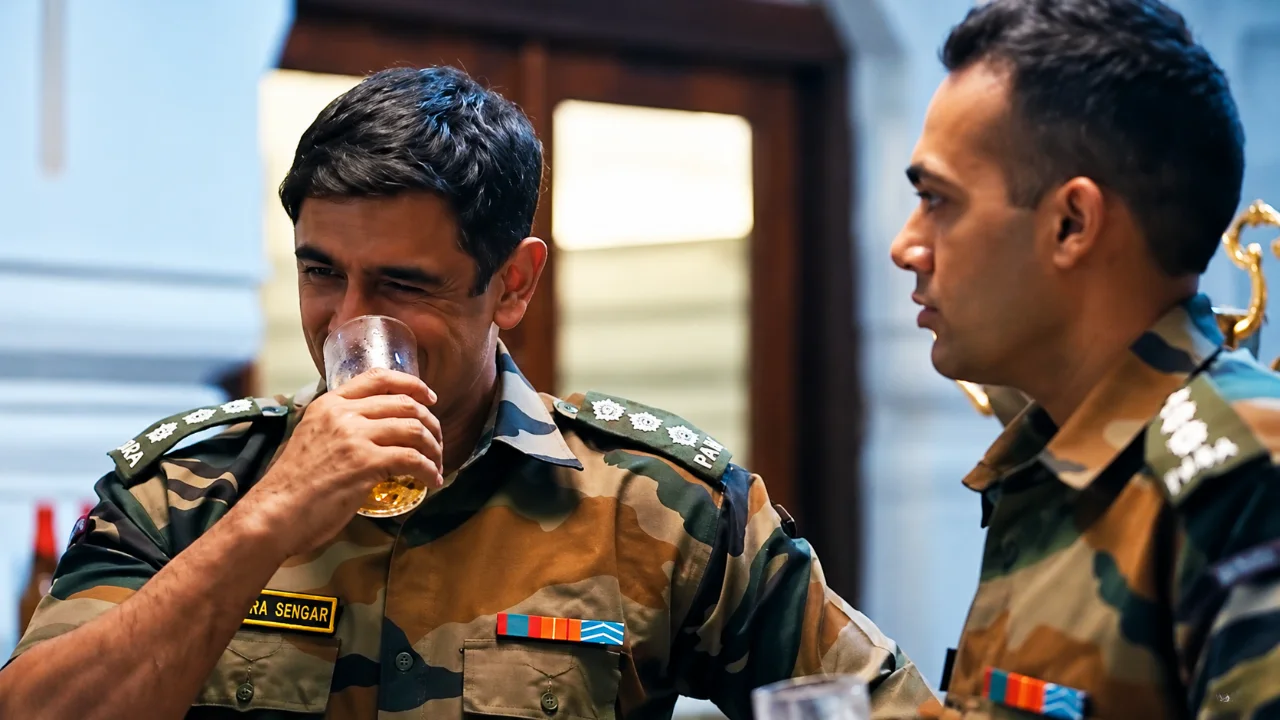
The Para Special Forces (Para SF) of the Indian Army stand among the world’s most elite and demanding military units. Drawn from the Parachute Regiment, these commandos specialise in counter-terrorism, counter-insurgency, special reconnaissance, direct action, and high-altitude operations, including HAHO and HALO parachute insertions. Their selection and training are among the harshest anywhere, with extremely low completion rates. Those who succeed earn the maroon beret and the Balidaan badge—symbols of sacrifice, where the green army beret is said to have been turned red by blood.
Among the many traditions that define this fraternity, one has given the unit its distinctive popular nickname: “Glass Eaters.”
The Glass Eating Ritual
The nickname originates from an informal induction tradition performed after a soldier successfully completes the rigorous probation or training course (commonly referenced as the intensive 90-day phase that forges candidates physically and mentally). Upon earning the right to wear the maroon beret, the new commando is presented with a “Patiyala Peg” (also spelled Patiala Peg) of rum. This is a large measure of the spirit, traditionally gauged from the index finger to the little finger held against the glass.
For an ordinary person, finishing the peg means consuming every drop. For a Para SF soldier, the drink is considered finished only when he bites a piece from the rim of the glass, chews it thoroughly until it is reduced to a fine powder, and swallows it along with the rum. Glass is primarily silica (essentially sand), so the act involves pulverising it completely rather than swallowing large sharp fragments.
This is not an officially sanctioned part of Indian Army training doctrine. It is an unofficial, unit-level tradition passed through generations of commandos. It has been described in accounts by former Special Forces personnel, featured in popular defence media, and referenced in programmes such as those on the Discovery Channel. Some observers note that questions occasionally arise about whether ordinary glass or a safer substitute is used in practice, and medical professionals have highlighted the inherent risks of ingesting glass even in powdered form. Nonetheless, the ritual endures in the lore and identity of the force as a deliberate demonstration of mental and physical extremes.
Symbolism and Purpose
The glass-eating act is symbolic rather than practical. Glass represents something sharp, dangerous, and seemingly indigestible—an obstacle that ordinary people instinctively avoid. By converting it into powder and consuming it, the soldier symbolically transforms the impossible into the manageable. The ritual is intended to mark the final transition from candidate to commando: the moment when the individual has surpassed normal human limits of pain, fear, and self-preservation.
It reinforces the core ethos already forged through training—wilderness survival (including living off the land), resistance to interrogation and capture, specialised infiltration techniques, and the capacity to operate under extreme physical and psychological stress. Completing the ritual alongside the award of the maroon beret and Balidaan badge serves as a shared rite of passage that binds members in camaraderie and a sense of absolute fearlessness.
Broader Context of Para SF Identity
Para SF battalions carry their own nicknames reflecting specialisations or history (for example, the “Red Devils” of 1 Para SF, the “Mountain Rats” or “Ghost Operators” associated with 9 Para SF, or the “Desert Scorpions” of 10 Para SF). The “Glass Eaters” label, however, is applied more broadly to the Para SF community as a whole. It captures the same spirit of uncompromising standards that defines the force, whether in the jungles, high mountains, deserts, or urban counter-terror environments.
The tradition complements, rather than replaces, the formal and brutal training pipeline. Only a small fraction of those who volunteer ultimately earn the beret. Those who do are expected to operate in environments where hesitation or ordinary human limitation can prove fatal. The glass ritual, dramatic as it appears, is presented as one more expression of that requirement for complete mental mastery.
Conclusion
Para Special Forces commandos are called “Glass Eaters” because of this longstanding informal induction ritual involving a Patiyala Peg of rum and the deliberate chewing and swallowing of a powdered piece of the glass rim. The practice is not an official Army procedure; it is a unit tradition meant to symbolise the transcendence of normal human boundaries, the conquest of fear, and the absolute commitment demanded of those who wear the maroon beret and the Balidaan badge.
In the public imagination and among defence aspirants, the nickname has become shorthand for the extreme physical and psychological standards that define India’s premier special forces. It stands as a vivid illustration of the ethos that has shaped Para SF operations and identity for decades.
ALSO READ:
- How To Become A PARA SF Commando In Indian Army
- 11 Things You Must Know About Balidaan Badge And Para SF
- Recruitment Procedure For Para & Para SF
- All The Badges Of A PARA SF Commando
- Special Forces Training School (SFTS) PARA Special Forces Training
- How To Join PARA (SF) Special Forces In Indian Army?