In Current Affairs for 02 February 2026, we will see the latest national and international current affairs news. These important current affairs will be beneficial for your upcoming NDA, CDS, CDS OTA, AFCAT, TA, Agniveer Army, Agniveer Navy, Agniveer Air Force, Women Military Police, INET, MNS, ACC exams, SCO, PCSL, CAPF, and SSB interviews, and direct entries for Army, Navy, and Air Force like SSC Tech, TGC, JAG, NCC, TES, 10+2 Cadet. Download a PDF file about current events at the end of this article. Let us now see the Current Affairs.
Current Affairs 02 February 2026
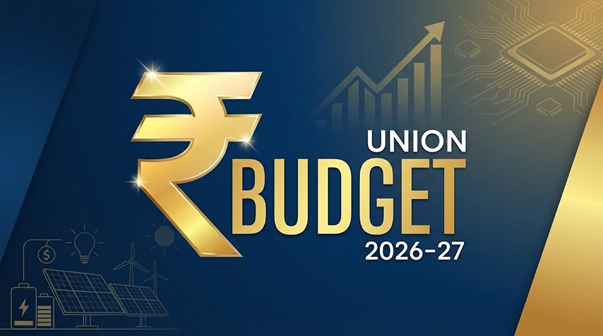
Union Budget 2026
- On 1-2-2026, the Finance Minister, Nirmala Sitharaman presented the Union Budget 2026- 2027 in Parliament. The Union Budget 2026-2027 lays emphasis on Scaling up manufacturing in 7 strategic frontier sectors.
- It is the first Budget prepared in Kartavya Bhawan and is inspired by “3 Kartavya”:
- 1st Kartavya- to accelerate and sustain economic growth, by enhancing productivity and competitiveness, and building resilience to volatile global dynamics;
- 2nd Kartavya- to fulfil aspirations of people and build their capacity, making them strong partners in India’s path to prosperity;
- 3rd Kartavya- is aligned with vision of Sabka Sath, Sabka Vikas to ensure that every family, community, region and sector has access to resources, amenities and opportunities for meaningful participation.
- 1. Fiscal Framework and Expenditure Estimates
- The budget underscores prudent fiscal management while committing strong support for investment-led growth:
- Total expenditure is estimated at ₹53.5 lakh crore, with net tax receipts projected at ₹28.7 lakh crore.
- Gross market borrowings are expected to be ₹17.2 lakh crore, with net borrowings of ₹11.7 lakh crore.
- The fiscal deficit for 2026-27 is targeted at 4.3% of GDP, reflecting a gradual consolidation path.
- The debt-to-GDP ratio is estimated to ease to 55.6%.
- 2. Growth-Focused Strategic Interventions
- Under the first Kartavya of accelerating and sustaining growth, the Budget introduces several transformational initiatives:
- Biopharma SHAKTI:
The government unveiled a ₹10,000 crore strategy to scale up India’s biopharmaceutical manufacturing capabilities, including the creation of new institutes and a network of clinical trial sites to position India as a global hub for biologics and biosimilars. - National Fibre Scheme:
Aimed at strengthening the labour-intensive textile sector, this scheme supports the production and self-reliance in natural fibers like silk, wool, jute, and new-age man-made fibers. - 3. Infrastructure and Connectivity Push
- Public capital expenditure remains a priority to support long-term growth. Alongside mega high-speed rail corridors and expanded national waterways, the government plans to:
- Enhance inland water transport and coastal shipping.
- Establish city economic regions with dedicated financing.
- Create infrastructure risk guarantee mechanisms to boost private investment.
- This infrastructure focus aligns with broader objectives to improve regional connectivity and economic linkages across Tier-II and Tier-III cities.
- 4. Tax Reforms and Business Environment
- The Budget introduced noteworthy tax and regulatory changes aimed at simplifying compliance and boosting investment:
- Incentives for foreign firms using Indian data centres through long-term tax stability.
- Reforms in Minimum Alternate Tax (MAT) and corporate taxation to balance predictability with competitiveness.
- Changes in Securities Transaction Tax (STT) and capital gain rules to align capital market dynamics with investor behaviour.
- While the core tax slabs for individuals saw limited changes, procedural simplifications were introduced to improve taxpayer experience.
- 5. Social and Human Capital Development
- The government also focused on people-centric reforms aimed at skills, health, and human capital:
- Expansion of health infrastructure, including plans for mental health and trauma care facilities.
- Strengthening tourism and hospitality through new institutes and digital-heritage platforms.
- Initiatives to bridge the gap between education and employment by enhancing skill pathways and support for creative industries.
- 6. Sectoral Priorities and MSME Support
- A multi-pronged strategy was outlined to support MSMEs, entrepreneurs, and key manufacturing sectors:
- Establishment of growth funds and equity support for SMEs.
- Credit and liquidity mechanisms to improve financing for micro and small firms.
- Customs and trade facilitation measures for export-oriented sectors such as textiles, electronics, and seafood.
- 7. Agriculture, Rural Economy and Green Growth
- Although the SCC Online piece focuses primarily on macroeconomic and industrial policy, broader budget reporting highlights continued emphasis on:
- Integrated agricultural development and fisheries infrastructure.
- Green initiatives like carbon capture investments and support for inland waterways.
- Export promotion and rural livelihood augmentation.
- The Union Budget 2026–27, presented by Finance Minister Nirmala Sitharaman, has drawn widespread attention for its mix of ambitious reforms and sector-specific impacts. Prime Minister Narendra Modi described the budget as a “highway of immense opportunities,” emphasizing its potential to drive growth and development across the country.
- Key Winners of Budget 2026
- 1. Nirmala Sitharaman
- Finance Minister Sitharaman earned accolades for delivering her ninth consecutive budget, setting a new record for continuity and showcasing her reform-oriented approach. Her policy framing has been credited with creating momentum for long-term economic goals.
- 2. Tourism Sector
- The budget allocated fresh focus and resources to tourism, signalling government intent to expand heritage, eco-tourism, and regional visitor infrastructure. This is expected to strengthen local economies and generate jobs in rural and urban areas alike.
- 3. Pharmaceuticals
- Policy support and investment incentives for the pharmaceutical industry place it among the key beneficiaries. Proposals aimed at expanding biopharmaceutical capacity and research received particular attention.
- 4. Women
- Several measures were introduced to foster women’s economic empowerment. These include initiatives to promote women-led enterprises and enhance participation in mainstream markets.
- 5. Textiles
- The labour-intensive textile sector gained from supportive programmes aimed at modernisation and competitiveness, positioning it to benefit from expanded employment and export potential.
- These sectors are expected to experience direct gains from policy support, strategic investment, and targeted incentives in the new Budget.
- Sectors That Didn’t Fully Benefit: Budget “Losers”
- Despite the overall positive tone, some sectors and groups may face challenges due to either limited support or shifts in policy emphasis.
- 6. Poll-Bound States
- States preparing for elections could feel shortchanged, as their resource allocations may not reflect expected additional project funding, leading to political and administrative concerns.
- 7. Financial Markets
- Market reaction was mixed, with some segments responding negatively to decisions that could affect investor returns or market activity in the short term.
- 8. Traders
- Certain trader groups expressed concerns over regulatory changes and tax structures that could tighten operating conditions or impact profit margins.
- 9. Promoters
- Corporate promoters may face increased compliance scrutiny or taxation, which could dampen investor sentiment in specific industries.
- 10. Bangladesh and Chabahar Port
- Due to geopolitical alignments and strategic resource allocation, some regional partners like Bangladesh and infrastructure nodes such as Chabahar Port may see reduced advantage from India’s policy focus in this budget cycle.
Devika Sihag Wins Maiden BWF Super 300
- Indian badminton has a new rising star. Devika Sihag, a 20-year-old shuttler from Haryana, has captured national attention after winning her first BWF Super 300 title at the Thailand Masters 2026.
- The women’s singles final at the Thailand Masters ended dramatically when Goh Jin Wei was forced to retire due to a hamstring injury.
- At the time of retirement, Devika Sihag was completely dominant, leading 21–8, 6–3.
- The match showcased Devika’s aggressive stroke play, sharp net control, and mental composure on a big stage.
Australian Open 2026 Women’s Singles Champion
- Elena Rybakina won the Australian Open 2026 women’s singles title after defeating World No. 1 Aryna Sabalenka in a thrilling final at Melbourne. The Australian Open 2026 women’s singles final was played between Aryna Sabalenka and Elena Rybakina at the Rod Laver Arena in Melbourne.
- Elena Rybakina defeated Aryna Sabalenka in three sets with a score of 6-4, 4-6, 6-4.
- Rybakina started strongly by breaking Sabalenka’s serve early in the first set and winning it.
- Sabalenka made a strong comeback in the second set and dominated to level the match.
World Wetlands Day 2026
- World Wetlands Day 2026 is being observed on 2 February with a renewed focus on culture and community wisdom. This year’s global theme draws attention to how traditional and indigenous knowledge has protected wetlands for centuries.
- World Wetlands Day is celebrated annually on 2 February to mark the signing of the Ramsar Convention in 1971 at Ramsar in Iran.The day aims to raise awareness about wetlands such as lakes, marshes, mangroves, floodplains, and lagoons.
- The 2026 theme, “Wetlands and Traditional Knowledge: Celebrating Cultural Heritage,” focuses on the role of indigenous peoples and local communities in wetland conservation.
Indian Coast Guard Day 2026
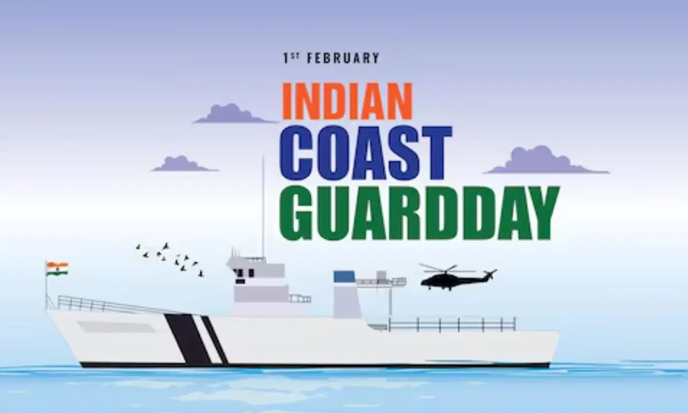
- Indian Coast Guard Day 2026 is observed on a 1 February, marking a historic milestone of 50 years since the raising of the Indian Coast Guard in 1977.
- Indian Coast Guard Day is celebrated every year on 1 February to commemorate the formation of the Indian Coast Guard in 1977.
- In 2026, the celebration is special as it marks 50 years of continuous service to the nation.
- The Indian Coast Guard was established on 1 February 1977 to address growing maritime challenges like smuggling, illegal fishing, and coastal security threats.
- In the 1960s and early 1970s, sea-borne smuggling severely impacted India’s economy.
- Committees such as the Nagchaudhuri Committee (1971) and Rustamji Committee (1974) recommended a separate maritime law enforcement force.
- The official theme for Indian Coast Guard Day 2026 is “Suraksha, Seva, Samarpan” meaning Security, Service, and Dedication.
Review Questions
- Who won her first BWF Super 300 title at the Thailand Masters 2026?
A. P.V. Sindhu
B. Devika Sihag
C. Ashmita Chaliha
D. Anupama Upadhyaya
ANSWER: B - Devika Sihag, the rising badminton star, belongs to which Indian state?
A. Rajasthan
B. Punjab
C. Uttar Pradesh
D. Haryana
ANSWER: D - Who won the Australian Open 2026 women’s singles title?
A. Aryna Sabalenka
B. Iga Świątek
C. Elena Rybakina
D. Coco Gauff
ANSWER: C - What is the theme of World Wetlands Day 2026?
A. Wetlands for Climate Action
B. Valuing Wetlands for Sustainable Future
C. Wetlands and Traditional Knowledge: Celebrating Cultural Heritage
D. Protecting Wetlands for Biodiversity
ANSWER: C - What is the total defence allocation for India in the Union Budget 2026–27?
A. ₹6.81 lakh crore
B. ₹7.32 lakh crore
C. ₹7.85 lakh crore
D. ₹8.10 lakh crore
Answer: C. ₹7.85 lakh crore - The defence outlay for 2026–27 shows an overall increase of approximately:
A. 8%
B. 10%
C. 12%
D. 15%
Answer: D. 15% - How much amount has been earmarked for capital expenditure for the armed
forces in 2026–27?
A. ₹1.86 lakh crore
B. ₹1.80 lakh crore
C. ₹2.19 lakh crore
D. ₹2.55 lakh crore
Answer: C. ₹2.19 lakh crore - The increase in capital outlay over Budget Estimates 2025–26 is approximately:
A. 10%
B. 15%
C. 18%
D. 21.84%
Answer: D. 21.84% - Which operation accounted for a major portion of additional defence hardware
spending?
A. Operation Vijay
B. Operation Sindoor
C. Operation Rakshak
D. Operation Trinetra
Answer: B. Operation Sindoor - Defence expenditure in 2026–27 accounts for what percentage of India’s
projected GDP?
A. 1.65%
B. 1.80%
C. 1.99%
D. 2.25%
Answer: C. 1.99% - A significant portion of capital expenditure has been allocated to which sector?
A. Submarines and destroyers
B. Cyber warfare systems
C. Aircraft and aero-engines
D. Missile defence shields
Answer: C. Aircraft and aero-engines - The Indian Air Force is considering procurement of how many Rafale fighter jets?
A. 90
B. 100
C. 114
D. 126
Answer: C. 114 - How much has been earmarked for domestic defence procurement in 2026–27?
A. ₹1.11 lakh crore
B. ₹1.25 lakh crore
C. ₹1.39 lakh crore
D. ₹1.50 lakh crore
Answer: C. ₹1.39 lakh crore - Which organisation’s budget was increased to ₹29,100 crore?
A. ISRO
B. DRDO
C. HAL
D. BEL
Answer: B. DRDO - What is the allocation for the Ministry of Home Affairs (MHA) in Budget 2026
27?
A. ₹2.33 lakh crore
B. ₹2.45 lakh crore
C. ₹2.55 lakh crore
D. ₹2.75 lakh crore
Answer: C. ₹2.55 lakh crore