





In Defence Current Affairs for 06 July 2026, we will see the latest national and international current affairs news. These important current affairs will be beneficial for your upcoming NDA, CDS, CDS OTA, AFCAT, TA, Agniveer Army, Agniveer Navy, Agniveer Air Force, Women Military Police, INET, MNS, ACC exams, SCO, PCSL, CAPF, and SSB interviews, and direct entries for Army, Navy, and Air Force like SSC Tech, TGC, JAG, NCC, TES, 10+2 Cadet. Download a PDF file about current events at the end of this article. Let us now see the Current Affairs.
Defence Current Affairs 06 July 2026
INS Sudarshini Represents India at Sail4th 250 Celebrations in New York
- The Indian Navy’s sail training ship INS Sudarshini reached New York Port on 4 July 2026 to participate in the United States International Naval Review 250 and the Sail4th 250 celebrations, commemorating the 250th anniversary of American independence.
- During the grand Parade of Sail along the Hudson River, the three-masted sailing vessel proudly displayed the Indian Tricolour, symbolising India’s rich maritime history and centuries-old seafaring traditions before an international audience.
- Lokayan 2026 Expedition
- The New York visit is part of Lokayan 2026, a ten-month transoceanic voyage undertaken by INS Sudarshini. The expedition reflects the Indian Navy’s commitment to:
- Strengthening maritime diplomacy.
- Enhancing cooperation with friendly navies.
- Promoting goodwill and cultural exchange.
- Showcasing India’s maritime heritage across the world.
- Before arriving in New York, INS Sudarshini successfully participated in SAIL 250 events at Norfolk and Baltimore.
- Significance of the Visit
- The ship is currently berthed at Brooklyn as part of the Sail4th 250 celebrations. Against the backdrop of the New York skyline, INS Sudarshini represents India’s growing maritime presence and the strengthening partnership between India and the United States.
- The visit highlights the expanding strategic relationship between the two democracies and reinforces India’s commitment to international maritime cooperation and peaceful engagement.

India to Host BRICS Heads of Anti-Drug Agencies Meeting in Guwahati
- India will host the BRICS Heads of Anti-Drug Agencies Meeting on 6–7 July 2026 in Guwahati, Assam. The conference will bring together senior officials from all BRICS member countries to strengthen cooperation against emerging global drug-related challenges.
- The meeting is being organised by the Narcotics Control Bureau (NCB) under the Ministry of Home Affairs.
- Background
- The global narcotics landscape has changed rapidly with the emergence of:
- Synthetic drugs.
- New Psychoactive Substances (NPS).
- Darknet-based drug trafficking.
- Cryptocurrency-enabled financial transactions.
- These developments have made international cooperation essential to tackle organised drug trafficking networks.
- Key Objectives
- India aims to transform BRICS cooperation from dialogue-based discussions to practical and action-oriented collaboration by focusing on:
- Combating synthetic drugs and precursor chemical diversion.
- Strengthening intelligence sharing and operational coordination.
- Enhancing institutional cooperation and capacity building.
- Six Major Thematic Sessions
- The participating nations will deliberate on six important themes:
- Leveraging digital technology for real-time drug interdiction.
- Countering drug trafficking through the darknet.
- Tackling emerging New Psychoactive Substances (NPS).
- Preventing diversion of precursor chemicals.
- Drug demand reduction and awareness initiatives.
- Strengthening institutional mechanisms and cooperation.
- The meeting will conclude with the adoption of a Joint Declaration outlining future cooperation among BRICS countries.
- India’s Fight Against Drug Abuse
- India has intensified its campaign against narcotics through a comprehensive approach that combines:
- Strict enforcement against trafficking networks.
- Public awareness campaigns.
- Community participation.
- Rehabilitation and treatment programmes.
- The recently released Vision Document on Narcotics Control (2026–2029) seeks to further strengthen India’s institutional capacity to combat drug abuse and trafficking.
- BRICS 2026 Chairmanship
- India’s BRICS Chairmanship in 2026 is guided by the theme:
- “Building for Resilience, Innovation, Cooperation and Sustainability.”
- BRICS currently comprises eleven member countries:
- Brazil
- Russia
- India
- China
- South Africa
- Egypt
- Ethiopia
- Indonesia
- Iran
- Saudi Arabia
- United Arab Emirates
- The grouping serves as an important platform for cooperation on global governance, economic development, security, and emerging international challenges.

Rajnath Singh Highlights India’s Transformation Over the Last 12 Years
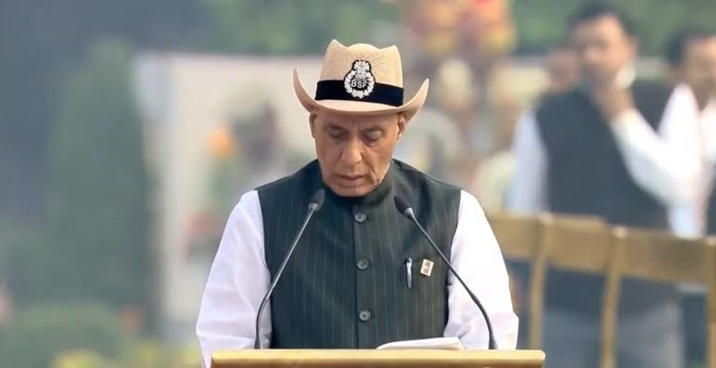
- Speaking at a public event in New Delhi on 4 July 2026, Defence Minister Rajnath Singh stated that India’s journey over the past twelve years reflects a transition from shortages to self-reliance, from self-reliance to self-confidence, and towards the goal of building a Viksit Bharat.
- He explained that the government’s current focus is guided by the principle of “Reform, Perform, Transform”, laying the foundation for a developed India.
- Growth of Make in IndiaThe Defence Minister highlighted the success of the Make in India initiative, stating that despite initial criticism, it has significantly strengthened India’s manufacturing capabilities.He also noted the success of the India Semiconductor Mission, under which India produced indigenous semiconductor chips after establishing modern semiconductor parks.
- Record Defence Production and ExportsIndia achieved remarkable progress in the defence sector during FY 2025–26.Major achievements include:Defence production reached an all-time high of ₹1.78 lakh crore.
- Defence exports crossed ₹38,000 crore, rising sharply from ₹686 crore in FY 2013–14.Indigenous defence manufacturing has strengthened India’s position in the global defence market.Advances in Manufacturing and TechnologyThe Minister highlighted major achievements in:Mobile phone manufacturing.Automobile exports.Indigenous locomotive production.Expansion of digital infrastructure.Nationwide rollout of indigenous 5G technology.Ongoing research and development for 6G technology.He also noted that 22.35 billion UPI transactions, worth approximately ₹29 lakh crore, were recorded in April, reflecting India’s leadership in digital payments.
- Welfare and Governance ReformsThe government strengthened welfare delivery through the JAM Trinity—Jan Dhan accounts, Aadhaar, and Mobile connectivity.According to the Minister:Around ₹51 lakh crore has been transferred directly to beneficiaries.Leakages worth nearly ₹4.3 lakh crore have been prevented through Direct Benefit Transfer (DBT).He also praised the successful implementation of the Goods and Services Tax (GST) as an example of cooperative federalism.Internal Security and Economic ProgressRajnath Singh highlighted several major policy initiatives, including:Abrogation of Article 370 in Jammu & Kashmir.Continuous efforts to eliminate Naxalism.Ease of Doing Business reforms.Jan Vishwas initiatives.Expansion of India’s start-up ecosystem.He noted that India now has over 2 lakh start-ups and 125 unicorns, making it one of the world’s largest innovation ecosystems.
- Preserving India’s Cultural HeritageThe Defence Minister emphasised that development has progressed alongside cultural preservation.Important initiatives include:Kashi Vishwanath Dham Corridor.Mahakal Lok.Maa Kamakhya Divya Lok Project.Installation of the Sengol in Parliament.Repatriation of ancient artefacts.Digitisation of ancient manuscripts.
- Responsible Journalism in the Digital AgeRajnath Singh stressed that while Artificial Intelligence can improve speed and efficiency in journalism, human judgement, empathy, and credibility remain indispensable.
- He urged media organisations to maintain accuracy, impartiality, and responsibility, particularly while reporting on national security and defence matters, emphasising that misinformation can adversely affect both society and the morale of the armed forces.
Turkey Seeks F110 Fighter Jet Engines Ahead of NATO Summit
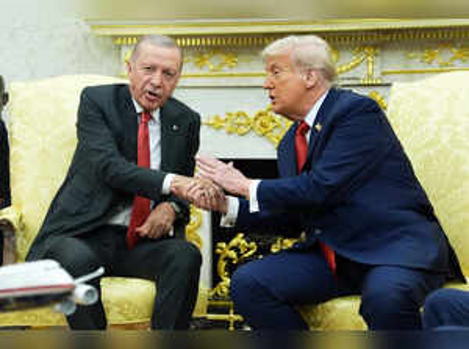
- Turkey is seeking to acquire General Electric F110 fighter jet engines from the United States as discussions on defence cooperation gain momentum ahead of the NATO Summit scheduled for 7–8 July 2026 in Ankara. The issue has attracted international attention as it reflects the evolving defence relationship between Turkey and the United States amid ongoing geopolitical challenges.
- Background
- The proposed engine acquisition is closely linked to Turkey’s indigenous KAAN fifth-generation stealth fighter programme. The F110 engines are intended to power the initial production batches of the aircraft until Turkey develops and integrates its own indigenous engine in the coming years.
- The discussions come as U.S. President Donald Trump is expected to visit Ankara for the NATO Summit, where defence cooperation is expected to be one of the major topics on the agenda. Reports indicate that the U.S. administration has initiated the process for the possible sale of dozens of F110 engines to Turkey.
- Importance of the F110 Engine
- The General Electric F110 is a proven afterburning turbofan engine used in several advanced fighter aircraft, including different variants of the F-16 Fighting Falcon, F-15 Eagle, and Turkey’s KAAN prototype aircraft. The engine offers high thrust, reliability, and operational performance, making it suitable for modern combat aircraft.
- KAAN Fighter Aircraft
- Turkey’s KAAN is a domestically developed fifth-generation stealth fighter designed by Turkish Aerospace Industries. The aircraft is expected to replace the Turkish Air Force’s ageing fighter fleet over time and strengthen the country’s indigenous defence capabilities.
- Although Turkey plans to equip future KAAN aircraft with an indigenous engine, the initial prototypes and early production models are expected to rely on imported F110 engines until domestic propulsion technology becomes operational.
- F-35 Issue Remains Unresolved
- While discussions on the F110 engine sale indicate improving defence engagement, analysts believe the move is unlikely to resolve the long-standing dispute over Turkey’s participation in the F-35 Joint Strike Fighter Programme.
- Turkey was removed from the programme after acquiring the Russian S-400 air defence system, leading to U.S. sanctions and suspension from the F-35 project. Despite recent diplomatic engagement, this issue continues to remain a major point of disagreement between the two NATO allies.
- Strategic Significance
- If approved, the engine deal would:
- Support the development of Turkey’s indigenous KAAN fighter programme.
- Strengthen defence cooperation between the United States and Turkey.
- Improve Turkey’s short-term aerospace capabilities while indigenous engine development continues.
- Highlight the strategic importance of defence partnerships within NATO.
- At the same time, the continued uncertainty surrounding Turkey’s return to the F-35 programme suggests that broader defence relations between Washington and Ankara still face significant challenges.
Adani Defence to Invest ₹2,500 Crore in Missile Manufacturing Complex
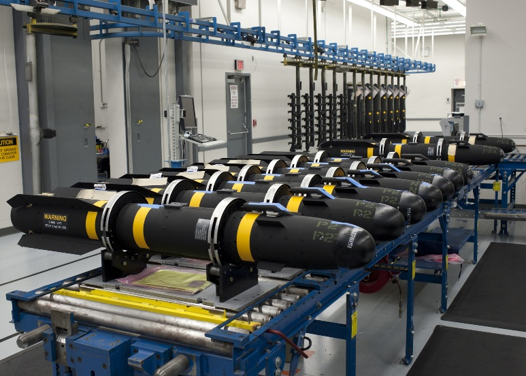
- In a major boost to India’s indigenous defence manufacturing capabilities, Adani Defence & Aerospace has announced an investment of ₹2,500 crore to establish an integrated missile manufacturing complex in Shivpuri district, Madhya Pradesh. The project is expected to become South Asia’s largest private-sector missile manufacturing ecosystem, further strengthening India’s vision of self-reliance in the defence sector.
- Foundation Stone Laid
- The foundation stone for the project was laid on 5 July 2026 in the presence of Madhya Pradesh Chief Minister Mohan Yadav, Union Minister Jyotiraditya Scindia, and senior representatives of the Adani Group. The facility marks the first major project under the state’s emerging defence manufacturing ecosystem and is expected to transform Shivpuri into an important defence production hub.
- Key Features of the Project
- The advanced manufacturing complex will include:
- A modern missile manufacturing facility.
- A composite propellant production unit.
- A Trinitrotoluene (TNT) manufacturing complex.
- A fully integrated defence production ecosystem from raw materials to mission-ready missile systems.
- The integrated model will create one of India’s first large-scale, backward-integrated private missile manufacturing facilities, reducing dependence on imported defence components.
- Employment Generation
- The project is expected to generate around 5,000 direct and indirect employment opportunities over the next three years. It will also encourage the growth of local Micro, Small and Medium Enterprises (MSMEs), enabling them to become part of India’s defence manufacturing supply chain.
- Contribution to Aatmanirbhar Bharat
- The investment supports the Government of India’s flagship initiatives of Aatmanirbhar Bharat and Make in India, aimed at strengthening indigenous defence production and reducing dependence on foreign suppliers.
- By establishing advanced manufacturing capabilities within the country, the project is expected to enhance India’s strategic autonomy while supporting the Armed Forces with domestically manufactured defence systems.
- Strategic Importance
- The missile manufacturing ecosystem is expected to:
- Strengthen India’s indigenous missile production capacity.
- Enhance the country’s defence industrial base.
- Promote private-sector participation in defence manufacturing.
- Develop Madhya Pradesh as an emerging defence production hub.
- Support exports of indigenously manufactured defence equipment in the future.
- The project also reflects the increasing role of the private sector in India’s defence modernisation programme.
Review Questions
1. INS Sudarshini represented India at which international event in New York in July 2026?
A) RIMPAC Exercise
B) Sail4th 250 Celebrations
C) Malabar Naval Exercise
D) Fleet Review 2026
Answer: B) Sail4th 250 Celebrations
Explanation: INS Sudarshini participated in the United States International Naval Review 250 and Sail4th 250 celebrations marking the 250th anniversary of U.S. independence.
2. INS Sudarshini’s 10-month transoceanic expedition is known as:
A) Samudra Shakti
B) Lokayan 2026
C) Sagar Suraksha
D) Ocean Vision
Answer: B) Lokayan 2026
Explanation: Lokayan 2026 is the Indian Navy’s global maritime goodwill expedition.
3. The BRICS Heads of Anti-Drug Agencies Meeting 2026 is being held in:
A) Shillong
B) Guwahati
C) Imphal
D) Agartala
Answer: B) Guwahati
Explanation: India is hosting the meeting in Guwahati, Assam, on 6–7 July 2026.
4. Which organisation is hosting the BRICS Anti-Drug Agencies Meeting on behalf of India?
A) CBI
B) NIA
C) Narcotics Control Bureau (NCB)
D) Intelligence Bureau
Answer: C) Narcotics Control Bureau (NCB)
Explanation: The meeting is organised by the NCB under the Ministry of Home Affairs.
5. Which of the following is NOT one of the three priority areas of the BRICS Anti-Drug Meeting?
A) Combating synthetic drugs
B) Intelligence sharing
C) Nuclear security cooperation
D) Capacity building
Answer: C) Nuclear security cooperation
Explanation: Nuclear security is not among the priorities discussed at the meeting.
6. India’s BRICS Chairmanship in 2026 is based on which theme?
A) Inclusive Growth for All
B) One Earth, One Future
C) Building for Resilience, Innovation, Cooperation and Sustainability
D) Shared Prosperity through Technology
Answer: C) Building for Resilience, Innovation, Cooperation and Sustainability
Explanation: This is India’s official BRICS theme for 2026.
7. BRICS currently consists of how many member countries?
A) 5
B) 8
C) 10
D) 11
Answer: D) 11
Explanation: BRICS now includes eleven emerging economies.
8. According to Defence Minister Rajnath Singh, India’s defence production reached what record level during FY 2025–26?
A) ₹1.20 lakh crore
B) ₹1.50 lakh crore
C) ₹1.78 lakh crore
D) ₹2.10 lakh crore
Answer: C) ₹1.78 lakh crore
Explanation: Defence production achieved an all-time high of ₹1.78 lakh crore.
9. India’s defence exports have crossed approximately:
A) ₹20,000 crore
B) ₹30,000 crore
C) ₹38,000 crore
D) ₹50,000 crore
Answer: C) ₹38,000 crore
Explanation: Defence exports reached a record level of over ₹38,000 crore.
10. The JAM Trinity consists of:
A) GST, PAN and Aadhaar
B) Jan Dhan, Aadhaar and Mobile
C) Jan Dhan, MSME and UPI
D) Mobile, PAN and GST
Answer: B) Jan Dhan, Aadhaar and Mobile
Explanation: JAM enables efficient Direct Benefit Transfer (DBT).
11. Rajnath Singh stated that India currently has more than how many startups?
A) 50,000
B) 1 lakh
C) 2 lakh
D) 5 lakh
Answer: C) 2 lakh
Explanation: India has emerged as one of the world’s largest startup ecosystems.
12. Turkey is seeking which fighter jet engine from the United States?
A) F404
B) EJ200
C) F110
D) AL-31
Answer: C) F110
Explanation: Turkey wants GE F110 engines for its KAAN fighter aircraft.
13. The F110 engine is manufactured by:
A) Rolls-Royce
B) Pratt & Whitney
C) General Electric
D) Safran
Answer: C) General Electric
Explanation: The F110 is a high-performance afterburning turbofan engine developed by GE Aerospace.
14. Turkey plans to use the F110 engines for which indigenous fighter aircraft?
A) Bayraktar Kizilelma
B) KAAN
C) Hurjet
D) Anka-3
Answer: B) KAAN
Explanation: KAAN is Turkey’s indigenous fifth-generation stealth fighter.
15. Turkey was removed from the F-35 programme mainly because of the purchase of:
A) Rafale aircraft
B) Patriot missile system
C) S-400 air defence system
D) SAMP/T system
Answer: C) S-400 air defence system
Explanation: The acquisition of Russia’s S-400 system led to U.S. sanctions.
16. Adani Defence will establish a missile manufacturing complex in which state?
A) Maharashtra
B) Gujarat
C) Madhya Pradesh
D) Telangana
Answer: C) Madhya Pradesh
Explanation: The facility will be established in Shivpuri district.
17. The proposed investment in the missile manufacturing complex is:
A) ₹1,000 crore
B) ₹1,500 crore
C) ₹2,000 crore
D) ₹2,500 crore
Answer: D) ₹2,500 crore
Explanation: Adani Defence has announced an investment of ₹2,500 crore.
18. The upcoming missile manufacturing complex is expected to become:
A) India’s first missile factory
B) Asia’s largest government missile plant
C) South Asia’s largest private-sector missile manufacturing ecosystem
D) The world’s largest ammunition factory
Answer: C) South Asia’s largest private-sector missile manufacturing ecosystem
Explanation: It will be the largest private missile manufacturing ecosystem in South Asia.
19. Approximately how many employment opportunities are expected to be generated by the Adani missile project?
A) 2,000
B) 3,000
C) 5,000
D) 10,000
Answer: C) 5,000
Explanation: The project is expected to create around 5,000 direct and indirect jobs.
20. Which of the following initiatives is directly promoted through the Adani missile manufacturing project?
A) Digital India
B) Smart Cities Mission
C) Aatmanirbhar Bharat and Make in India
D) PM Gati Shakti
Answer: C) Aatmanirbhar Bharat and Make in India
Explanation: The project strengthens indigenous defence manufacturing and supports India’s self-reliance goals.
ALSO READ:
- Latest Daily Current Affairs and Defence Updates
- Latest Daily Current Affairs June 2026[DOWNLOAD PDF]
- Latest Daily Current Affairs May 2026[DOWNLOAD PDF]
- Latest Daily Current Affairs April 2026[DOWNLOAD PDF]
- Latest Daily Current Affairs March 2026[DOWNLOAD PDF]
- Latest Daily Current Affairs February 2026[DOWNLOAD PDF]
- Latest Daily Current Affairs January 2026[DOWNLOAD PDF]
- Latest Daily Current Affairs November 2025[DOWNLOAD PDF]
- Latest Daily Current Affairs October 2025[DOWNLOAD PDF]
- Latest Daily Current Affairs August 2025[DOWNLOAD PDF]
- Latest Daily Current Affairs July 2025[DOWNLOAD PDF]
- Monthly Defence Current Affairs June 2025 [DOWNLOAD PDF]
- Monthly Defence Current Affairs May 2025 [DOWNLOAD PDF]


