




In Current Affairs for 24 March 2026, we will see the latest national and international current affairs news. These important current affairs will be beneficial for your upcoming NDA, CDS, CDS OTA, AFCAT, TA, Agniveer Army, Agniveer Navy, Agniveer Air Force, Women Military Police, INET, MNS, ACC exams, SCO, PCSL, CAPF, and SSB interviews, and direct entries for Army, Navy, and Air Force like SSC Tech, TGC, JAG, NCC, TES, 10+2 Cadet. Download a PDF file about current events at the end of this article. Let us now see the Current Affairs.
Defence Current Affairs 24 March 2026
Operation True Promise 4
- The Islamic Revolutionary Guard Corps (IRGC) has announced the 78th wave of its ongoing military campaign, “Operation True Promise 4,” marking a significant escalation in the ongoing conflict in West Asia. The statement accompanying this announcement reflects a hardened stance by Iran, emphasizing that it “negotiates with enemies through impact-driven strikes,” signaling a shift toward direct and forceful engagement rather than traditional diplomacy.
- Background of the Operation
- Operation “True Promise 4” began in response to what Iran describes as aggressive actions by Israel and the United States. The campaign represents a series of retaliatory strikes involving missiles and drones targeting military and strategic sites across the region.
- This operation is part of a broader conflict that escalated rapidly in early 2026, where Iran responded within hours to coordinated attacks by its adversaries.
- Details of the 78th Wave
- According to IRGC statements, the 78th wave involved precision missile and drone strikes on key locations, including:
- The port city of Eilat
- Areas near Dimona, associated with Israel’s nuclear infrastructure
- Northern parts of Tel Aviv
- Advanced missile systems such as Emad and multi-warhead Qadr missiles were reportedly used in the attacks.
- The IRGC described these strikes as part of a “new phase” of intensified military action, highlighting both technological capability and strategic intent.
- “Impact-Driven Negotiation” Strategy
- One of the most striking aspects of the announcement was the IRGC’s statement that it is:
- “negotiating with enemies through impact-driven operations”
- This phrase indicates a doctrine where military pressure replaces conventional diplomatic negotiation, suggesting that Iran aims to force outcomes on the battlefield rather than at the negotiating table.
- Potential for Further Escalation
- The IRGC warned that the situation could escalate even further, stating that:
- Many combat units are still not deployed
- Millions of Basij volunteer forces remain available
- Future responses could be rapid and more severe
- This warning underscores the possibility of a prolonged and intensifying conflict, with broader regional consequences.
- Regional Impact
- The conflict is already affecting neighboring countries. For example:
- Air defence operations in the region have caused collateral disruptions, including damage to infrastructure such as power lines in nearby countries.
- Previous waves of the operation have targeted not only Israeli locations but also U.S. military bases across West Asia, expanding the scope of the conflict.
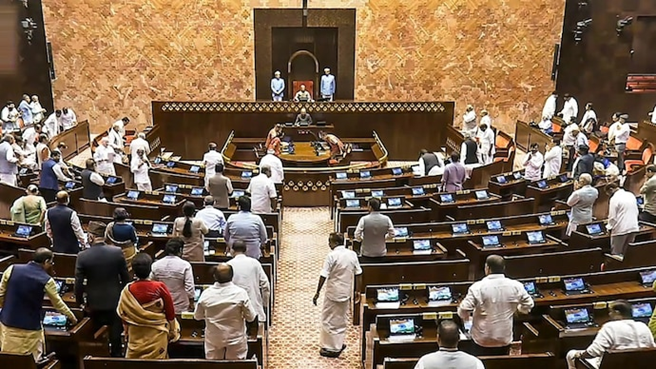
CAPF Bill 2026 Sparks Opposition Protest in Rajya Sabha
- The introduction of the Central Armed Police Forces (CAPF) Bill, 2026 in the Rajya Sabha has triggered strong opposition protests, highlighting a major debate over reforms in India’s paramilitary forces. The bill, presented by the government as a step toward administrative clarity and efficiency, has instead become a point of political and institutional conflict.
- What is the CAPF Bill 2026?
- The CAPF Bill aims to create an “umbrella law” governing recruitment, deputation, promotions, and service conditions of officers in forces like the CRPF, BSF, ITBP, and CISF.
- A key provision of the bill is to formalize and expand the role of Indian Police Service (IPS) officers in senior leadership positions:
- Around 50% of Inspector General (IG) posts for IPS officers
- At least 67% of Additional Director General (ADG) posts
- All Director General (DG) and Special DG posts reserved for IPS officers
- The government argues that this will improve coordination between Centre and states and enhance operational efficiency.
- Why is the Opposition Protesting?
- Opposition parties strongly protested the bill in the Rajya Sabha, raising several concerns:
- 1. Violation of Supreme Court Directions
- Critics argue that the bill goes against a 2025 Supreme Court judgment, which had directed a reduction in IPS deputation in CAPFs to give more opportunities to cadre officers.
- 2. Discrimination Against CAPF Cadre Officers
- Opposition leaders and former officers claim the bill:
- Limits promotion opportunities for CAPF cadre officers
- Strengthens the dominance of IPS officers
- Creates inequality within the forces
- 3. Impact on Morale and Career Growth
- CAPF officers often take much longer to get promotions compared to IPS officers. Critics warn that the bill may:
- Further delay promotions
- Increase dissatisfaction
- Lead to more resignations or voluntary retirements
- Government’s Stand
- The government has defended the bill, stating that:
- There is currently no unified legal framework, leading to confusion and litigation
- The bill will bring clarity, uniformity, and efficiency
- IPS deputation ensures better coordination in national security operations
- It also emphasizes that CAPFs play a critical role in internal security, border protection, and counter-insurgency, making strong leadership essential.
- The Core Issue: CAPF vs IPS Debate
- At the heart of the controversy is a long-standing conflict:
- CAPF Cadre Officers: Direct recruits within forces, seeking better promotion opportunities
- IPS Officers: Deputed officers who often occupy top leadership roles
- This has created tension over power, promotions, and representation, which the new bill has intensified.
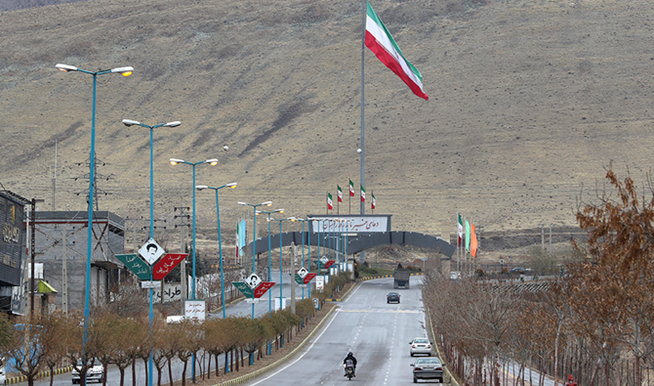
Tehran Accord: How India Secured Energy Lifeline Amid West Asia
- In the midst of escalating tensions in West Asia, India has managed to secure a crucial breakthrough often referred to as the “Tehran Accord.” This development ensured the safe passage of Indian gas carriers through the highly volatile Strait of Hormuz, offering much-needed relief to the country’s energy supply chain.
- Background: Crisis in the Strait of Hormuz
- The ongoing conflict involving Iran and Western powers has severely disrupted global energy routes. The Strait of Hormuz, a key maritime chokepoint through which a significant portion of the world’s oil and gas passes, witnessed:
- Threats to commercial shipping
- Suspension of tanker movements
- Hundreds of vessels stranded in the Gulf
- For India, this created a major challenge, as a large share of its liquefied petroleum gas (LPG) imports depends on this route.
- The Role of Indian Gas Carriers
- Two Indian-flagged LPG carriers played a crucial role:
- Jag Vasant (loaded from Kuwait)
- Pine Gas (loaded from UAE)
- These vessels were carrying massive quantities of LPG—enough to meet several days of India’s consumption.
- Initially stranded due to security risks, these ships eventually managed to cross the Strait safely.
- What is the “Tehran Accord”?
- The so-called “Tehran Accord” refers to a backchannel diplomatic understanding between India and Iran that allowed Indian ships to pass through the Strait under controlled conditions.
- Key features of this arrangement included:
- Case-by-case clearance by Iranian authorities (IRGC)
- Use of a designated safe maritime corridor
- Strict navigation protocols, including sailing close to the Iranian coastline
- Identification of vessels as Indian-owned to avoid targeting
- This agreement highlights India’s use of quiet diplomacy rather than confrontation to protect its strategic interests.
- Strategic Importance for India
- The successful passage of these ships had major implications:
- 1. Relief from LPG Crisis
- India was facing a severe cooking gas shortage, affecting households and businesses. The arrival of these carriers helped stabilize supply.
- 2. Energy Security
- India imports a significant portion of its energy. Ensuring uninterrupted supply during geopolitical crises is critical for:
- Economic stability
- Daily life (especially cooking fuel)
- Industrial operations
- 3. Diplomatic Success
- Despite global pressure and conflict, India:
- Maintained communication with Iran
- Avoided direct confrontation
- Secured national interest through strategic autonomy
- Wider Geopolitical Context
- The agreement comes at a time when:
- The US-Iran conflict has intensified
- Shipping traffic through Hormuz has drastically reduced
- Global oil supply has been disrupted
- Even in such conditions, selected vessels—including Indian tankers—have been allowed passage under strict monitoring.
- Conclusion
- The “Tehran Accord” represents a major diplomatic and strategic achievement for India. By ensuring the safe transit of LPG carriers like Jag Vasant and Pine Gas, India has demonstrated its ability to safeguard national interests even in highly volatile geopolitical conditions.
- This episode underlines the importance of:
- Strong foreign policy
- Energy diversification
- Crisis-time diplomacy
- As global tensions continue, India’s approach may serve as a model for balancing national security, economic needs, and international relations.
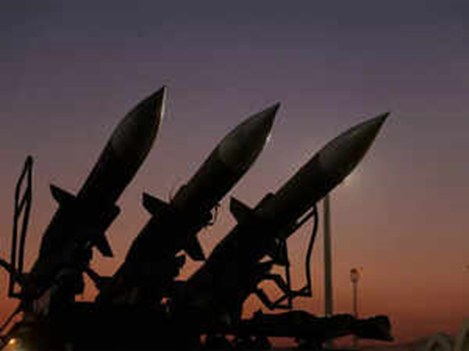
Indian Army Scales Up Indigenous Pinaka Rocket System to Boost Firepower
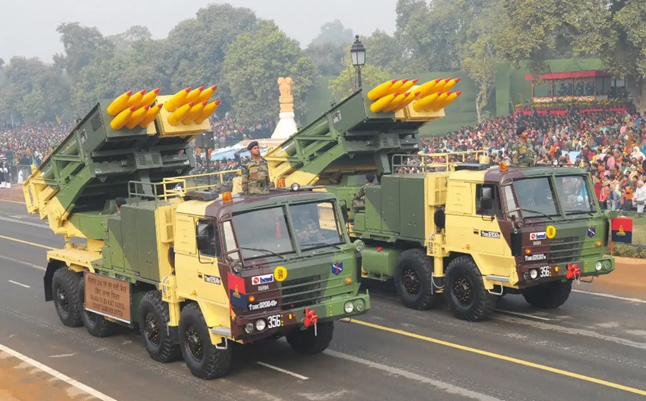
- The Indian Army is rapidly expanding its indigenous Pinaka multi-barrel rocket launcher system, marking a major step toward strengthening its artillery capabilities and achieving self-reliance in defence. This expansion comes amid rising security challenges along India’s borders and reflects a broader push under the Aatmanirbhar Bharat initiative.
- What is the Pinaka System?
- The Pinaka multi-barrel rocket launcher (MBRL) is an indigenously developed artillery system designed by India’s defence ecosystem. It is capable of:
- Firing multiple rockets in quick succession
- Delivering high-volume, area-targeted strikes
- Neutralising enemy positions over large areas within seconds
- Earlier versions had a range of around 37–45 km, while newer guided and extended-range variants can strike targets at much greater distances.
- Rapid Expansion of Pinaka Regiments
- The Indian Army has significantly increased its deployment of Pinaka systems:
- Currently, 7 Pinaka regiments are operational
- One more regiment is expected to be added soon
- Long-term plans aim to expand up to 22 regiments
- This expansion is part of a strategy to replace older systems like the BM-21 Grad and enhance long-range strike capabilities.
- Recent developments also show that:
- A 7th regiment has been inducted to strengthen border readiness
- Additional regiments are planned within the year
- Advanced Variants and Capabilities
- India is continuously upgrading the Pinaka system:
- Extended-range rockets (around 45 km or more) have successfully completed trials
- Guided Pinaka rockets can hit targets with higher precision and longer ranges
- Future variants may reach up to 120 km, enabling deep-strike operations
- A recent successful trial of the extended-range Pinaka rockets confirmed:
- High accuracy and reliability
- Readiness for operational deployment
- Strategic Importance
- 1. Strengthening Border Security
- Pinaka regiments are being deployed along:
- Western border (Pakistan)
- Northern border (China)
- This ensures quick response capability in case of conflict.
- 2. Boost to Indigenous Defence
- The system is fully developed in India, reducing dependence on foreign weapons and supporting domestic industries.
- 3. Replacement of Legacy Systems
- Older rocket systems are gradually being phased out and replaced with Pinaka, improving:
- Range
- Accuracy
- Firepower
- 4. Export Potential
- India is also exporting Pinaka systems to friendly countries, showcasing its growing role in the global defence market.
- Future Outlook
- The Indian Army’s plan to induct up to 22 Pinaka regiments highlights its long-term vision of building a modern, self-reliant artillery force. Continuous upgrades, private sector participation, and large-scale production will further strengthen India’s military capabilities.
BrahMos-A’s 800 km Leap
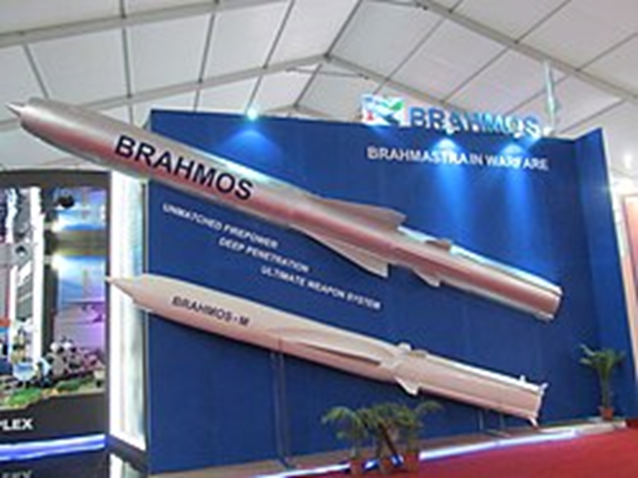
- India is moving toward a major upgrade in its strike capability with the development of the 800 km range BrahMos-A missile, a step that could significantly transform the operational strategy of the Indian Air Force. This advancement is being seen as a “game-changer” because it allows fighter jets to strike deep into enemy territory while staying safely within Indian borders.
- What is BrahMos-A?The BrahMos missile is a supersonic cruise missile developed jointly by India and Russia. The BrahMos-A is its air-launched version, primarily integrated with the Su-30MKI fighter aircraft.Speed: Around Mach 2.8–3High precision targetingCapable of low-altitude flight to avoid radar detectionThe current operational range is about 450 km, but the new upgrade aims to extend it to 800 km or more.
- The 800 km BreakthroughThe new extended-range BrahMos-A is expected to:Begin flight trials by late 2026Be inducted into service around 2028–29This upgrade nearly doubles the strike range, representing a major technological leap in India’s missile capabilities.“Border-Safe” Strike CapabilityThe most important advantage of this upgrade is what experts call “stand-off strike capability.”
- With a range of 800 km:Fighter jets like Su-30MKI can launch missiles without crossing enemy borders
- Pilots remain safe from enemy air defence systemsMissions become less risky and more effectiveIn fact, the missile can allow aircraft to strike targets deep inside enemy territory while flying within Indian airspace, turning them into long-range “safe killers.”Strategic Advantages1. Increased Safety for PilotsAircraft no longer need to enter heavily defended enemy zones, reducing:Risk of being shot downExposure to radar and missile systems
- 2. Deep Strike Capability
- The IAF can now:
- Hit high-value targets far inside hostile territoryRespond quickly during conflicts3. Strong DeterrenceA longer-range missile sends a strong message to adversaries:India can strike from a distanceRetaliation can be swift and precise
- 4. Hard-to-Intercept Weapon
- Because BrahMos travels at supersonic speed and follows complex trajectories:
- Enemy defence systems get very little reaction time
- Interception becomes extremely difficult
- Technology Behind the Upgrade
- The increase in range is achieved through:
- Improved fuel efficiencyLightweight composite materials
- Advanced guidance systems (INS + satellite navigation)Despite the longer range, the missile retains the same size and weight, allowing seamless integration with existing aircraft.
- Future Outlook
- The 800 km BrahMos-A is part of a broader roadmap that includes:BrahMos-NG (Next Generation)Hypersonic BrahMos-II
- India is steadily building a layered, high-precision strike capability across land, sea, and air platforms.
Review Questions
1. “Operation True Promise 4” is associated with which country?
A. Israel
B. Iran
C. USA
D. Russia
✅ Answer: B. Iran
2. The 78th wave of Operation True Promise 4 mainly involved:
A. Naval warfare
B. Cyber attacks
C. Missile and drone strikes
D. Ground invasion
✅ Answer: C. Missile and drone strikes
3. The term “impact-driven negotiation” refers to:
A. Peace talks
B. Economic sanctions
C. Military pressure as negotiation
D. Trade agreements
✅ Answer: C. Military pressure as negotiation
4. The CAPF Bill 2026 is related to:
A. Education reforms
B. Police and paramilitary forces
C. Agriculture policy
D. Banking system
✅ Answer: B. Police and paramilitary forces
5. CAPF stands for:
A. Central Armed Police Forces
B. Civil Armed Protection Force
C. Central Army Protection Force
D. Combined Armed Police Federation
✅ Answer: A. Central Armed Police Forces
6. The CAPF Bill proposes reservation of top posts mainly for:
A. Army officers
B. IAS officers
C. IPS officers
D. State police
✅ Answer: C. IPS officers
7. The opposition to the CAPF Bill is mainly due to:
A. High cost
B. Foreign involvement
C. Reduced promotion opportunities for cadre officers
D. Tax increase
✅ Answer: C. Reduced promotion opportunities for cadre officers
8. The “Tehran Accord” is related to:
A. Nuclear deal
B. Trade agreement
C. Safe passage of Indian ships
D. Military alliance
✅ Answer: C. Safe passage of Indian ships
9. The Strait of Hormuz is important because it:
A. Connects India and China
B. Is a major oil and gas route
C. Is a tourist destination
D. Is a military base
✅ Answer: B. Is a major oil and gas route
10. Jag Vasant and Pine Gas are:
A. Fighter jets
B. Warships
C. LPG carriers
D. Submarines
✅ Answer: C. LPG carriers
11. The Pinaka system is:
A. Tank
B. Fighter jet
C. Rocket launcher system
D. Radar system
✅ Answer: C. Rocket launcher system
12. Pinaka is developed by:
A. USA
B. Russia
C. India
D. France
✅ Answer: C. India
13. The Pinaka system is mainly used for:
A. Air defence
B. Area saturation attacks
C. Naval warfare
D. Cyber defence
✅ Answer: B. Area saturation attacks
14. India plans to expand Pinaka regiments up to approximately:
A. 10
B. 15
C. 22
D. 30
✅ Answer: C. 22
15. BrahMos-A is launched from:
A. Land
B. Submarine
C. Aircraft
D. Ship
✅ Answer: C. Aircraft
16. The upgraded BrahMos-A will have a range of about:
A. 450 km
B. 600 km
C. 800 km
D. 1000 km
✅ Answer: C. 800 km
17. BrahMos missile is known for its:
A. Slow speed
B. Supersonic speed
C. Underground launch
D. Nuclear-only use
✅ Answer: B. Supersonic speed
18. The main advantage of extended-range BrahMos-A is:
A. Low cost
B. Border-safe strike capability
C. Smaller size
D. Civilian use
✅ Answer: B. Border-safe strike capability
19. The IRGC belongs to which nation?
A. Iraq
B. Iran
C. Turkey
D. Syria
✅ Answer: B. Iran
20. India’s approach in the Tehran Accord reflects:
A. Military aggression
B. Isolation policy
C. Strategic diplomacy
D. Trade sanctions
✅ Answer: C. Strategic diplomacy
ALSO READ:
- Latest Daily Current Affairs and Defence Updates
- Latest Daily Current Affairs February 2026[DOWNLOAD PDF]
- Latest Daily Current Affairs January 2026[DOWNLOAD PDF]
- Latest Daily Current Affairs November 2025[DOWNLOAD PDF]
- Latest Daily Current Affairs October 2025[DOWNLOAD PDF]
- Latest Daily Current Affairs August 2025[DOWNLOAD PDF]
- Latest Daily Current Affairs July 2025[DOWNLOAD PDF]
- Monthly Defence Current Affairs June 2025 [DOWNLOAD PDF]
- Monthly Defence Current Affairs May 2025 [DOWNLOAD PDF]
- Monthly Defence Current Affairs April 2025 [DOWNLOAD PDF]
- Monthly Defence Current Affairs March 2025 [DOWNLOAD PDF]
- Monthly Defence Current Affairs February 2025 [DOWNLOAD PDF]
- Monthly Defence Current Affairs January 2025 [DOWNLOAD PDF]
- Defence Current Affairs Year End Review 2024
- Monthly Defence Current Affairs November 2024 [DOWNLOAD PDF]
- Monthly Defence Current Affairs October 2024 [DOWNLOAD PDF]
- Monthly Defence Current Affairs September 2024 [DOWNLOAD PDF]
- Monthly Defence Current Affairs August 2024 [DOWNLOAD PDF]
- Monthly Defence Current Affairs July 2024 [DOWNLOAD PDF]
- Monthly Defence Current Affairs June 2024 [DOWNLOAD PDF]


