




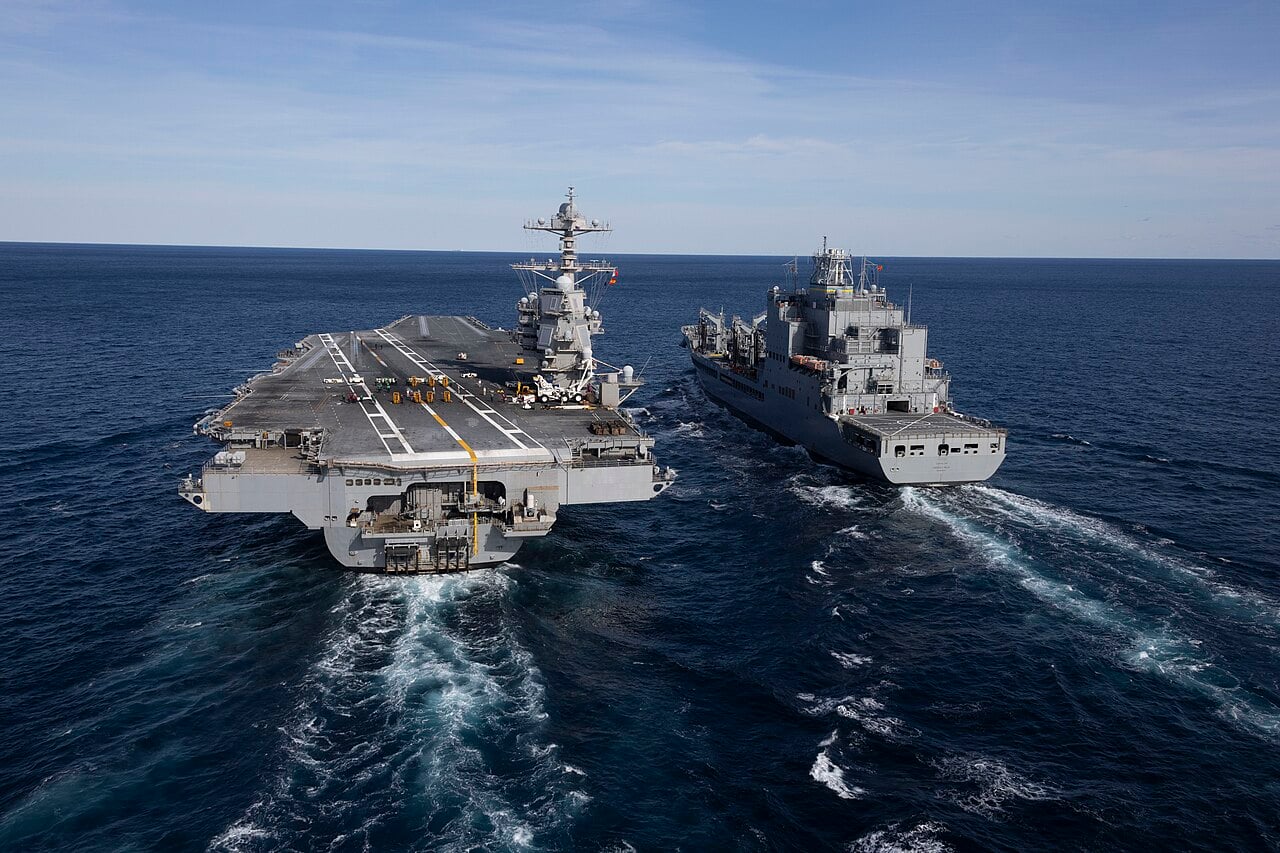
The US Navy’s John Lewis-class fleet replenishment oilers are becoming critical components of modern naval logistics, operating far from the direct confrontations of combat. These ships play a vital role in maintaining the operational readiness of naval fleets by delivering necessary supplies, fuel, and provisions without requiring warships to return to port, thereby ensuring sustained naval presence and endurance.
Unlike traditional combat vessels that engage in offensive operations, the John Lewis-class oilers serve as mobile logistics hubs at sea. They are designed to maintain continuous operational capabilities by transporting large quantities of marine diesel and aviation fuel. This fuel is transferred to warships through a sophisticated underway replenishment process, where ships move parallel while linked by hoses. Additionally, these oilers support vertical replenishment missions using helicopters for transporting crucial items such as spare parts, food, and ammunition.
The John Lewis-class vessels have modern specifications aimed at enhancing the Navy’s logistics capabilities. Each ship displaces over 41,000 tons, measures approximately 206.5 meters in length, and can carry 180,000 barrels of fuel. With a propulsion system that includes two diesel engines, these oilers can reach speeds of around 20 knots and have a virtually unlimited operational range due to their logistics support functionalities.
The origins of the John Lewis-class came from the need to replace the aging Henry J. Kaiser-class oilers that have been in service since the 1980s. Initiated in 2016, the T-AO(X) program aims to provide a more efficient and cost-effective logistics platform. General Dynamics NASSCO leads the construction of this new class, with the first ship, the USNS John Lewis, delivered in 2022, marking the beginning of a planned fleet of 20 vessels.
With advanced automation and efficient transfer systems, the replenishment process is executed in a meticulously planned sequence: rendezvous at a predetermined location, maintaining station-keeping, rigging connections, transferring fuel while both vessels sail in tandem, and securing lines before separation. These capabilities significantly reduce crew demands while increasing operational reliability and flexibility.
The strengths of the John Lewis-class oilers include their ability to extend the operational endurance of naval fleets, enabling them to execute prolonged deployments far from home bases. They enhance the US Navy’s global reach, supporting missions ranging from deterrence to humanitarian efforts. However, their non-combatant role poses limitations, such as minimal self-defense capabilities and dependency on their availability in operational theaters.
These vessels are already playing crucial roles in various US Navy operations, particularly in the Indo-Pacific and the Middle East, routinely supporting carrier strike groups and amphibious ready groups. Their logistical prowess ensures that fleets can operate in areas where access to ports may be limited or politically sensitive.
Looking to the future, the John Lewis-class represents a significant advancement in enabling resilient and efficient naval logistics. As distributed maritime operations become more prominent, the demand for versatile and survivable supply ships is expected to grow. Future enhancements may include the integration of autonomous resupply systems and improved defensive measures.
While they may operate away from the spotlight, the John Lewis-class fleet replenishment oilers are indispensable to sustaining maritime power, ensuring that naval forces can remain active and effective across global waters.


