




In Defence Current Affairs for 09 July 2026, we will see the latest national and international current affairs news. These important current affairs will be beneficial for your upcoming NDA, CDS, CDS OTA, AFCAT, TA, Agniveer Army, Agniveer Navy, Agniveer Air Force, Women Military Police, INET, MNS, ACC exams, SCO, PCSL, CAPF, and SSB interviews, and direct entries for Army, Navy, and Air Force like SSC Tech, TGC, JAG, NCC, TES, 10+2 Cadet. Download a PDF file about current events at the end of this article. Let us now see the Current Affairs.
Defence Current Affairs 09 July 2026
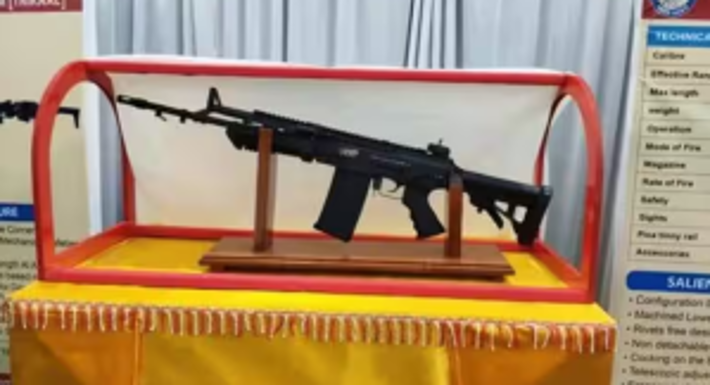
Ugram Indigenous Assault Rifle Clears Army Trials
- The Ugram is an indigenous 7.62×51mm assault rifle developed in India by the Armament Research and Development Establishment, a laboratory of the DRDO and Dvipa Defence India Private Limited.
- It cleared the Indian Army’s General Staff Qualitative Requirement trials and the Ministry of Home Affairs Board trials in July 2026.
- The rifle is expected to be procured by Central Armed Police Forces in India. These include the Central Reserve Police Force, Indo-Tibetan Border Police, Sashastra Seema Bal, and National Security Guard.
- The General Staff Qualitative Requirement, or GSQR, is the technical and operational standard used by the Indian Army for equipment trials.
- The Ministry of Home Affairs oversees several Central Armed Police Forces, including the CRPF, ITBP, SSB, and NSG.
- The INSAS rifle is a 5.56mm service rifle that has been used by Indian security forces since the 1990s.
- Atmanirbhar Bharat is a Government of India initiative linked with domestic manufacturing and reduced import dependence.
India and Russia Strengthen Counter-Terrorism Cooperation Amid Emerging Regional Threats
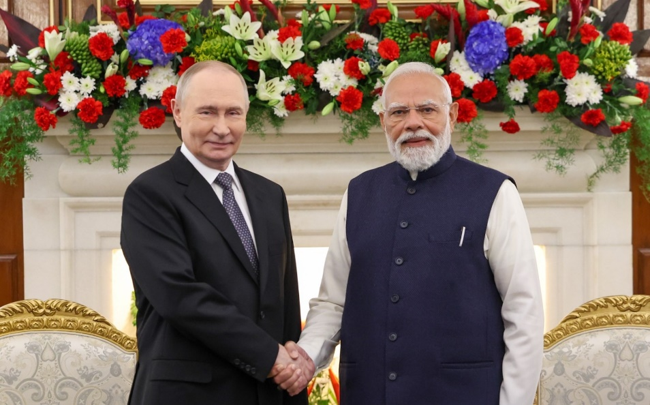
- India and Russia have agreed to deepen their cooperation in counter-terrorism following a high-level meeting of the India-Russia Joint Working Group on Counter-Terrorism. The discussions focused on the growing security challenges in the Afghanistan-Pakistan (Af-Pak) region and across Eurasia, where terrorist networks, radicalisation, and transnational extremist activities continue to pose significant risks.
- The two countries strongly reaffirmed their commitment to combating terrorism in all its forms and manifestations. They emphasized that terrorism should never be justified under any circumstances and called for stronger international cooperation to eliminate terrorist organizations, their financing networks, recruitment channels, and safe havens.
- Focus on Regional Security
- During the meeting, both sides exchanged assessments of the evolving security environment in South Asia, Central Asia, and the wider Eurasian region. Special attention was given to the deteriorating security situation in the Af-Pak region, which has witnessed increased activities by extremist groups capable of affecting regional peace and stability.
- The discussions also highlighted concerns over radicalisation, cross-border terrorism, and the use of emerging technologies by terrorist organisations. India and Russia agreed that these evolving threats require enhanced coordination between intelligence agencies and security institutions.
- Enhanced Bilateral Cooperation
- India and Russia decided to further strengthen their bilateral counter-terrorism framework through:
- Greater intelligence sharing and exchange of information.
- Enhanced coordination between security and law-enforcement agencies.
- Capacity building and training programmes.
- Cooperation against terror financing and online radicalisation.
- Joint efforts to address emerging technological threats used by terrorist groups.
- Both countries also reiterated the importance of preventing terrorists from exploiting cyberspace, encrypted communication platforms, and modern technologies for recruitment, propaganda, financing, and planning attacks.
- Commitment to Multilateral Cooperation
- India and Russia reaffirmed their support for stronger international cooperation through multilateral platforms such as the United Nations and the Shanghai Cooperation Organisation (SCO). They underlined the need for all countries to implement international obligations related to combating terrorism and to deny safe havens to terrorist organisations.
- The two nations also stressed the importance of implementing relevant UN Security Council resolutions and called for continued global efforts to dismantle terrorist infrastructure and financing networks.
- Strategic Importance for India
- The strengthened India-Russia counter-terrorism partnership is strategically significant because:
- It enhances India’s security cooperation with one of its long-standing strategic partners.
- It addresses rising instability in the Afghanistan-Pakistan region.
- It improves intelligence coordination against transnational terrorist networks.
- It contributes to regional peace and stability across South Asia and Eurasia.
- It reinforces India’s commitment to global efforts against terrorism.
Indian Army Accelerates Procurement of Indigenous One-Way Attack Drones
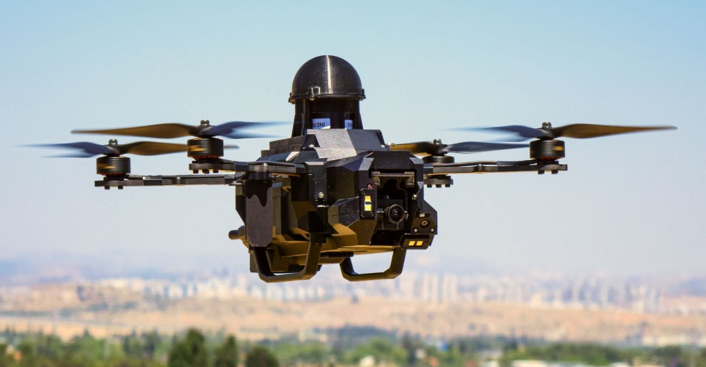
- In a major step towards strengthening India’s unmanned combat capabilities, the Indian Army has fast-tracked the procurement of indigenous one-way attack drones, also known as loitering munitions. The project, valued at nearly ₹1,500 crore, is aimed at equipping the Army with advanced precision-strike systems capable of operating effectively in modern battlefields. According to reports, Tata Advanced Systems Limited (TASL) has emerged as the lowest bidder (L1) for the contract.
- Enhancing India’s Drone Warfare Capability
- One-way attack drones are designed to remain airborne over a designated area, identify enemy targets, and strike them by crashing into the objective with an explosive payload. These systems combine the features of surveillance drones and precision-guided weapons, making them highly effective against enemy command posts, radar stations, armoured vehicles, artillery positions, and troop concentrations.
- The procurement reflects the Indian Army’s increasing emphasis on integrating unmanned systems into its operational strategy, particularly in view of recent global conflicts where loitering munitions have demonstrated significant battlefield effectiveness.
- Tata Advanced Systems Emerges as Lowest Bidder
- Following the commercial evaluation process, Tata Advanced Systems Limited has emerged as the lowest bidder for supplying hundreds of these advanced drones. Once the contract is formally signed, deliveries are expected to commence within six months, allowing the Army to induct the systems at an accelerated pace.
- The project also supports the Government of India’s Aatmanirbhar Bharat and Make in India initiatives by promoting indigenous defence manufacturing and reducing dependence on imported military equipment.
- Advanced Features of the Drones
- The new generation of one-way attack drones is expected to include several advanced capabilities, such as:
- Precision strike against high-value enemy targets.
- Resistance to electronic jamming and GPS spoofing.
- Autonomous navigation and target engagement.
- Enhanced operational reliability in contested electronic warfare environments.
- Rapid deployment for tactical battlefield missions.
- These features make the drones suitable for operations along India’s northern and western borders, where electronic warfare and precision engagement capabilities are becoming increasingly important.
- Growing Importance of Loitering Munitions
- Modern warfare has witnessed the widespread use of loitering munitions in several international conflicts. Their ability to combine intelligence, surveillance, reconnaissance, and strike capabilities in a single platform has transformed battlefield tactics.
- For India, these systems will enhance:
- Precision engagement with minimal collateral damage.
- Quick response against time-sensitive targets.
- Reduced risk to soldiers during offensive operations.
- Greater operational flexibility in difficult terrain.
- Part of a Larger Defence Modernisation Drive
- The procurement of one-way attack drones forms part of India’s broader military modernisation programme. The government has recently approved several major defence acquisition projects aimed at strengthening air defence, surveillance, anti-tank warfare, electronic warfare, and unmanned combat capabilities. The focus remains on developing indigenous technologies while enhancing the operational readiness of the Armed Forces.
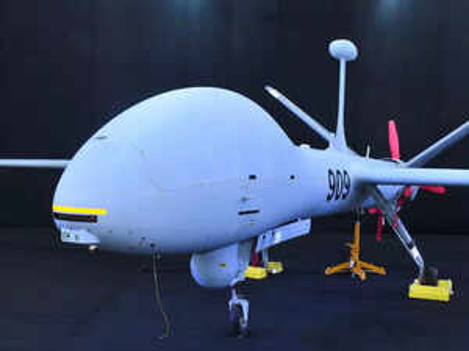
Indian Navy UAV Crashes Near Porbandar During Training Sortie; No Casualties Reported
- An unmanned aerial vehicle (UAV) of the Indian Navy crashed near Porbandar, Gujarat, during a routine training sortie. The incident occurred shortly after the UAV took off from the Naval Air Enclave at Porbandar. Fortunately, the aircraft came down in an open field near Dharampur village, and no casualties, injuries, or damage to civilian property were reported. The Indian Navy has initiated an investigation to determine the cause of the accident.
- Incident Details
- According to officials, the UAV crashed into an open field approximately 6 km from Porbandar city soon after take-off.
- Navy personnel and local authorities immediately reached the crash site, secured the area, and began recovery operations. The prompt response ensured that there was no threat to nearby residents.The Indian Navy stated that the UAV was on a routine training mission when the incident occurred. At present, the exact reason behind the crash has not been disclosed, and a detailed technical investigation has been ordered.
- Investigation Underway
- A Board of Inquiry has been initiated to determine whether the accident resulted from:Technical malfunction.Mechanical failure.Communication or navigation system issues.Other operational factors.The findings of the investigation will help the Navy implement corrective measures and improve the safety and reliability of future UAV operations.
- Role of UAVs in the Indian Navy
- The Indian Navy extensively employs unmanned aerial vehicles for maritime surveillance and reconnaissance. These platforms perform several important missions, including:Monitoring India’s vast coastline and Exclusive Economic Zone (EEZ).Maritime domain awareness.Surveillance of shipping lanes.Intelligence, Surveillance and Reconnaissance (ISR) missions.Support for search and rescue operations.Assistance in anti-piracy and coastal security operations.UAVs have become an essential component of India’s maritime security architecture, enabling persistent surveillance without exposing aircrew to operational risks.Importance of Porbandar Naval Air Enclave
- The Naval Air Enclave at Porbandar is a strategically significant base located on India’s western coast. It supports surveillance operations over the Arabian Sea and plays an important role in safeguarding maritime interests, coastal security, and monitoring activities in the western maritime region.
Review Questions
- The indigenous ‘Ugram’ assault rifle has been jointly developed by DRDO’s
Armament Research and Development Establishment (ARDE) and which private
company?
A) Larsen & Toubro
B) Tata Advanced Systems Limited
C) Dvipa Defence India Private Limited
D) Bharat Forge
Answer: C) Dvipa Defence India Private Limited - The Ugram assault rifle recently cleared which important Indian Army evaluation
process?
A) Defence Acquisition Council Trial
B) General Staff Qualitative Requirement (GSQR) Trials
C) Field Firing Evaluation Trial
D) Integrated Battle Trial
Answer: B) General Staff Qualitative Requirement (GSQR) Trials - India and Russia recently agreed to strengthen cooperation through which
bilateral mechanism?
A) India-Russia Defence Commission
B) India-Russia Strategic Partnership Council
C) India-Russia Joint Working Group on Counter-Terrorism
D) India-Russia Military Cooperation Committee
Answer: C) India-Russia Joint Working Group on Counter-Terrorism - The recent India-Russia counter-terrorism discussions primarily focused on
security concerns in which region?
A) Indo-Pacific Region
B) West Asia
C) Afghanistan-Pakistan (Af-Pak) region and Eurasia
D) Arctic Region
Answer: C) Afghanistan-Pakistan (Af-Pak) region and Eurasia - Which company has emerged as the lowest bidder (L1) for the Indian Army’s
nearly ₹1,500 crore one-way attack drone project?
A) Hindustan Aeronautics Limited
B) Adani Defence
C) Tata Advanced Systems Limited
D) Bharat Electronics Limited
Answer: C) Tata Advanced Systems Limited - One-way attack drones are commonly known as:
A) Reconnaissance Drones
B) Cargo Drones
C) Loitering Munitions
D) Target Drones
Answer: C) Loitering Munitions - Which capability is NOT an expected feature of the new indigenous one-way
attack drones?
A) Autonomous navigation
B) Resistance to electronic jamming
C) Mid-air aerial refuelling
D) Precision strike capability
Answer: C) Mid-air aerial refuelling - An Indian Navy UAV recently crashed during a routine training sortie near which
city?
A) Kochi
B) Visakhapatnam
C) Porbandar
D) Karwar
Answer: C) Porbandar - The crashed Indian Navy UAV came down near which village?
A) Mandvi
B) Dharampur
C) Okha
D) Bhujpur
Answer: B) Dharampur - Which of the following is NOT a major role of UAVs in the Indian Navy?
A) Maritime surveillance
B) Intelligence, Surveillance and Reconnaissance (ISR)
C) Search and Rescue support
D) Strategic nuclear missile launch
Answer: D) Strategic nuclear missile launch - The Naval Air Enclave at Porbandar primarily supports surveillance operations
over which water body?
A) Bay of Bengal
B) Arabian Sea
C) Indian Ocean near Andaman Sea
D) Gulf of Mannar
Answer: B) Arabian Sea - Which Government of India initiative is directly promoted through the
procurement of indigenous one-way attack drones?
A) Digital India
B) Startup India
C) Atmanirbhar Bharat and Make in India
D) PM Gati Shakti
Answer: C) Atmanirbhar Bharat and Make in India - Training Command of IAF is located at
A. New Delhi
B. Bangalore
C. Gurugram
D. Lucknow
ANSWER: B - ISRO Was Established On
A. 15 August 1969
B. 1 September 1965
C. 1 October 1975
D. 18 December 1985
ANSWER: A - INS Visakhapatnam (D66) Manufactured By
A. GRSE
B. MDL
C. CSL
D. Boeing
ANSWER: B - Rashtriya Rifles Motto Is
A. Courage and Valor
B. Always Brave
C. Service Before Self
D. Lethal
ANSWER: A - Parakram Diwas Celebrated On
A. December 1
B. October 8
C. January 23
D. March 10
ANSWER: C - Amogha Is A
A. Anti-tank guided missile
B. Surface-to-surface tactical ballistic missile
C. Quick reaction surface-to-air missile
D. Multiple rocket launcher
ANSWER: A - Operation Steeplechase Launched In
A. July 1971
B. July 1972
C. July 1973
D. July 1974
ANSWER: A - War Cry of THE BIHAR REGIMENT
A. Parakramo Vijayate
B. Rhino Charge
C. Jai Bajrangbali
D. Duty, Honour, courage
ANSWER: C
ALSO READ:
- Latest Daily Current Affairs and Defence Updates
- Latest Daily Current Affairs June 2026[DOWNLOAD PDF]
- Latest Daily Current Affairs May 2026[DOWNLOAD PDF]
- Latest Daily Current Affairs April 2026[DOWNLOAD PDF]
- Latest Daily Current Affairs March 2026[DOWNLOAD PDF]
- Latest Daily Current Affairs February 2026[DOWNLOAD PDF]
- Latest Daily Current Affairs January 2026[DOWNLOAD PDF]
- Latest Daily Current Affairs November 2025[DOWNLOAD PDF]
- Latest Daily Current Affairs October 2025[DOWNLOAD PDF]
- Latest Daily Current Affairs August 2025[DOWNLOAD PDF]
- Latest Daily Current Affairs July 2025[DOWNLOAD PDF]
- Monthly Defence Current Affairs June 2025 [DOWNLOAD PDF]
- Monthly Defence Current Affairs May 2025 [DOWNLOAD PDF]


