




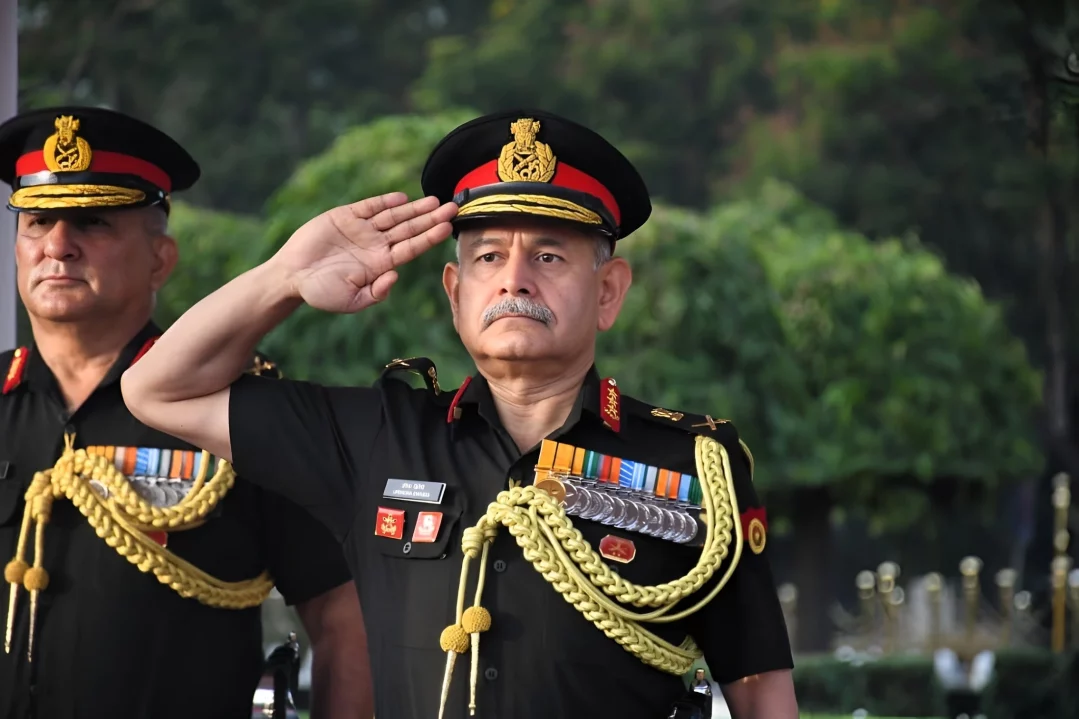
The Eighth Central Pay Commission (8th CPC) is anticipated to bring significant changes to the pensionary benefits of Indian Army officers, both in active service and those retired. As the Commission engages in stakeholder consultations, the deadline for submitting memoranda has been extended to May 31, 2026, with the report expected by May 2027. Defence personnel are hopeful for transformative pay structure and pension revisions effective from January 1, 2026, which could enhance financial security for commissioned officers dedicating their careers to national service.
Currently, under the Seventh Central Pay Commission (7th CPC) introduced in 2016, officers receive a service pension that constitutes 50% of their last drawn basic pay in the relevant pay matrix level, supplemented by a Military Service Pay (MSP) component. The MSP stands at ₹15,500 monthly for ranks ranging from Lieutenant to Brigadier. Pensions are subject to periodic revisions and align with the One Rank One Pension (OROP) principle to ensure fairness among different retirement cohorts. For instance, an officer who retires after 25 years of service with a last drawn basic pay of ₹80,000 receives approximately ₹40,000 monthly, prior to additional Dearness Relief (DR).
However, rapid inflation and changing economic conditions have sparked the need for a comprehensive review of this existing framework, leading to the establishment of the 8th CPC in November 2025, chaired by Justice Ranjana Prakash Desai.
Central to the anticipated enhancements in pensions is the expected application of a revised fitment factor, projected to be around 2.86, which marks an increase from the 2.57 factor utilized in the 7th CPC. This new multiplier promises to raise the basic pay levels across the defence pay matrix, enhancing pension foundations for both new and existing retirees.
Submissions from various stakeholders, including the Indian Army’s Adjutant General Branch, advocate for a higher fitment factor to more accurately compensate military service’s unique demands. Once approved, this fitment factor will be uniformly applied, reflecting modern economic circumstances. Moreover, the Army is pushing for a substantial revision in MSP—potentially increasing it by 130% or more depending on rank—aimed at rectifying historical discrepancies and acknowledging the continuous operational commitments faced by officers.
Preliminary projections based on a 2.86 fitment factor suggest the following illustrative figures for officer ranks:
- Lieutenant: ₹1,60,446 (up from ₹56,100)
- Captain: ₹1,75,318 (up from ₹61,300)
- Major: ₹1,98,484 (up from ₹69,400)
- Lieutenant Colonel: ₹3,46,632 (up from ₹1,21,200)
- Colonel: ₹3,73,516 (up from ₹1,30,600)
- Brigadier: ₹3,99,256 (up from ₹1,39,600)
- Major General: ₹4,12,412 (up from ₹1,44,200)
- Lieutenant General: ₹5,21,092 (up from ₹1,82,200)
These adjustments would lead to significantly higher pensions when officers retire. For example, a Colonel could expect a basic pension of around ₹1,86,758 per month, excluding MSP and subsequent DR adjustments.
For an officer with 25 years of service and a last drawn basic pay of ₹80,000 under the 7th CPC, the current pension stands at ₹40,000 monthly. However, under the proposed 8th CPC, with a revised basic pay estimate of ₹2,28,800, the projected pension could rise to ₹1,14,400 per month, prior to any Dearness Relief, signifying an increase of nearly 186% in the basic pension component.
Additionally, the 8th CPC proposes enhancements to family pension provisions. The Indian Army recommends increasing the ordinary family pension from 30% to 40% of the last drawn basic pay, providing better financial support for the spouses and dependents of deceased officers.
Proposed reforms also include adjustments to the Modified Assured Career Progression (MACP) scheme, enhancing allowances for field and high-altitude service, and simplifying leave encashment rules, all aimed at strengthening the overall pension entitlements of officers.
An estimated 33–35 lakh defence pensioners will benefit from these changes, which are expected to lead to retroactive payment from January 1, 2026, resulting in arrears calculated based on the difference between new and old monthly pensions.
As the Commission advances towards its report submission in 2027, stakeholders are encouraged to stay informed via official channels, including the Ministry of Defence, the Principal Controller of Defence Accounts, and the 8th CPC website. This initiative promises not just immediate financial relief but also reinforces the nation’s commitment to the welfare of armed forces personnel and their families.
While these projections remain subject to final recommendations and government approval, the 8th CPC signifies a crucial opportunity to modernise the military pay and pension structures, recognizing the unique sacrifices of Indian Army officers.


