





In Monthly Defence Current Affairs for June 2026, we will see the latest national and international current affairs news. These important current affairs will be beneficial for your upcoming NDA, CDS, CDS OTA, AFCAT, TA, Agniveer Army, Agniveer Navy, Agniveer Air Force, Women Military Police, INET, MNS, ACC exams, SCO, PCSL, CAPF, and SSB interviews, and direct entries for Army, Navy, and Air Force like SSC Tech, TGC, JAG, NCC, TES, 10+2 Cadet. Download a PDF file about current events at the end of this article. Let us now see the Current Affairs.
Monthly Defence Current Affairs June 2026
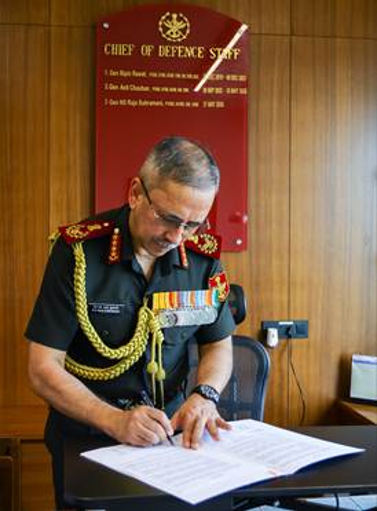
General NS Raja Subramani Assumes Charge as CDS
- General NS Raja Subramani, PVSM, AVSM, SM, VSM, assumed charge as the third Chief of Defence Staff (CDS) and Secretary, Department of Military Affairs on May 31, 2026.
- He acknowledged the exemplary leadership and contribution of his predecessors and pledged to build upon their achievements. Expressing gratitude to the country for the trust reposed in the Defence Forces, General NS Raja Subramani asserted that they would work in unison with all stakeholders as part of the Whole-of-Nation approach to further strengthen national security.
- A highly decorated officer with over four decades of service, General Subramani was commissioned into the Garhwal Rifles in December 1985.
- His distinguished career includes a number of key Command and Staff appointments, including General Officer Commanding, 2 Corps, General Officer Commanding-in-Chief, Central Command; and the Vice Chief of the Army Staff. Prior to assuming the appointment of CDS, he served as Military Adviser at the National Security Council Secretariat.
Admiral Krishna Swaminathan Assumes Charge As CONS
- Admiral Krishna Swaminathan, PVSM, AVSM, VSM assumed charge as the 27th Chief of the Naval Staff of the Indian Navy on 31 May 2026. He succeeds Admiral Dinesh Kumar Tripathi, PVSM, AVSM, NM who superannuated after 41 years of distinguished service.
- Admiral Krishna Swaminathan was commissioned into the Indian Navy on 01 July 1987. A Communication and Electronic Warfare specialist, he has held a wide range of operational, staff and training appointments during a distinguished career spanning nearly four decades.
- Admiral Swaminathan’s sea commands include the guided missile vessels INS Vidyut and INS Vinash, guided missile corvette INS Kulish, guided missile destroyer INS Mysore and aircraft carrier INS Vikramaditya.
Vice Admiral Sanjay Vatsayan Assumes Charge As Flag Officer Commanding-in-Chief
- Vice Admiral Sanjay Vatsayan, PVSM, AVSM, NM, assumed charge as the Flag Officer Commanding-in-Chief, Western Naval Command, at a ceremonial parade held in Mumbai on 30 May 2026.
- Prior to this appointment, he served as Vice Chief of the Naval Staff at Naval Headquarters, New Delhi. On assuming charge, he paid homage to the bravehearts who have made the supreme sacrifice in service to the Nation, at Gaurav Stambh, Naval Dockyard, Mumbai.
- An alumnus of NDA, Khadakwasla Pune, the Flag Officer was commissioned into the Indian Navy on 01 Jan 1988. A specialist in Gunnery and Missile Systems, he has held a wide range of command, operational, staff and training assignments, both afloat and ashore, during his distinguished naval career spanning more than three decades.
- The Flag Officer has served onboard various frontline warships, including command of Coast Guard Ship C-05, Missile Vessels INS Vibhuti and Nashak, Missile Corvette INS Kuthar and Guided Missile Frigate INS Sahyadri.
Inauguration of ‘Nausena Shaurya Vatika’
- Raksha Mantri Rajnath Singh and UP CM Yogi Adityanath jointly inaugurated ‘Nausena Shaurya Vatika’ in Lucknow on May 30, 2026. Built at a cost of Rs 19 crore over an area spanning over two acres, this Open-Air Display Museum honours the spirit, valour & prowess of the Indian Navy.
- It showcases the artefacts and weapon systems of INS Gomati, which was decommissioned on May 29, 2022 after 34 years of service.
- Speaking on the occasion, Raksha Mantri described the Nausena Shaurya Vatika as not only a tourist attraction, but also a symbol of inspiration that would remind future generations of the true cost of freedom and security.
- AK 726 (Naval Gun Installed onboard Naval Warship), ZIF 101 launcher for Surface-to-Air Missiles, Surface-to-Surface Anti-Ship and Surface-to-Air Missiles and Ship’s radar, torpedo launcher, anchors, ship’s masts and other artefacts of INS Gomati are on display at the park.
- It also features a Walkthrough Museum of TU 142M, a long range maritime patrol aircraft which is no longer in service.
- INS Gomati derives her name from the vibrant river Gomti and was commissioned on April 16, 1988 by the then Raksha Mantri at Mazagon Dock Limited. The third ship of the Godavari class guided-missile frigates, INS Gomati was also the oldest warrior of the Western Fleet when decommissioned.
- During her service, she participated in Operations Cactus, Parakram and Rainbow, and several bilateral & multinational naval exercises. For her remarkable spirit and stellar contribution to national maritime security, she was twice awarded the coveted Unit Citation, once in 2007-08 and again in 2019-20.
Multilateral Exercise Pragati 2026 Concludes
- The maiden edition of Multilateral Exercise PRAGATI 2026, conducted at Umroi Military Station, Meghalaya, concluded with a 72-hour validation exercise, showcasing the interoperability, mutual trust, and collective resolve of the participating armed forces to address common security challenges.
- The event was attended by six Vice Chiefs and over 40 senior military officials from the 13 participating friendly foreign countries. Lieutenant General Dhiraj Seth, Vice Chief of the Army Staff, hosted the dignitaries from all participating countries.
- PRAGATI, which stands for Partnership of Regional Armies for Growth and Transformation in the Indian Ocean Region, brought together more than 400 troops from India, Bhutan, Cambodia, Malaysia, Maldives, Myanmar, Nepal, Philippines, Seychelles, Sri Lanka, Vietnam, Indonesia and Laos
- This maiden edition of Exercise PRAGATI has laid a strong foundation for like-minded nations striving for a peaceful, prosperous and secure region; and serves as a precursor to future editions of the exercise.
Vice Admiral Vineet McCarty Assumes Charge as Commander-in-Chief of Andaman & Nicobar Command
- Vice Admiral Vineet McCarty, AVSM, assumed charge as the 20th Commander-in-Chief of the Andaman & Nicobar Command (ANC) at Sri Vijaya Puram on June 1, 2026. His appointment marks an important leadership transition in India’s only integrated Tri-Service Operational Command, which plays a crucial role in safeguarding national interests in the Indo-Pacific region.
- A highly experienced naval officer with over 36 years of distinguished service, Vice Admiral McCarty brings extensive expertise in operational, strategic, training, and joint-service domains.
- Early Career and Professional Education
- Commissioned into the Indian Navy on July 1, 1989, Vice Admiral McCarty is a specialist in Gunnery and Missile Warfare. Throughout his career, he has demonstrated exceptional leadership and professional excellence in a variety of challenging assignments.
- He is an alumnus of the Defence Services Staff College (DSSC), Wellington, and the National Defence College (NDC), New Delhi, both premier institutions for advanced military education and strategic studies.
- Distinguished Naval Career
- Vice Admiral McCarty has held numerous important sea and shore appointments during his naval career. His operational journey began as a member of the commissioning crew of INS Delhi, one of the Indian Navy’s frontline guided missile destroyers. He subsequently completed various specialist appointments onboard the warship, gaining extensive operational experience.
- His command assignments include:
- INS Ajay
- INS Khanjar
- INS Shivalik
- These commands provided him with valuable experience in maritime operations, fleet management, and naval warfare.
- Key Staff and Training Appointments
- In addition to his sea commands, Vice Admiral McCarty has served in several important staff and training positions. Some of his notable assignments include:
- Training Commander at the Indian Naval Academy
- Command Plans Officer at Headquarters Eastern Naval Command
- Commodore Naval Plans at Naval Headquarters
- These roles contributed significantly to operational planning, training, force development, and capability enhancement within the Indian Navy.
- Strategic Importance of Andaman & Nicobar Command
- The Andaman & Nicobar Command is India’s first and only integrated Tri-Service Command, bringing together personnel and assets from the Army, Navy, and Air Force under a unified command structure.
- Located at a strategically vital position near major international sea lanes, the command plays a critical role in:
- Maritime surveillance and security
- Protection of sea lines of communication
- Humanitarian assistance and disaster relief operations
- Regional security cooperation
- Safeguarding India’s interests in the Indo-Pacific
- The command serves as a key pillar of India’s maritime strategy and defence posture in the Indian Ocean Region.
- Vision for the Future
- Upon assuming command, Vice Admiral McCarty highlighted the strategic importance of the Andaman & Nicobar Command in ensuring maritime security and regional stability.
- He reaffirmed his commitment to:
- Enhancing operational preparedness
- Strengthening jointness among the three armed services
- Improving interoperability and coordination
- Reinforcing the command’s role in national and regional security
- His leadership is expected to further strengthen India’s ability to respond to emerging security challenges in the Indo-Pacific region.
BRO Celebrates 37th Raising Day of Project UDAYAK
- The Border Roads Organisation (BRO) celebrated the 37th Raising Day of Project UDAYAK on June 1, 2026, at Doomdooma in Assam. The occasion marked over three decades of dedicated service in developing and maintaining strategic infrastructure across India’s North-Eastern region. The celebrations highlighted the project’s significant contribution to national security, regional connectivity, and socio-economic development in some of the country’s most remote and challenging terrains.
- Commemorating Three Decades of Service
- The Raising Day celebrations were marked by a variety of ceremonial, welfare, and community outreach activities. As part of the event, Project UDAYAK organized:
- Swachhata Abhiyan (Cleanliness Drive)
- Road Safety Awareness Campaigns
- Run and Walkathon Events
- Medical Camps
- Dental Health Camps
- These activities benefited local communities and reflected the project’s commitment not only to infrastructure development but also to social welfare and community engagement.
- Internal events such as Sainik Sammelan and troop interactions were also conducted to strengthen morale, foster camaraderie, and recognize the contributions of personnel serving in demanding operational environments.
- Strategic Role of Project UDAYAK
- Project UDAYAK is one of the key projects of the Border Roads Organisation responsible for constructing and maintaining strategic road infrastructure in the easternmost parts of Arunachal Pradesh and adjoining areas of Assam.
- The project is entrusted with the maintenance and development of more than 1,457 kilometers of road network. Its area of responsibility includes several strategically important districts:
- Anjaw
- Lohit
- Dibang Valley
- Longding
- Tirap
- Changlang
- These regions are located near sensitive international borders and play a critical role in India’s defence and border management strategy.
- Enhancing Connectivity Along Strategic Frontiers
- Project UDAYAK has been instrumental in improving connectivity in remote and strategically important areas situated along:
- The Line of Actual Control (LAC)
- The Indo-Myanmar Border
- By building and maintaining roads, bridges, and other critical infrastructure, the project facilitates the movement of security forces, enhances border management capabilities, and supports the development of local communities.
- The project is currently engaged in the construction of roads and border fencing infrastructure along the Indo-Myanmar border, which is expected to further strengthen national security and improve accessibility in frontier regions.
- Major Infrastructure Achievements
- Over the years, Project UDAYAK has successfully executed several landmark infrastructure projects despite difficult terrain, adverse weather conditions, and logistical challenges.
- In 2025, the project completed:
- 12 strategic bridges
- One important road project
- One helipad
- These infrastructure assets were inaugurated by Defence Minister Rajnath Singh and have significantly improved mobility, connectivity, and operational preparedness in the region.
- The projects have also contributed to economic growth by improving access to markets, healthcare, education, and other essential services for local populations.
- Contribution to National Security and Development
- The strategic road infrastructure developed by Project UDAYAK serves multiple purposes. It supports military logistics and operational readiness while simultaneously promoting socio-economic development in remote border areas.
- Improved connectivity has enabled better integration of border communities with the national mainstream and enhanced disaster response capabilities in the region.
- The project’s efforts align with the Government of India’s broader objective of strengthening border infrastructure and ensuring balanced regional development in the North-East.
- Looking Ahead
- As Project UDAYAK completed 37 years of service, it reaffirmed its commitment to nation-building, excellence, and infrastructure development in some of India’s most challenging operational environments.
- With ongoing projects aimed at enhancing border connectivity and security, Project UDAYAK continues to play a vital role in supporting India’s strategic interests and fostering development in the North-Eastern region.
Flight-tests of RudraM-II
- DRDO and the IAF have conducted the successful flight-tests of RudraM-II Air-to-Surface Missile from an airborne platform. The tests were conducted under extreme release conditions with critical trajectory establishing the capability of all subsystems.
- The missiles after release were guided to a predefined target with pin-point accuracy. All the test objectives were fully met as confirmed by the flight data captured by various range instruments deployed by Integrated Test Range (ITR), Chandipur.
- Rudram-II has been indigenously developed by Research Centre Imarat, Hyderabad as the nodal DRDO laboratory in collaboration with other sister labs such as Defence Research and Development Laboratory, High Energy Materials Research Laboratory, Armament Research & Development Establishment & ITR.
- The Rudram missile is an indigenously developed air-to-surface anti-radiation missile (ARM) designed by the Defence Research and Development Organisation (DRDO). It is developed to detect, track, and destroy enemy radar systems, communication installations, and other radio-frequency emitting targets, thereby enhancing the combat capability of the Indian Armed Forces.
- What is an Anti-Radiation Missile?
- An anti-radiation missile is specifically designed to home in on electromagnetic radiation emitted by enemy radar and air-defense systems. By neutralizing these systems, the missile helps friendly aircraft operate more safely in hostile airspace.
- Key Features of Rudram Missile
- Type: Air-to-Surface Anti-Radiation Missile
- Developer: Defence Research and Development Organisation (DRDO)
- Country: India
- Launch Platform: Fighter aircraft such as the Sukhoi Su-30MKI
- Guidance System: Inertial Navigation System (INS) with GPS support and passive homing seeker
- Role: Suppression and destruction of enemy air defence systems
- Rudram-1
- Rudram-1 is the first missile in the Rudram series.
- Features
- Range of approximately 100–150 km
- Capable of targeting surveillance radars, tracking radars, and communication stations
- Can lock onto targets before or after launch
- Effective against enemy air-defense networks
- Rudram-2
- The Rudram-2 is an advanced version with improved range and strike capability.
- Features
- Longer range than Rudram-1
- Higher speed and enhanced precision
- Designed to engage heavily defended targets
- Strengthens India’s Suppression of Enemy Air Defence (SEAD) capabilities
- Rudram-3
- The Rudram-3 is under development as a long-range stand-off weapon.
- Expected Features
- Range exceeding 300 km
- Ability to strike strategic targets deep inside enemy territory
- Advanced navigation and targeting systems
- Enhanced survivability against modern air-defense systems
- Significance for India
- The Rudram missile series provides several strategic advantages:
- Reduces dependence on imported anti-radiation missiles.
- Strengthens the Indian Air Force’s capability to neutralize enemy radar networks.
- Enhances India’s indigenous defence manufacturing under the Atmanirbhar Bharat initiative.
- Improves survivability of fighter aircraft during combat operations.
Solar Industries, BDL Joins DRDO Development For Project Kusha
- Project Kusha represents India’s most ambitious indigenous air defence program, combining DRDO’s technological leadership with private sector partners Solar Industries and Bharat Dynamics Limited under the Development-cum-Production Partner (DcPP) model.
- The system is designed to provide a multi-layered shield against advanced aerial threats, with phased induction planned between 2028 and 2030.
- Project Kusha has been conceived as a long-range surface-to-air missile (LRSAM) system capable of neutralising drones, cruise missiles, stealth aircraft, and ballistic missiles before they penetrate Indian airspace.
- The system is structured around three interceptor variants. The M1 interceptor, with a range of 120 to 150 kilometres, is optimised for short-range engagements against low-flying or stealthy targets.
- The M2 interceptor extends the reach to approximately 250 kilometres, while the M3 interceptor pushes the envelope to 350–400 kilometres, capable of engaging threats at hypersonic speeds.
- All three interceptors travel at speeds exceeding Mach 5, with simulations confirming performance up to Mach 5.5. The M3 variant is specifically designed to counter intermediate-range ballistic missiles travelling at re-entry speeds of up to 4 kilometres per second, equivalent to Mach 12.
- Project Kusha is not an isolated initiative but part of India’s broader “Sudarshan Chakra” air defence network. It will supplement existing systems such as the Barak 8, the Russian-origin S-400, and the indigenous ballistic missile defence program.
India Develops ‘MITHYA’ Electronic Warfare System
- India is developing the “MITHYA” electronic warfare system to protect its strategic missile arsenal from advanced Ballistic Missile Defence networks, marking a major leap in survivability and deterrence.
- The system is self-powered, deployable during flight, and designed to jam, spoof, and mask hostile radars, ensuring India’s long-range missiles remain credible against evolving threats.
- India’s defence establishment has initiated the development of the MITHYA system, a sophisticated electronic warfare suite tailored for strategic missile platforms.
- The system is being designed to counter increasingly advanced ballistic missile defence networks deployed by adversaries, which pose a challenge to the survivability of India’s deterrent arsenal.
- The system is reportedly linked to the “A5C” platform, believed to be associated with advanced variants of the Agni-V missile series. This connection suggests that MITHYA is intended to complement India’s premier long-range strategic missile ecosystem, enhancing its ability to penetrate sophisticated defences.
India Discovers Offshore Natural Gas At Sri Vijayapuram
- India has announced a significant breakthrough in its offshore energy exploration program with the discovery of natural gas at the Sri Vijayapuram‑3 well, located about 15 kilometres off the east coast of the Andaman Islands.
- The announcement was made by the Minister for Petroleum and Natural Gas, Hardeep Singh Puri, who emphasised that the find reinforces the vast energy potential of the Andaman Sea and marks another success in the ongoing exploration campaign in the basin.
- The discovery was made at a water depth of 355 metres, underscoring the technical capabilities of India’s offshore exploration teams in navigating challenging subsea environments.
- The Sri Vijayapuram‑3 well forms part of a broader exploration initiative aimed at mapping and harnessing the hydrocarbon potential of India’s eastern offshore territories. The Andaman Sea, with its complex geological structures and relatively under‑explored basins, has been identified as a promising zone for natural gas reserves.
- This development is likely to stimulate interest among both public sector enterprises and private operators in exploring the Andaman basin further. The combination of strategic location, growing demand, and technological feasibility makes the region an attractive frontier for future investment.
DRDO Develops Indigenous AI For Cyber Defence
- The DRDO has embarked on a significant initiative to develop an indigenous artificial intelligence system tailored for cyber defence.
- This project is designed to address critical areas such as vulnerability discovery, malware analysis, and threat intelligence, with the aim of creating a defence-grade AI capability that operates entirely within secure military networks.
- By doing so, India seeks to reduce its dependence on foreign AI models for sensitive national security applications, ensuring that all model weights, training data, inference logs, and operational outputs remain confined to defence-controlled infrastructure.
- Officials have emphasised that the system will function in a fully air-gapped environment, thereby eliminating risks associated with external connectivity. This approach is intended to safeguard against potential backdoors, adversarial model poisoning, and reliance on overseas computing infrastructure.
- The AI platform will be capable of identifying a wide range of software vulnerabilities, including memory corruption bugs, use-after-free and double-free vulnerabilities, authentication bypasses, injection attacks, cryptographic weaknesses, and logic flaws.
- The scale of the project is ambitious, with DRDO envisioning a large language model in the 30–70 billion parameter category. This places the system in the same class as advanced global AI models currently available.
- This initiative aligns with the Ministry of Defence’s declaration of 2025 as the “Year of Reforms,” which placed strong emphasis on technology-driven transformation in areas such as artificial intelligence, machine learning, and cyber capabilities.
Air Marshal Ashutosh Dixit Will Be Next Vice Chief
- Air Marshal Ashutosh Dixit, a decorated fighter pilot and seasoned test pilot, has been appointed as the next Vice Chief of the Air Staff of the Indian Air Force.
- He will assume charge on 1 July 2026, succeeding Air Marshal Nagesh Kapoor, at a crucial juncture when the IAF is intensifying its modernisation drive and advancing theatre command integration.
- His tenure has been marked by significant contributions towards the creation of integrated theatre commands, improving coordination and operational synergy between the Army, Navy, and Air Force. His transition to the Vice Chief’s role is expected to bring this cross-service perspective into the Air Force’s leadership structure.
- Commissioned into the fighter stream of the IAF on 6 December 1986, he is an alumnus of the National Defence Academy, Khadakwasla, the Defence Services Staff College in Bangladesh, and the National Defence College, New Delhi.
- A qualified flying instructor and experimental test pilot, he has logged over 3,300 flying hours on more than 20 types of aircraft, including the Mirage-2000, MiG-21, Jaguar, and Hawk. His operational experience includes participation in major operations such as Rakshak and Safed Sagar during the Kargil War, underscoring his combat credentials.
India Expands Nuclear Arsenal To 190 Warheads
- India has once again marginally expanded its nuclear arsenal in 2025, bringing its estimated stockpile to approximately 190 warheads by early 2026, according to the Stockholm International Peace Research Institute (SIPRI) Yearbook 2026.
- The report highlights that New Delhi continues to modernise its nuclear delivery systems, with increasing emphasis on long-range capabilities designed to reach deep into China, while simultaneously maintaining focus on its enduring rivalry with Pakistan.
- The SIPRI assessment describes Operation Sindoor in May 2025 as an unusually severe military crisis between India and Pakistan. During this confrontation, India struck targets in Pakistan’s air and missile bases believed to have nuclear-related roles. Despite the intensity of the exchanges, both sides took deliberate steps to avoid escalating a full-scale nuclear conflict.
- India has retained its position as the world’s fifth-largest military spender and the second-largest importer of major arms during the 2021–25 period. Military expenditure reached $92.1 billion in 2025, marking an 8.9 per cent increase from the previous year.
- India ranks behind only the United States, China, Russia and Germany in defence spending.
- The SIPRI report identifies 162 countries as recipients of major arms between 2021 and 2025. The five largest recipients were Ukraine, India, Saudi Arabia, Qatar and Pakistan, together accounting for 35 per cent of total arms imports.
- India alone accounted for 8.2 percent of global arms imports, consolidating its position as the world’s second-largest arms importer.
L&T Signs ₹18,600 Crore Tamil Nadu Pact For Data Centres
- Larsen & Toubro has signed a landmark ₹18,600 crore MoU with the Tamil Nadu government, spanning three sectors — data centres, electronics manufacturing, and shipbuilding — with the projects expected to generate over 8,200 jobs and strengthen the state’s industrial ecosystem.
- The agreement was formalised at the Secretariat in Chennai in the presence of Chief Minister C. Joseph Vijay and L&T CMD SN Subrahmanyan. This marks the first major industrial MoU signed under the new government, signalling a strong push towards digital infrastructure, advanced manufacturing, and strategic defence capabilities.
- The largest component of the investment is a ₹15,000 crore hyperscale and edge AI data centre expansion in Kanchipuram district, designed to meet the rising demand for cloud services, artificial intelligence applications, and secure data storage.
- The facility will create around 500 jobs and is expected to position Tamil Nadu as a leading hub for digital infrastructure in South Asia. The state government has emphasised that this project will be critical in supporting its ambition to build a trillion-dollar digital economy by 2036.
- The second project involves ₹2,500 crore investment in electronics and electrical systems manufacturing in Coimbatore, generating approximately 2,000 jobs.
- The third project is the ₹1,100 crore expansion of L&T’s Kattupalli shipyard in Tiruvallur district, expected to create nearly 5,700 jobs. The expansion will enhance the shipyard’s ability to handle vessels from the Indian Navy, US Navy, and UK Royal Navy, while also supporting offshore wind installation and fabrication infrastructure.
- The state government has highlighted that the investments will generate substantial direct and indirect employment opportunities, contributing to its long-term goal of expanding the economy to USD 1.5 trillion by 2036.
Defence Ministry Signs ₹1,476 Crore Deal With BEL
- The Defence Ministry has signed a ₹1,476 crore contract with Bharat Electronics Limited (BEL) for the supply of five ground-based mobile electronic warfare systems to strengthen the Indian Army’s capabilities in the electromagnetic domain.
- The agreement was concluded in New Delhi and falls under the Buy (Indian-Indigenously Designed, Developed and Manufactured) category, with a minimum of 72% indigenous content mandated. This reflects the government’s continued emphasis on self-reliance in defence production under the Aatmanirbhar Bharat initiative.
- These mobile electronic warfare systems are designed to detect, intercept, and disrupt enemy communications, radar networks, and UAVs. They provide what is termed a “soft kill” capability, allowing hostile drones to be neutralised by jamming their control links or interfering with satellite navigation signals.
- This mobility provides commanders with the flexibility to employ them in both offensive and defensive roles, adapting to evolving battlefield conditions. Their ability to accompany manoeuvre formations ensures that electronic warfare support is available at the point of contact, a critical advantage in modern high-tempo operations.
Indian Army Plans 300 More K9 Vajra Guns
- The Indian Army signed its first contract for 100 K9 Vajra guns in 2017 for about ₹4,500 crore. Deliveries under that contract were completed in 2021. A second contract for another 100 guns was signed by the Ministry of Defence in December 2023 for about ₹7,600 crore.
- The K9 Vajra is used for long-range artillery support on the western and northern fronts. The system has also undergone cold-weather trials in Ladakh, which is a high-altitude region along the Line of Actual Control with China.
- If approved, the new order would take Larsen & Toubro’s cumulative K9 Vajra production mandate beyond 500 guns. The proposed procurement would be one of the largest artillery acquisitions by the Indian Army in recent decades.
- The K9 Vajra-T is based on the South Korean K9 Thunder platform.
- The K9 Vajra is a tracked self-propelled howitzer used for mobile artillery support.
- The Defence Procurement Board is a key body in India’s defence acquisition process.
- The Line of Actual Control is the de facto boundary between India and China in several sectors.
MoD inks Rs 449 Crore Contract for Global Navigation Satellite System
- Ministry of Defence has signed a contract with Accord Software and Systems Private Limited, Bengaluru for the procurement of 20 Enhanced Capability Global Navigation Satellite System Jammers for the Indian Navy at a total cost of Rs 449 crore with minimum 75% indigenous content.
- The contract, under the Buy (Indian-Indigenously Designed, Developed and Manufactured) category, was inked in the presence of Defence Secretary Shri Rajesh Kumar Singh in New Delhi on June 10, 2026.
- The system’s capabilities include degrading the satellite signal acquisition and tracking performance of the adversary GNSS receiver and signal spoofing or deceptive jamming. The induction would pave the way for safe operations by the ships of the Indian Navy in a multi-threat environment.
- The contract reinforces the Government’s commitment to Aatmanirbhar Bharat and Make-in-India while bolstering the maritime security architecture of the country. It marks a critical milestone in the ongoing efforts to bolster defence capabilities and indigenise advanced military technology.
QpiAI Builds India’s Most Powerful 64-Qubit Quantum Processor ‘Kaveri’
- India has achieved a remarkable milestone in the field of quantum computing with the announcement of the country’s most powerful indigenous quantum processor.
- Bangalore-based start-up QpiAI has successfully built a 64-qubit superconducting quantum processor named ‘Kaveri’.
- This achievement places India in the elite league of nations capable of designing and fabricating such advanced quantum systems, a group that currently comprises only seven countries worldwide. The processor represents a significant leap forward in India’s technological sovereignty and innovation capacity.
- The processor crosses the critical 50-qubit threshold, a benchmark recognised globally as the point where quantum systems begin to outperform classical computers in specific problem domains. Kaveri is a testament to the strength and dynamism of Bangalore’s innovation ecosystem, which continues to deliver cutting-edge technologies for the nation.
- The processor has been developed by QpiAI, a start-up comprising experts in artificial intelligence, semiconductors, device physics, and related fields. The company’s mission, as outlined on its official website, is to transform frontier computational science into reliable, production-grade technologies that provide measurable industrial advantages.
- Quantum processors of this scale are expected to revolutionise fields such as cryptography, materials science, drug discovery, optimisation problems, and artificial intelligence.
- By crossing the 50-qubit threshold, Kaveri positions India to explore these domains with unprecedented computational power, opening opportunities for both academic research and industrial deployment.
A Tripartite MoU Signed Between GOI, Assam and Nagaland
- In the presence of Union Home Minister and Minister of Cooperation, Amit Shah, a Tripartite MoU was signed in New Delhi between the Government of India, the Government of Assam and the Government of Nagaland for facilitating mineral oil operations in the Assam–Nagaland boundary areas.
- Amit Shah said that we have witnessed a historic moment. He stated that this agreement will open up possibilities for oil and natural gas exploration as well as mineral mining
- Amit Shah said that the North-East possesses not only vast reserves of oil and gas but also an immense wealth of minerals. He stated that, with the signing of this MoU, there is potential for the current extraction capacity of 1,000–1,500 barrels per day to increase by more than tenfold.
- The Home Minister expressed confidence that, with the exception of one or two states, AFSPA would be completely withdrawn from the entire North-East by next year.
- AFSPA stands for Armed Forces (Special Powers) Act.
- It is a law in India that grants special powers to the armed forces in areas declared as “disturbed areas” by the government.
- Key Provisions
- Under AFSPA, armed forces personnel can:
- Use force, including firing upon individuals, under certain circumstances to maintain public order.
- Arrest without a warrant.
- Conduct searches without a warrant.
- Destroy arms dumps, fortified positions, or shelters used by insurgents.
- Areas of Application
- AFSPA has been applied at different times in parts of:
- Jammu and Kashmir (AFSPA was largely withdrawn in several areas in recent years)
- Manipur
- Nagaland
- Assam
- Other northeastern states, depending on security conditions.
- Arguments in Favor
- Supporters argue that AFSPA:
- Helps combat insurgency and terrorism.
- Enables quick military action in conflict-prone regions.
- Protects security personnel operating in dangerous environments.
- Criticism
- Critics argue that AFSPA:
- Can lead to human rights violations.
- Provides excessive immunity to security forces.
- Has been associated with allegations of misuse and lack of accountability.
- Historical Background
- AFSPA was first enacted in 1958 for the Northeast and later extended to other regions facing insurgency. It has remained one of India’s most debated security laws.
Indian Army Inducts 106 Turbojet-Powered Peacekeeper
- The Indian Army has received a major boost to its unmanned warfare arsenal with the induction of 106 advanced kamikaze drones. These turbojet-powered systems, named Peacekeeper (Agniveg), have been delivered by defence technology firm SMPP and are designed to strike deep inside enemy territory while operating effectively in contested electromagnetic environments.
- According to SMPP, the Peacekeeper (Agniveg) drone has an operational range of 180 kilometres and can reach speeds of up to 450 kilometres per hour. It is engineered to conduct autonomous precision strike missions against critical military infrastructure, logistics hubs, command centres, radar installations, and other strategic targets.
- The Peacekeeper (Agniveg) drones are expected to play a pivotal role in India’s evolving military doctrine, which emphasises precision warfare, rapid response, and reduced collateral damage.
- The drones successfully underwent user trials, where they reportedly achieved high accuracy with a circular error probable (CEP) of less than five metres, the company said. The system also showed an operational range of around 180 km.
DRDO Demonstrates The Nation’s Next-gen Defence Capabilities
- DRDO has successfully demonstrated multiple crucial technologies bolstering the nation’s defence capabilities against different types of enemy threats.
- Three consecutive flight-tests were conducted on June 10 & 11, 2026 to demonstrate multi-layered defence against long range ballistic missiles and anti-ship capability at medium range.
- Multi-layered Ballistic Missile Defence (BMD) capability was successfully demonstrated. The interceptors successfully engaged their respective targets. The systems are designed and developed with latest technologies to address the emerging missile threats.
- These tests have put the country in the elite group of nations having BMD capability to engage up to Intercontinental Ballistic Missiles. The maiden flight-test of the Naval Anti-Ship Missile-Medium Range (NASM-MR) was also carried out successfully.
Raksha Mantri Inaugurates An Advanced Weapon System Complex
- Raksha Mantri Shri Rajnath Singh inaugurated an Advanced Weapon System Complex at DRDO’s Defence Research & Development Laboratory (DRDL), Dr APJ Abdul Kalam Missile Complex during his visit to Hyderabad in Telangana on June 12, 2026.
- “The systems developed by DRDO, such as Akash and BrahMos, proved that India possesses the capability to compete in the global defence technology ecosystem. Strength is essential for peace, and self-reliance is the most reliable foundation for that strength. It is a fact proven by DRDO,” said Rajnath Singh.
- “‘Mission Sudarshan Chakra’, announced by PM Modi during his 2025 Independence Day address, is set to become a multi-level missile defence system of modern India. It will not only protect military installations and critical infrastructure but also ensure the safety of civil infrastructure & key establishments.
- Project Kusha is an indigenous long-range air defence programme under development in India. The system is planned with interceptor variants of 150 km, 250 km, and 400 km, and it is linked with India’s multi-layered missile defence architecture.
- DRDL stands for Defence Research and Development Laboratory, which functions under DRDO.
- The Dr APJ Abdul Kalam Missile Complex is located in Hyderabad, Telangana.
- Mission Sudarshan Chakra is a national plan for a comprehensive missile defence architecture.
- Akash is an indigenous surface-to-air missile system, and BrahMos is a supersonic cruise missile.
DRDO’s NETRA Airborne System Set For Final Clearance
- DRDO’s indigenously developed NETRA Airborne Early Warning and Control (AEW&C) system is set to achieve a landmark milestone with the award of its Final Operational Clearance (FOC) on 25 June 2026.
- The ceremony will be held at the Centre for Airborne Systems (CABS) in Bangalore, marking the culmination of more than two decades of development and operational validation.
- The FOC certifies that the aircraft is fully combat‑ready, structurally sound, and equipped with all required mission capabilities, following the earlier Initial Operational Clearance phase.
- The Indian Air Force currently operates three NETRA MK-1 aircraft based on the Embraer ERJ‑145 platform. These are stationed at Bhisiana Air Force Station near Bathinda in Punjab with No. 200 Squadron.
- Inducted in 2015, the aircraft have already proven their operational worth in several high‑intensity scenarios. They were deployed during the Balakot airstrikes in 2019, the India‑China border stand‑off in 2020, and most recently during Operation Sindoor in 2025.
- The NETRA fleet is complemented by three Beriev A‑50 Phalcon AWACS aircraft based on the Russian IL‑76 platform, which provide 360‑degree coverage and form the backbone of India’s airborne surveillance capability.
- The first fully modified aircraft undertook its maiden flight in December 2011 at Embraer’s Brazilian facility and was delivered to DRDO in August 2012.
- The first NETRA aircraft was handed over to the IAF in February 2017, receiving IOC in October 2017 after trials at Bhisiana. The second and third aircraft joined the fleet in 2019 and 2023 respectively.
- The MK‑2 is expected to deliver detection ranges exceeding 500 kilometres, improved situational awareness, and greater endurance, thereby bridging the gap with advanced AEW&C systems operated by other major air forces.
Dharashakti EW Systems Cleared To Jam Enemy Radars
- Defence Acquisition Council has approved the induction of the ₹5,150 crore Dharashakti Integrated Electronic Warfare System, a landmark indigenous capability that can jam multiple enemy AEWCS, fighter radars, synthetic aperture radars, encrypted communications, and navigation networks.
- Critically, it now provides the Indian Army with the ability to jam and neutralise Pakistani UAVs and UCAVs at ranges of up to 150 kilometres, significantly enhancing India’s spectrum dominance.
- The Dharashakti EW system represents a decisive leap in India’s electronic warfare preparedness. Entirely indigenously developed, it integrates both communication (COM) and non-communication (Non-COM) segments. The COM segment intercepts and analyses radio frequencies, ensuring secure and encrypted battlefield communications even under hostile jamming.
- The Non-COM segment is designed to detect, disrupt, and neutralise enemy radar emissions, surveillance systems, and guidance networks, thereby degrading adversary situational awareness and air defence capabilities.
Lt Gen Dhiraj Seth Appointed as COAS
- GOI has appointed Lieutenant General Dhiraj Seth, PVSM, UYSM, AVSM, presently serving as the Vice Chief of the Army Staff, as the next Chief of the Army Staff with effect from the afternoon of June 30, 2026. The present Chief of the Army Staff General Upendra Dwivedi retires from service the same day.
- Lieutenant General Dhiraj Seth is an alumnus of the National Defence Academy, Khadakwasla, and was commissioned into the Armoured Corps in December 1986.
- His command assignments include an Armoured Regiment in the Desert Sector, an Armoured Brigade in the Western Theatre, and a Counter-Insurgency Force in Jammu & Kashmir.
- As a Lieutenant General, he commanded the Sudarshan Chakra Corps, one of the Indian Army’s premier strike formations. He subsequently served as General Officer Commanding, Delhi Area, overseeing key national and international military engagements and ceremonial responsibilities.
LCH Prachand Demonstrates HELINA Missile
- The Light Combat Helicopter (LCH) Prachand has achieved a significant milestone with the successful demonstration of its HELINA anti-tank guided missile (ATGM), underscoring India’s progress in indigenous rotary-wing strike capabilities.
- This event is part of a broader roadmap that integrates advanced weapon systems and electronic warfare suites into the platform, ensuring its readiness for frontline deployment in high-intensity combat environments.
- The electronic warfare suite is expected to be fielded within the next six months. Entirely indigenous, it will comprise a Radar Warning Receiver, Laser Warning Receiver, and Missile Approach Warning System.
- On the weapons front, HELINA ATGM trials are progressing smoothly. The missile, designed for precision strikes against armoured targets, will first complete its validation on the Advanced Light Helicopter (ALH) platform by April 2026.
- This phased approach ensures that technical risks are mitigated while maintaining momentum towards operational readiness. The HELINA, with its fire-and-forget capability and high hit probability, will significantly enhance the Prachand’s lethality in high-altitude warfare scenarios.
- The successful HELINA firing demonstration is therefore not an isolated achievement but part of a carefully sequenced program that combines indigenous avionics, electronic warfare systems, and advanced weaponry.
Successful Flight-test of Long-Range Land Attack Cruise Missile
- DRDO conducted a successful flight-test of Long-Range Land Attack Cruise Missile (LRLACM) from Dr APJ Abdul Kalam Island off the coast of Odisha on June 15, 2026. All the test objectives were fully met, as per the data captured by various tracking instruments deployed by Integrated Test Range, Chandipur.
- The LRLACM is an indigenously developed missile with all sub-systems developed by various DRDO laboratories and Indian Industry partners. Aeronautical Development Establishment, Bengaluru is the Nodal Laboratory. The launch was witnessed by senior officials from DRDO and user representatives from the Indian Navy & the IAF.
Indian Navy Retires Iconic Sea King 42B
- The Indian Navy has officially retired its legendary Sea King MK-42B helicopter fleet, marking the end of an era for one of its most iconic squadrons.
- The historic Indian Naval Air Squadron 330, known as the “Harpoons,” has been “number plated” after more than five decades of distinguished service.
- The ceremonial final flight of the Sea King Bravo helicopters took place from INS Shikra, the Western Naval Command base in Colaba, Mumbai. While the MK-42B variant has been retired, other configurations of the Sea King will continue to operate within the Navy’s rotary wing fleet.
- The Sea King helicopters, often referred to as the “Flying Frigates,” were armed with advanced torpedoes, depth charges, and missiles. They played a crucial role in anti-submarine warfare, anti-ship missions, and search-and-rescue operations.
- Their versatility made them indispensable assets for India’s maritime security. Commissioned on 17 April 1971 at INS Garuda in Kochi under Commander MP Wadhawan, INAS 330 quickly established itself as one of the most decorated squadrons in naval aviation history.
- The squadron saw extensive service during the 1971 Indo-Pak war, and on 26 July 1971, the first multi-role helicopter landed on INS Vikrant, India’s aircraft carrier, marking a milestone in naval aviation.
- Over its 55-year tenure, the “Harpoons” earned an extraordinary 22 Nausena Medals, a testament to their valour and operational excellence. At any given time, the squadron operated between six to eight Sea King helicopters, maintaining a formidable presence in the Indian Navy’s arsenal.
US Renames Indo-Pacific Command back to Pacific Command
- The United States renamed the U.S. Indo-Pacific Command back to the U.S. Pacific Command. The command was first established as the U.S. Pacific Command on January 1, 1947, by President Harry S. Truman.
- The command used the name U.S. Pacific Command until May 2018, when it was renamed U.S. Indo-Pacific Command under Defence Secretary Jim Mattis. The 2018 change aligned the command’s title with the term Indo-Pacific, which links the Indian Ocean and the Pacific Ocean in strategic geography.
- The U.S. Pacific Command is one of the unified combatant commands of the United States Armed Forces. It is the oldest and largest of these commands and is headquartered at Camp H. M. Smith in Hawaii.
- The command’s area of responsibility extends from the U.S. West Coast to the western border of India. Its mission, operational responsibilities, personnel strength, and geographic scope remained unchanged after the renaming.
- The renaming restored the earlier designation used for more than seven decades after the command’s creation. The change did not alter the command’s troops, military tasks, or Pentagon-wide operational structure.
Induction of Indigenous Air Cushion Vehicle
- The first of the six indigenous Air Cushion Vehicles (ACVs), being constructed by Chowgule & Company Private Limited for the Indian Coast Guard (ICG), was inducted into service in Goa on June 18, 2026.
- The hovercraft aims to enhance ICG’s operational effectiveness across a broad spectrum of maritime duties and reinforce its ability to respond to emerging challenges.
- Its induction would further the vision of Aatmanirbhar Bharat and serve as a reflection of the growing strength of the maritime industrial base of the country.
- The induction ceremony was held in the presence of senior ICG officials and representatives from the shipbuilding industry. The induction underscores the organisation’s continued focus on modernisation and capability enhancement in support of its mandate to safeguard the nation’s maritime interests.
- The contract for the acquisition of six ACVs for ICG was signed between the Ministry of Defence and Chowgule & Company Private Limited on October 24, 2026.
Indian Navy Commissioned Three Indigenous Naval Platforms
- The Indian Navy commissioned three indigenously built frontline platforms – Dunagiri, Sanshodhak, and Agray – in Kolkata on 21 Jun 2026.
- Designed by the Indian Navy’s Warship Design Bureau and constructed by Garden Reach Shipbuilders & Engineers (GRSE), Kolkata, the vessels represent key operational capabilities across maritime combat, hydrographic surveying, and anti-submarine warfare.
- Together, they reflect the Navy’s balanced approach to capability development, strengthening blue-water operations, enhancing maritime domain awareness, and securing coastal waters against evolving threats.
- Dunagiri, the fifth Project 17A stealth frigate, is equipped with advanced weapons and sensors, including BrahMos surface-to-surface missiles and the Medium Range Surface-to-Air Missile system, significantly enhancing the Navy’s combat capability.
- Sanshodhak, the fourth Survey Vessel (Large), is designed for coastal and deep-water hydrographic surveys and collection of oceanographic and geophysical data for defence and civil applications and is equipped with advanced survey systems including Autonomous Underwater Vehicles and Remotely Operated Vehicles.
- Agray, the fourth of the Arnala-class Anti-Submarine Warfare Shallow Water Craft, is equipped with lightweight torpedoes, indigenous rocket launchers, and shallow-water sonar systems to detect and engage underwater threats in littoral waters.
- The three platforms demonstrate the growing maturity of India’s indigenous shipbuilding ecosystem, with indigenous content exceeding 75 percent. Their construction involved extensive participation by Indian industry, including more than 200 MSMEs, and generated substantial direct and indirect employment.
MoD inks Rs 425 Crore Contract for 12 sets of 1.25 MW Marine Gas Turbine Generators
- The Ministry of Defence has signed a contract with Bharat Forge Limited, Pune for the acquisition of 12 sets of 1.25 MW Marine Gas Turbine Generators, with minimum 60% indigenous content, for the Indian Navy at a total cost of around Rs 425 crore.
- The contract was inked under Buy (Indian) category in the presence of Defence Secretary Shri Rajesh Kumar Singh in New Delhi on June 19, 2026.
- The project reinforces the Government’s commitment to Aatmanirbhar Bharat and Make-in-India by creating a robust domestic manufacturing ecosystem.
- It would enhance maritime self-reliance in critical strategic technologies and bolster Indian Navy’s operational readiness through indigenous production & end-to-end life-cycle support.
- The contract marks a significant step towards establishing indigenous capability to manufacture marine gas turbine generators. The generator serves as a backbone of modern Naval combatants for power generation applications that power critical combat systems and advanced weapon & sensors.
- Marine Gas Turbine Generators (MTGs) are high-power, aeroderivative or industrial gas turbines coupled with electrical generators. They provide massive electrical output for modern naval vessels, cruise ships, and commercial vessels while offering a highly compact, lightweight, and reliable power source.
GRSE Conferred Navratna Status: A Major Milestone for India’s Warship Builder
- Defence Public Sector Undertaking (DPSU) Garden Reach Shipbuilders & Engineers (GRSE) has been granted the prestigious Navratna status by the Government of India. The recognition marks a significant achievement for the Kolkata-based shipbuilder and reflects its strong financial performance, operational excellence, and contribution to India’s defence manufacturing sector.
- What is Navratna Status?
- Navratna status is awarded to select Central Public Sector Enterprises (CPSEs) that demonstrate consistent financial strength and operational efficiency. The designation provides greater financial and administrative autonomy, enabling companies to make larger investment decisions and pursue expansion projects with reduced government approvals.
- Recognition for Strong Performance
- GRSE received Navratna status on 19 June 2026 after years of impressive growth. The shipyard’s revenue from operations increased from ₹1,754 crore in FY 2021-22 to ₹7,002 crore in FY 2025-26, while its profit after tax rose from ₹190 crore to ₹748 crore during the same period. These achievements highlight the company’s rapid expansion and operational efficiency.
- CMD Calls It a Defining Moment
- Chairman and Managing Director Commodore P. R. Hari described the conferment of Navratna status as a defining moment in the company’s journey. He stated that the recognition reflects the dedication of GRSE’s workforce and will empower the organization to explore strategic opportunities, strengthen self-reliance in defence manufacturing, and enhance its global competitiveness.
- Contribution to India’s Maritime Strength
- GRSE has played a vital role in strengthening India’s maritime capabilities. The shipyard has delivered more than 800 marine platforms, including 118 warships for the Indian Navy, Coast Guard, and friendly foreign nations. Of these, 80 warships have been inducted into the Indian Navy.
- The company also delivered eight warships during FY 2025-26, including:
- INS Dunagiri – an advanced guided-missile frigate.
- Sanshodhak – a modern survey vessel.
- Agray – designed for anti-submarine operations.
- Expansion Plans Ahead
- The elevation to Navratna status comes at a time when GRSE is expanding its production capacity through both brownfield and greenfield projects. The company is also strengthening its presence in commercial shipbuilding, export markets, green vessels, and autonomous maritime technologies.
- Significance for India’s Defence Sector
- The Navratna recognition is expected to:
- Increase GRSE’s investment capabilities.
- Accelerate capacity expansion projects.
- Strengthen indigenous defence manufacturing.
- Support the vision of Aatmanirbhar Bharat.
- Enhance India’s position as a leading maritime power.
IAF Gets Final Operational Clearance of Netra
- DRDO has achieved a significant milestone with the handing over of the Final Operational Clearance (FOC) certificate of the Indigenous ‘Netra’ Airborne Early Warning and Control (AEW&C) system to the Indian Air Force (IAF).
- The system has been indigenously developed through close collaboration among the IAF, DRDO, and associated industries to significantly enhance airborne surveillance, situational awareness & battle management capability.
- It represents a landmark achievement in India’s journey towards self-reliance in advanced aerospace & defence technologies. The Initial Operational Clearance (IOC) was given in 2017.
- The successful induction of the Netra AEW&C system into operational service reflects DRDO’s commitment to indigenisation, innovation, and capability enhancement of the Defence Services. The programme stands as a shining example of synergy between operational users, scientific agencies, and defence production establishments.
- Developer: DRDO (Centre for Airborne Systems – CABS)
- Operator: Indian Air Force
- Aircraft Platform: Embraer EMB-145
- Radar Type: Indigenous Active Electronically Scanned Array (AESA) radar
- Coverage: Approximately 240° radar coverage
- Mission Endurance: Around 5–6 hours, extendable through aerial refuelling
- India’s first indigenous AEW&C system.
- Reduces dependence on imported airborne surveillance platforms.
- Acts as a force multiplier by improving the effectiveness of fighter aircraft.
- Enhances border surveillance along both western and northern frontiers.
- Supports the vision of Aatmanirbhar Bharat in defence technology.
Indian Army Contingent Participates in Exercise Khaan Quest 2026
- The 23rd edition of the Multilateral Joint Military Exercise Khaan Quest 2026 is currently underway at the Five Hills Training Area, Ulaanbaatar, Mongolia.
- This edition also marks the 20th anniversary of one of the largest peacekeeping operations training exercises, with participation of over 1,000 troops from 18 countries.
- The Indian Army contingent, comprising 40 personnel and represented by troops from a Battalion of the JAT Regiment along with personnel from other Arms and Services, is actively participating in intensive joint peacekeeping drills in a multinational environment.
- The exercise is being conducted in accordance with the UN mandate and is aimed at enhancing interoperability, communication and coordinated responses in complex operational scenarios.
- The exercise first started as a bilateral event between the USA and the Mongolian Defence Forces in the year 2003. Subsequently, from the year 2006 onwards, the exercise graduated to a Multilateral Peacekeeping Exercise with the current one being the 23rd iteration.
Operation Amistad
- India has launched a major humanitarian mission to assist Venezuela in the aftermath of the devastating earthquakes. EAM S Jaishankar announced on Friday that ‘Operation Amistad’ was underway, with two IAF C-17 Globemaster aircraft dispatched to Caracas carrying critical relief supplies and medical support.
- The mission includes an Indian Army Field Hospital Unit and more than 35 tonnes of humanitarian assistance. Among the supplies are medicines, medical equipment, and two BHISHM Cubes, which are advanced portable systems designed to provide rapid emergency medical support in disaster-hit areas.
- Modi’s remarks were warmly received by Venezuelan Acting President Delcy Rodriguez, who expressed gratitude for India’s solidarity and support. She highlighted that such gestures of cooperation are vital in times of crisis, especially as Venezuela grapples with the aftermath of two massive earthquakes near its capital city.
- The Venezuelan Health Minister Carlos Alvarado confirmed that the death toll had risen to 235, with more than 4,300 people injured. He explained that while most injuries were minor, many serious cases required surgical intervention. Hospitals reported receiving patients who were declared dead upon arrival, while others showed no vital signs, underscoring the severity of the disaster.
ICGS Akshay Commissioned
- Bharatiya Tatrakshak marked another milestone in its force modernisation with the commissioning of ICGS Akshay, a new-generation Fast Patrol Vessel (FPV), at Goa Shipyard Limited, Goa, on June 27, 2026.
- Named Akshay, meaning Indestructible, the Fast Patrol Vessel embodies the enduring spirit, resilience and unwavering commitment of Bharatiya Tatrakshak towards safeguarding the nation’s maritime interests.
- The ship reinforces the Service’s resolve to ensure safe, secure and clean seas while protecting India’s vast maritime domain.
- The vessel is equipped to undertake a wide range of Coast Guard operations, including maritime law enforcement, coastal security, search and rescue, marine environmental protection and assistance to mariners in distress, thereby enhancing the operational capability of Bharatiya Tatrakshak.
- Designed and constructed by Goa Shipyard Limited, ICGS Akshay is another significant achievement in indigenous shipbuilding and reflects the Government’s commitment to Aatmanirbhar Bharat. The induction of the vessel further strengthens India’s domestic shipbuilding capabilities and maritime ecosystem.
India Quietly Deploys Russian Nebo-UM Radar
- India has quietly inducted the Russian-made Nebo-UM VHF-band radar into its air defence network, a system capable of detecting stealth aircraft and missiles at ranges up to 600 kilometres.
- Despite no official announcement of contracts or costs, its presence in Indian Air Force exercises confirms operational deployment, significantly strengthening India’s early warning capability against advanced aerial threats.
- The Russian-origin Nebo-UM (55Zh6ME) is an advanced mobile 3D Very High Frequency (VHF) early-warning radar . Designed to detect low-observable stealth aircraft, ballistic missiles, and hypersonic targets at long ranges , it serves as a critical first layer in integrated air defence networks .
- The Nebo-UM radar is a Russian-origin system developed by the Nizhny Novgorod Research Institute of Radio Engineering, part of Almaz-Antey. It is a mobile three-dimensional phased-array radar operating in the Very High Frequency band, specifically between 133–144 MHz and 216–225 MHz.
- Unlike conventional higher-frequency radars, its longer wavelengths interact differently with stealth aircraft, reducing the effectiveness of radar-absorbent materials and stealth shaping. This makes it particularly effective against fifth-generation fighters such as the F-35 Lightning II, F-22 Raptor, and China’s J-20 and J-35.
- The radar has an instrumented detection range of up to 600 kilometres, with the ability to track stealth aircraft at distances exceeding 250 kilometres under favourable conditions. It can also detect cruise missiles and ballistic missiles, providing valuable early warning for India’s layered air defence network.
- The system is capable of tracking targets flying at speeds up to Mach 6.4 and altitudes exceeding 80 kilometres, covering a wide spectrum of aerial and missile threats.
Ancy Sojan Breaks Anju Bobby George’s 22-Year-Old Long Jump National Record
- Kerala long jumper Ancy Sojan smashed the 22-year-old national record previously held by the legendary Anju Bobby George, while high jumper Sarvesh Kushare also etched his name in the record books on a memorable day of Indian athletics during the National Inter-State Championships in Bhubaneswar on Saturday. The 25-year-old Ancy leaped a stunning 6.88m in her fifth attempt to better the previous national record of 6.83m, which Anju set during the 2004 Athens Olympics. She also bettered the Asian Games qualifying mark of 6.48m set by the Athletics Federation of India (AFI). She also became the season leader among Asian athletes.
- She was earlier second among Asian athletes this season with her 6.75m jump, which was her previous personal best.
- Shaili Singh of Uttar Pradesh was second with 6.67m, while Mubassina Mohammed of Lakshadweep was third with 6.53m. All three podium finishers breached the qualifying mark. Only two, however, can represent the country at the Asian Games (September 19 to October 4).
- Just before Ancy’s feat, Maharashtra’s Sarvesh Kushare set a national record in the men’s high jump with a stunning effort of 2.31m.
- The championships have so far witnessed five national records.
- Kushare, who became the first Indian to qualify for the men’s high jump final at the World Championships in Tokyo last year, cleared 2.31m, bettering the previous national record of 2.29m, which has been held by Tejaswin Shankar since 2018.
- Kushare went for 2.35m but could not clear it in two attempts.
- His performance on Saturday took Kushare to joint third in the global season rankings and to the top spot among Asian athletes. He also became the first Indian high jumper to clear 2.30m.
- In the process, he bettered the Asian Games qualifying standard of 2.19m set by the Athletics Federation of India.

Review Questions
- Who assumed charge as India’s third Chief of Defence Staff (CDS) on 31 May 2026?
A) General Manoj Pande
B) General NS Raja Subramani
C) General Upendra Dwivedi
D) General Anil Chauhan
Answer: B) General NS Raja Subramani - Admiral Krishna Swaminathan became the _ Chief of the Naval Staff of the
Indian Navy.
A) 25th
B) 26th
C) 27th
D) 28th
Answer: C) 27th - The inaugural edition of Exercise PRAGATI 2026 was conducted at which location?
A) Pune, Maharashtra
B) Jaipur, Rajasthan
C) Umroi Military Station, Meghalaya
D) Jodhpur, Rajasthan
Answer: C) Umroi Military Station, Meghalaya - ‘Nausena Shaurya Vatika’, inaugurated in May 2026, is located in which city?
A) New Delhi
B) Mumbai
C) Visakhapatnam
D) Lucknow
Answer: D) Lucknow - Vice Admiral Vineet McCarty assumed charge as the 20th Commander-in-Chief of:
A) Western Naval Command
B) Eastern Naval Command
C) Southern Naval Command
D) Andaman & Nicobar Command
Ans: D) Andaman & Nicobar Command - Which is India’s only integrated Tri-Service Operational Command?
A) Strategic Forces Command
B) Western Command
C) Andaman & Nicobar Command
D) Integrated Defence Staff Headquarters
Ans: C) Andaman & Nicobar Command - Project UDAYAK of the Border Roads Organisation is responsible for maintaining
more than how many kilometres of road network in Arunachal Pradesh and Assam?
A) 1,157 km
B) 1,257 km
C) 1,357 km
D) 1,457 km
Ans: D) 1,457 km - RudraM-II is a type of:
A) Surface-to-Air Missile
B) Air-to-Air Missile
C) Air-to-Surface Missile
D) Ballistic Missile
Answer: C) Air-to-Surface Missile - RudraM-II was successfully flight-tested by DRDO in collaboration with:
A) Indian Navy
B) Indian Army
C) Indian Coast Guard
D) Indian Air Force
Answer: D) Indian Air Force - Which organization is leading the development of Project Kusha, India’s
indigenous long-range air defence system?
A) HAL
B) ISRO
C) DRDO
D) BEL
Answer: C) DRDO - The M3 interceptor under Project Kusha is expected to engage aerial threats at a
range of approximately:
A) 100–150 km
B) 200–250 km
C) 250–300 km
D) 350–400 km
Answer: D) 350–400 km - The ‘MITHYA’ system being developed by India is primarily associated with:
A) Cybersecurity operations
B) Electronic warfare for strategic missiles
C) Satellite communication
D) Naval surveillance
Answer: B) Electronic warfare for strategic missiles - India recently discovered natural gas at the Sri Vijayapuram-3 well located near
which region?
A) Lakshadweep Islands
B) Gulf of Kutch
C) Andaman Islands
D) Gulf of Mannar
Answer: C) Andaman Islands - The indigenous AI system being developed by DRDO is primarily aimed at
strengthening which capability?
A) Space Exploration
B) Cyber Defence
C) Weather Forecasting
D) Agricultural Research
Answer: B) Cyber Defence - The Zorawar light tank project, designed for mountain warfare, is being jointly
developed by DRDO and:
A) Bharat Electronics Limited (BEL)
B) Hindustan Aeronautics Limited (HAL)
C) Larsen & Toubro (L&T)
D) Bharat Dynamics Limited (BDL)
Answer: C) Larsen & Toubro (L&T) - According to SIPRI Yearbook 2026, India’s estimated nuclear warhead stockpile
reached approximately how many warheads by early 2026?
A) 150
B) 175
C) 190
D) 210
Answer: C) 190 - Which organization publishes the annual report on global military expenditure,
arms transfers, and nuclear arsenals?
A) IAEA
B) SIPRI
C) NATO
D) ASEAN
Answer: B) SIPRI - India ranked as the world’s __ largest military spender in 2025.
A) Third
B) Fourth
C) Fifth
D) Sixth
Answer: C) Fifth - The Ministry of Defence signed a ₹1,476 crore contract with which company for
the supply of ground-based mobile electronic warfare systems?
A) Hindustan Aeronautics Limited (HAL)
B) Bharat Electronics Limited (BEL)
C) Bharat Dynamics Limited (BDL)
D) Mazagon Dock Shipbuilders Limited (MDL)
Answer: B) Bharat Electronics Limited (BEL) - The electronic warfare systems procured by the Indian Army are primarily
designed to:
A) Launch ballistic missiles
B) Detect and disrupt enemy communications and UAVs
C) Conduct underwater surveillance
D) Transport troops in combat zones
Answer: B) Detect and disrupt enemy communications and UAVs - The K9 Vajra-T artillery gun used by the Indian Army is based on which foreign
platform?
A) M777 Howitzer
B) Caesar Howitzer
C) K9 Thunder
D) Archer System
Answer: C) K9 Thunder - The Ministry of Defence signed a ₹449 crore contract with which company for
Enhanced Capability GNSS Jammers?
A) Bharat Electronics Limited
B) Hindustan Aeronautics Limited
C) Accord Software and Systems Pvt. Ltd.
D) Tata Advanced Systems Ltd.
Answer: C) Accord Software and Systems Pvt. Ltd. - The GNSS Jammers procured for the Indian Navy are intended primarily to:
A) Improve weather forecasting
B) Enhance satellite communication
C) Disrupt enemy navigation signals
D) Track submarines
Answer: C) Disrupt enemy navigation signals - What is the name of India’s indigenous 64-qubit quantum processor developed
by QpiAI?
A) Ganga
B) Narmada
C) Saraswati
D) Kaveri
Answer: D) Kaveri - The Peacekeeper (Agniveg) inducted by the Indian Army is a:
A) Ballistic missile
B) Main battle tank
C) Kamikaze drone
D) Air defence system
Answer: C) Kamikaze drone - The Advanced Weapon System Complex inaugurated by Defence Minister
Rajnath Singh is located at which DRDO facility?
A. Integrated Test Range, Chandipur
B. Aeronautical Development Establishment, Bengaluru
C. Dr APJ Abdul Kalam Missile Complex, Hyderabad
D. Terminal Ballistics Research Laboratory, Chandigarh
Answer: C. Dr APJ Abdul Kalam Missile Complex, Hyderabad - Project Kusha, currently under development in India, is related to:
A. Nuclear submarine construction
B. Long-range air defence system
C. Space-based surveillance network
D. Anti-drone laser weapon system
Answer: B. Long-range air defence system - INS Dunagiri belongs to which class of warships?
A) Project 15B Destroyer
B) Arnala-class ASW Craft
C) Project 17A Stealth Frigate
D) Survey Vessel (Large)
Answer: C) Project 17A Stealth Frigate - Garden Reach Shipbuilders & Engineers (GRSE) was recently granted which
prestigious status by the Government of India?
A) Maharatna
B) Miniratna-I
C) Navratna
D) Strategic Ratna
Answer: C) Navratna - Exercise Khaan Quest 2026 is being conducted in which country?
A) Kazakhstan
B) Mongolia
C) South Korea
D) Uzbekistan
Answer: B) Mongolia
ALSO READ:
- Latest Daily Current Affairs and Defence Updates
- Latest Daily Current Affairs May 2026[DOWNLOAD PDF]
- Latest Daily Current Affairs April 2026[DOWNLOAD PDF]
- Latest Daily Current Affairs March 2026[DOWNLOAD PDF]
- Latest Daily Current Affairs February 2026[DOWNLOAD PDF]
- Latest Daily Current Affairs January 2026[DOWNLOAD PDF]
- Latest Daily Current Affairs November 2025[DOWNLOAD PDF]
- Latest Daily Current Affairs October 2025[DOWNLOAD PDF]
- Latest Daily Current Affairs August 2025[DOWNLOAD PDF]
- Latest Daily Current Affairs July 2025[DOWNLOAD PDF]
- Monthly Defence Current Affairs June 2025 [DOWNLOAD PDF]
- Monthly Defence Current Affairs May 2025 [DOWNLOAD PDF]
- Monthly Defence Current Affairs April 2025 [DOWNLOAD PDF]
- Monthly Defence Current Affairs March 2025 [DOWNLOAD PDF]
- Monthly Defence Current Affairs February 2025 [DOWNLOAD PDF]


