




In Defence Current Affairs for 08 July 2026, we will see the latest national and international current affairs news. These important current affairs will be beneficial for your upcoming NDA, CDS, CDS OTA, AFCAT, TA, Agniveer Army, Agniveer Navy, Agniveer Air Force, Women Military Police, INET, MNS, ACC exams, SCO, PCSL, CAPF, and SSB interviews, and direct entries for Army, Navy, and Air Force like SSC Tech, TGC, JAG, NCC, TES, 10+2 Cadet. Download a PDF file about current events at the end of this article. Let us now see the Current Affairs.
Defence Current Affairs 08 July 2026
India and Indonesia Strengthen Strategic Partnership with Defence Agreements
Prime Minister Narendra Modi’s official visit to Indonesia has resulted in a major boost to bilateral relations, with the two countries signing more than eight agreements covering defence, technology, healthcare, education, maritime cooperation, and cultural exchanges.
The most significant outcome of the visit was the signing of the BrahMos missile agreement, making Indonesia one of India’s important defence partners in Southeast Asia. The deal supports India’s efforts to strengthen regional security and expand its defence cooperation under the Act East Policy.
India also agreed to supply the indigenous Astra Beyond Visual Range Air-to-Air Missile (BVRAAM) to Indonesia through a new arrangement involving Bharat Dynamics Limited. The agreement is expected to improve defence interoperability and enhance the operational capabilities of both nations.
Apart from defence, both countries concluded a framework agreement on maritime safety and security to promote secure sea lanes and maintain stability in the Indo-Pacific region. The visit forms part of Prime Minister Modi’s multi-nation tour, including Australia and New Zealand, in line with India’s MAHASAGAR Vision and its commitment to a free, open, and inclusive Indo-Pacific.
Astra Missile
- Indigenous Beyond Visual Range Air-to-Air Missile (BVRAAM) developed by DRDO.
- Designed to destroy enemy aircraft before they enter visual combat range.
- Equipped with an active radar seeker for terminal guidance.
- Integrated with the Su-30MKI fighter aircraft and being inducted on the HAL Tejas.
BrahMos Missile
- World’s fastest operational supersonic cruise missile.
- Jointly developed by India and Russia.
- Can be launched from land, sea, submarine, and air platforms.
- Flies at low altitude to avoid enemy radar detection.
- Inducted into the Indian Army, Navy, and Air Force.
India and France Launch First Joint Working Group on Critical Minerals
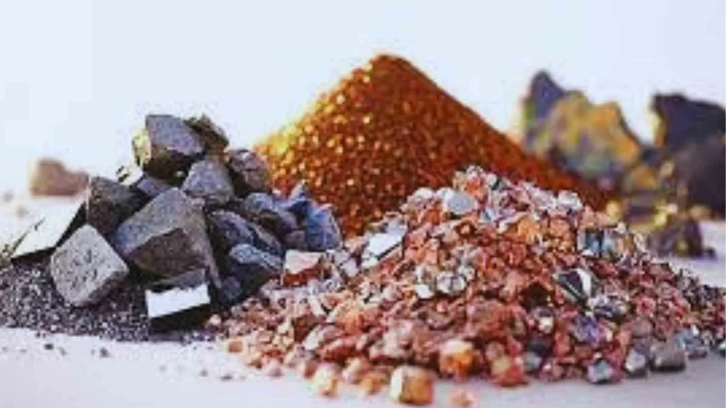
India and France have officially launched their first Joint Working Group (JWG) on Critical Minerals in New Delhi, marking a significant step towards building resilient and sustainable supply chains for strategic minerals and rare earth elements.
The meeting was jointly chaired by Benjamin Gallezot, France’s Inter-Ministerial Delegate for Strategic Minerals and Metals Supplies, and Kadam Sandeep Vasant from India.
Discussions focused on cooperation in mineral exploration, mining, processing, recycling, research, and technological innovation. Both countries also explored opportunities for joint projects in India, France, and other strategically important regions.
Representatives from France’s Geological Survey (BRGM) and the Geological Survey of India participated in the discussions and agreed to expand scientific collaboration across the critical minerals value chain.
The initiative follows the France-India Joint Declaration of Intent on Critical Minerals signed during French President Emmanuel Macron’s visit to India in February 2026.
What are Critical Minerals?
Critical minerals are naturally occurring minerals that are essential for economic growth, national security, clean energy technologies, and advanced manufacturing, but whose supply may be vulnerable due to limited availability or excessive dependence on imports.
Importance of Critical Minerals
- Essential for defence equipment including missiles, fighter aircraft, submarines, radars, and satellites.
- Crucial for electric vehicles, renewable energy systems, and battery manufacturing.
- Used in semiconductors, smartphones, communication systems, and advanced electronics.
- Support industrial growth and technological innovation.
Major Critical Minerals and Their Uses
| Mineral | Major Applications |
|---|---|
| Lithium | Electric vehicle batteries and energy storage |
| Cobalt | Rechargeable batteries and aerospace |
| Nickel | Batteries and stainless steel |
| Graphite | Battery anodes and lubricants |
| Rare Earth Elements | Magnets, missiles, wind turbines, electronics |
| Copper | Electrical wiring and renewable energy |
| Silicon | Semiconductors and solar panels |
| Titanium | Aircraft, naval platforms and medical equipment |
| Tungsten | Defence systems and industrial cutting tools |
| Gallium | Semiconductors, radar systems and 5G technology |
India and Rwanda Expand Defence Cooperation
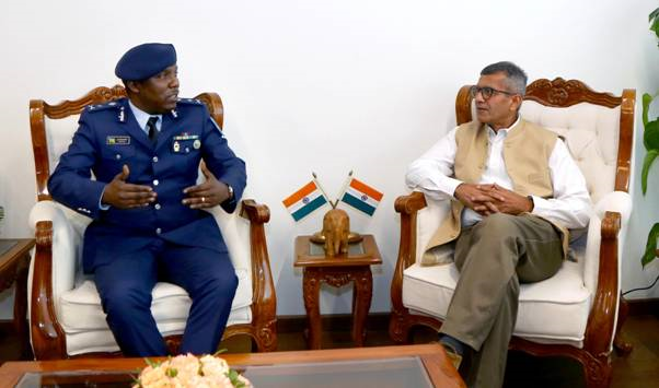
India and Rwanda have agreed to deepen their defence partnership during the second Joint Defence Cooperation Committee (JDCC) meeting held in New Delhi on 6-7 July 2026.
Both countries decided to enhance cooperation in military training, joint military exercises, defence industries, military medicine, and capacity building. An implementation plan with defined timelines was also finalized to ensure effective execution of the agreed initiatives.
The Rwandan delegation visited leading Indian defence industries to understand India’s growing indigenous defence manufacturing capabilities and technological advancements. They also visited the Army Hospital (Referral and Research), where they observed India’s military healthcare infrastructure and medical support systems.
The two countries reaffirmed their commitment to strengthening defence ties based on the Memorandum of Understanding signed during Prime Minister Narendra Modi’s visit to Rwanda in July 2018.
Fresh Escalation in the Iran Conflict
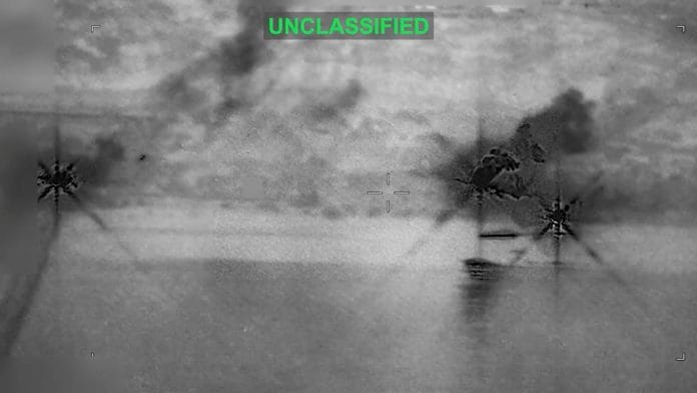
The United States Central Command (CENTCOM) announced a fresh round of military strikes against Iran, claiming that more than 80 military targets were attacked.
According to the U.S. military, the strikes targeted Iranian air defence systems, command centres, coastal radar installations, anti-ship missile capabilities, and Islamic Revolutionary Guard Corps naval assets operating near the Strait of Hormuz.
Alongside the military action, Washington suspended a licence that had allowed Iran to export oil after multiple tankers were reportedly attacked near the strategic waterway.
Iran strongly condemned the strikes, describing them as an act of aggression and warning that its armed forces would respond decisively. Iranian authorities also stated that they would resist any foreign interference in the management of the Strait of Hormuz.
The conflict continues despite an uneasy ceasefire, with tensions contributing to higher global oil prices, disruptions in international trade, and increased uncertainty in global financial markets.
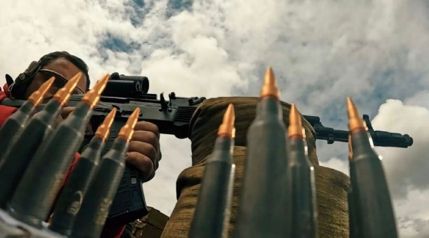
Russia Unveils New Triple-Projectile Anti-Drone Ammunition
Russia has introduced an innovative anti-drone ammunition named “Mnogotochie” to improve its capability against unmanned aerial vehicles (UAVs).
Unlike conventional bullets, the new round separates into three individual projectiles during flight, increasing the probability of striking fast-moving drones.
The ammunition is available in both 5.45 mm and 7.62 mm calibres, making it compatible with standard Russian assault rifles and machine guns.
Developed by Vysokotochka, a subsidiary of Rostec, the ammunition has been specifically designed for Counter-Unmanned Aircraft System (C-UAS) operations and is effective against drones at distances of up to 300 metres.
The development reflects the growing importance of anti-drone technologies as unmanned systems continue to play a major role in modern warfare.
Review Questions
- During Prime Minister Narendra Modi’s visit to Indonesia, which missile
agreement became the highlight of the bilateral defence cooperation?
A. Akash Missile
B. Nirbhay Missile
C. BrahMos Missile
D. Pralay Missile
Answer: C. BrahMos Missile - The Astra missile is primarily classified as a:
A. Ballistic Missile
B. Cruise Missile
C. Surface-to-Air Missile
D. Beyond Visual Range Air-to-Air Missile (BVRAAM)
Answer: D. Beyond Visual Range Air-to-Air Missile (BVRAAM) - BrahMos missile is jointly developed by India and which country?
A. Israel
B. France
C. United States
D. Russia
Answer: D. Russia - India and France launched their first Joint Working Group (JWG) on which
strategic sector?
A. Artificial Intelligence
B. Space Technology
C. Nuclear Energy
D. Critical Minerals
Answer: D. Critical Minerals - Which of the following is NOT generally considered a critical mineral?
A. Lithium
B. Cobalt
C. Graphite
D. Limestone
Answer: D. Limestone - The second Joint Defence Cooperation Committee (JDCC) meeting held in New
Delhi was between India and:
A. Kenya
B. Nigeria
C. Rwanda
D. Tanzania
Answer: C. Rwanda - The Strait of Hormuz is strategically important because it serves as a major route
for the transportation of:
A. Coal
B. Iron Ore
C. Crude Oil and Natural Gas
D. Agricultural Products
Answer: C. Crude Oil and Natural Gas - Russia’s newly developed anti-drone ammunition “Mnogotochie” is unique
because it:
A. Uses laser guidance.
B. Travels at hypersonic speed.
C. Is nuclear-capable.
D. Splits into three projectiles during flight.
Answer: D. Splits into three projectiles during flight. - Which Indian organisation developed the Astra missile?
A. HAL
B. ISRO
C. Bharat Electronics Limited (BEL)
D. DRDO
Answer: D. DRDO - Which of the following correctly matches the missile with its primary role?
A. BrahMos – Air-to-Air Missile
B. Astra – Anti-Ship Cruise Missile
C. Astra – Air-to-Air Missile
D. BrahMos – Surface-to-Air Missile
Answer: C. Astra – Air-to-Air Missile - Colonel Rank Of Indian Army Is Equivalent To Rank Of Indian Navy Is
A. Commander
B. Captain
C. Group Captain
D. Lieutenant
ANSWER: B - Maitree Exercise Held B/W India And___?
A. Thailand
B. USA
C. Qatar
D. Singapore
ANSWER: A - Tangail Airdrop Was Done At Which War
A. 1948
B. 1962
C. 1965
D. 1971
ANSWER: D - War Cry of NAGA REGIMENT
A. Bharat Mata ki Jai
B. Ki ki so so Lhargyalo
C. Jai Durga Naga
D. Durga Mata Ki Jai
ANSWER: C - Kamov Ka-31 Is A
A. Destroyer
B. Unmanned Combat Aerial Vehicle
C. Helicopter
D. Submachine gun
ANSWER: C - High Altitude Warfare School Is At
A. Wellington
B. Gulmarg
C. Shimla
D. Dehradun
ANSWER: B - War Cry of THE MAHAR REGIMENT
A. Bharat Mata ki Jai
B. Bolo Hindustan Ki Jay
C. Jai Hind
D. Durga Mata Ki Jai
ANSWER: B - Southwestern Air Command Of IAF Is In
A. Prayagraj
B. Gandhinagar
C. Shillong
D. New Delhi
ANSWER: B - Bagram Air Base Located In
A. Pakistan
B. Iraq
C. Afghanistan
D. Qatar
ANSWER: C - Dassault Aviation Is A Company Of
A. Thailand
B. USA
C. Qatar
D. France
ANSWER: D
ALSO READ:
- Latest Daily Current Affairs and Defence Updates
- Latest Daily Current Affairs June 2026[DOWNLOAD PDF]
- Latest Daily Current Affairs May 2026[DOWNLOAD PDF]
- Latest Daily Current Affairs April 2026[DOWNLOAD PDF]
- Latest Daily Current Affairs March 2026[DOWNLOAD PDF]
- Latest Daily Current Affairs February 2026[DOWNLOAD PDF]
- Latest Daily Current Affairs January 2026[DOWNLOAD PDF]
- Latest Daily Current Affairs November 2025[DOWNLOAD PDF]
- Latest Daily Current Affairs October 2025[DOWNLOAD PDF]
- Latest Daily Current Affairs August 2025[DOWNLOAD PDF]
- Latest Daily Current Affairs July 2025[DOWNLOAD PDF]
- Monthly Defence Current Affairs June 2025 [DOWNLOAD PDF]
- Monthly Defence Current Affairs May 2025 [DOWNLOAD PDF]


